
The National Health Service England (NHSE) digital social care records programme is one of the most significant digital health initiatives for UK care providers this year. If you run a domiciliary care, supported living, or residential care service, you need to understand the DSCR programme, its funding mechanisms, and implementation timeline. It matters for staying ahead of regulation and improving service user outcomes.
This article unpacks what DSCR is, where funding sits, and the practical steps your organisation needs to take.
What Are Digital Social Care Records Under the NHSE 2026 Programme?
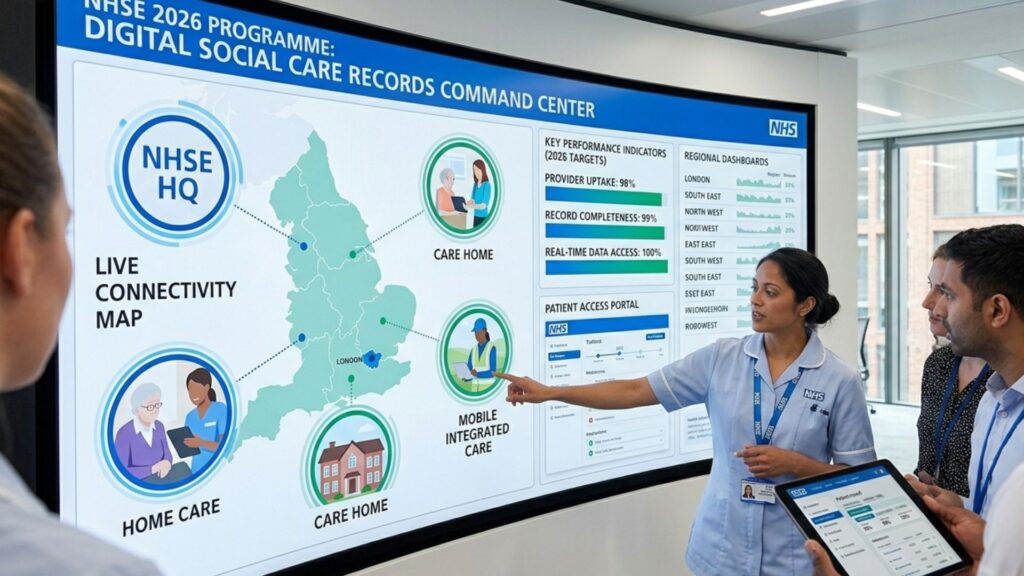
Digital Social Care Records represent a unified approach to electronic care documentation across health and social care sectors. Rather than care workers and clinical teams operating in silos, DSCR enables service users’ records—medication history, care plans, assessments, safeguarding notes—to flow securely between NHS settings (hospitals, GPs, community teams) and social care providers (care homes, domiciliary care agencies, supported living services).
For care organisations, this means reducing duplication, improving care quality, and minimising the risk of missed safeguarding or clinical information. The NHSE programme, launched in early 2026, is providing grant funding and technical support to help providers adopt interoperable systems. This is not optional; regulators (CQC, Local Authority commissioners) increasingly expect digital maturity and data sharing capability.
NHSE Funding and Rollout Timeline for Digital Social Care Records Nhse 2026
The NHSE has allocated dedicated funds to help care providers implement digital records systems. As of April 2026, funding streams are being distributed through Local Health and Care Partnerships, meaning your local Integrated Care Board (ICB) is the gateway. Providers in priority tranche areas (typically densely populated regions and high-complexity care settings) are receiving first access.
Rollout is phased: Tranche 1 covers Q1 to Q2 2026, with prioritisation toward care homes, domiciliary agencies serving older adults, and supported living for learning disability and autism. Later tranches extend into 2027. The amount awarded varies by service size and needs assessment. Domiciliary care agencies with 10 to 50 staff should expect funding of £5,000 to £25,000 depending on complexity and current IT baseline. Larger residential or supported living organisations may receive higher grants.
Key dates: funding applications close in May 2026 for early-access areas; implementation contracts typically run 6 to 12 months post-award. If you haven’t yet approached your local ICB or digital social care lead, do so immediately.
Data Interoperability: Connecting Care Records Across Providers
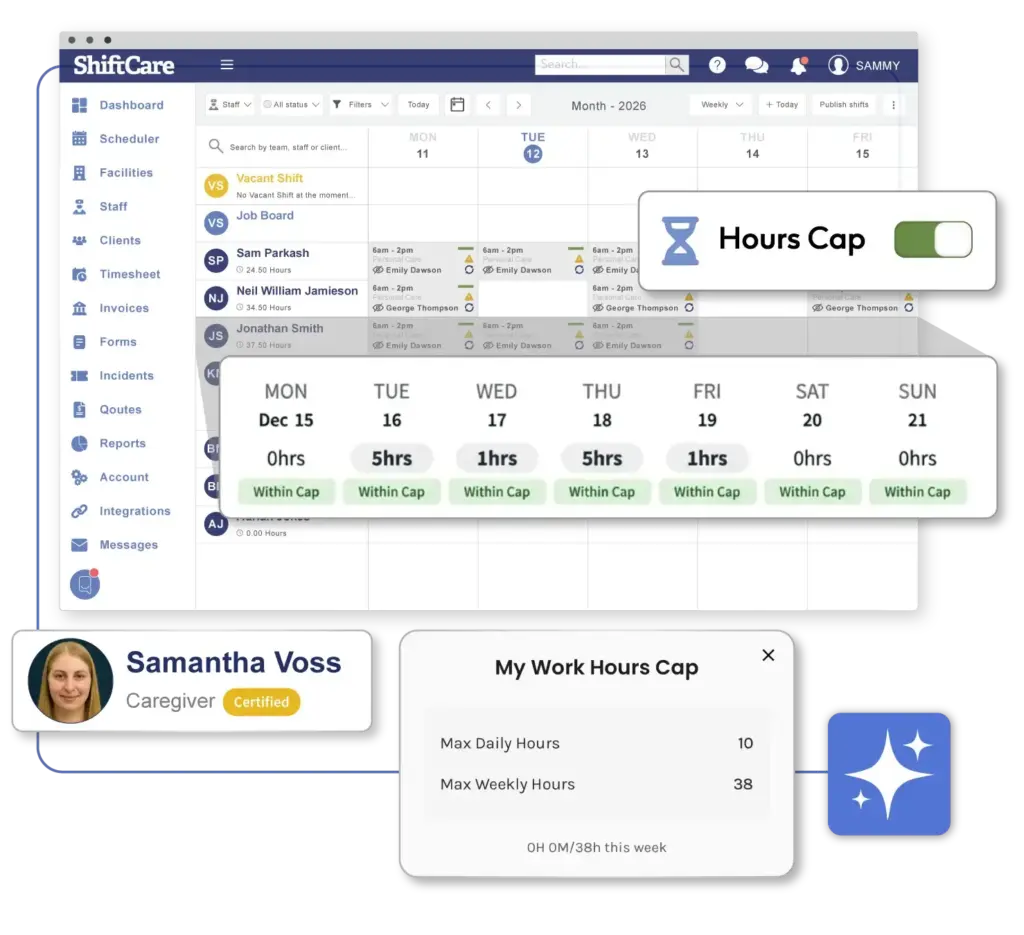
The core value of DSCR is interoperability—the ability for your care management system to “talk” to NHS systems, other care providers, and Local Authority platforms. This requires adoption of common standards (HL7 FHIR, ICS standards) and integration via secure APIs.
For a domiciliary care agency, interoperability means that when a service user is discharged from hospital, their GP’s referral, medication list, and care instructions arrive in your care management platform without manual re-entry. Similarly, when you update a care plan or note a safeguarding concern, that update is visible (with proper consent) to the commissioning Local Authority and NHS teams. This reduces errors, speeds up escalation, and improves person-centred outcomes.
Technical readiness is essential. Your current care management system must either have DSCR compliance built in or be compatible with middleware solutions. This is where choosing a platform—like our care management tools for UK providers—that already supports FHIR standards and NHS integration becomes invaluable.
Implementation Steps for Domiciliary Care and Residential Services
A practical roadmap for DSCR adoption typically involves five stages:
- Stage 1: Assessment and planning. Audit your current data systems, identify gaps (legacy paper records, disconnected scheduling tools), and map care user data flows. This typically takes 4 to 6 weeks.
- Stage 2: Vendor selection. If your care management system does not yet have DSCR-ready functionality, evaluate replacements or integration partners early. Budget 8 to 12 weeks for demo, procurement, and due diligence.
- Stage 3: Staff training and change management. Your care workers and admin teams will adopt new workflows (e.g., structured data entry, interoperable consent processes). Allocate 2 to 3 months for training rollout, with ongoing support.
- Stage 4: Pilot and testing. Run a pilot with a subset of service users (10 to 20) to test system stability, data quality, and team confidence. This phase lasts 4 to 8 weeks.
- Stage 5: Full rollout. Once tested, migrate remaining service users and establish ongoing data governance, auditing, and compliance monitoring.
The entire journey typically spans 9 to 15 months. Domiciliary care agencies often move faster than large residential services due to smaller, more agile teams.
Common Challenges and Mitigation Strategies

Challenge 1: Legacy system incompatibility. If your care provider runs paper records or a system with no integration capability, migration is unavoidable.
Mitigation: Start vendor evaluation now; prioritise systems with out-of-the-box DSCR compliance to avoid costly custom development.
Challenge 2: Data quality and cleaning. Existing records may contain duplicates, missing fields, or non-standard formats. Interoperability demands clean, structured data.
Mitigation: Budget 6 to 8 weeks for a data cleansing project. Many NHSE-funded projects include data quality support services.
Challenge 3: Workforce confidence and adoption. Care workers accustomed to paper handovers or familiar legacy systems may resist digital workflows.
Mitigation: Invest in co-design; involve care workers early in system selection and training to build buy-in.
Challenge 4: Cybersecurity and compliance. Data interoperability increases exposure; you must meet NHS Data Security Protection Toolkit standards.
Mitigation: Work with your IT provider and NHSE technical support to implement encryption, access controls, and audit logging.
Preparing Your Team for the Transition
Success hinges on people, not just technology. Start conversations with your leadership, IT team, and frontline care workers now. Clarify roles, assign a project lead, and engage your Local Authority commissioning team and NHS partners early. ShiftCare’s digital care management platform helps UK care providers meet DSCR requirements with structured records, audit-ready documentation, and integration capabilities that support NHS data sharing standards.
Start your free trial today. See how ShiftCare helps domiciliary care, supported living, and residential care providers prepare for DSCR implementation with systems built for CQC readiness and person-centred care.