Cash flow is everything in domiciliary care. You’re paying care workers weekly, but funding bodies invoice on monthly or longer cycles. You’re absorbing the cost of services delivered weeks before payment arrives. When invoicing is slow, inaccurate, or disputed, the gap between money out and money in widens in ways that put real pressure on the business.
This article looks at where domiciliary care agencies lose time and money in their invoicing processes, what better systems look like, and how providers are reducing the admin burden while getting paid faster.
Why Domiciliary Care Invoicing Is More Complex Than It Looks

Additionally, domiciliary care invoicing is more complex than it looks from the outside. In practice, a single invoice to a local authority funder might cover hundreds of individual visits, each with a different service user, a different rate depending on the time of day or day of week. Potentially different care workers. For example, the rate for a Saturday morning visit differs from a Tuesday afternoon. Similarly, bank holiday rates differ.
Furthermore, when this complexity is managed manually, or in spreadsheet-based systems, errors will occur. For example, a transposed visit time, a missed bank holiday uplift, or a visit that was not recorded properly creates an inaccurate invoice that either gets queried and delayed, or gets paid at the wrong amount and creates a reconciliation problem later.
However, the downstream consequences of invoicing errors extend beyond the immediate payment delay. Notably, repeated invoice queries damage the relationship with commissioners. Meanwhile, finance staff spend time resolving disputes rather than managing cash flow. Indeed, the cumulative effect of small errors across hundreds of visits compounds into a meaningful revenue problem over time.
How Integrated Billing Eliminates Manual Invoicing Errors
Consequently, the fundamental difference between manual invoicing and integrated billing software is where the data comes from. As a result, in a manual process, someone takes visit records, usually from a rota or care workers’ paper timesheets. Uses them to construct an invoice. As a result, this introduces opportunities for data loss, transcription error, and rate misapplication at every step.
In practice, in an integrated system, confirmed visits in the rostering software flow directly into the billing engine. The software applies the rate automatically based on the service user’s funding agreement and visit time. The day type. The result is an invoice that reflects exactly what was delivered, at the correct rate, without manual intervention.
This is not just faster. It is more accurate. And in domiciliary care, accuracy is the difference between an invoice that gets paid promptly and one that enters a query cycle that delays payment by weeks.
How to Manage Multiple Funders with Different Invoice Formats
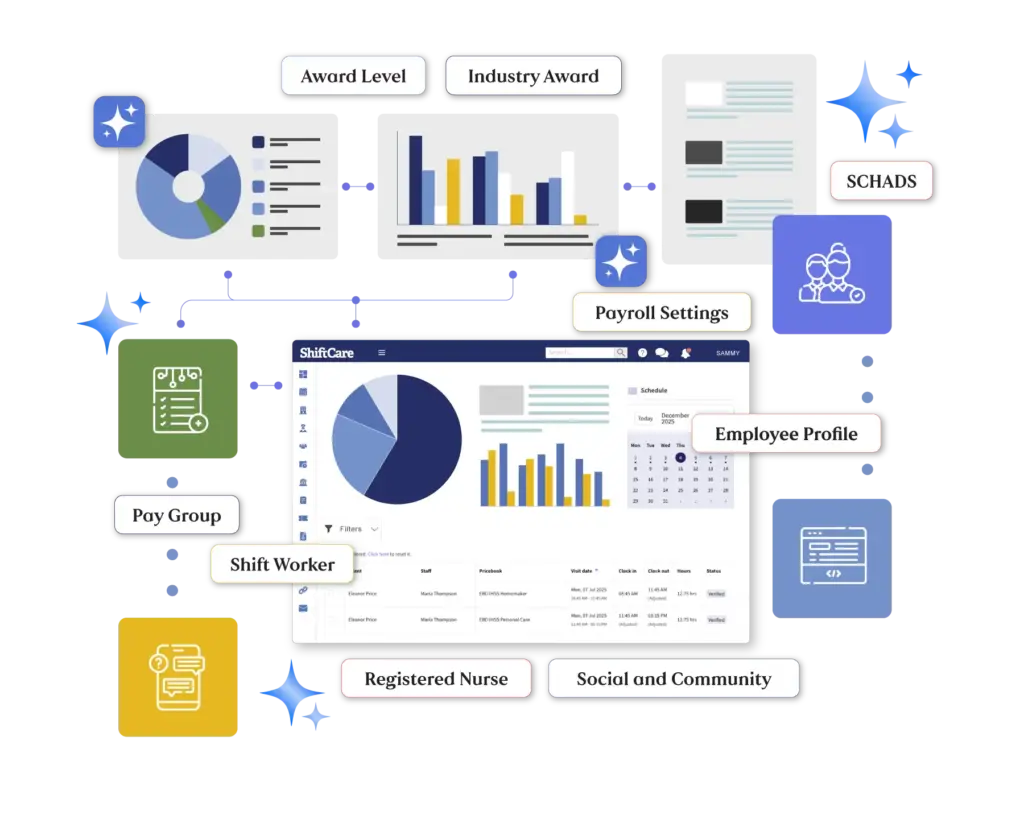
Importantly, local authorities fund the majority of domiciliary care in England, with NHS continuing healthcare funding a smaller proportion continuing healthcare. Each funder has its own rate schedule, its own invoicing format requirements. Its own payment terms.
Notably, some local authorities require invoices to be submitted through specific portals, in specific formats, by specific deadlines. Providers who miss submission windows or submit incorrectly formatted invoices face automatic delays. Software that can generate invoices in the formats required by specific commissioners. That can track submission deadlines, removes this source of delay from the process.
Ultimately, for providers who have service users funded through a mix of local authority, continuing healthcare. Private sources, the complexity multiplies. Integrated software that handles each stream according to its specific requirements. That produces consolidated reporting across all streams, changes what is operationally possible.
Why Billing and Payroll Must Use the Same Visit Data
Meanwhile, for domiciliary care agencies, the relationship between billing and payroll is direct. The same visit data that drives invoicing also drives care worker pay. When teams manage these two processes separately, the risk of inconsistency increases.
Instead, care workers who receive payment for shifts your agency never invoiced, or who go unpaid for shifts you did bill, create problems in both directions. Integrated systems that manage scheduling, billing, and payroll from a single source of visit data eliminate this inconsistency by design.
What to Look for in Domiciliary Care Billing Software
In particular, when evaluating billing software, the questions that matter most for domiciliary care are specific to the sector’s funding and operational context. Can the system handle multiple funders with different rate schedules, including time-of-day and day-of-week rate variations? Can it generate invoices in the formats required by your specific local authority commissioners? Does it integrate with your rostering system, or does it require a separate data entry step? Can it track payment status and flag overdue invoices? Does it produce the reporting you need for financial management, including revenue by funder, outstanding debtors. Cash flow forecasting?
Reduce Invoice Queries and Get Paid Faster
Providers who have implemented integrated billing systems consistently report fewer invoice queries from funders, faster payment cycles, and finance staff who spend time on management and analysis rather than data entry and dispute resolution. The benefits extend beyond cash flow. Better financial data gives management the information needed to make decisions about service mix, staffing levels, and growth. When you can see margin by service type, by funder, and by geographic area, you can manage the business with a level of insight that manual systems cannot support.
For domiciliary care agencies navigating rising costs, workforce pressures, and commissioner rate constraints, tighter financial management is not optional. The agencies that are managing it well are doing so with integrated systems rather than manual processes. ShiftCare’s domiciliary care billing software integrates with rostering to eliminate manual invoicing, applies correct rates automatically, generates funder-specific invoice formats, and tracks payment status in real time.
Start your free trial today. See how ShiftCare helps domiciliary care agencies get paid faster without the admin burden.