Domiciliary care providers don’t have an IT problem. They have a fragmented software problem that looks like an IT problem. This guide covers what UK care providers actually need from their technology in 2026, what CQC expects to see, and how the right care management platform removes the IT overhead that’s costing registered managers time they don’t have.
Most agencies add software the same way: rostering first, then a separate care notes app, then a spreadsheet for billing, then paper MAR charts. Each addition creates a new system to maintain, a new login to manage, and a new gap where information falls through. By the time an IT support contract gets called in, the problem isn’t the technology. It’s that the technology was never connected in the first place.
What CQC Actually Expects From Your Technology in 2026
CQC completed 50% more inspections in November 2025 compared to the same period in 2024 and is targeting 9,000 published assessments by September 2026. Under the Single Assessment Framework (SAF), inspectors assess providers continuously rather than waiting for scheduled visits. Evidence of quality can be requested at any time across five key questions: Safe, Effective, Caring, Responsive, and Well-Led.
The most common reason for a Requires Improvement rating under Well-Led is not poor care. It is poor documentation of how issues were identified and resolved. Regulation 17 of the Health and Social Care Act 2008 requires providers to have auditing systems that actively drive improvement, not just record what happened. Paper-based systems and disconnected software cannot produce that evidence trail on demand.

What the NHS Digital Social Care Records Mandate Requires From Providers
By July 2025, 80% of registered care providers had adopted a Digital Social Care Records (DSCR) solution, up from 41% in 2021. NHS England’s DSCR framework sets 14 standards covering the digital capture, storage, and management of care records. Providers on NHS Standard Contracts must also register with the Data Security and Protection (DSP) Toolkit and demonstrate compliance with the National Data Guardian’s 10 data security standards.
Businesses that have not yet made this transition face a growing disadvantage when tendering for funded contracts. Being on the NHS England Assured Solutions List is no longer optional for providers managing local authority or Integrated Care Board-funded packages. It forms part of tender evaluation criteria.
Why UK GDPR Creates Data Security Obligations That IT Support Alone Can’t Solve
Domiciliary care providers process special category data under UK GDPR. Health information, care needs, and medication records fall under Article 9, carrying the highest data protection obligations. The Information Commissioner’s Office (ICO) can fine providers up to £17.5 million or 4% of global annual turnover for breaches.
The four baseline data security requirements CQC expects providers to evidence are consistent access controls, staff training records, use of supported software only, and an IT security framework aligned to Cyber Essentials. Running care data across multiple disconnected platforms makes enforcing consistent access controls significantly harder. Every additional system is a potential breach point, and a separate vendor contract to manage.
What Care Providers Actually Need From Their Software Stack
IT support contracts maintain infrastructure. They don’t fix the underlying problem of care data living across systems that don’t communicate. If your software is built around scheduling as the primary data structure, the information it generates tells you whether your care professionals showed up on time. It doesn’t tell you whether your care recipient’s nutritional intake has declined over six weeks, whether their personal goals are reflected in active tasks, or whether their care plan was last reviewed within the required timeframe.
The capabilities that reduce IT complexity for domiciliary care providers are specific:
- Electronic call monitoring replacing paper timesheets, with timestamped visit records that satisfy CQC evidence requirements
- Digital care notes logged at point of care via mobile, connected to individual care plans and goals
- eMAR replacing paper MAR charts, with missed medication flagged automatically rather than discovered at inspection
- Role-based access and audit trails covering every record access, edit, and update across the platform
- Rostering connected to billing so every invoiced hour is traceable to a documented visit
How to Reduce IT Overhead Without Adding More Systems
Agencies with the lowest IT overhead run the fewest systems. Every platform added creates vendor management, staff training, data reconciliation, and security risk. Three operational checks reveal whether your current setup needs consolidation rather than more IT support.
A carer interacting with more than one system per shift means information is being duplicated or lost somewhere in the workflow. Taking more than five minutes to produce six months of care records for a specific service user signals a documentation structure that won’t hold under a CQC evidence request. Billing data that doesn’t come directly from verified visit records means manual reconciliation and avoidable errors before invoicing.
The CQC’s Single Assessment Framework has raised the bar so that digital systems are the only way to provide the Well-Led and Responsive evidence required for a Good or Outstanding rating. That evidence has to come from somewhere connected — not assembled manually from separate systems when an inspector arrives.
Stop Paying for IT Support to Fix a Software Problem
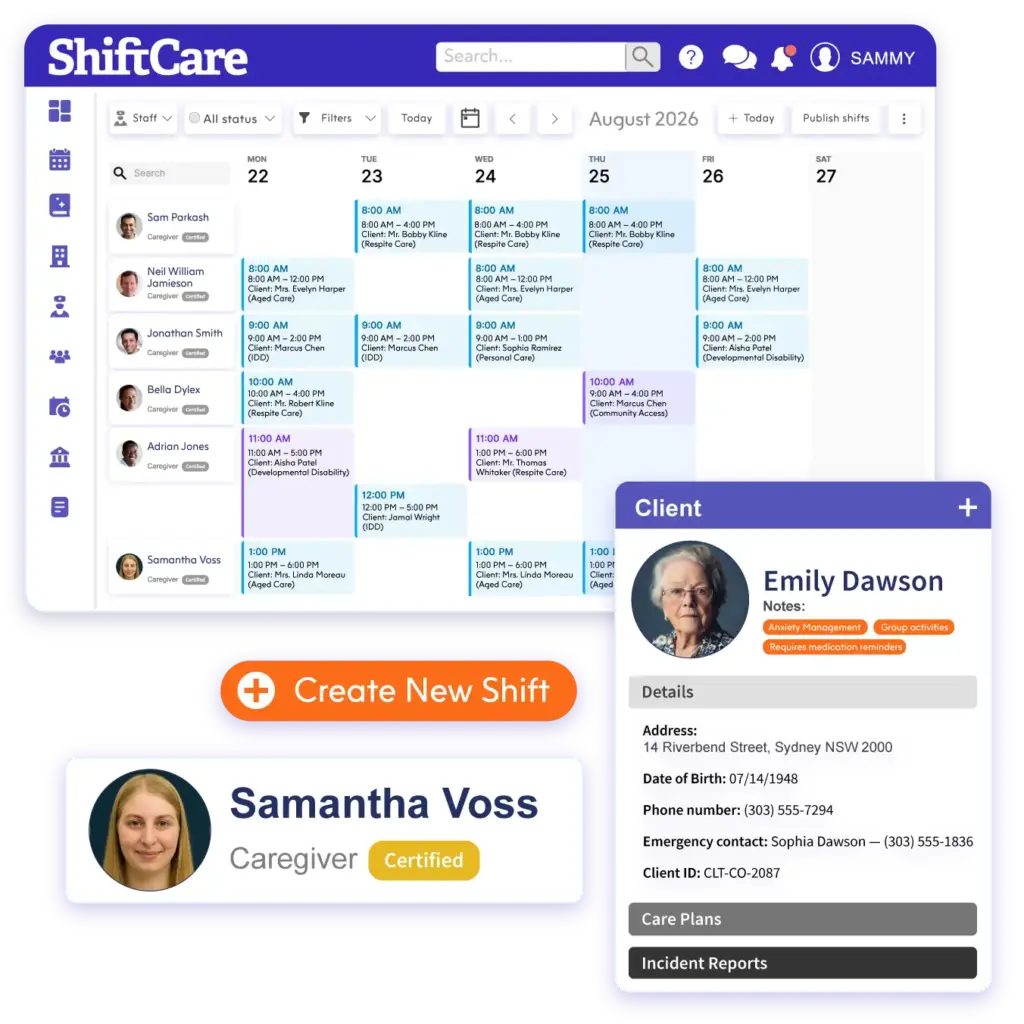
A managed IT contract maintains complexity. A care management platform built for UK domiciliary care removes it. ShiftCare’s domiciliary care software covers scheduling, digital care notes, medication management, billing, and carer records in one platform. Electronic visit verification replaces paper timesheets, role-based access with full audit trails satisfies both CQC and UK GDPR requirements, and the family portal keeps communication secure without personal messaging apps entering your data perimeter.
Start your free trial today and see how ShiftCare reduces your agency’s IT complexity without reducing capability.