What Features Does Care Software Need for CQC Compliance?
Care software supports CQC compliance by maintaining accurate, timestamped records across staff training, medication administration, incident reporting, and care planning. Inspectors assess these records against CQC’s five key questions: Safe, Effective, Caring, Responsive, and Well-led. Gaps in documentation directly affect inspection ratings.
A “Requires Improvement” rating costs more than the inspection itself. Local authority contracts become vulnerable. Recruitment suffers. CQC schedules a follow-up inspection, and regaining a “Good” rating takes months of remediation work and evidence gathering.
CQC’s five key questions each carry specific documentation requirements, and inspectors arrive expecting to access that evidence on the day. The sections below cover which care software features map to those requirements and where documentation gaps most commonly put domiciliary care providers at risk.
What Does CQC Actually Check During a Domiciliary Care Inspection?
CQC assesses all registered domiciliary care providers against five key questions: Safe, Effective, Caring, Responsive, and Well-led. Each question has corresponding quality statements, and inspectors use care records as primary evidence across all five.
Policies matter, but records are what inspectors examine on the day. A provider with a well-written safeguarding policy but incomplete incident logs will struggle to demonstrate the “Safe” standard in practice.
What records CQC inspectors typically request
- Staff training records confirming mandatory training is current for all active care workers
- DBS check status for every worker delivering direct support to service users
- Up-to-date care plans and risk assessments for each service user
- Medication administration records (MAR) with no unexplained gaps or unwitnessed corrections
- Timestamped incident and safeguarding reports with documented follow-up
Which Care Software Features Directly Support CQC’s Evidence Requirements?
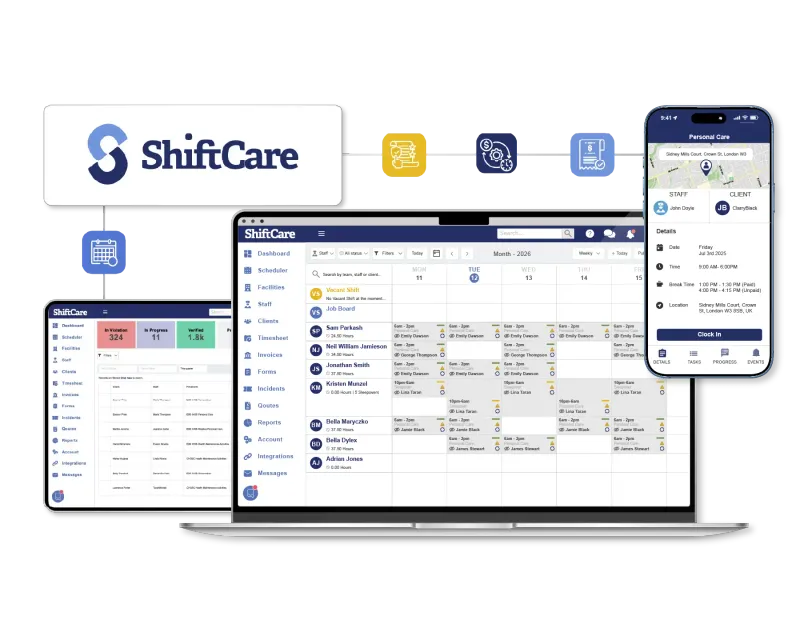
Each of CQC’s five key questions maps to specific record types. Software either makes those records accurate, current, and accessible, or it doesn’t. The features below correspond to the areas inspectors examine most closely across “Safe,” “Effective,” and “Well-led.”
Staff records and training compliance
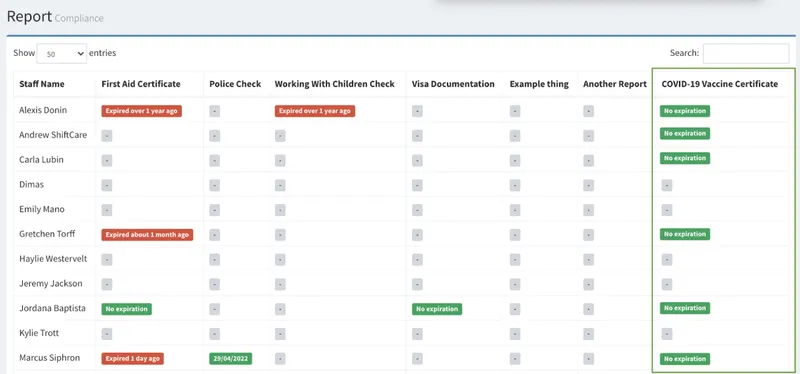
CQC’s “Safe” and “Well-led” standards require evidence that every active care worker holds a valid DBS check and has completed mandatory training. Care software should track expiry dates for both and send alerts before a lapse occurs.
- DBS expiry tracking with automated renewal alerts for coordinators
- Mandatory training records with completion dates: moving and handling, safeguarding, medication awareness, fire safety
- Induction documentation confirming competency before a worker’s first solo shift
Digital care plans and risk assessments
Care plans must reflect each service user’s current needs and circumstances. CQC inspectors check whether plans carry a review date within the required timeframe and whether risk assessments link directly to the relevant care plan. Software that flags overdue reviews and connects risk assessments to each care plan closes the gap inspectors most commonly find.
Medication administration records
Paper MAR sheets with unexplained gaps or corrections without a countersignature are among the most common “Safe” findings in domiciliary care. Digital MAR records each medication event with a timestamp, the identity of the care worker, and the outcome if a dose was missed or refused. Coordinator alerts for missed doses within the visit window give managers time to act before an oversight becomes a record gap.
Incident reporting and safeguarding logs
Inspectors look for evidence that providers identified an incident, responded appropriately, escalated where required, and closed the loop in writing. A log showing an incident occurred is not sufficient. Providers need timestamped records of the response, any notifications made to the local authority or CQC, and what changed as a result.
Does CQC Require Care Providers to Use Digital Care Records?
CQC does not mandate a specific system, but the inspection framework expects records to be accurate, current, and accessible on the day. Paper records that are incomplete, stored offsite, or require significant time to retrieve create immediate problems during an inspection visit. CQC’s strategy, updated in 2023, explicitly supports digital transformation as a means of improving accountability and transparency across the sector. Providers who rely on paper face growing pressure to demonstrate record accuracy in a format inspectors can access quickly.
What Documentation Gaps Put Providers at Risk of a “Requires Improvement” Rating?
- Care plans without a documented review within the required timeframe for the service user’s needs
- Training records missing for care workers currently delivering direct support
- MAR sheets with unexplained gaps or corrections lacking a witness signature
- Incident reports that were logged but show no escalation or documented follow-up
- Risk assessments that do not reflect a service user’s current circumstances
- No audit trail showing managers reviewed care records between inspection cycles

Frequently Asked Questions
How often does CQC inspect domiciliary care providers?
CQC does not follow a fixed inspection schedule. Registered providers can expect an inspection at any point, and frequency is risk-based. Providers rated “Requires Improvement” or “Inadequate” face more frequent inspections, sometimes within months of a previous visit. CQC can also inspect in response to a safeguarding concern, a serious incident, or a complaint, regardless of a provider’s current rating.
What are CQC’s quality statements and how do they relate to care software?
Quality statements are the specific evidence criteria CQC uses to assess each of its five key questions: Safe, Effective, Caring, Responsive, and Well-led. CQC introduced quality statements as part of its updated single assessment framework in 2023. Many quality statements require documentary evidence, including training records, care plans, and incident logs. Care software that keeps those records accurate and current provides the evidence base inspectors work from during an assessment.
Can care software improve a CQC rating that has already dropped to “Requires Improvement”?
Software alone does not change a rating. What changes a rating is consistent evidence of improved practice over time. Care software contributes by making that evidence accurate, timestamped, and accessible when CQC returns for a follow-up visit. Providers who move from “Requires Improvement” to “Good” typically show inspectors a clear audit trail of what changed after the previous inspection, which is far easier to demonstrate from a digital system than from paper records.
What is the difference between a care plan and a risk assessment in CQC terms?
A care plan describes what support a service user needs, how the provider delivers that support, and the individual’s personal preferences. A risk assessment identifies specific hazards relevant to that person, the likelihood of harm, and the steps the provider takes to mitigate each risk. Both documents must be current, linked to each other, and reviewed whenever the service user’s circumstances change. CQC expects both to be in place for every person receiving care.
How long must domiciliary care providers retain care records?
CQC does not specify a universal retention period, but providers should follow the NHS England Records Management Code of Practice. Adult social care records should generally be retained for a minimum of eight years after the last date of service. Local authority contract terms may also impose their own retention requirements, which can exceed the general standard. Providers should confirm requirements with their commissioning council before setting a retention policy.
Give Your Team the Documentation System CQC Expects
Documentation gaps are the most consistent driver of poor CQC ratings in domiciliary care. Inspectors work from what your records show, not what your team knows.
ShiftCare’s care management software for UK providers connects care plans, digital MAR, incident reporting, staff training records, and visit verification in one platform. Start your free trial today, no credit card required.