
The home care industry is bleeding caregivers. The turnover rate sits at nearly 80% across the sector, and the crisis is even worse for new hires. Data from early 2026 shows that roughly 70% of newly hired caregivers quit within their first 100 days. That’s not just a hiring problem. That’s a hiring and onboarding problem combined with deeper issues in how we structure work, compensation, and support.
For agencies with 5 to 50 staff, caregiver turnover is the single biggest threat to profitability and client service. Every time a caregiver leaves, you lose $2,600 to $5,000 in recruitment and training costs. More importantly, you lose clients. When caregivers leave unexpectedly, clients either leave with them or downgrade their service.
Why 70% of New Caregivers Quit Within 100 Days

If you hired five caregivers last month and three of them have already quit, you’re experiencing early-stage attrition. New caregivers are overwhelmed, undersupported, and often feel they made a mistake within the first few weeks. They don’t know the software, they don’t know your protocols, they’re anxious about making mistakes with a vulnerable client, and if they hit even a small issue in their first few visits, they have no one to turn to quickly.
The agencies that crack this problem move fast during days 1–30. They assign a mentor who’s available by phone, they make sure the new hire completes all training and system access before the first client visit. Also, they schedule a check-in after visit one, visit three, and at week one. Simple interventions here cut new-hire attrition in half.
How Pay and Scheduling Stability Affect Caregiver Retention
Home care workers are struggling financially. The data is stark: 59% of home care workers receive some form of public assistance, and 15% live below the federal poverty line. If you’re paying below market rate, you’re not competitive. But once you’re paying market rate or above, pay stops being the primary driver of retention.
What matters then is scheduling reliability, respect, clear communication, and a sense of belonging. You can pay $18 per hour and still lose caregivers if they’re scheduled for three different clients in one day with no consistency, or if they never know their schedule more than a week out. The best-performing agencies pay at or above market rate and then layer in stability: consistent client assignments, predictable hours, transparent scheduling.
What Low-Turnover Agencies Do Differently
Agencies with the lowest turnover rates share several operational characteristics. They publish schedules at least two weeks in advance, minimise last-minute schedule changes, compensate when they’re unavoidable, and give each caregiver a primary client assignment rather than scattering them across multiple unfamiliar clients. They have structured 30-, 60-, and 90-day check-ins with every new hire. And they actively solicit feedback from caregivers and act on what they hear.
Why Scheduling and Payroll Integration Reduces Turnover
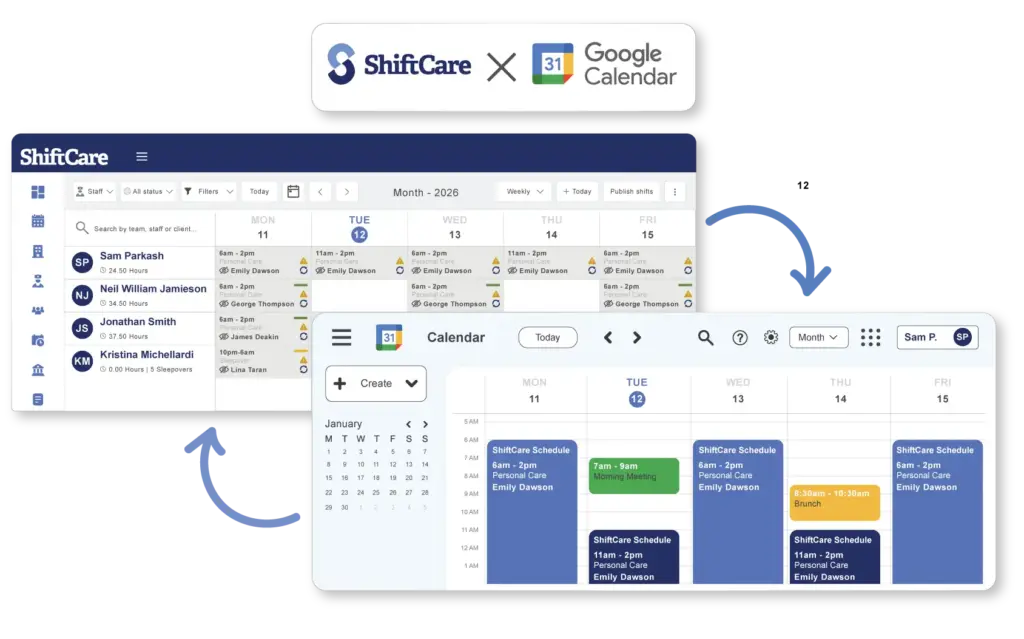
Agencies that integrate their payroll systems with their scheduling software see lower turnover. When caregivers use separate apps for scheduling and tracking hours, they get frustrated. Hours go missing. Overtime isn’t calculated right. When ShiftCare’s scheduling tools pull hours automatically into payroll, there’s no guesswork. Caregivers see their hours the moment a visit is logged. Pair this with solid EVV tracking and your caregivers have one source of truth for their entire work record.
How to Track Caregiver Turnover by Tenure Cohort
You can’t improve what you’re not measuring. Track turnover rate monthly by tenure cohort: new hires under 90 days, 90 days to one year, and over one year. Each cohort has different drivers and different solutions. Track time-to-fill for open positions, track your offer acceptance rate, and track exit interview data by reason. This data tells you where the leaks are so you can fix the right problems rather than guessing.
Fix Retention or Watch Your Agency Stall
59% of home care agencies report running with insufficient staffing. One in four clients who need home care are being turned away. This is a structural crisis, not a temporary shortage. Agencies that solve retention will grow. Agencies that don’t will turn away clients, burn out their remaining staff, and watch competitors capture market share.
Start with the first 100 days. Assign mentors. Schedule check-ins after visit one, visit three, and at week one. Publish schedules two weeks in advance. Give caregivers consistent client assignments. Integrate scheduling with payroll so hours are never lost or miscalculated. ShiftCare’s payroll and workforce integration gives caregivers one source of truth for their hours, reduces administrative friction, and cuts turnover by eliminating the frustration that comes with missing hours and incorrect paychecks.
Start your free trial today and see how ShiftCare helps home care agencies reduce caregiver turnover.