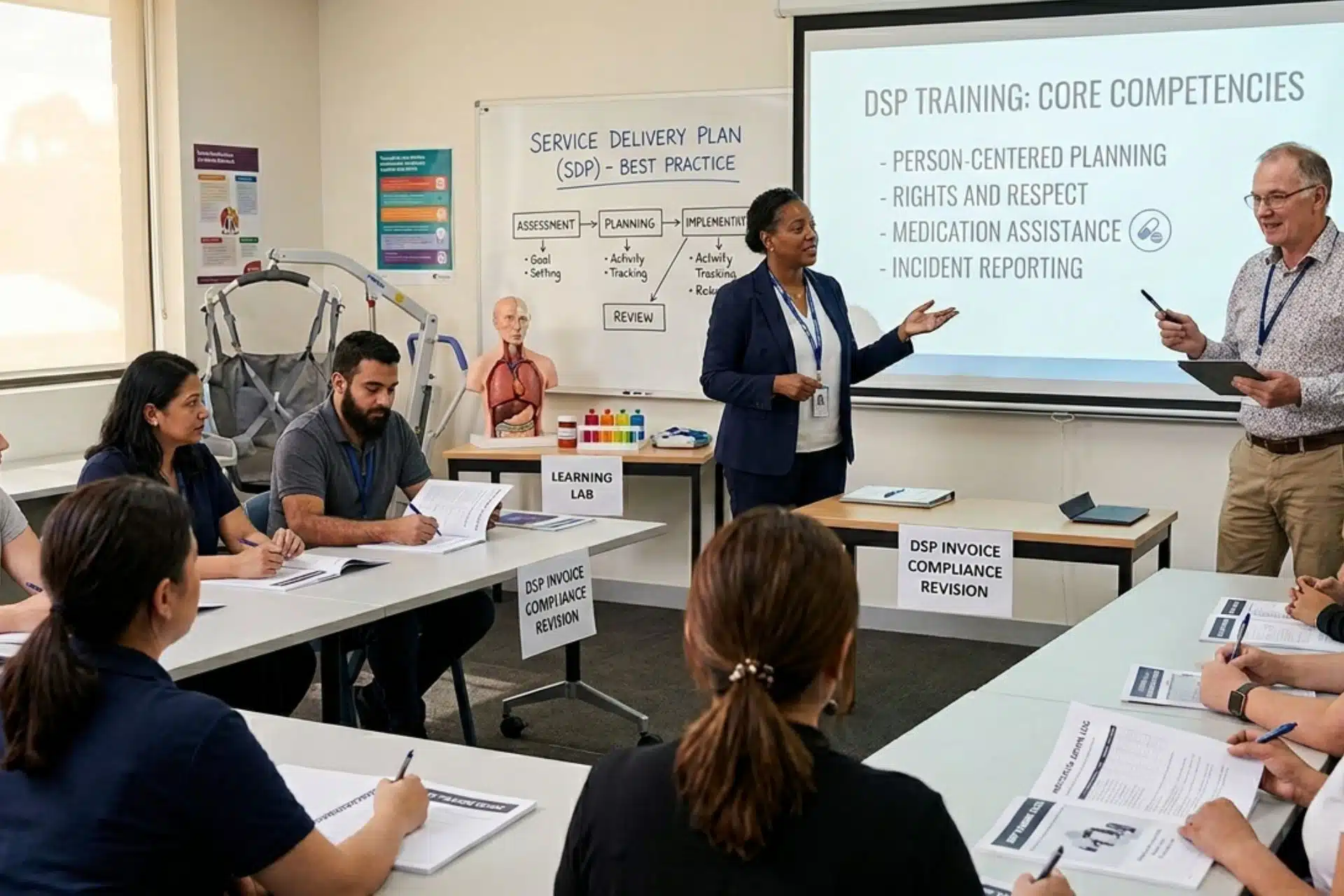
The Direct Support Professional workforce sits at roughly 1.4 million people across the United States. These workers provide hands-on support to people with intellectual and developmental disabilities, managing everything from personal care to community integration to employment support. Training that prepares them ranges dramatically, from short employer orientations in some states to mandatory 70-hour programs in others.
Getting DSP training right matters operationally. Poor training creates turnover, compliance gaps, and quality issues. Strong training builds stability and reputation. The problem is that the training landscape itself is fragmented.
State Requirements Vary Dramatically
California’s Mandatory Approach
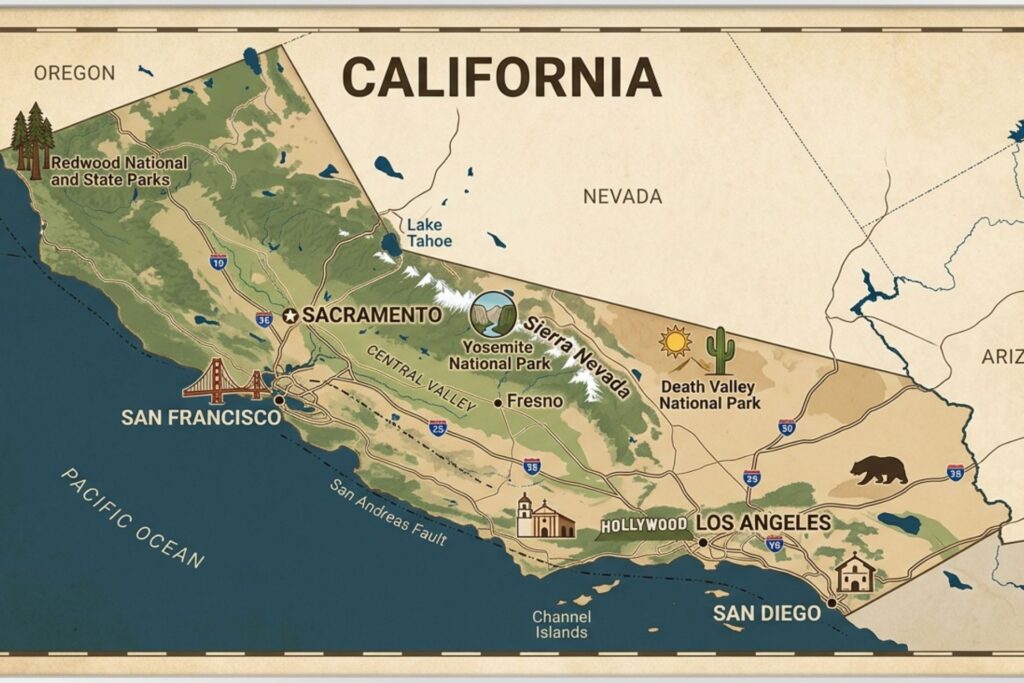
California mandates competency-based training for all Direct Support Professionals employed in licensed community care facilities. The program divides into two 35-hour segments completed over successive years, totaling 70 hours. This training is free to eligible DSPs and covers core competencies necessary for job performance.
The curriculum includes training on “Seven Rights.” The care principles expanded in 2017 to include “Right Reason” and “Right Documentation.” This framework structures how DSPs approach medication management, personal care decisions, and documentation practices.
Why This Matters
Mandatory training exists because individuals with IDD deserve consistent quality support. Standardized training ensures DSPs understand fundamental principles before providing care.
Other states impose lighter requirements. Some require training completion within the first year of employment. Others specify pre-hire training. The pattern is inconsistent because states regulate their own disability services programs independently.
Getting Certified in California: Registration to Results
How Registration Works
DSPs register online at DSP Train. Registration opens 35 days before training and closes 7 days before the scheduled test. Applicants must provide email, phone, facility vendor number, and facility email address.
The challenge test option matters operationally. DSPs with prior experience or equivalent training can test directly rather than sit through classroom sessions. This flexibility accommodates experienced hires and reduces training burden for agencies with high turnover.
What Results Look Like
Results arrive as Certification Notice, Certification Notice with Additional Training Needed (ATN), Failure Notice, or Incomplete/Failure Notice. A certification with ATN means the DSP passed but needs remedial training in identified areas.
The facility is responsible for providing that follow-up training, not the state. Failure means retaking that year’s program.
The National Credential: NADSP Certification
While California enforces training statewide, the National Alliance for Direct Support Professionals offers a voluntary national credential. NADSP’s mission is to elevate DSP status by improving practice standards, promoting system reform, and advancing knowledge, skills and values.
Three-Tier Credential Pathway
DSP-I (Entry-Level)
- Requires 1+ years of paid DSP experience, 50 hours of approved training, and a portfolio demonstrating competency
- Portfolio requires written reflection and documentation taking 50-100 hours to assemble
DSP-II (Intermediate)
- Requires 100 accredited educational hours with focus on Evaluation and Observation, Communication, Professionalism and Ethics, and Community Inclusion and Networking
DSP-III (Advanced)
- Specialized tier for advanced roles and training responsibilities
Why Employers Care
NADSP credentials are increasingly recognized by employers, state Medicaid agencies, and disability services organizations as evidence of professional competence beyond minimum employment standards. This recognition matters for recruiting quality staff and signaling organizational commitment to professional development.
E-Badge Academy: Building Credentials Incrementally
The NADSP E-Badge Academy allows DSPs and FLSs to receive formal acknowledgement by achieving stackable electronic badges, or e-badges, which can then be used to attain nationally-recognized NADSP Certification.
This structure works for various teams. A DSP who completes some competency areas earns individual badges without completing full certification. Progress toward credentials becomes visible rather than all-or-nothing.
Multi-State Operations: Portability Questions

NADSP certification works across state lines because it’s national. A DSP certified at DSP-I in one state holds the same credential if transferred. State-specific training doesn’t automatically transfer. Agencies hiring from out of state typically require local training completion.
For multi-state operators, NADSP offers a common language. Pennsylvania’s ODP (Office of Developmental Programs) recognizes NADSP training accreditation through MyODP, establishing workforce stability and career ladder through Pay for Performance. This trend suggests states increasingly view national credentials as quality assurance mechanisms.
Specialized Path: NADD-DSP Certification
Beyond NADSP, NADD developed a Competency-Based IDD/MI Dual Diagnosis Direct Support Professional Certification Program for DSPs supporting people with dual diagnosis (IDD plus mental illness). DSP certification validates that a direct support professional has met NADD standards and entitles them to use “NADD-DSP” as a credential.
This credential targets agencies serving complex populations. A DSP supporting someone with both IDD and schizophrenia needs different skills. NADD-DSP validates that specialization.
Recertification: The Ongoing Requirement
NADSP Certification requires recertification every two years. By the end of your two-year term, you must complete and submit at least 20 hours of training. This requirement keeps credentials current but also creates operational planning. Agencies must track expiration dates and allocate time and budget for continuing education.
Start Your DSP Training Plan Today
Contact your state’s Department of Developmental Services this week and request training requirements for your jurisdiction. Once you know the landscape, decide whether NADSP certification aligns with organizational goals.
ShiftCare helps agencies centralize DSP training records, track certification expiration dates, get renewal alerts, and coordinate multi-state compliance in one system. Start your free trial today. See how ShiftCare simplifies DSP training management and keeps your workforce certified and current.