Healthcare scheduling software built specifically for home care providers solves the interconnected challenges of caregiver availability, client preferences, geographic routing, skill matching, and compliance requirements through intelligent automation, real-time communication, and mobile accessibility. Scheduling in home care isn’t simple arithmetic. It’s a complex puzzle that, when managed manually, consumes administrative time, generates conflicts, leaves gaps in coverage, and frustrates both caregivers and clients.
When caregivers lack predictable schedules or travel inefficiently between visits, profitability suffers. When clients face frequent caregiver changes due to scheduling conflicts, satisfaction declines and complaints accumulate. The strongest platforms transcend basic appointment booking to optimize workflows, ensure regulatory compliance, enhance caregiver experience, and ultimately improve client outcomes.
What is Home Care Scheduling Software?
Healthcare scheduling software for home care is a technology platform designed to automate the assignment and management of caregiver visits while optimising routes, managing compliance, and improving communication between caregivers, clients, and supervisors. Unlike generic calendar apps, specialised home care scheduling systems understand the unique complexity of managing mobile workforces across distributed locations.
Why Spreadsheets and Calendar Apps Don’t Work

Many home care agencies initially attempt managing schedules through spreadsheets, calendar applications, or general-purpose project management software. These approaches quickly reveal fundamental limitations. Spreadsheets lack real-time visibility. By the time you’ve updated your master schedule, circumstances have already changed. A caregiver calls out sick, a client reschedules a visit, a new client enrolls, and your spreadsheet is instantly outdated.
General-purpose scheduling tools lack home care-specific features that separate a usable system from a transformational one. They don’t:
- calculate travel time between visits or suggest optimal geographic routing
- track caregiver certifications and match only qualified staff to specialised clients
- integrate with electronic visit verification systems to capture actual visit start and end times
- sync with billing systems to ensure accurate time capture for invoicing
- provide family portal visibility so clients can see who’s arriving
Most critically, general tools create caregiver frustration by not enabling mobile access, not providing real-time communication, and not accounting for individual preferences around scheduling.
Core Features of Effective Home Care Scheduling Software
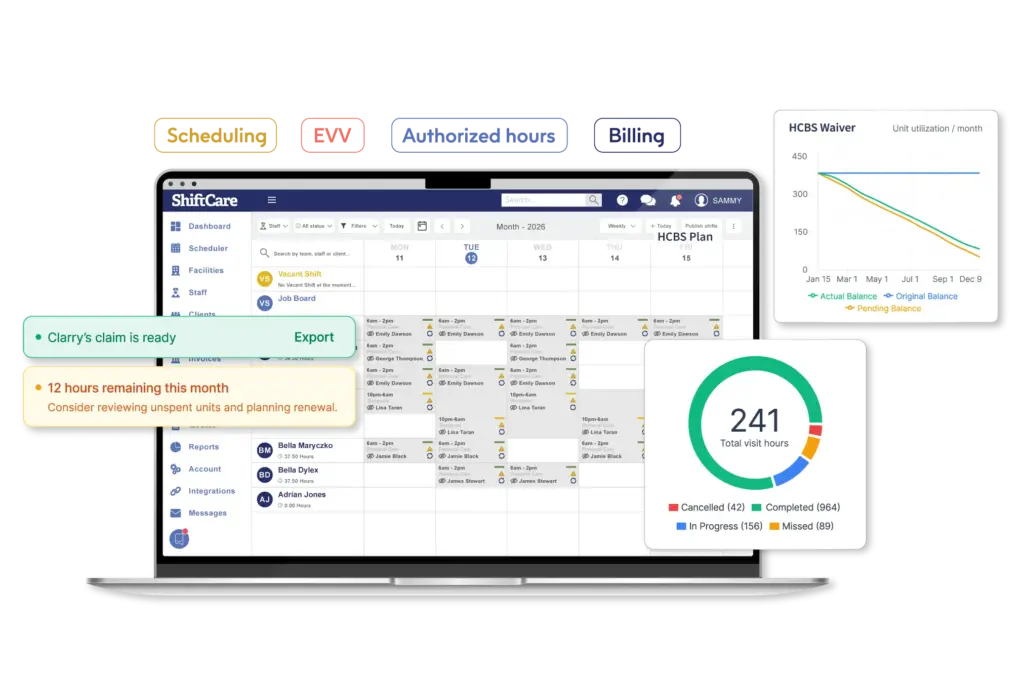
Top-tier healthcare scheduling software for home care includes several essential capabilities.
1. Automated Assignment Matching
Automated assignment matching is foundational. The system evaluates client needs against caregiver qualifications, certifications, preferences, location, and availability, then suggests optimal matches. Rather than a scheduler manually reviewing dozens of candidates for each shift, the system presents a ranked list with the best options at the top. This dramatically reduces administrator time while improving quality of assignments.
2. Real-Time Mobile Access
Real-time mobile access empowers caregivers to view schedules, accept shifts, request changes, and access client information from the field. Caregivers know their schedule as soon as assignments are made, can see driving directions to the next visit, and can access care plans and client preferences without returning to an office. This mobile-first design improves caregiver experience and reduces no-shows and delays.
3. Geographic Optimisation
Geographic optimisation ensures efficient routing and minimises drive time between visits. When caregivers spend less time driving, you reduce fuel costs, vehicle wear, and labor inefficiency. Travel time optimisation also enables you to serve more clients with the same caregiver workforce, improving capacity and profitability. Advanced systems use real-time traffic data to suggest route adjustments during the day, helping caregivers navigate unexpected congestion.
4. Two-Way Communication
Two-way communication between schedulers, caregivers, and clients eliminates information silos. Caregivers can message supervisors about concerns during visits. Clients or family members can request schedule adjustments. Supervisors can provide real-time guidance when questions arise. This communication layer significantly improves problem-solving speed and client satisfaction while reducing missed visits and care gaps.
Compliance and Electronic Visit Verification Integration
Modern healthcare scheduling software integrates seamlessly with EVV-compliant systems required by Medicaid and increasingly by private payers. Rather than requiring separate systems and duplicate data entry, best-in-class platforms capture visit verification data, including actual start time, end time, service location, and services provided, directly through the scheduling and mobile app flow. The caregiver clocks in at the client’s location using their phone, and this data automatically satisfies EVV requirements while providing billing-critical information for your invoicing system.
This integrated approach ensures compliance without creating additional administrative burden. States continue expanding EVV requirements and increasingly demand claims submission that includes verified visit data. Agencies with older systems that separate scheduling from EVV quickly fall behind competitors with integrated platforms.
Compliance also extends to caregiver credential tracking. The software maintains current certifications (CPR/BLS, background clearance dates, training completion), automatically alerts when renewals are due, and prevents assignments of uncertified staff to clients requiring specific qualifications. This automated credential management reduces compliance risk and prevents costly billing denials.
Caregiver Experience and Retention Benefits
Scheduling software that prioritises caregiver experience becomes a retention tool. When caregivers have predictable schedules with sufficient advance notice, they can manage personal responsibilities better. When they can request schedule adjustments or swap shifts with colleagues through the app rather than calling supervisors repeatedly, they feel more control over their work lives. And when they receive timely communication about changes, they experience less stress and frustration.
Advanced systems enable caregivers to set availability preferences and scheduling constraints — for example, “I prefer working in the southeast quadrant of the service area,” or “I’m not available Thursdays.” The system honors these preferences when making assignments, improving job satisfaction and reducing schedule-related turnover. Agencies implementing modern scheduling software that improves caregiver experience report retention improvements of 15-20%.
Scheduling efficiency also reduces administrative burden on coordinators and supervisors. Rather than spending hours each week managing scheduling problems reactively, administrators use the system to proactively manage capacity, identify upcoming gaps, and plan hiring.
Client Satisfaction and Family Communication
Clients and families increasingly expect visibility into scheduling and service delivery. Modern healthcare scheduling software provides client and family portal access showing who will arrive, when they’ll arrive, and what services they’ll provide. Real-time notifications alert families when caregivers are en route. Visit summaries document what was accomplished during each visit — personal care, household tasks, appointments attended, any concerns noted. This transparency builds trust and confidence in your agency.
The ability to request schedule changes or communicate preferences through the family portal improves client satisfaction. Rather than requiring phone calls during business hours, clients and families can submit requests asynchronously, which is particularly valuable for out-of-area families or those managing care from distance.
Integration with Broader Care Management Systems
The strongest home care scheduling software integrates with comprehensive care management platforms rather than operating in isolation. When scheduling syncs with care plans, e-billing systems, payroll, electronic visit verification, and family portals, you eliminate data silos and ensure information consistency across your agency. A caregiver’s visit time captured during clock-in automatically flows to billing and payroll systems. Care plan updates immediately appear in caregiver mobile apps. Client changes documented by caregivers surface in supervisor dashboards.
This integrated approach reduces errors, improves efficiency, and enables better decision-making. Your executive team can view real-time dashboards showing caregiver utilisation, visit productivity, client satisfaction metrics, and financial performance — all based on actual field data rather than static reports.
Selecting the Right Healthcare Scheduling Software for Your Agency

Evaluate scheduling platforms based on your specific needs and service model. If you primarily serve Medicaid clients, ensure robust EVV integration and state-specific compliance features. And if you operate across multiple states, confirm the software supports varying regulatory requirements in each state. If you serve primarily private pay clients expecting high service quality, prioritise features supporting caregiver-client matching continuity and family portal communication.
Consider your technical readiness and staff comfort with mobile-first platforms. Some teams embrace smartphones and apps naturally; others require significant change management. Reputable vendors provide training, support, and phased implementation approaches to ease transitions.
Evaluate total cost of ownership including implementation costs, training, ongoing support, and potential for future expansion. The cheapest software may create hidden costs through inefficiency, failed implementations, or limitations requiring expensive workarounds.
FAQs About Healthcare Scheduling Software for Home Care Providers
How does scheduling software reduce caregiver turnover?
Modern scheduling software improves caregiver experience through predictable schedules, mobile access to shift information, ability to request changes through apps, and better communication with supervisors. When caregivers feel more control over their work lives and experience fewer last-minute changes, they’re significantly more likely to remain with your agency long-term.
What’s the difference between scheduling software and EVV systems?
Scheduling software manages when and where caregivers work and handles assignment optimisation. EVV systems specifically capture point-of-service verification that services were actually delivered. Best-in-class platforms integrate both capabilities so caregivers check in/out through their regular scheduling app, which simultaneously serves both scheduling and compliance purposes.
How quickly can we implement scheduling software and see results?
Most agencies see operational improvements within 30-60 days of implementation as they gain real-time visibility and reduce manual scheduling time. Significant retention improvements typically appear within 6-12 months as caregivers experience better scheduling practices and communication. Implementation timelines vary based on agency size and technical readiness, but reputable vendors support phased rollouts minimising disruption.
Make Scheduling a Strategic Asset, Not an Admin Burden
Healthcare scheduling software specifically designed for home care isn’t a nice-to-have operational tool—it’s a strategic necessity. Agencies with modern scheduling systems outperform competitors through more efficient operations, better caregiver retention, superior compliance management, and improved client satisfaction. As the home care market becomes more competitive and regulatory requirements increase, the scheduling platform you choose directly impacts your agency’s financial performance, service quality, and growth trajectory. ShiftCare’s scheduling software handles intelligent assignment matching, real-time mobile access, integrated EVV compliance, and family portal communication—built specifically for the unique demands of home care.
Start your free trial today. See how ShiftCare helps you optimize caregiver utilization, maintain service continuity, and delight clients.