SCHADS Award Pay Levels and Rates Explained

The SCHADS Award sets minimum pay rates across 8 classification levels for social and community services employees and 4 levels for home care employees. Each level contains pay points that workers progress through after 12 months of continuous employment and demonstrated competency. Rates update annually from 1 July.
Wrong classifications are prevalent in Australian home aged care. Most assessments rely on the verbal reports of the clients’ families, and they leave room for missing logs, lost documents, misdiagnoses, and erroneous medical incidents. The Fair Work Ombudsman audits in the home care and disability sector even identify classification errors as the primary underpayment cause.
The SCHADS Award (MA000100) sets minimum pay through classification levels and pay points within each level. Understanding both is necessary to roster correctly, process payroll accurately, and avoid underpayment findings. The sections below cover the 8 SCHADS classification levels, current pay rates from 1 July 2026, how workers progress through pay points, and how to determine the correct level for each role.
This page is part of our complete guide to the SCHADS Award.
What Are the SCHADS Award Pay Levels and How Are They Structured?
The SCHADS Award covers two main employee streams: social and community services employees, and home care employees. Social and community services employees, e.g., including NDIS disability support workers, fall under 8 classification levels. Home care employees have a separate structure with 4 levels. Both streams contain pay points within each level.
What is the difference between a SCHADS level and a pay point?
A classification level reflects the scope of the role:
- what tasks the worker performs
- how much supervision they need
- what qualifications the position requires
A pay point marks the worker’s position within that level, determined by length of continuous service and demonstrated performance.
A worker advances from Pay Point 1 to Pay Point 2 within the same level without changing roles or receiving a formal promotion. Moving to a higher classification level requires a separate reclassification process based on a change in duties.
For a broader overview of how classification interacts with other SCHADS compliance questions, see top 10 frequently asked questions about the SCHADS Award.

What Are the Current SCHADS Award Pay Rates for 1 July 2026?
The table below shows minimum base hourly rates for social and community services employees, effective from 1 July 2026. Rates are set annually by the Fair Work Commission and published in the SCHADS Award Pay Guide at fairwork.gov.au.
Social and Community Services Employees — Minimum Base Rates, from 1 July 2026
| Level | Pay Point | Hourly rate (AUD) |
|---|---|---|
| Level 1 | Pay Point 1 | $27.55 |
| Level 1 | Pay Point 2 | $28.44 |
| Level 1 | Pay Point 3 | $29.45 |
| Level 2 | Pay Point 1 | $36.22 |
| Level 2 | Pay Point 2 | $37.36 |
| Level 2 | Pay Point 3 | $38.50 |
| Level 2 | Pay Point 4 | $39.53 |
| Level 3 | Pay Point 1 | $40.49 |
| Level 3 | Pay Point 2 | $41.66 |
| Level 3 | Pay Point 3 | $42.55 |
| Level 3 | Pay Point 4 | $43.42 |
| Level 4 | Pay Point 1 | $46.70 |
| Level 4 | Pay Point 2 | $47.92 |
| Level 4 | Pay Point 3 | $49.16 |
| Level 4 | Pay Point 4 | $50.25 |
| Level 5 | Pay Point 1 | $53.43 |
| Level 5 | Pay Point 2 | $54.58 |
| Level 5 | Pay Point 3 | $55.85 |
| Level 6 | Pay Point 1 | $58.37 |
| Level 6 | Pay Point 2 | $59.66 |
| Level 6 | Pay Point 3 | $60.95 |
| Level 7 | Pay Point 1 | $63.13 |
| Level 7 | Pay Point 2 | $64.46 |
| Level 7 | Pay Point 3 | $65.77 |
| Level 8 | Pay Point 1 | $68.49 |
| Level 8 | Pay Point 2 | $69.84 |
| Level 8 | Pay Point 3 | $71.19 |
How does the 25% casual loading apply to these rates?
Casual employees receive a 25% loading on top of the base rate for their applicable level and pay point. The loading compensates for the absence of paid annual leave, personal leave, and notice entitlements. Penalty rates, Saturday, Sunday, and public holiday loadings, then apply on top of the combined casual rate. The order matters: base rate plus casual loading first, then the relevant penalty rate applies to that combined figure.
How Do Support Workers Progress Through SCHADS Pay Points?
Pay point progression within a classification level requires 12 months of continuous employment and demonstrated competent and satisfactory performance. Reaching 12 months does not guarantee progression. Employers assess both the service period and the performance criteria at the 12-month mark before confirming advancement.
What does the 12-month pay point rule actually require?
Per the Fair Work Ombudsman, employees must demonstrate:
- Competent and satisfactory performance over the previous 12 months of continuous employment
- Where required by the employer: new or improved skills gained and suitably applied within their classification level
- Where applicable: compliance with the workplace staff development and appraisal scheme
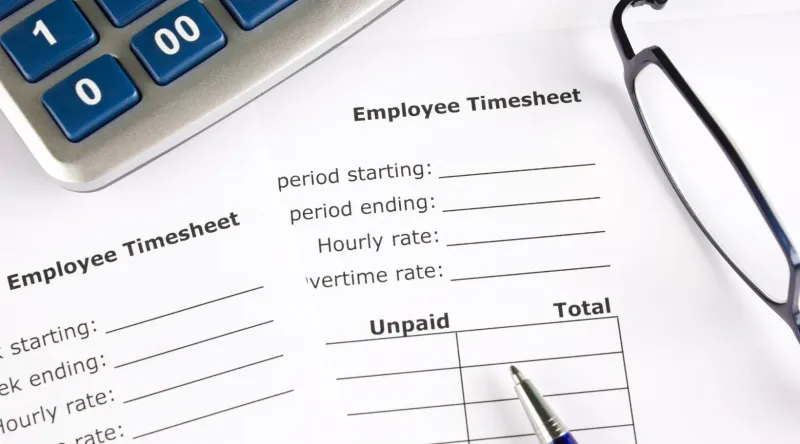
Employers should document performance assessments at the 12-month mark. A missed progression (or one granted without documentation) each carries compliance risk.
When is pay point progression automatic?
Some social and community services employees progress through pay points automatically, without a formal employer review. The Fair Work Ombudsman’s automatic progression guidance specifies which classifications apply. Confirm which roles in your organisation qualify before assuming all staff require a manual assessment each year.
What Is the Pay Difference Between Casual, Part-time, and Full-time SCHADS Employees?
The base hourly rates in the table above apply to both full-time and part-time employees. Employment type determines loading, leave entitlements, and minimum engagement requirements.
| Employment type | Hourly rate | Casual loading | Paid leave | Minimum engagement per shift |
|---|---|---|---|---|
| Full-time | Base rate | No | Yes | 8 hrs (10 by agreement) |
| Part-time | Base rate | No | Yes (pro-rata) | 3 hrs (SACS); 2 hrs (disability services or home care) |
| Casual | Base rate + 25% | Yes | No | 3 hrs (SACS); 2 hrs (disability services or home care) |
Part-time employees receive the same base rates as full-time workers for hours worked. Annual leave and personal leave accrue on a pro-rata basis. Engagement minimums apply to all three types, but confirm the specific hours from the Award before rostering.
How do penalty rates interact with employment type?
Penalty rates apply across all three employment types. For casual workers, the penalty rate applies to the casual rate, not the base rate alone. Applying the penalty to the base rate only results in systematic underpayment on every penalty shift.
Casual loading is a margin line too, not just a compliance one. At a 25% loading, every casual hour that could have been a permanent shift costs roughly $8.65. You can size that against your own roster in the margin leakage calculator.
For worked examples of penalty rate stacking by employment type, see the SCHADS Award compliance webinar Q&A.
How Do You Determine an Employee’s Correct SCHADS Classification Level?
Classification follows actual duties performed, not job title. The SCHADS Award sets classification descriptors for each level, and employers must match the worker’s day-to-day tasks against those descriptors to assign the correct level. A contract describing a lower-level role does not protect an employer from underpayment liability if the worker performs higher-level duties.
What factors determine the correct SCHADS level?
- Complexity of tasks and degree of independent judgement the role requires
- Level of supervision the worker operates under: close, general, or limited
- Whether formal qualifications are required to perform the role
- Whether the position involves leading or supervising other workers
- Client complexity: behaviour support, specialist health needs, and complex communication requirements typically correspond to higher classification levels
What does misclassification actually cost?
Backpay liability runs from the date the underpayment started. A support worker classified at Level 2 who performs Level 3 duties for two years generates two years of underpayment exposure. Fair Work Ombudsman enforcement in the disability sector consistently identifies classification accuracy as the primary issue, ahead of allowances or penalty rate errors.
Classification errors are only one of the places SCHADS quietly costs money. Overtime, casual loading and unbilled shift overrun are three more. The margin leakage calculator puts a yearly figure on each, using the same SCHADS 2026 benchmarks as this guide.
For providers managing classification across a large roster, see balancing flexibility and compliance in rostering.
Frequently Asked Questions
How many classification levels does the SCHADS Award have?
Social and community services employees, which includes most NDIS disability support workers, fall under 8 classification levels. Home care employees have a separate 4-level structure within the same award. Each level contains pay points that give workers a progression pathway without changing their classification. Confirm which stream applies to each role in your organisation by checking the SCHADS Award (MA000100) at Fair Work.
What triggers progression to the next SCHADS pay point?
Twelve months of continuous employment, plus demonstrated competent and satisfactory performance. Employers assess both criteria at the 12-month mark. Depending on workplace requirements, workers may also need to show they have gained and applied new skills within their current classification. Apart from reaching 12 months, performance must also meet the set standards.
Do part-time SCHADS workers progress through pay points at the same rate as full-time workers?
Yes. Pay point progression for part-time employees follows the same 12-month continuous employment rule. A part-time worker on a regular, predictable schedule accumulates the qualifying period at the same rate as a full-time worker. The performance criteria apply equally to both.
Can a support worker move to a higher SCHADS pay level through pay point progression?
No. Pay point progression moves a worker through points within their current classification level. Reaching the highest pay point in a level does not trigger reclassification. Moving to a higher level requires a formal reclassification based on a genuine change in duties, not on length of service alone.
Stop Getting SCHADS Pay Wrong at the Roster Stage
Payroll errors in SCHADS compliance typically start at rostering. It’s easy to make lapses when documenting employment types, worker classifications, and pay points. Each error compounds across every pay cycle until it surfaces in an audit or an underpayment complaint.
The rates above are only half the picture, because the same rate produces a very different margin depending on how the shift is built. We have worked through what these rates cost once they are on a roster.
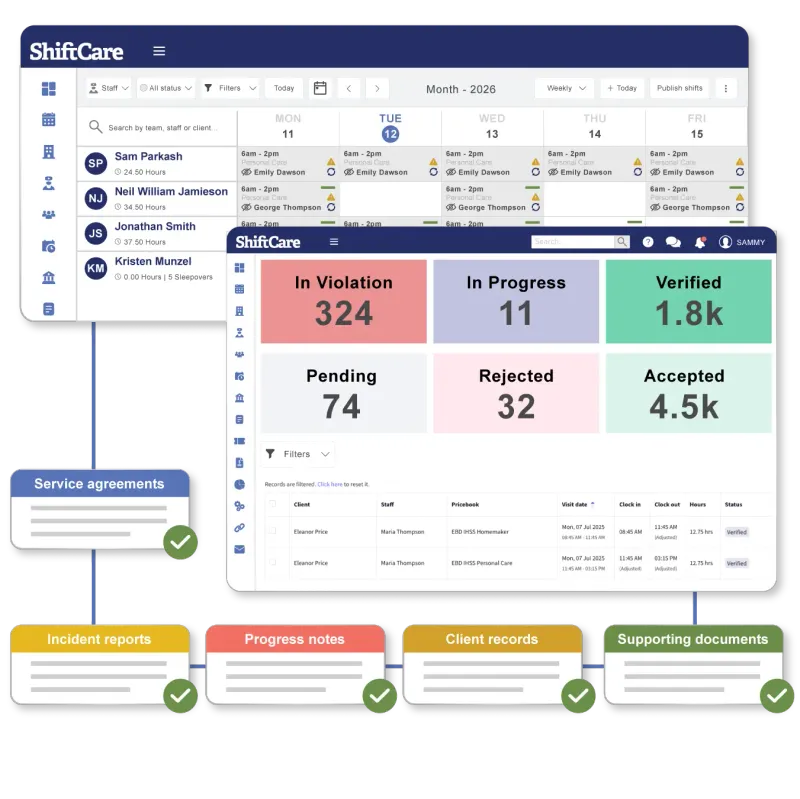
ShiftCare’s SCHADS Award Interpretation validates shifts against current award rates in real time, flagging classification mismatches and missing allowances before payroll runs. Start your free trial today.
For how ShiftCare reads SCHADS rules as each shift is placed, not when it’s paid, see Workforce Intelligence.
Book a 15 minute walkthrough and we’ll run it against your own rosters.
Not ready to talk to anyone yet? Run your numbers through the margin leakage calculator first. Three minutes, no email needed.