If you’re running a Supported Independent Living service, the clock is ticking. From 1 July 2026, every SIL provider in Australia must be registered with the NDIS Quality and Safeguards Commission. This isn’t optional, and the transition will be tight. Most of the foundations you already have in place can be reused, but you need to start preparing now.
What is SIL and Why the New Rule
Supported Independent Living means providing in-home supports that help people with disability live as independently as possible. This covers everything from personal care to daily tasks like cooking and cleaning, delivered in private homes or shared accommodation. The mandate exists because SIL sits at the frontline of care. Participants are often vulnerable, and historically, quality and safety gaps have been harder to spot in decentralised home settings. Registration brings accountability and puts safeguards in place.
Step 1: Audit Your Current Service Model Against Registration Standards

Start by comparing your existing operations to what the NDIS Commission expects. You’ll need robust policies on quality, safety, and incident management. Check that your service agreements with participants are clear and documented. Review how you currently handle complaints and concerns. Most providers find they’re already doing much of this work, but it may be scattered across different systems or team members. Create a master document that maps your current practices against the registration requirements. If you use dedicated NDIS provider software, pull your incident reports, worker screening registers, and policy documentation to see what gaps exist.
Step 2: Verify and Update Your Worker Screening Processes
Every worker delivering SIL supports must hold a valid NDIS Worker Screening Check. These expire after five years, and we’re now in the first major renewal cycle. Conduct a full audit of your workforce screening register to identify expiry dates. Workers cannot continue in role after their check lapses, so set up automatic renewal reminders for 90 days before expiry. Document your screening procedures and ensure your hiring process includes this check as a non-negotiable step.
Step 3: Document Your Incident Management and Reporting Framework
The NDIS Commission expects providers to have a clear incident management system that captures, investigates, and reports all incidents according to strict timelines. Within 24 hours of becoming aware of a serious incident, you must notify the Commission. Within five business days, you must provide full documentation. Create a simple incident recording template that your team can use consistently. If you’re not using automated incident reporting tools, now is the time to implement it.
Step 4: Establish Clear Communication Protocols with Participants and Families

Transparency builds trust and demonstrates your commitment to safety. Ensure participants and their families know how to report concerns, incidents, or complaints. Document how you acknowledge and respond to concerns, with realistic timelines. Many providers publish their complaint resolution process in participant welcome packs.
Step 5: Prepare Your Compliance Documentation for Submission
When you register, you’ll need to demonstrate that your service meets the Practice Standards for SIL. Compile the key documents: your service description, policies on duty of care and incident management, evidence of worker training including the NDIS Worker Orientation Module, your quality improvement processes, and details of any complaints or concerns you’ve managed. You don’t need to create new documents from scratch. Organise what you already have and fill gaps.
Step 6: Train Your Team on Mandatory Obligations
Every team member who works with participants should complete the NDIS Worker Orientation Module, a free 90-minute online course run by the Commission. Schedule group sessions or link staff to the module individually. Document completion. Ensure frontline workers understand your incident reporting procedures and when to escalate concerns.
Register Before the July 2026 Deadline
The NDIS Commission will release more detailed transition guidance as 2026 progresses. Don’t wait until July to act. Start by auditing your current service model against registration standards. Verify that all workers hold valid NDIS Worker Screening Checks and set up renewal reminders for 90 days before expiry. Document your incident management system and ensure your team knows how to report serious incidents within 24 hours. Compile your compliance documentation now so you’re ready to submit when registration opens.
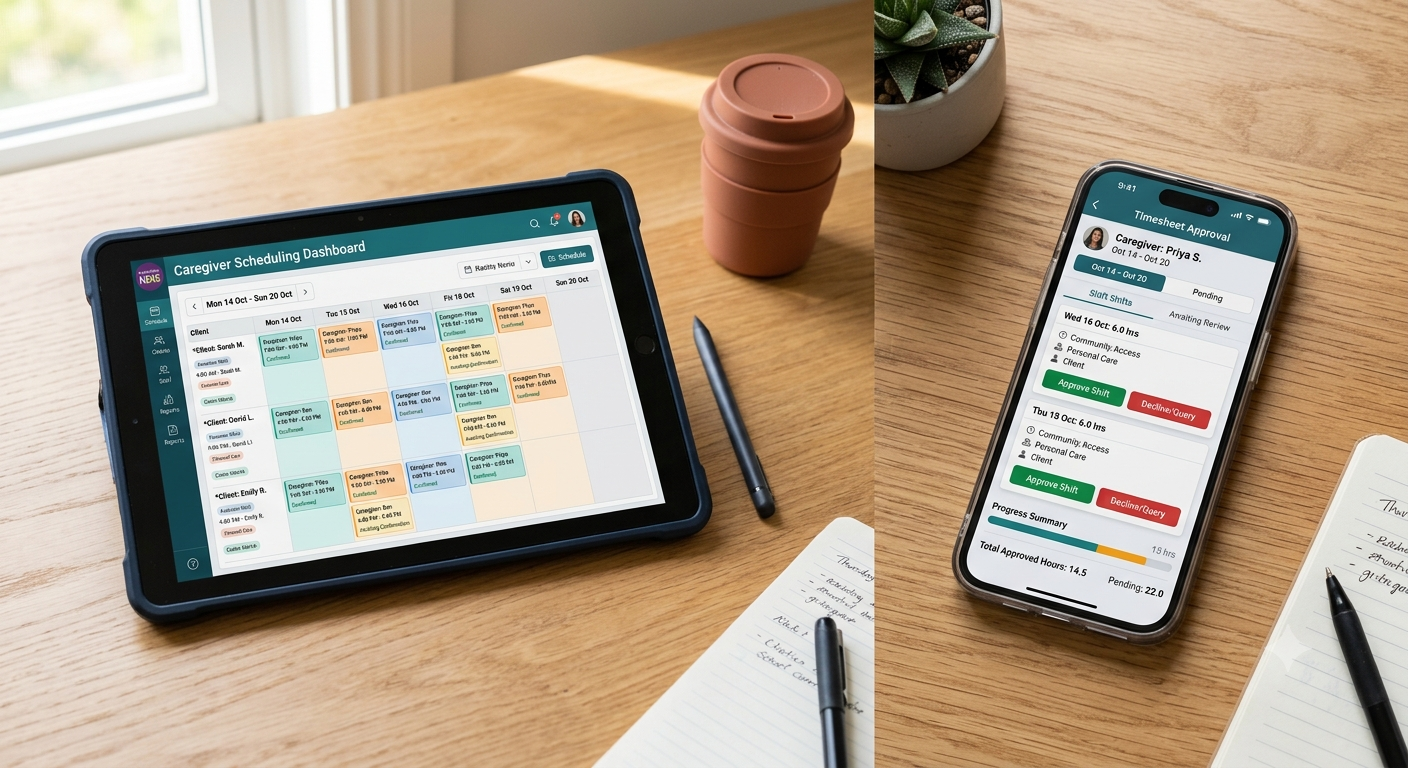
Most providers find they’re already doing much of this work, but it may be scattered across different systems or team members. The providers who register smoothly are the ones who organise what they already have and fill gaps systematically. ShiftCare’s NDIS provider software helps SIL providers track worker screening expiry dates, manage incident reporting, and maintain compliance documentation in one platform.
Start your free trial today and see how ShiftCare helps SIL providers prepare for NDIS registration.