The California Self Determination Program (SDP) rolled out statewide in July 2021, fundamentally changing how regional center consumers access and direct their services. Instead of a service coordinator arranging services through approved vendors at regional center rates, SDP participants receive an individual budget to purchase services themselves. They can hire vendors directly, negotiate rates, and design their own service packages.
For regional center vendors, the California Self Determination Program represents both opportunity and disruption. Vendors who understand the SDP structure and adapt their contracts, billing, and service delivery models gain access to budget-conscious consumers who might choose them over traditional arrangements. Those who don’t adapt find themselves competing on rate rather than value, or excluded entirely.
The 2026-27 California State Budget proposes adjustments to SDP funding and structure. Understanding the program now and preparing your vendor practices will position your agency for success regardless of how the program evolves.
How the California SDP Changes the Vendor-Consumer Relationship

Under the traditional regional center service delivery model, a service coordinator approved your agency as a vendor and referred eligible clients to you. The regional center paid you directly at established rates. The client had little choice in vendor selection or rate negotiation.
The California Self Determination Program inverts this model. The client is the purchaser. They receive an individual budget (often $15,000 to $50,000 annually, depending on support intensity) and the authority to spend it how they choose. They can hire multiple vendors, negotiate rates directly, and change vendors at will.
For vendors, this means your access to clients depends on your reputation, your willingness to negotiate, and your ability to deliver outcomes the client values. It’s relationship-driven rather than approval-driven.
Understanding SDP Budgets and Service Packages
SDP budgets are individualised and often nontraditional. A client might allocate $10,000 for direct care, $5,000 for community access support, $3,000 for day services, and $2,000 for emergency backup services. These categories don’t map neatly to regional center service codes.
This requires flexibility from vendors. If you typically bill hourly for personal care, an SDP client might ask you to bill monthly for a set number of hours. Budgets are also limited; SDP clients can’t spend more than their individual budget, and many budgets are tighter than traditional service packages. This means your rates must be competitive, your services must be efficient, and you need to clearly articulate the value you provide. Scheduling and coordination software that supports multiple vendor visibility can help prevent service gaps when clients work with multiple agencies simultaneously.
Contracting Directly with SDP Consumers
In the traditional model, the regional center provides the contract language and establishes payment terms. The California Self Determination Program requires direct contracting with the consumer or their support network.
You need a contract template that protects your agency while remaining clear and accessible to consumers and families who may not have legal expertise. The contract should specify: the services you’ll provide, the rates, the schedule, how billing and payment will work, how the client can change or terminate the contract, and what happens if there’s a dispute.
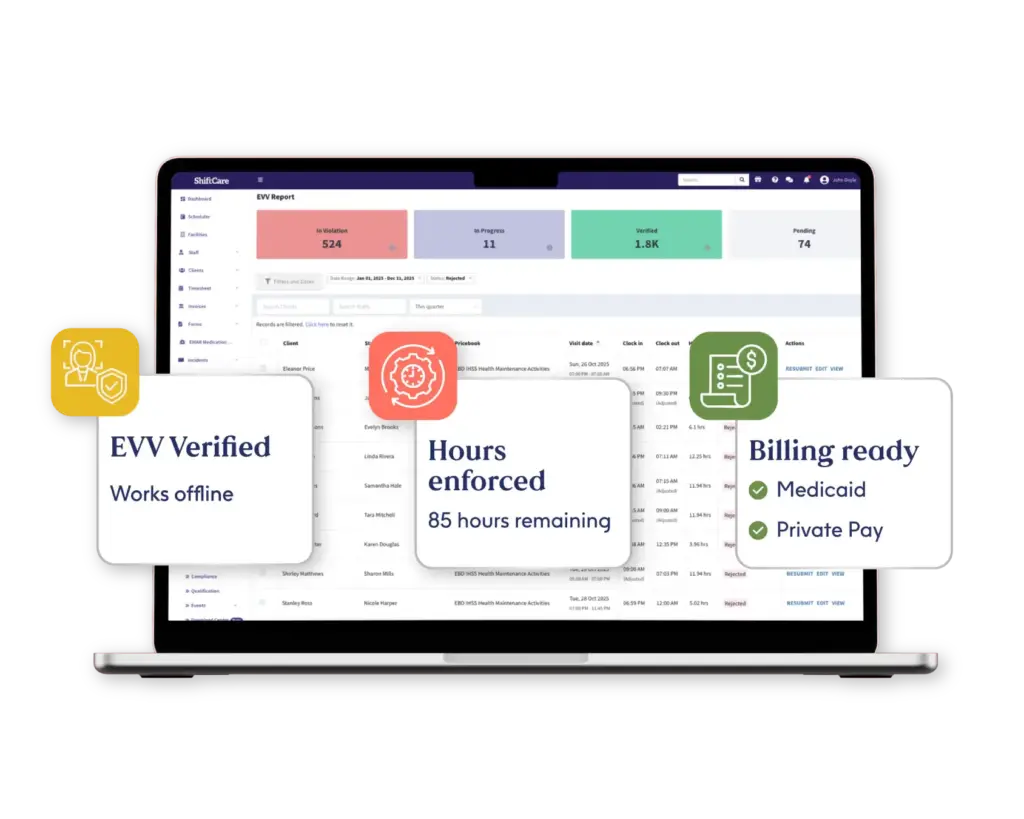
Payment is also different. In SDP, the consumer pays you directly using their individual budget allocation. You’re responsible for invoicing the client, tracking payment, and reporting to the regional center for statistical purposes. Billing software that handles direct consumer invoicing streamlines this process and reduces manual tracking errors. Some consumers hire fiscal intermediaries (organisations that manage budgets, process payments, and handle compliance on behalf of consumers). If your client uses a fiscal intermediary, you’ll invoice the intermediary rather than the consumer directly.
Service Documentation and Reporting for SDP Participants
SDP doesn’t eliminate documentation and reporting requirements. The regional center still needs to track which services were provided, by whom, and at what cost. Instead of submitting claims to the regional center for payment authorisation, you document services and the consumer (or fiscal intermediary) submits proof of payment to the regional center.
Some SDP consumers use funding management systems (software platforms where invoices, payments, and service records live). Your agency needs to be able to submit invoices and service documentation through these systems if the client uses one.
Progress notes and outcome documentation work similarly. You document the services you provided and the consumer’s progress toward their goals. The consumer keeps these records and may submit them to the regional center as evidence that their SDP budget was well-spent and producing results.
Pricing and Negotiation Strategies for SDP Service Delivery
SDP fundamentally changes how you price services. In the traditional model, regional center rates are fixed. You either accept them or decline to serve. In the California Self Determination Program, rates are negotiable.
Value-based pricing means understanding what outcomes the consumer cares about and pricing accordingly. Research what other vendors charge for similar services in your area. Test different rate structures (hourly, daily, monthly, outcome-based) to see which resonates with SDP consumers.
Consider offering service packages or bundle rates. Instead of hourly personal care, you might offer “daily support” at a fixed rate, or “weekly community access” that includes transportation, activity planning, and documentation. This appeals to consumers managing fixed budgets.
Building Your Regional Center SDP Presence

Start by registering with the regional center if you haven’t already. Make sure your agency information is current and accurate in the regional center’s vendor directory.
Develop relationships with SDP facilitators and consultants. Many regional centers employ SDP facilitators who help consumers plan their budgets and select vendors. These facilitators influence which vendors clients consider. Attend regional center SDP information sessions and consumer forums; your presence and expertise will be memorable.
If you’re new to SDP, consider piloting with one or two consumers before scaling up. Use early SDP clients to test your contracts, billing processes, and documentation systems before taking on larger volume.
Adapt to the California SDP Model or Get Left Behind
SDP is now five years old and growing. Consumer adoption continues to increase. Vendors who understand the California Self Determination Program model, build relationships with SDP consumers, and adapt their practices to support consumer choice will thrive in this environment. Those who wait and hope to return to the traditional model will find themselves marginalized.
Start by registering with the regional center if you haven’t already. Develop relationships with SDP facilitators and consultants who influence which vendors clients consider. If you’re new to SDP, consider piloting with one or two consumers before scaling up. ShiftCare’s billing and scheduling software supports direct consumer invoicing, multiple funding streams, and flexible service documentation for California regional center vendors.
Start your free trial today and see how ShiftCare helps you adapt to the California Self Determination Program model.