CMS mandated EVV for Medicaid HCBS services effective January 1, 2023. Caregiver arrives at service user’s home, checks in via mobile app or phone system. System records time, caregiver ID, location, service user. Caregiver provides care. Upon departure, checks out. System generates visit documentation. Billing departments no longer rely on caregiver timesheets or verbal reports. Medicaid has timestamped proof.
Why CMS Mandated Electronic Visit Verification
Fraud exists. Some caregivers clock in but don’t show up. Some agencies bill hours caregivers never worked. Medicaid absorbs the losses. CMS responded with a mandate that eliminates the old model entirely. Every visit is timestamped and location-verified at the moment it happens. Auditing becomes instantaneous rather than months-late paperwork reviews.
What EVV Systems Must Capture
Real-time check-in and check-out. Caregiver identity verification (biometric, PIN, or app authentication). Service user verification. Location tracking (GPS or manual address entry). HIPAA-compliant encryption for all data. Offline functionality (service continues if internet fails). Audit trail showing every check-in, check-out, edit, and correction.
How EVV Compliance Requirements Vary by State
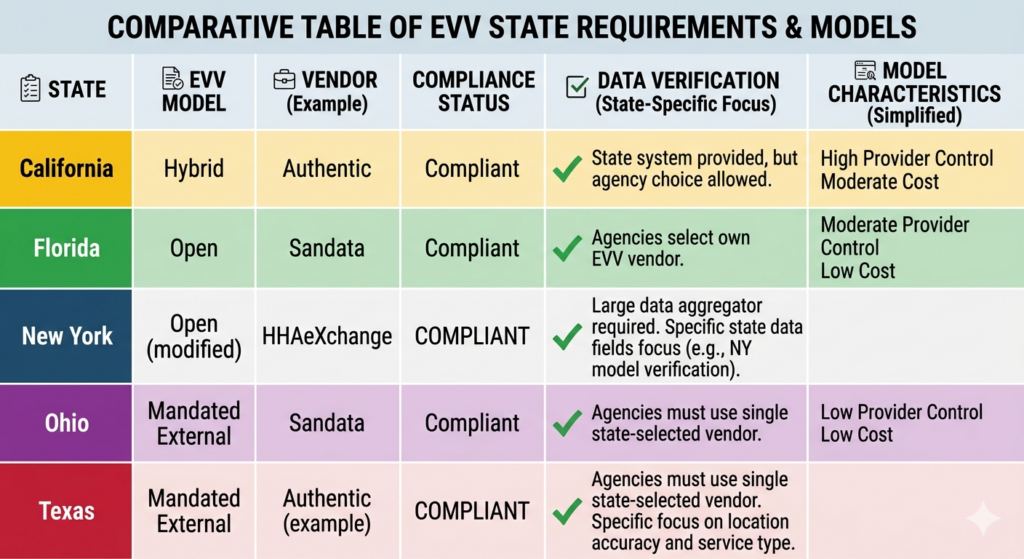
Federal mandate took effect January 1, 2023 nationwide. States had until January 2024 to enforce. After that, compliance requirements diverge. California specifies different requirements than federal baseline. Some states mandate specific EVV vendors; others allow flexibility. Documentation standards differ. Exceptions differ (telehealth, case management, support coordination may be exempt in some states but required in others). Penalties for non-compliance vary (billing denials versus contract termination versus both).
Texas has separate standards for long-term care providers. An agency operating across multiple states tracks different EVV rules per state or faces non-compliance risk.
How EVV Affects Day-to-Day Agency Operations
Staff adoption happens slowly. Caregivers resist new systems. Technology access becomes a problem (not all caregivers have smartphones). Integration with existing billing and payroll systems requires IT coordination or expensive replacements. Emergency visits and system failures force agencies to build exception handling before it’s needed.
Check-in timing matters. A caregiver checking in 30 minutes late creates a billing mismatch that state auditors flag. A forgotten check-out stops the clock prematurely. Wrong address verification bounces the visit. Inaccuracies surface immediately, not months later during audit season.
How EVV Reduces Medicaid Billing Denials
EVV eliminates the conflict between what caregivers claimed they worked and what actually happened. Medicaid sees real-time data. Billing accuracy improves. Denials drop when EVV data matches claim submissions.
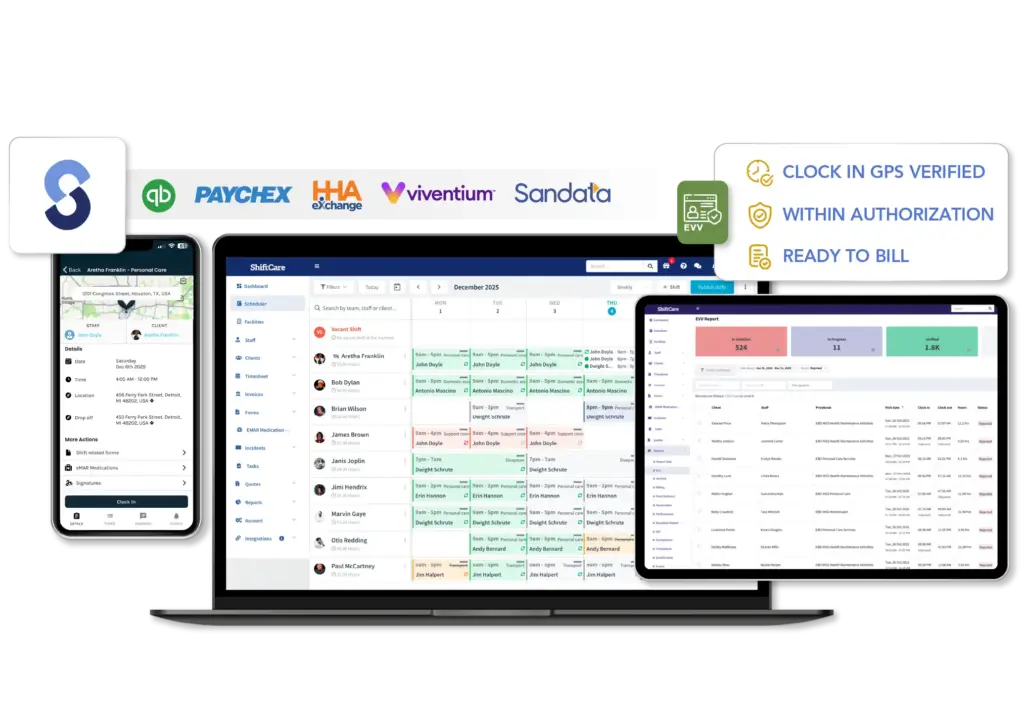
Care management workflows integrate EVV documentation directly into participant support plans. ShiftCare’s EVV integration automates check-in and check-out, eliminates manual timekeeping. E-billing automation matches documented visits to claim submissions, reducing denials and audit risk.
Stop Managing EVV Compliance Manually
EVV isn’t optional. State compliance deadlines have passed and CMS expects real-time visit verification. Agencies still using paper timesheets face billing denials and audit exposure. ShiftCare automates check-in and check-out so caregivers never forget, eliminating the manual workflow that creates compliance gaps. Care management workflows connect EVV data directly to participant support plans, so documentation flows seamlessly into billing. E-billing automation matches documented visits to claim submissions, converting visit data into revenue instead of reconciliation headaches.
Start your free trial today. Stop managing EVV compliance manually. Watch how ShiftCare converts timekeeping from a compliance burden into automated, auditable billing.