Home and community-based services (HCBS) providers lose thousands of dollars monthly to rejected Medicaid claims. A claim arrives back marked “invalid service code” or “missing EVV documentation” and your billing staff has to start over. Three weeks later, the claim resubmits. By then, you’re weeks behind on cash flow. The client’s family questions why they haven’t been paid yet. Your staff feels frustrated and overworked.
Medicaid billing software built for HCBS providers can break this cycle entirely. This pattern repeats across most HCBS programs because manual billing leaves too much room for error. Medicaid billing software that connects directly to state clearinghouses and validates claims before submission changes everything. Your claims arrive clean, get paid faster, and your staff stops chasing ghosts.
Step 1: Understand Why Claims Reject

Claims reject for predictable reasons. Missing or mismatched EVV data is the most common problem. A caregiver clocks in and out using a phone app, but the app timestamps don’t sync with your billing records. Or the caregiver completed the visit but forgot to log the end time. The claim hits the state system, the EVV doesn’t align with the service code, and it bounces back.
Service code errors are equally common. Your staff bills under “Homemaker Services” when the authorization specifies “Personal Care.” Or they bill for eight hours when the authorization allows only six. Or the authorization expired three days ago and they didn’t notice. Each error stalls payment and requires resubmission.
Eligibility mismatches also cause rejections. A client’s Medicaid coverage changed mid-month. The first half of services were covered under one program; the second half under another or not covered at all. Your billing staff billed everything under the old program. The state system rejects the second half. Now you’re chasing eligibility records instead of moving forward.
Late submission is another silent problem. HCBS programs typically require claims within 30, 60, or 90 days of service delivery, depending on the state. Paper-based workflows miss that window all the time. A supervisor forgets to submit timesheets. A billing staff member is out sick. Suddenly the claim is ineligible for payment, period.
Step 2: See How e-Billing Software Prevents These Problems
Medicaid billing software eliminates most rejection causes before the claim ever leaves your system. Here’s how.
Real-time electronic visit verification (EVV) validation starts when a caregiver clocks in. The software checks the client’s authorization, confirms the service code matches, and verifies that the caregiver is certified for that service. If anything doesn’t align, the caregiver sees an error message immediately. They can correct it on the spot instead of submitting hours that will later be rejected. By the time the claim goes to the state, the EVV data is guaranteed to match the service code and authorization.
Eligibility checks run automatically as well. When your staff enters a client or selects a service date, the software checks the state’s Medicaid system for current eligibility and active authorizations. If a client’s coverage changes or an authorization is about to expire, your team sees a warning. You can adjust the claim or contact the family before submitting.
Service code validation works the same way. The software knows what codes are authorized for each client and flags any mismatches. If someone tries to bill “Homemaker Services” but the authorization only allows “Personal Care,” the system won’t let the claim proceed. This prevents rejections and also ensures you’re billing for what you’re actually authorized to deliver.
Submission timing becomes automatic. The software tracks submission deadlines by program and state. It flags claims that are approaching the window deadline and either submits them automatically or alerts your team to do so. No more missed deadlines.
Step 3: Connect Your Software to State Clearinghouses
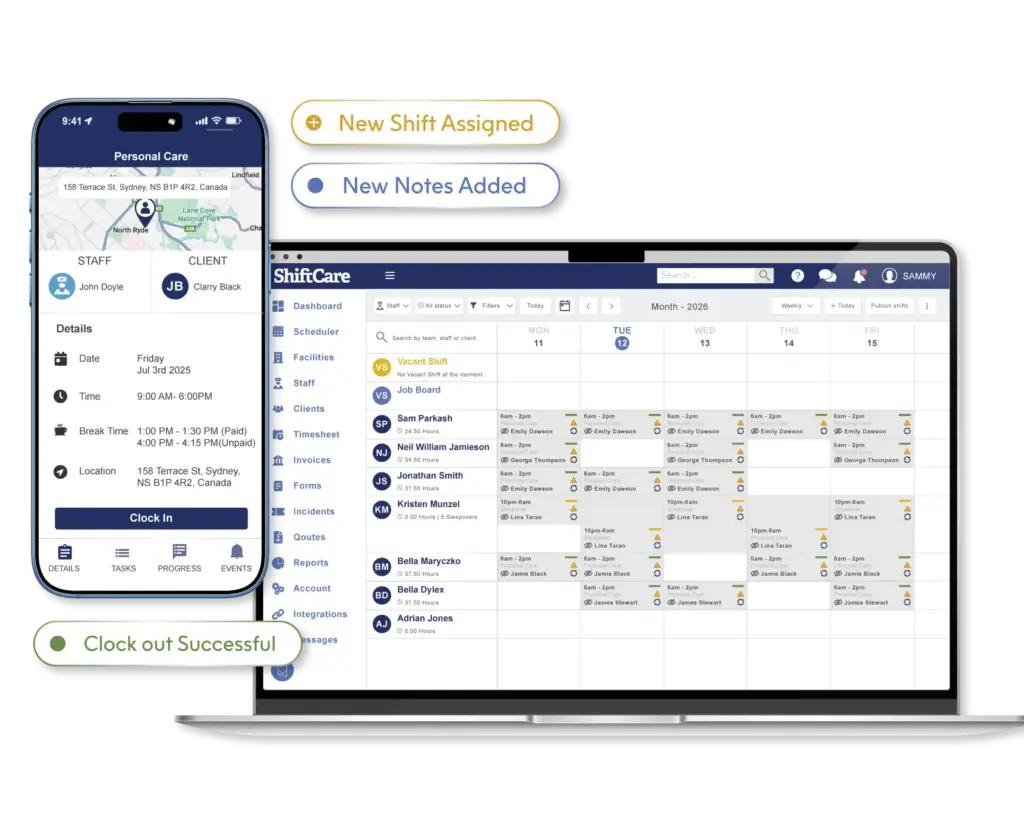
The next leap is direct integration with state Medicaid clearinghouses. Instead of your staff manually submitting claims through a state portal or email, the software sends claims directly to the clearinghouse system. This eliminates manual data entry errors, speeds up the submission process, and gives you real-time confirmation of receipt.
Many states also offer claims status tracking through their clearinghouses. Once your claims are submitted electronically, you can see their exact status in real time. You know which ones have been paid, which are pending review, and which were rejected. You don’t have to wait for an email or call your state contact. The information is available instantly.
Direct integration also simplifies reconciliation. Your software tracks what was submitted, what was paid, and when. You can match payments to claims without manually comparing bank deposits to your billing records.
Step 4: Train Your Team and Monitor Early Results
Moving to electronic billing requires training. Your staff needs to understand how to use the software, what those real-time validation alerts mean, and when to contact support. A good implementation partner walks you through this step and doesn’t move you live until your team is confident.
Once you’re live, monitor your rejection rate closely. Most providers see rejection rates drop from 8% to 15% to 2% to 5% in the first month. Claims get paid 10 to 15 days faster on average. Your billing staff shifts from chasing rejections to proactive follow-up on complex cases.
Step 5: Use the Data to Optimize
After a few months of clean claims, your software gives you visibility into patterns. You can see which service codes bill most often, which clients have the most visits, and which authorizations expire soonest. You can use that data to forecast revenue, manage caregiver schedules, and plan for capacity.
Get Paid Faster with Electronic Billing
The shift to electronic billing takes effort upfront. But providers who make that move consistently report the same outcome: they get paid faster, their team stops drowning in rejection follow-up, and they can actually see their business clearly. Most providers see rejection rates drop from 8 to 15% to 2 to 5% in the first month. Claims get paid 10 to 15 days faster on average. Your billing staff shifts from chasing rejections to proactive follow-up on complex cases.
ShiftCare’s e-billing tools integrate EVV, eligibility verification, and state clearinghouse submission into one workflow. Claims are validated before submission, connected to real-time authorization data, and tracked through payment.
Start your free trial today! See how ShiftCare reduces claim rejections and gets you paid faster.