Electronic Visit Verification (EVV) is a federally mandated system that captures and verifies when Medicaid-funded home care services are delivered. It uses technology, such as mobile apps, GPS tracking, or phone-based check-in systems to record visit details in real time, creating an auditable trail that proves services were delivered as authorized.
EVV exists because, without it, there’s no reliable way to confirm whether a billed service actually happened. The system protects clients, holds payors accountable, and gives providers a defensible record if they’re ever audited. But for many home care providers, compliance feels like a burden layered on top of already stretched operations.
If the situation sounds similar, you’re not alone – and we’re here to break it down for you. Here’s what EVV requires, why Medicaid mandates it, what data you need to capture, and how to roll it out without adding layers of complexity to your business.
What Data Does EVV Capture? The Six Required Data Points
EVV systems must capture six specific data points for every Medicaid-funded visit. Missing or inaccurate data triggers claim rejection, which means you’ve delivered care but won’t get paid for it. Here’s what’s required at the federal level:
| Data Point | What It Captures | What Goes Wrong Without It |
| Type of Service | HCPCS code or service description | Claim rejected if it doesn’t match the authorization or billing code |
| Individual Receiving Service | Client name or Medicaid ID | Visit can’t be linked to the correct client record, delaying payment |
| Individual Providing Service | Caregiver name or employee ID | No verification of who delivered the service, raising audit flags |
| Date of Service | Calendar date when service occurred | Claim denied if the date falls outside the authorization period |
| Location of Service | GPS coordinates or address | No proof the service happened at the approved location |
| Start and End Time | Exact clock-in and clock-out times | Billed hours can’t be verified against authorized hours |
These six data points create an auditable record proving the right service was delivered to the right client, by the right caregiver, at the right time and place. EVV systems capture this data automatically through mobile apps, phone-based systems, or fixed devices. Manual entry is technically possible, but it creates compliance risk: it’s error-prone and harder to defend during audits.
How EVV Systems Work (And Why They’re Not the Same as Time Tracking)
A common misconception is that time tracking and EVV are interchangeable. They’re not.
Time tracking records how many hours your staff work at your agency. Medicaid doesn’t require this data for claim submission. EVV, on the other hand, verifies the exact times a caregiver clocks in and out while delivering home care services to a specific client.
Here’s the difference in practice: time tracking might show a caregiver worked eight hours on Tuesday. EVV shows they delivered personal care to John Smith at his home address between 9:00 AM and 5:00 PM on Tuesday, March 15, 2025. That data is then linked to a specific service authorization and billing code, which is the level of specificity Medicaid requires to pay your claims.
EVV Implementation Models: Open, Closed, and Aggregator
States implement EVV through three models, and the model your state uses directly affects which vendors you can work with and how your data gets submitted.
1 Open Model
Your agency chooses its own EVV vendor. This gives you the flexibility to pick a system that fits your existing workflows and integrates with your scheduling and billing software. Open models work well for providers who want control over their technology stack and prefer a unified platform.
2 Closed/Aggregator Model
The state mandates a specific EVV vendor or aggregator. You must use the state-designated system, which limits flexibility but simplifies statewide reporting. Many states use aggregator models for traditional Medicaid personal care services. Your home care business submits EVV data through the state’s platform, and that platform validates the data before claims are processed.
3 Hybrid Model
Your agency chooses its own EVV vendor, but your data must integrate with a state aggregator. This balances provider choice with state oversight: you use your preferred system for daily operations, but EVV data flows through the state’s aggregator for claim validation. Several states are transitioning to hybrid models as they refine EVV requirements.
Practical takeaway: Check your state Medicaid agency’s website to confirm which model applies to your specific services. Some states use different models for different programs. For example, an open model for HCBS waivers and an aggregator model for traditional personal care.
What Happens If Providers Don’t Comply with EVV?

The financial consequences are real and escalating.
Under Section 12006 of the 21st Century Cures Act, states that don’t enforce EVV face reductions to their Federal Medical Assistance Percentage (FMAP). The penalty starts at 0.25 percentage points of federal funding and increases incrementally, reaching up to 1 percentage point for sustained non-compliance. States pass this enforcement pressure directly down to providers.
For your agency, the impact is straightforward: Medicaid won’t pay claims without verified EVV data. If you submit a claim for personal care services but can’t provide matching EVV records, the claim gets rejected. Rejected claims mean delayed revenue, increased administrative rework, and potential cash flow disruption, especially for smaller providers operating on tight margins.
Repeated compliance failures can trigger more serious consequences. The HHS Office of Inspector General actively monitors EVV compliance across states, and home care providers with persistent data quality issues may face formal audits.
Some states enforce additional compliance thresholds beyond the federal baseline. Pennsylvania, for example, requires that no more than 15% of your EVV records involve manual edits. Exceed that threshold for two consecutive quarters, and your agency receives a formal notice of non-compliance and must submit a Corrective Action Plan (CAP).
How to Implement EVV Without Disrupting Care Delivery
If your home care organization is implementing EVV for the first time (or switching systems) a phased approach reduces risk. For a more detailed walkthrough, see our full guide on how to implement EVV in your home care business.
Step 1: Confirm Your State’s EVV Model
Start by checking whether your state uses an open, aggregator, or hybrid model. For open-model states, choose an EVV vendor that integrates with your scheduling and billing systems. For aggregator states, confirm the state-designated vendor and plan your integration timeline. Prioritize mobile apps with offline capability, automated reminders, and real-time exception reporting.
Step 2: Start with a Pilot Group
Roll out in phases rather than going live with your entire team at once. Select 5–10 caregivers for a pilot group. Test workflows, identify friction points, and adjust training materials based on what actually breaks in the field. Expand to the full team once the pilot group is running smoothly and common issues are resolved.
Step 3: Provide Ongoing Support
EVV adoption doesn’t end after initial training. Set up ongoing support through help desk tickets, messaging channels, or direct phone access, not just a one-time training session. Caregivers need a way to get help when they encounter issues between client visits, particularly in areas with poor connectivity.
Step 4: Build EVV Into Daily Workflows
Don’t treat EVV as an add-on task. Integrate it into existing processes so it becomes part of the routine. For example, clock-in notifications can trigger automatically when a caregiver arrives at a scheduled shift. Coordinators should review EVV exceptions daily: missed clock-ins, GPS mismatches, time discrepancies, before they stack up and complicate the billing cycle.
Step 5: Align EVV Validation with Payroll
Run EVV validation before processing payroll. This catches discrepancies before you pay caregivers for hours that can’t be billed. If EVV shows six hours but the authorization only covers four, you’ll know before cutting the check, not after.
Step 6: Monitor Compliance Metrics
Track EVV completion rate, manual edit percentage, missed visits, and GPS accuracy. Set internal thresholds, aim for less than 1% manual edits, and address patterns early, before your MCO or state agency flags your data. Real-time dashboards help coordinators catch problems during the week instead of discovering them during month-end reconciliation.
Simplify EVV Compliance with ShiftCare
The most common implementation challenges from caregiver adoption, connectivity issues, and excessive manual edits, are solvable with a mobile-first system designed for care delivered in the field.
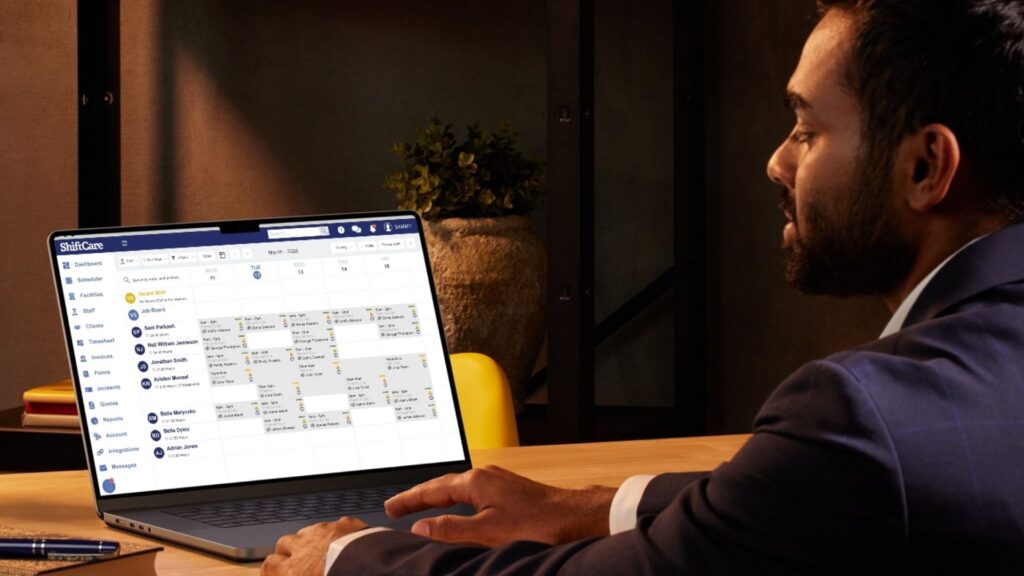
ShiftCare’s EVV solution provides GPS-based visit verification with real-time exception reporting, offline clock-in capability, and integrated care management. Your caregivers clock in and out from their phone. Your coordinators see verified data on a single dashboard. And your billing team gets clean, submission-ready records, reducing manual edits and preventing the claim rejections that cost your agency time and revenue.
Start your free trial today (no credit card required). See how ShiftCare simplifies EVV compliance for Medicaid home care and HCBS providers across the US.