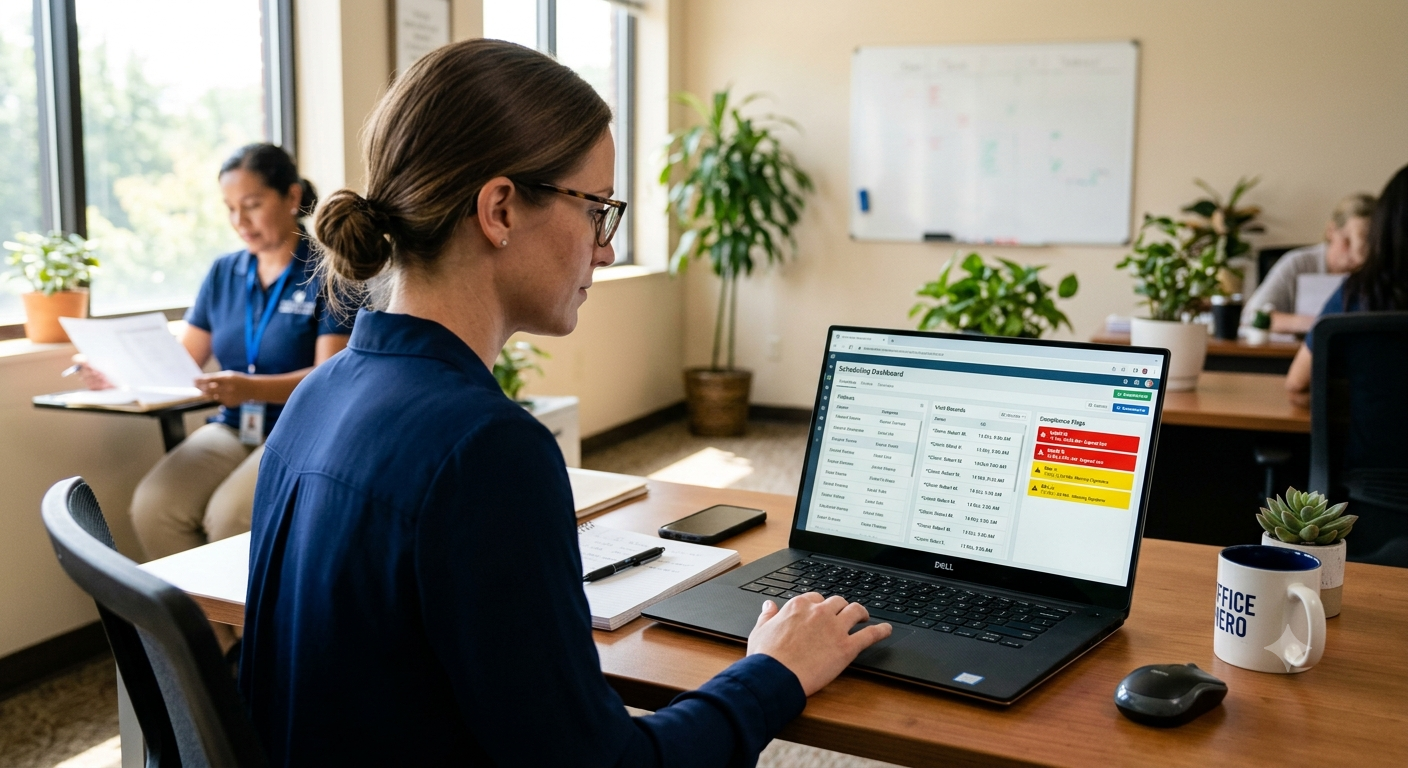
The shortage is critical. Nearly 500,000 Direct Support Professional (DSP) positions remain unfilled across the United States, according to the U.S. Department of Labor. Agencies struggle to recruit qualified workers while managing annual turnover rates exceeding 45%. Job seekers considering this career need clarity on what DSPs actually do, where they work, and whether the role matches their skills and lifestyle.
This guide covers the DSP role from both angles. Job seekers learn what the career entails and how to get started. Agencies understand how to attract and retain qualified staff in a competitive market.
What Does a Direct Support Professional Do?

A Direct Support Professional provides individualized support and personal care to people with intellectual and developmental disabilities (IDD). The work is straightforward in concept but demanding in practice. DSPs are the primary support person in clients’ daily lives, handling everything from personal hygiene to community integration to crisis management.
Core Responsibilities
DSPs assist with personal care: bathing, dressing, grooming, toileting. They prepare meals, manage nutrition, remind clients about medication. When clients need to access the community, DSPs arrange transportation and provide support during errands, appointments, and recreational activities. Beyond direct care, DSPs document everything. Progress notes must capture what clients did, how they responded, and any concerns that emerged during the shift. Incident reports document accidents, behavioral episodes, or safety concerns. This documentation is both legal protection and clinical data that shapes the client’s care plan.
Advocacy matters too. DSPs represent client preferences and rights. When a client can’t speak for themselves, the DSP’s observations inform decisions about care, activities, and support needs.
Where DSPs Work
The setting shapes the role significantly. Group homes are the most common setting. DSPs support 4-8 clients in a residential home, providing 24-hour coverage across shifts. Day programs employ DSPs to provide skills training, employment support, and community integration during business hours. Some DSPs work in-home, providing 1-on-1 support in the client’s own residence.
Larger residential facilities employ DSPs to manage care for 10+ clients with more structured routines. Vocational rehabilitation programs employ DSPs to support employment and job training. The Arc, a national organization supporting people with IDD, operates many of these programs across the country.
| Setting | Client Ratio | Primary Focus | Schedule Type |
| Group home | 4-8 | Daily living, community access | Shift-based (includes nights/weekends) |
| Day program | 8-15 | Skills development, employment | Day shifts, M-F focused |
| In-home support | 1 | Personalized care, specific goals | Flexible, client-driven |
| Residential facility | 10+ | Care coordination, activities | Rotating shifts, 24-hour coverage |
Who Employs Direct Support Professionals
State and local government agencies are the largest employers, managing Medicaid-funded disability services. Private nonprofit organizations including Easterseals and The Arc hire DSPs across multiple programs. For-profit home care agencies increasingly employ DSPs to meet growing demand. Community mental health centers employ DSPs for clients with co-occurring disabilities and mental health needs.
The employment landscape matters because it affects pay, benefits, stability, and advancement. Government positions typically offer better benefits and job security. Nonprofits emphasize mission alignment but may offer lower wages. For-profit agencies compete on scheduling flexibility and sometimes wage. Self-directed programs, where participants or families hire and manage their own DSPs directly, offer maximum scheduling control but require clients to handle employment administration.
Direct Support Professional Job Requirements
High school diploma or GED is the baseline education requirement across virtually all positions. Beyond that, requirements vary dramatically by state. Some states mandate formal DSP certification involving 40-100+ hours of training, competency exams, and continuing education. Others have voluntary credentials or minimal requirements. Every position requires background check clearance, usually fingerprinting through the FBI and state police.
CPR and First Aid certification is nearly universal. American Red Cross or American Heart Association certification is required by most employers and valid for 2-3 years. Abuse and neglect reporting training is mandatory. DSPs must understand how to recognize and report suspected abuse. HIPAA compliance training is standard because DSPs handle confidential client information.
State-Specific Certification Requirements
Certification pathways differ significantly. Contact your state’s Department of Intellectual/Developmental Disabilities to learn your specific requirements. Some states require completion of an approved training program through a community college or nonprofit organization. Costs are typically low or free, often covered by the employer. Other states allow on-the-job training with less formal structure. A few states have no state-level DSP credential at all, leaving requirements to individual employers.
Skills Employers Actually Prioritize
Reliability matters more than credentials. Can you show up on time consistently? Can you handle schedule changes without complaint? Employers hire based on demonstrated dependability because one absent DSP creates crisis coverage situations that exhaust the entire team. Genuine care for people with disabilities shows through in how you interact with clients. Flexibility is non-negotiable. Shifts change, emergencies arise, coverage gaps emerge. Problem-solving under pressure separates effective DSPs from those who freeze when crises happen. Documentation skills matter because poor notes create liability and clinical gaps. Communication with clients, families, and supervisors determines whether the team coordinates or fragments.
How to Become a Direct Support Professional
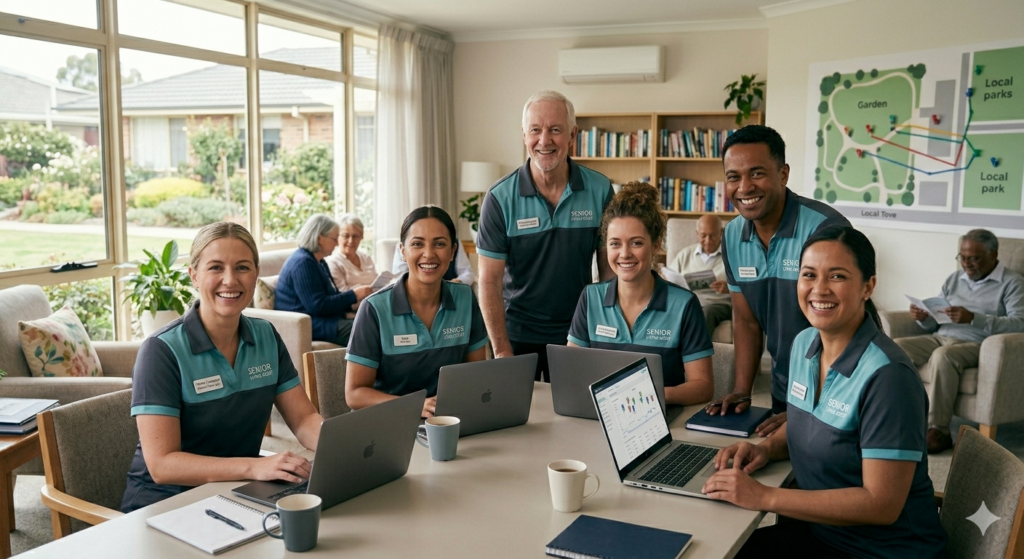
The path is straightforward and the timeline is fast. Start with your state’s requirements by contacting your state’s vocational rehabilitation office. Request information on approved DSP training providers. Most states have multiple options: community colleges, nonprofits, or employer-based programs.
Complete the required training. Most programs run 40-100 hours, either in-person or hybrid. Attend CPR/First Aid training through American Red Cross or American Heart Association. Pass your state’s competency exam if required. Submit background check materials. Start applying to employers while you’re completing training. Many hire contingent on certification completion.
Where DSP Jobs Are Listed
Indeed posts DSP positions by location and employer. LinkedIn allows filtering by job title and location. Glassdoor shows salary ranges and employer reviews. Helpful for understanding workplace culture before applying. Direct contact with local group homes and day programs often surfaces positions before they’re listed publicly. Check The Arc’s job board for positions within their network. State government job boards list positions with state and county agencies.
Direct Support Professional Salary and Job Outlook
The national average salary for DSPs ranges from $28,000-$32,000 annually in 2024, according to Bureau of Labor Statistics data. Entry-level positions start around $24,000 while experienced DSPs with supervisory responsibilities earn $38,000+. Regional variation is significant. West Coast and Northeast positions pay substantially more than Southern positions, though cost of living varies accordingly.
Benefits differ by employer. Government positions typically include health insurance, dental, vision, 401(k), and paid time off. Nonprofits vary widely. Some offer full benefits, others minimal coverage. For-profit agencies increasingly compete on benefits to retain staff in tight labor markets. Part-time positions rarely include benefits, making full-time work essential for stability.
The job outlook is exceptionally strong. The Bureau of Labor Statistics projects 14% growth in healthcare support occupations through 2032. That’s much faster than the average occupation. Demand outpaces supply significantly. Turnover rates of 40-50% annually mean constant hiring pressure. This shortage creates job security and bargaining power for qualified DSPs.
Skills and Traits That Matter Most
Reliability transcends credentials. Showing up on time, every shift, matters more than perfect training records. Genuine care for people with disabilities shows through in how you handle difficult moments. When a client is in crisis, DSPs who care stay calm and focused on the client’s needs rather than their own stress. Patience during repetitive tasks or behavioral challenges distinguishes excellent DSPs from adequate ones.
Flexibility extends beyond scheduling. Clients’ needs change. Plans get disrupted. Effective DSPs adapt without complaint. Documentation skills ensure that your observations actually benefit the client. Poor notes that lack detail or timeliness undermine clinical care and create audit liability. Communication keeps teams coordinated and clients safe. Ask clarifying questions, report concerns promptly, and document accurately.
Advancement Pathways
DSP isn’t a dead-end role. Experienced DSPs advance to team lead or supervisor positions, managing other DSPs and client assignments. Program coordination roles leverage DSP experience by coordinating services, managing schedules, and handling documentation systems. Some DSPs pursue continued education in case management, service coordination, or related fields. Nonprofit organizations increasingly value DSP experience when promoting staff into administrative roles because DSPs understand operations from the ground up.
How Agencies Can Attract and Retain DSPs
The DSP shortage isn’t inevitable. It’s a symptom of poor workforce management. Agencies that struggle to fill positions and retain staff often share the same problems: unpredictable schedules, low wages, inadequate support, and high pressure.
What attracts DSPs? Predictable schedules matter immensely. DSPs juggling childcare, transportation, or second jobs can’t accept positions requiring last-minute shift changes. Competitive wages starting at $30,000+ signal that the organization values the work. Health insurance and benefits make the role sustainable as a career, not just a stopgap. A supportive team environment where supervisors recognize good work reduces burnout. Clear advancement paths show DSPs they can build a career, not just work a job. Professional development opportunities demonstrate investment in staff growth.
What prevents turnover? Adequate staffing means DSPs don’t work crisis coverage constantly. When you’re short-staffed, every open shift becomes urgent, every shift extends longer, and every day feels like chaos. This exhausts even dedicated staff. Manager support matters. Supervisors who listen to concerns, address problems, and acknowledge good work create retention. Wellness programs address the emotional toll of the work. Peer mentoring and team building create community rather than isolation.
Start Your Career or Solve Your Staffing Crisis
For job seekers, Direct Support is meaningful work with genuine job security and advancement potential. Contact your state’s vocational rehabilitation office to find training programs in your area. Apply to multiple employers: group homes, day programs, nonprofits, and government agencies are all hiring now. Your willingness to show up reliably and care genuinely matters more than perfect credentials. The job shortage means employers need you more than you need them, which creates real opportunity for career building.
For agencies, DSP shortage is solvable through better scheduling, adequate staffing, and professional support. Turnover drops when DSPs get predictable schedules, reasonable workloads, and organizational support. ShiftCare helps you create transparent, automated schedules that keep DSPs satisfied and committed. Start your free trial to see how structured scheduling strengthens your operation from the ground up.