Inside Julia’s Learning at Wingate University, a two-year college program for adults with intellectual and developmental disabilities, and how ShiftCare’s care management software helps it run.
When students with intellectual and developmental disabilities (IDD) finish high school, most face a quiet cliff. They can stay in a public or private program until they turn 21, but after that, as Kira Garrett of Julia’s Learning puts it, there are limited options. Programming in the additional years of high school rarely changes. Students simply move on to grades 13 and 14, addressing the same skills they have been working on through their academic career in the same setting they have been in for at least four years.
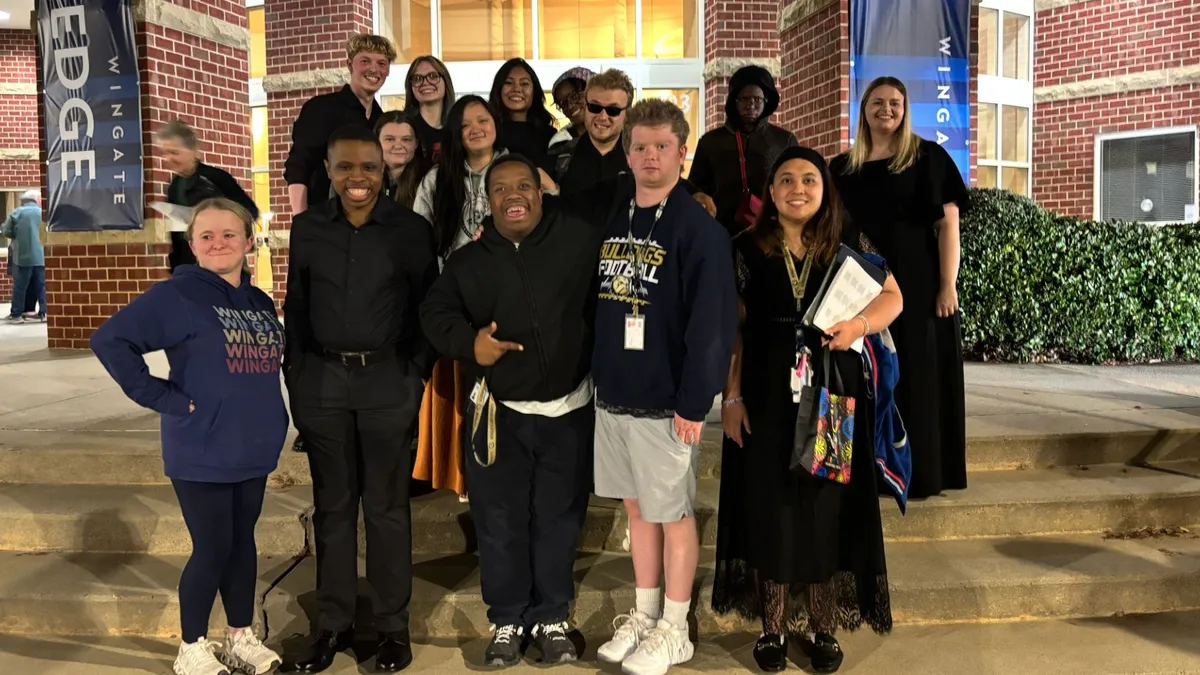
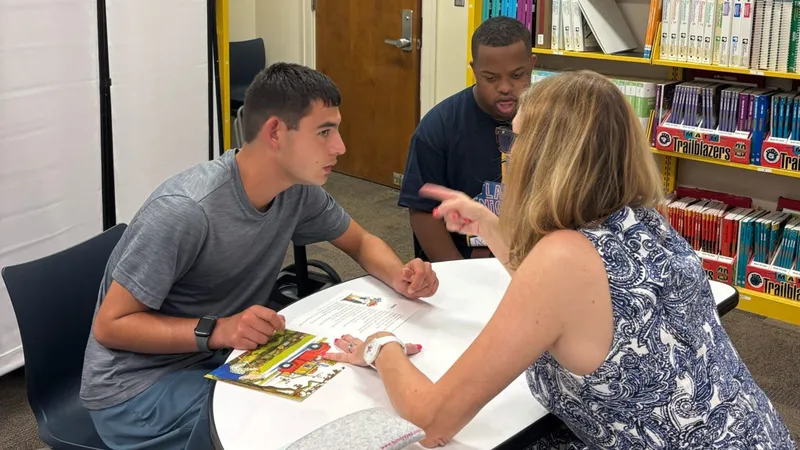
Julia’s Learning at Wingate University is a two-year Career and Community Studies certificate program for adults with IDD. It offers this population something they’ve almost never been given: a real college experience. Students live on campus, take inclusive classes, join clubs, and work campus jobs, building the academic, life, and vocational skills to live as independently as possible.
It’s one of a growing number of inclusive postsecondary education programs nationwide: the national Think College network of more than 300 college options for students with intellectual disability. But every program answers that question differently, and what sets Julia’s Learning apart is how far it goes to build genuine independence, one student at a time.
People don’t ask our students what they “want to be when they grow up”. A lot of times, they don’t know what the options are.
— Kira Garrett, Julia’s Learning
Helping students discover their options through individualized academics, life skills, and vocational training is the heart of the program. This year, Julia’s Learning added ShiftCare, a care management platform, to help execute their vision. We sat down with Garrett after the program’s summer pilot to hear how it’s going.
Piloting ShiftCare During Summer Orientation
Before the full student body returned, the team ran a summer orientation with six incoming freshmen. It’s a smaller-scale weekend that mimics a normal school year, with classes, activities, and meals. The event doubled as a live test of ShiftCare. Staff clocked in and out, entered progress notes, and watched the dashboard pull everything together in real time.
“We really tried to test as many of the features as we could,” Garrett says. The verdict? “Our staff were really, really receptive. They definitely saw the benefits.” Returning staff were thrilled there would be something new, and the team is now rolling ShiftCare out formally. They’re building account setup and app training into their three-day staff onboarding. Garrett even brought on a graduate student worker to share the scheduling load for the year.
Real-Time Communication With Care Signals
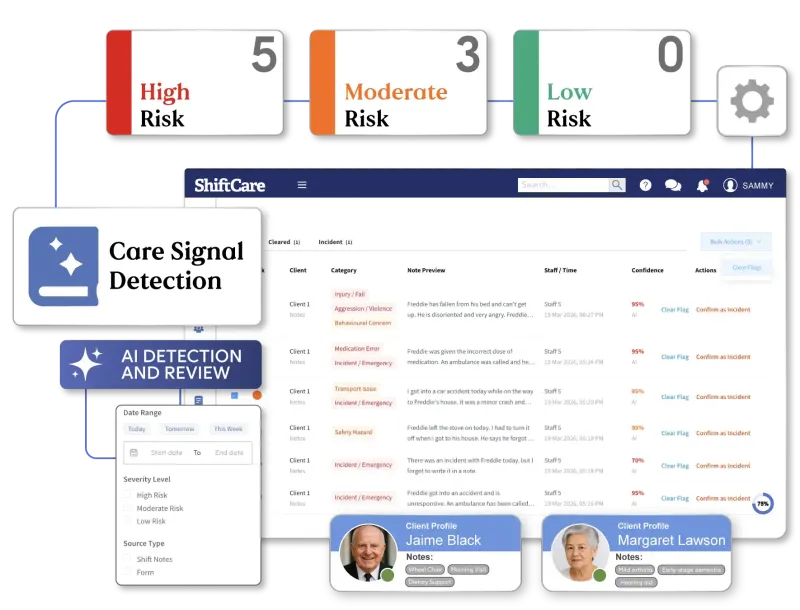
The feature that made the biggest impression was Care Signals, an AI tool that reads care notes in real time and flags what needs attention. During the pilot, a 19-year-old staff member was with a student who was having a panic attack. Instead of stopping to make a phone call, the issue surfaced in real time, allowing the team to respond immediately.
We were able to see that in real time and go respond. She didn’t have to call us. That was incredible.
— Kira Garrett
For a program whose biggest historical challenge was communication, that shift is enormous. “Our staff didn’t have a good way to reach out beyond a phone call, which took up everybody’s time. It was impossible to manage,” Garrett explains. “Now Care Signals picks those things up and sorts through what I need to actually act on and what’s just good to know.”
Building Trust With Caregiver Profiles and the Family Portal
With hiring across campus delayed this year, Garrett needs roughly 50 staff and started the year with nine. Students might feel anxious about meeting a lot of new faces. Thankfully, ShiftCare’s caregiver profiles, complete with photos, can help turn that uncertainty into trust.
Just a picture is life changing for us. To know that this isn’t some random stranger showing up at your door — it’s actually someone you can trust.
— Kira Garrett
Through the family portal, students can now see not only their own schedule but who is showing up to support them that day. That’s something they’ve never had visibility into before. It’s a small feature with an outsized effect on how safe and in control a student feels.
Care Plans That Build Student Independence
If a K-12 education taught these students that adults make the decisions — parents, IEP teams, staff — Julia’s Learning is trying to hand the wheel back. Here, the focus is ownership. ShiftCare’s distinction between tasks and instructions inside care plans turned out to matter more than anyone expected: students now own their tasks, while staff still receive the detailed instructions behind the scenes.
“Our students used to rely on staff telling them what to do all the time,” Garrett says. “Now they’ll have that ownership.” Those care plans — mapping each student’s academic, social, and life-skill goals — are becoming a primary focus this year, built in conversation with students and their families. Staff also embraced the everyday ease of the app, especially the AI inside progress notes. “You can just dump it, click the button, and it cleans it up into professional language.” The AI care summaries the team sent to families after the summer session? “Absolutely life changing.”
With the pilot behind them, the team is already eyeing what’s next — using ShiftCare’s Custom Forms to digitize staff job descriptions and the monthly competency check-ins that tie each shift back to workforce-ready skills.

How Julia’s Learning Measures Success
Ask Garrett what success looks like, and she’ll tell you it depends on the student. “You have to measure growth differently when you’re working with people with disabilities.”
Success is a freshman with selective mutism who didn’t speak to anyone on campus for two months but now works almost independently in the library, emails her supervisor when she has questions, and is learning to advocate for herself. “She’s finding her voice,” Garrett says. “That growth is exceptional.”
Success is a 24-year-old first-year student whose parents, for the first time since he was little, felt safe enough to take a vacation without him. The family was able to travel knowing he was safe and learning to be independent.
Those moments — they’re small, but they’re mighty. That’s why we do this.
— Kira Garrett
The staff is improving, too. The biggest shift Garrett has watched is one from sympathy to empathy: “They don’t feel sorry for our students because they have disabilities. They’ve learned to empathize with them instead.”
Technology in Service of Independence
For Julia’s Learning, ShiftCare was never the destination, but rather independence. It helps clear up miscommunication, surfacing the moments that matter and giving students ownership of their own days. The goal is to help the team spend less time managing logistics and more time doing what they came to do: helping each student answer, in their own voice, what they want to do when they grow up.
Frequently Asked Questions
What is Julia’s Learning at Wingate University?
Julia’s Learning is a two-year Career and Community Studies certificate program at Wingate University for adults with intellectual and developmental disabilities (IDD). Students live on campus, take inclusive classes, join clubs, and work campus jobs, building the academic, life, and vocational skills to live and work as independently as possible.
Can students with intellectual and developmental disabilities go to college?
Yes. Inclusive postsecondary education programs, like Julia’s Learning and the 300-plus programs in the national Think College network, give students with IDD a genuine college experience, including on-campus living, coursework, and employment, options that historically didn’t exist after high school.
What is ShiftCare and how does it support IDD and disability programs?
ShiftCare is care management software for disability, home care, and support programs. It brings scheduling, time and attendance, progress notes, care plans, and family communication into one platform, helping programs like Julia’s Learning cut administrative work and spend more time supporting people.
What are Care Signals in ShiftCare?
Care Signals is an AI feature that reads care notes in real time and flags safeguarding risks and documentation gaps, routing them to a single triage queue. It lets supervisors see and respond to urgent moments, e.g., like a student in distress, without waiting for a phone call.
How does ShiftCare’s family portal help students and families?
The family portal is a secure online space where students and families can view schedules, staff profiles, and visit records. Students can see who is supporting them each day, and caregiver photos help them recognize and trust new staff members.
How do care plans support student independence?
In ShiftCare, care plans connect each student’s academic, social, and life-skill goals to daily shifts. The split between student-facing tasks and staff-facing instructions gives students ownership of their own responsibilities while staff keep the detailed guidance behind the scenes.
What is Think College?
Think College is a national organization and directory of inclusive higher education options for students with intellectual disability, tracking more than 300 college programs across the United States.
How long is the Julia’s Learning program?
Julia’s Learning is a two- to three-year program that awards a Career and Community Studies certificate. First year students explore career options through on-campus volunteer opportunities while taking general education and life skills courses. As students move through the program, they gain on-campus employment, continue to take classes, and make long term plans for their futures.
Learn more
Julia’s Learning at Wingate University · Think College · ShiftCare for U.S. care teams
See it in ShiftCare.
7 days free on Premium. No credit card.