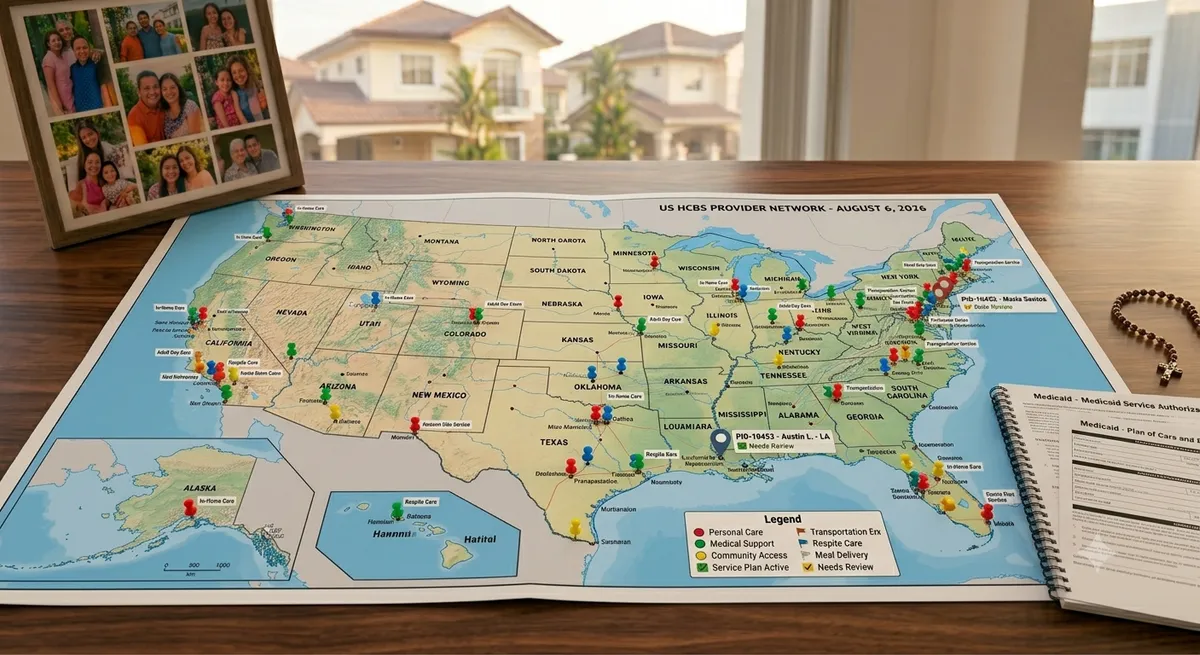
HCBS waivers are Medicaid programs that fund home and community-based care for people who would otherwise require institutional care. More than 257 active programs operate across 50 states, each with its own eligibility criteria, covered services, and provider enrollment requirements. Financial limits in most states in 2026: $2,000 asset limit, $2,982 per month income limit.
More than 257 HCBS waiver programs are active across the United States. No two are identical. Each state designs its own waivers, sets its own eligibility criteria, and determines which services are covered and how providers get paid.
For home care agencies, that variation creates real operational complexity. Enrolling in a new state or a new waiver program means learning a different set of rules from the ground up. The sections below cover what HCBS waivers are, who qualifies, what services they fund, and what providers need to enroll and bill correctly.
What Is an HCBS Waiver and How Is It Different From Regular Medicaid?
Standard Medicaid covers acute medical care and limited long-term services. HCBS waivers extend that coverage to home and community-based care by allowing states to waive specific Medicaid rules for defined populations. CMS approves each waiver individually and requires that waiver costs not exceed what institutional care would cost for the same people.
The three main waiver authorities
- 1915(c): The most common authority. State-designed programs approved by CMS for specific populations. Capacity is capped, so most have waiting lists.
- 1915(k) Community First Choice: An entitlement program with no waiting list, available in select states. Anyone who meets eligibility criteria is entitled to services.
- 1115 demonstration waivers: Broader flexibility for states testing new delivery or payment models outside standard waiver structures.
What Does HCBS Waiver Eligibility Actually Require?
Participants must meet two separate eligibility tracks: financial and functional. Both must be satisfied before services begin.
2026 financial limits
- Asset limit: $2,000 for an individual in most states
- Income limit: $2,982 per month (300% of the SSI Federal Benefit Rate)
- Home equity is exempt up to $752,000, or $1,130,000 in states with higher property values
- Married applicants: the non-applicant spouse may retain between $32,532 and $162,660 in assets under spousal protection rules
Functional eligibility
Applicants must meet the Nursing Facility Level of Care standard in their state. The assessment is administered by the state Medicaid agency. Criteria and assessment tools vary by state and by waiver program.

What Services Do HCBS Waivers Cover by State?
No federal list defines which services a state must offer. Each state determines covered services within its own waiver design. Common services across most programs include:
- Personal care assistance: bathing, dressing, grooming, and continence care
- Respite care for family caregivers
- Supported employment and day programs
- Community access and transportation
- Meal preparation
- Medication reminders (not administration)
- Home modifications and assistive technology
A service covered in one state’s waiver may not appear in the adjacent state’s program. Providers operating across state lines need to confirm the approved service list for each waiver they enroll in.
How Do HCBS Waiver Waiting Lists Affect Provider Capacity Planning?
710,000 people were on HCBS waiver waiting lists as of 2024, with an average wait of 40 months. Providers enrolling in a new waiver program should plan for slow initial referral volume if the program has a long list.
How states prioritize openings
- Crisis or emergency situations with immediate care needs
- Individuals transitioning out of nursing homes or other institutions
- People at imminent risk of institutionalization without waiver services
- Highest-acuity assessed needs within the eligible population
What Do Home Care Agencies Need to Enroll as HCBS Waiver Providers?
Providers must enroll separately in each waiver program they intend to serve. Enrollment with the state Medicaid agency does not automatically extend to every waiver program in that state.
Standard enrollment requirements across most states
- State license for the service categories being delivered
- Medicaid provider enrollment with the state agency
- MCO credentialing in states where managed care organizations administer the waiver
- EVV system compatible with the state aggregator
- Background checks completed for all staff in direct care roles before first shift
- Caregiver credential records matching the specific training requirements of each waiver
Some waivers also require minimum liability insurance coverage and a documented quality assurance process before enrollment is approved.

How Does HCBS Waiver Billing Work for Home Care Agencies?
Most waiver billing runs in 15-minute service units using state-specific billing codes. Units billed must match the authorized hours in the participant’s care plan. Billing more units than authorized generates a denial and may trigger a compliance review.
Common billing errors that generate claim denials
- Units billed exceed the authorized hours in the participant’s plan
- EVV record doesn’t match the claim submission date, time, or service type
- Participant eligibility lapsed before the visit date
- Service code used doesn’t match the waiver’s approved service list
Billing accuracy depends on documentation accuracy. Clean visit records produce clean claims.
Frequently Asked Questions
What is the difference between a 1915(c) and a 1915(k) HCBS waiver?
1915(c) waivers are state-designed, CMS-approved programs for specific populations. They operate with capacity caps, which create waiting lists. 1915(k) Community First Choice programs are an entitlement: anyone meeting the eligibility criteria is entitled to services with no waiting list. Fewer states have implemented 1915(k), but those that have offer more consistent access for eligible participants without capacity constraints.
Can a home care agency enroll in multiple HCBS waiver programs?
Yes. Agencies can enroll in as many waiver programs as they qualify for and can operationally support. Each program requires a separate enrollment process with the relevant state agency or MCO. Agencies operating across multiple waivers in the same state encounter different service codes, documentation requirements, and billing formats for each program.
How long does HCBS waiver provider enrollment typically take?
Most agencies should plan for four to twelve weeks from initial application to active provider status. States with MCO-administered waivers require separate credentialing with each MCO, which runs on its own timeline. Background check processing and license verification are common bottlenecks. Agencies should begin enrollment well ahead of their intended start date.
What happens to billing when a participant’s HCBS waiver authorization expires?
Services delivered after an authorization expires are not reimbursable, even if the participant was previously eligible and continues to need care. Agencies should track authorization end dates for every participant and flag upcoming expirations early enough to give the renewal process time to complete before a coverage gap opens.
Do federal Medicaid funding changes affect HCBS waivers?
HCBS waivers are optional Medicaid benefits, which makes them more vulnerable to state-level cuts when federal funding is reduced. The One Big Beautiful Bill Act, signed in July 2025, reduced federal Medicaid funding by approximately $990 billion over ten years. States facing reduced federal matching funds may scale back waiver capacity, reduce reimbursement rates, or tighten eligibility criteria. Providers in states with large HCBS waiver populations should monitor state budget proposals for program changes.
Manage HCBS Waiver Documentation and Billing in One System
HCBS waiver billing runs on accurate visit documentation. Agencies managing multiple waivers across multiple states track different service codes, authorization limits, and EVV requirements simultaneously.
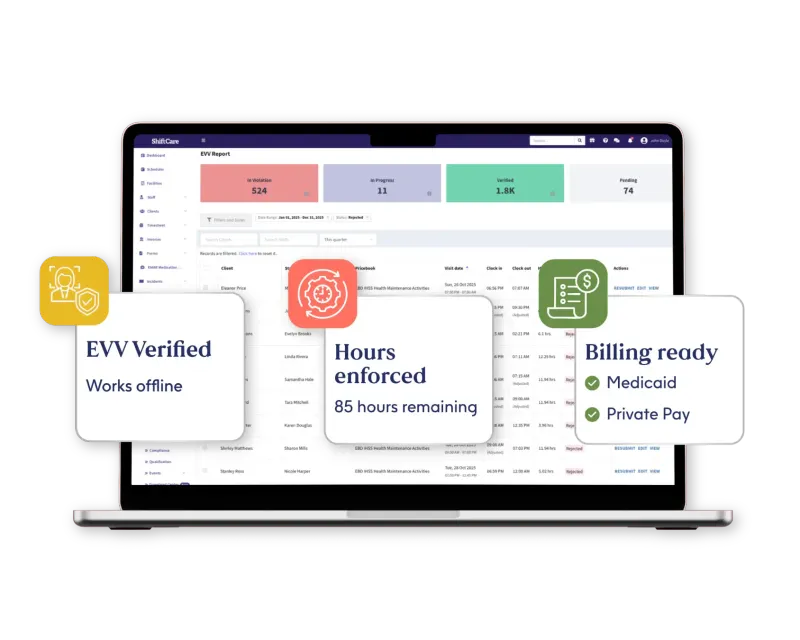
ShiftCare’s home care software connects scheduling, EVV, and Medicaid billing in one platform, reducing the reconciliation work that generates billing errors across waiver programs. Start your free trial today and give your billing team a system built for multi-waiver compliance.
See it in ShiftCare.
7 days free on Premium. No credit card.