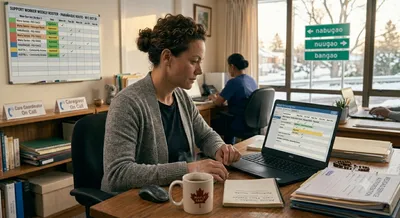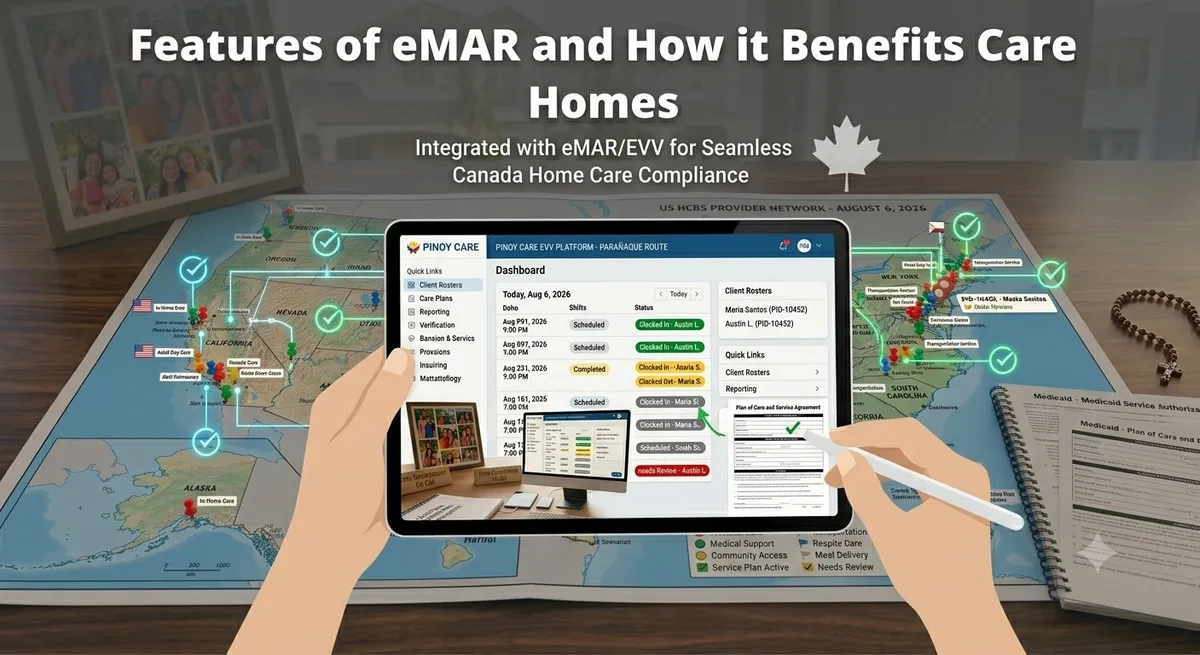
Home care software with eMAR replaces paper medication administration records with timestamped digital entries captured at the point of care. In Canada, PSW and HCA scope-of-practice rules vary by province and determine which medication tasks workers can document. Agencies should evaluate eMAR features against their province’s documentation requirements and funder expectations before selecting a system.
Medication documentation is one of the most audited areas in provincially funded home care. HCCSS in Ontario, Alberta Health Services, and BC Regional Health Authorities each expect records that show what was administered, when, by whom, and what the outcome was if a dose was missed or refused.
Home care software with integrated eMAR captures those records at the point of care. Choosing the right system requires matching eMAR features to provincial scope-of-practice rules, funder documentation standards, and how medication tasks fit into the broader visit workflow.
What Is eMAR Software and Do Canadian Home Care Agencies Need It?
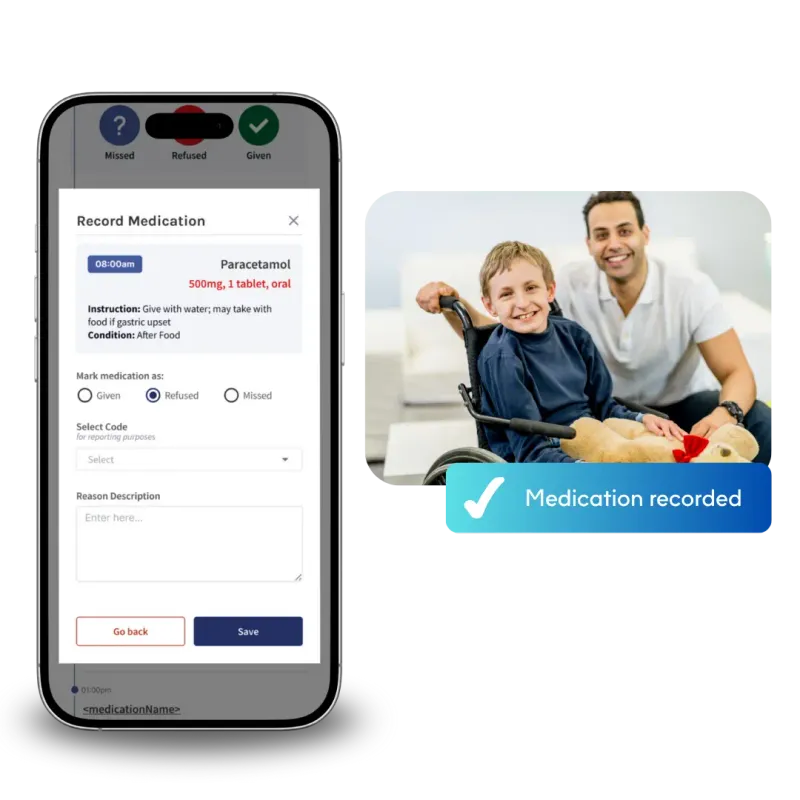
eMAR stands for Electronic Medication Administration Record. The system captures each medication event during a visit: the medication name and dose, the time of administration, the identity of the worker who assisted or administered, and the outcome if a dose was missed or refused.
Acute care facilities and long-term care homes across Canada have used eMAR systems for over a decade. Home care agencies are adopting them as provincial funders increase their documentation expectations and as client acuity in home-based care rises. For agencies under provincial contract, point-of-care medication records are increasingly a standard requirement, not an optional feature.
How Does Medication Scope Differ for PSWs and HCAs Across Provinces?
Medication administration is regulated provincially in Canada. The rules differ by province and by care setting. Home care software with eMAR needs to reflect those differences in how it assigns and restricts tasks by worker.
By province
Ontario: PSWs can assist with self-administration of oral medications, topicals, eye, ear, and nose drops, and transdermal patches. Administering controlled substances is outside PSW scope of practice. Expanded medication tasks require additional authorisation under delegation from a regulated health professional, beyond the base 600-hour PSW programme.
British Columbia: HCAs follow a similar scope boundary. Medication administration beyond assisting with self-administration requires certification beyond the base HCA programme and active registration with the BC Care Aide and Community Health Worker Registry.
Alberta: Medication training expectations for providers contracted with Alberta Health Services are set through the Continuing Care Health Service Standards. No mandatory provincial registration for HCAs is currently in place.
eMAR systems used in home care should restrict which medication tasks a worker can document based on their credential level and province of practice.
What eMAR Features Matter Most for Home Care Providers?
Home care visits are dispersed across multiple client homes, often delivered by lone workers without on-site clinical supervision. eMAR features built for home care reflect those conditions.
Features specific to home care settings
- Mobile-first entry: medication records captured on a smartphone during the visit, with offline capability for areas without reliable connectivity
- Real-time missed dose alerts: coordinators receive a notification when a dose is not recorded within the visit window
- PRN documentation: captures the clinical indication and outcome for as-needed medications at the point of care
- Credential-based access controls: restricts which medication tasks a worker can document based on their authorised scope
What Should You Look For in Home Care Software with eMAR in Canada?
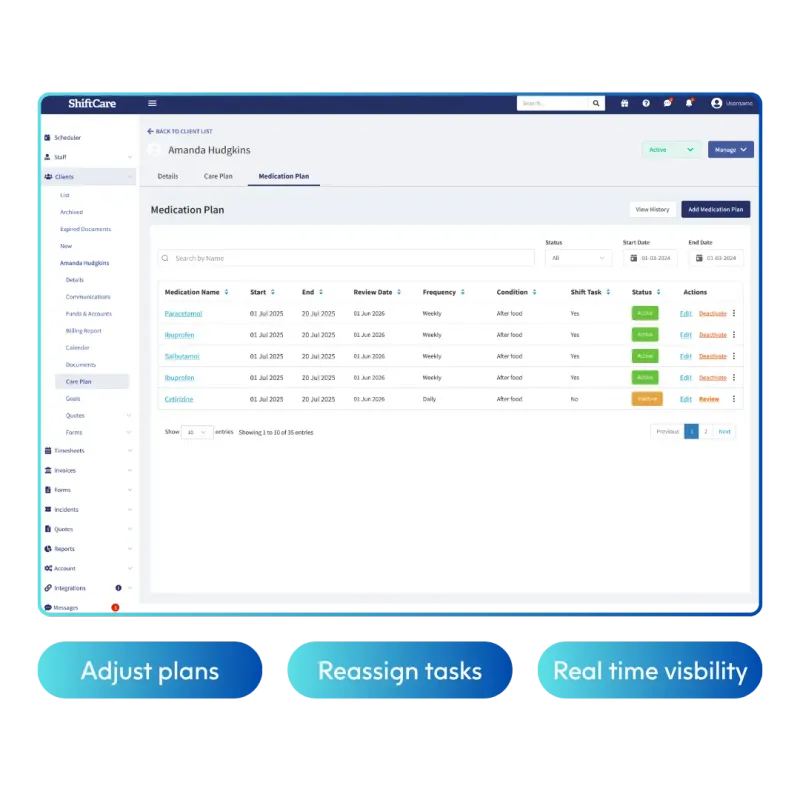
eMAR should be integrated into the visit workflow. Workers who complete visit check-in, care notes, and medication documentation within a single workflow are less likely to miss steps or create documentation gaps.
Core features to evaluate
- Visit-integrated medication prompts: medication tasks appear within the visit record, not in a separate module the worker switches to
- Pharmacy or prescription sync: new and changed medications update in the system without manual transcription by office staff
- Missed dose escalation: coordinator alert triggered automatically when a dose is overdue within the scheduled visit window
- Funder-ready reporting: medication administration summaries exportable in formats that match HCCSS, AHS, and BC Regional Health Authority requirements
- Canadian data residency: client records stored on Canadian servers to satisfy provincial privacy legislation, including PHIPA in Ontario and HIA in Alberta
How Does eMAR Connect to Visit Verification and Provincial Funder Reporting?
Provincial funders expect documentation of both visit delivery and care tasks completed during the visit. eMAR records that sit separately from visit data require manual compilation when a funder review is initiated.
What connected systems produce automatically
- GPS-verified visit timestamps alongside medication administration records
- Missed and refused dose logs without additional data entry
- Worker identity tied to each medication event
- Visit summaries exportable for funder audit on request

What Questions Should You Ask an eMAR Vendor Before Signing?
- Does the system restrict medication task types by worker credential and province?
- Are medication records captured within the visit workflow or in a separate module?
- How are missed doses escalated, and who receives the alert?
- Does the system integrate with Canadian pharmacy dispensing networks?
- What does funder-ready reporting look like for HCCSS, AHS, or BC Regional Health Authorities specifically?
- Is client data stored on Canadian servers?
Frequently Asked Questions
Is eMAR mandatory for home care agencies in Canada?
There is no single federal mandate requiring eMAR for home care agencies in Canada. Provincial funders including HCCSS, Alberta Health Services, and BC Regional Health Authorities set their own documentation standards for contracted providers. Some provincial contracts specify electronic documentation requirements. Agencies receiving provincial funding should confirm documentation format expectations with their funder before selecting a system.
Can PSWs document medication administration in Ontario?
PSWs in Ontario can assist with self-administration of oral medications, topicals, transdermal patches, and eye, ear, and nose drops. Administering controlled substances is outside PSW scope. Expanded medication tasks require additional authorisation under delegation from a regulated health professional, beyond the base 600-hour PSW programme. eMAR systems used in Ontario should restrict documentation entry types to match each worker’s authorised scope.
Does home care software need to store data on Canadian servers?
Provincial privacy legislation governs how personal health information is stored and accessed. Ontario’s Personal Health Information Protection Act (PHIPA) and Alberta’s Health Information Act (HIA) are the primary frameworks. Some provincial contracts specify that client data must remain on Canadian servers. Agencies should confirm data residency requirements with their funder and verify storage location with any vendor before signing.
How should a missed medication dose be documented in home care?
A missed or refused dose should be recorded in the eMAR during the visit, noting the reason and any action taken. Documentation should specify whether the client refused, the medication was unavailable, or the task fell outside the worker’s authorised scope. Coordinators should be notified promptly so they can determine whether a follow-up visit or clinical escalation is required.
What is PRN medication and how is it documented in home care eMAR?
PRN stands for pro re nata, meaning as-needed. PRN medications are given based on the client’s condition at the time of the visit rather than on a fixed schedule. Home care eMAR documentation for PRN medications should capture the indication for administration, the dose given, and the client’s response. Some provincial funders and regulated health professionals require PRN outcome documentation as part of the formal care record.
Find Home Care Software With eMAR Built for Canadian Providers
ShiftCare’s home care software for Canadian providers connects care documentation, credential tracking, and visit verification in one platform. Care notes and visit records are captured at the point of care and tied to each worker’s credential profile. Start your free trial today, no credit card required.
See it in ShiftCare.
7 days free on Premium. No credit card.