From Spreadsheets to Smart Scheduling: Modernizing Your Care Agency Workflow
Most Canadian home care agencies outgrow spreadsheets without realising it until a missed shift, a billing error, or a funder review makes the gap obvious. Here’s what a modernised scheduling and care management workflow looks like, and what it takes to get there without disrupting the team mid-roster.
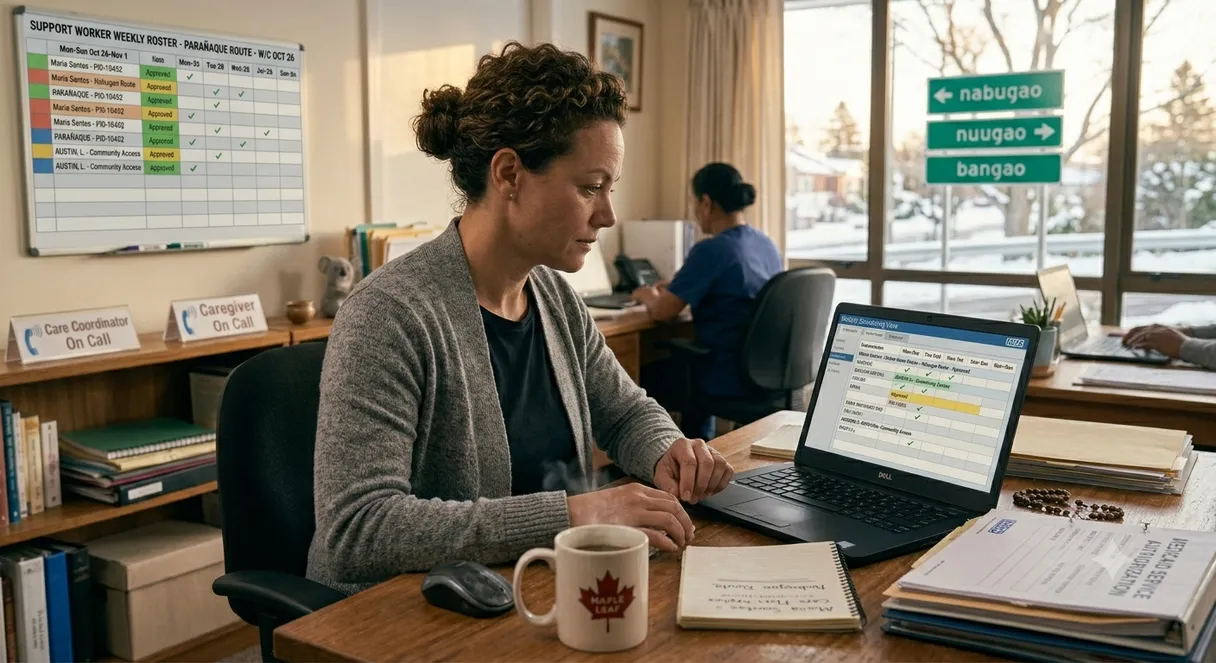
A coordinator managing 20 PSWs across a mix of HCCSS-contracted clients and private pay clients in Ontario isn’t making scheduling errors because they’re disorganised. Spreadsheets don’t surface conflicts, credential gaps, or unfilled shifts until someone notices, usually the morning the shift was supposed to happen. The tool creates the problem.
The agencies that transition smoothly tend to move scheduling, documentation, and invoicing into one connected system in stages rather than all at once. Starting with scheduling makes sense because that’s where daily operational friction is highest. What follows covers each layer of that transition.
What Breaks When a Care Agency Scales on Spreadsheets
Scheduling Conflicts That Stay Hidden Until They Don’t
A spreadsheet can’t flag a double-booked PSW, a lapsed certification, or a Friday shift that’s still uncovered. By the time those gaps surface, the coordinator is already in reactive mode. Common scheduling failures spreadsheet-based systems can’t prevent:
- Double-booked PSWs or HCAs across overlapping shifts
- No real-time view of who’s available, booked, or on leave
- Last-minute gaps discovered the morning of the shift
- No automated alert when a confirmed shift becomes unconfirmed
Documentation That Disconnects From the Shift Record
Shift notes recorded in a group chat or emailed to the coordinator at the end of the week aren’t accessible to the next PSW before they walk in the door. HCCSS in Ontario, Alberta Health Services, and Community Living BC all expect timely, complete records tied to each client’s service authorisation. When a funder review requests three months of documentation, assembling it from email threads takes days.
Billing Errors From Double Data Entry
Every time shift data moves from a scheduling spreadsheet into a separate invoice, re-entry creates an opportunity for a unit, rate, or client reference error. Funded client invoices submitted with incorrect hours reach HCCSS or AHS as discrepancies requiring correction and resubmission. Recurring billing problems from manual entry:
- Incorrect service hours submitted to provincial funders
- Private pay invoices delayed because shift data hasn’t been finalised
- Rate changes for funded clients applied inconsistently
- No audit trail matching what was delivered against what was billed
What Provincial Funders Expect From Providers
Funding accountability in Canada varies by province because the funding itself does. HCCSS in Ontario manages service authorisations with specific care plan and documentation requirements. Alberta Health Services and the Regional Health Authorities in BC carry their own standards. Agencies contracted across multiple provinces manage multiple documentation frameworks simultaneously, with no single national template.
What funder reviews typically ask for:
- Current, signed care plans on file for each funded client
- Shift notes logged against the specific service authorisation
- PSW and HCA credential and certification records
- Incident reports submitted within funder-defined timeframes
What Smart Scheduling Changes Day to Day
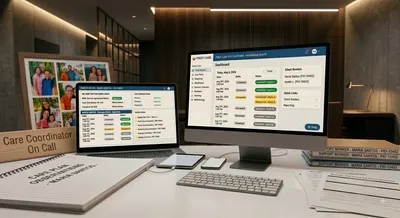
A scheduling dashboard that shows confirmed, pending, and unconfirmed shifts across the full week lets coordinators identify gaps before the morning of. Reactive scheduling is expensive. Proactive scheduling requires a system that surfaces problems before they become missed visits.
Matching PSWs and HCAs to the Right Clients
Credential-based scheduling restricts assignments automatically. A PSW without current first aid certification doesn’t appear as available for a client who requires it. Matching by credential type, geographic proximity, and worker-client history removes the manual cross-referencing a spreadsheet demands.
Shift Notes Captured at Point of Care
PSWs and HCAs who log care notes on a mobile device during or immediately after a shift produce timestamped records against the right client file. Notes written from memory two days later produce gaps. Building documentation into the shift workflow, rather than treating it as a separate end-of-week task, consistently improves the quality and completeness of records.
The PSW and HCA Retention Connection

Scheduling unpredictability is one of the most commonly cited reasons PSWs and HCAs leave a position. Last-minute shift changes, paper rosters sent the night before, and unresolved pay discrepancies create friction that pushes workers toward agencies with more consistent systems. Published schedules, instant shift notifications, and a clear record of logged hours address those frustrations directly.
What a modernised scheduling system delivers for frontline workers:
- Published rosters accessible from a phone before the week starts
- Instant notification of shift changes rather than calls or texts
- Ability to indicate availability and apply for open shifts directly
- A clear hours record for pay queries
Connecting Scheduling to Invoicing
Invoicing that runs off the scheduling record removes the re-entry step entirely. When shift data, time and attendance, and client billing rates sit in the same system, the invoice reflects what was actually delivered. Provincial funder invoice runs that previously took a day take minutes.
Frequently Asked Questions
When does a care agency need to move from spreadsheets to scheduling software?
Coordinators spending more time fixing the schedule than managing care quality is the clearest signal. Recurring missed shifts, billing discrepancies, and last-minute coverage calls indicate the tool has become the operational constraint. Agencies contracted with HCCSS or other provincial funders that require documented service delivery records face a documentation gap spreadsheets can’t close.
How does scheduling software help with PSW and HCA retention?
Predictable scheduling is a documented retention factor for PSWs and HCAs. Software that publishes rosters in advance and notifies workers of changes instantly removes the scheduling frustrations most commonly cited in care sector exit surveys. Coordinators benefit from the same system: automated notifications and recurring rosters reduce back-and-forth that takes hours each week.
What documentation do Canadian home care funders require?
Requirements vary by province and funder. HCCSS in Ontario requires care plans, service authorisation documentation, and timely shift records tied to each client’s funded services. Alberta Health Services and BC’s Regional Health Authorities carry their own standards, which is why agencies operating across provinces need systems that organise records by client and funder independently.
Can scheduling software handle both funded and private pay clients?
Canadian home care agencies typically carry a mix of publicly funded clients and private pay clients billed directly. A scheduling platform built to handle both client types in the same system, with different rates and invoice formats, removes the need to manage them in separate workflows. Funded and private pay billing then run off the same shift record.
Stop Patching the Gaps a Spreadsheet Can’t See
Scheduling, documentation, and billing held in separate manual systems absorb the reconciliation cost every week. A missed shift that wasn’t flagged, a care note that never reached the client file, a funder invoice assembled from email threads: each one is friction that compounds as the agency grows. The system creates the cost, not the team.
ShiftCare’s home care software connects scheduling, care notes, care plans, and invoicing in one platform built for Canadian home care and disability services providers. Start your free trial today! Invest in a system that surfaces gaps before the shift, not after.