The landscape of senior living across California is experiencing an unprecedented dual pressure: surging resident enrollment paired with an increasingly tight labor market. For executive directors and clinical operators of Residential Care Facilities for the Elderly (RCFEs) and Assisted Living Facilities (ALFs) in the Golden State, managing these compounding dynamics requires a shift away from fragmented legacy workflows toward integrated digital solutions.
Investing in dedicated software for assisted living facilities is no longer just a strategy for modernizing an office; it is a core requirement for safeguarding California Title 22 compliance, maximizing thin operating margins, and maintaining clinical safety.
Academic research demonstrates that re-architecting senior living around integrated data infrastructure transforms facilities from reactive environments into proactive, preventive care hubs, significantly delaying nursing home entry and reducing overall care costs. This comprehensive guide outlines the operational utility of modern care management software and how it structurally eliminates inefficiency across your organization.
What is Assisted Living Software?
Assisted Living Software is a centralized, cloud-based platform specifically designed to manage the unique clinical, operational, and billing workflows of non-medical and semi-clinical residential senior care.
Unlike standard Electronic Health Records (EHRs) designed for acute hospital settings, assisted living platforms bridge the gap between hospitality management, resident lifestyle engagement, and personal care compliance.
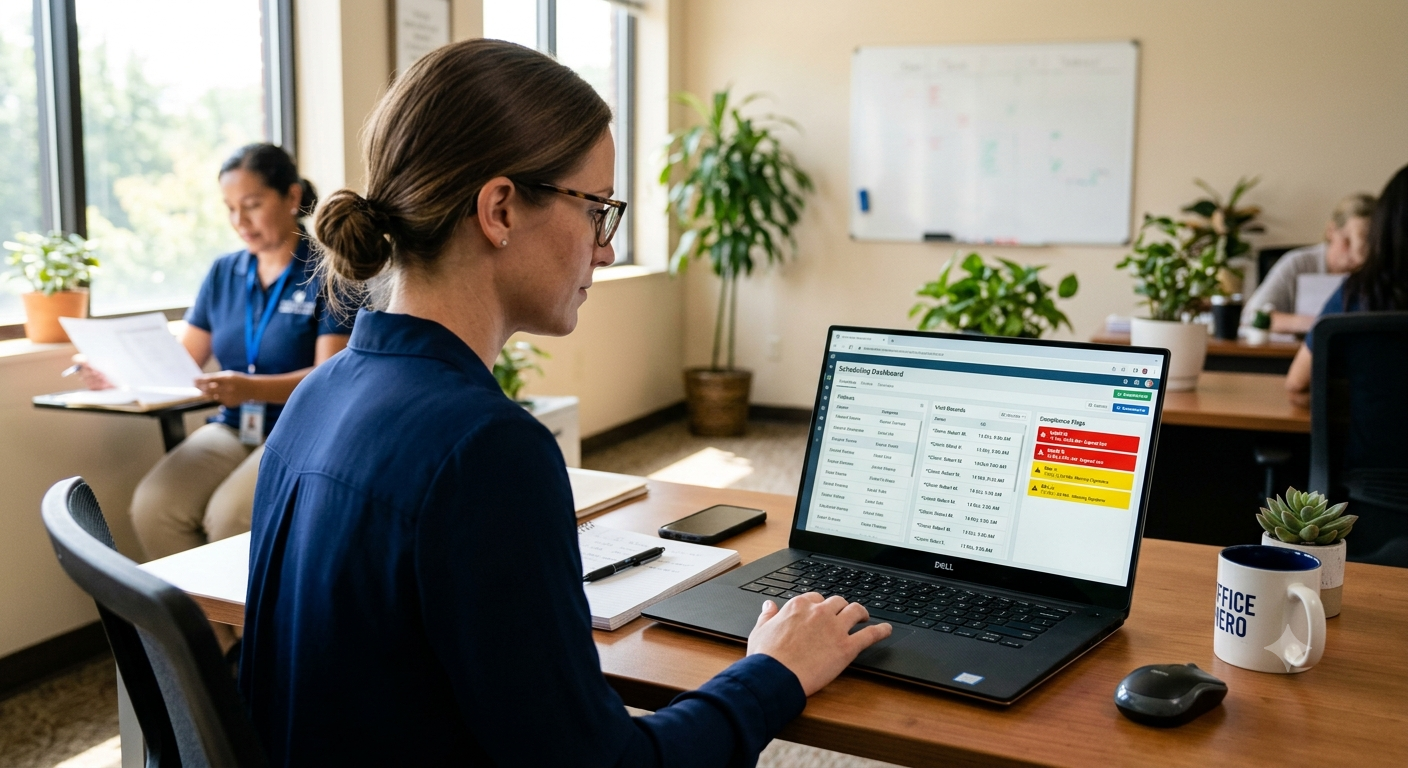
A robust platform typically unifies three operational pillars into a single dashboard interface:
- Clinical & Care Tracking: Real-time logging of Activities of Daily Living (ADLs), vitals tracking, and Incident Management.
- Workforce Management: Smart scheduling, staff dispatching, task delegation, and automated credential compliance tracking.
- Financial Operations: Tiered care-level billing, automated invoicing, and resident agreement tracking.
Navigating California Title 22 and CDSS Compliance
Navigating California’s strict regulatory framework shouldn’t break your staff’s workflow. Under the California Department of Social Services (CDSS) and Title 22 regulations, RCFEs face intense oversight regarding medication records, staff training hour tracking, and incident reporting. Failing a state audit can result in steep financial penalties or delayed licensing renewals.
Implementing an enterprise-grade platform directly addresses the primary bottlenecks that lead to facility inefficiencies and regulatory compliance citations.
Medication Management & eMAR
Medication errors represent one of the highest liability risks in California assisted living facilities. Manual paper charts are prone to transcription mistakes, missed signatures, and delayed dosing alerts.
- The Software Solution: An electronic Medication Administration Record (eMAR) system provides real-time alerts, cross-references prescriptions against resident allergy profiles, and forces positive staff identification at the point of care. If a medication window is missed, supervisors receive immediate automated notifications, drastically reducing risk before an adverse event occurs – keeping your facility firmly compliant with Title 22 Section 87465 mandates.
Automated Care Level Assessments & Billing Capture
One of the fastest ways an ALF loses revenue is “scope creep”- providing advanced personal care to a resident whose contract only accounts for basic support.
- The Software Solution: By integrating digitized functional assessments directly into the care tracker, the system automatically recalibrates a resident’s required care tier based on actual staff documentation. When an aide records that a resident now requires two-person physical transfers instead of setup assistance, the software flags the change, prompts a care plan review, and updates the billing ledger to ensure accurate revenue capture.
Workforce Optimization & Task Delegation
Staff turnover and burnout are chronic challenges within the long-term care ecosystem. Studies on digital health implementation emphasize that technology must be seamlessly integrated into existing staff workflows to minimize friction and prevent cognitive overload.
- The Software Solution: Instead of broad, unmonitored shift notes, staff use mobile applications to receive discrete, structured task lists per resident (e.g., “Assisted shower at 08:30,” “Escort to dining hall at 12:00”). Point-of-care documentation cuts administrative overhead at the end of shifts, allowing aides to focus on direct resident interaction.
The Impact on Resident Outcomes & Quality of Life
Transitioning to a software-driven care model yields quantifiable improvements in the overall health status of residents. Clinical trials evaluating technology-enhanced integrated care models in long-term residential settings demonstrate a significant reduction in instrumental activities of daily living (IADL) disabilities, alongside marked improvements in residents’ overall quality of life.
Continuous data standardization and real-time behavioral logging allow algorithms and clinical staff to perform early risk stratification.
| Manual/Paper Process | Software-Driven Process | Operational & Clinical Impact |
| Fragmented Communication | Integrated Messaging & Portals | Eliminates redundancies, ensures family visibility, and coordinates care between nurses and aides. |
| Delayed Risk Identification | Real-time Trend & Vitals Analysis | Early detection of subtle physiological or behavioral changes, preventing avoidable hospital admissions. |
| Reactive Incident Management | Automated Post-Fall Alerts & Logs | Immediate supervisor notifications paired with automated incident report generation ready for CDSS state auditors. |
Selecting the Right Software for Your Facility
Evaluating different platforms requires analyzing how effectively a solution integrates into your specific facility footprint. Avoid general-purpose software; look for features that specifically address the operational realities of California senior living:
1.Verify California Compliance & Regulatory Alignment:
Assisted living regulations vary heavily state-by-state. Ensure the software vendor can configure assessment tools, incident reporting forms, and eMAR workflows to match the explicit Title 22 compliance parameters enforced by the CDSS.
2.Assess Mobile Usability for Care Aides:
The best software is useless if your frontline staff refuses to use it. Run a pilot test of the caregiver app interface. It should feature highly visual, low-text inputs, offline operational capabilities, and intuitive task checklists that simplify point-of-care tracking without introducing administrative fatigue.
3.Audit Billing & Interoperability Capabilities:
Confirm that the software can handle multi-payer billing models, private pay structures, and long-term care insurance invoicing. The platform must offer clean interoperability, allowing secure data sharing with external pharmacy partners, laboratories, and visiting physical therapists.
Sign up for a free 7-day trial
Frequently Asked Questions
Q: Does ShiftCare support compliance framework requirements under California Title 22?
A: Yes. Our flexible care management platform allows facility administrators to build custom clinical assessment forms, track specific medication windows, and generate detailed shift logs that directly support the documentation required by CDSS inspectors.
Q: Can this software manage different tiers of care for billing adjustments?
A: Absolutely. The system allows you to define custom care-level parameters based on your facility footprint. When staff track increased ADL support at the point of care, the platform automatically flags the changes so you can adjust your private-pay or insurance invoicing tiers accurately.
The Bottom Line: Transitioning your facility onto modern assisted living software is a strategic investment that pays dividends in staff retention, airtight compliance, and enhanced revenue protection. By eliminating administrative friction at the point of care, operators can insulate their businesses from liability while returning their staff’s focus to where it matters most: delivering high-quality, dignified resident care.