The 21st Century Cures Act mandated Electronic Visit Verification for all Medicaid-funded personal care and home health services. Getting implementation wrong means rejected claims and potential FMAP penalties. Here’s how agencies confirm state requirements, configure their system, train DSPs, and connect visit data directly into Medicaid billing.
CMS began withholding Federal Medical Assistance Percentage funding from non-compliant states in 2023. For agencies still relying on paper sign-in sheets or manual call-in systems, that compliance gap carries a direct financial consequence. The mandate covers Medicaid-funded personal care services and home health services across all 50 states, with no exceptions for agency size or payer mix.
State EVV models split into two types: closed systems, where the state mandates a specific platform, and open systems, where agencies select any CMS-compliant vendor that transmits to the state aggregator. Which model applies determines what software to evaluate, how data gets transmitted, and what a failed visit record costs in the billing workflow. Confirming the model is step one.
What the EVV Mandate Actually Requires
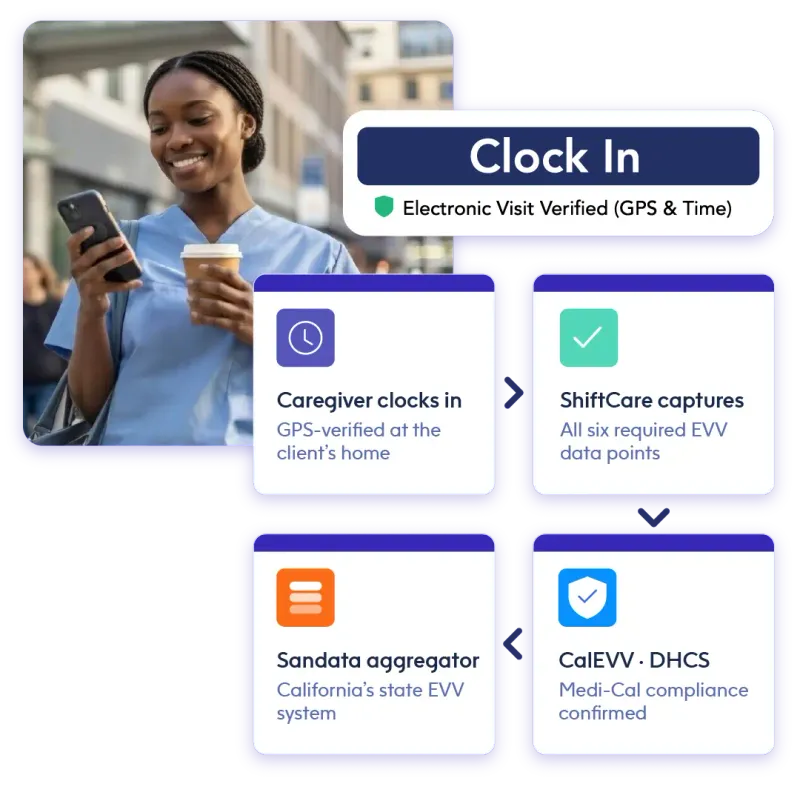
The 21st Century Cures Act requires agencies to capture six data elements for every Medicaid-funded visit: type of service, individual receiving care, date, location, provider identity, and time in and out. Location data confirms the caregiver was physically at the client’s service address. Provider identity confirms the credentialed DSP delivered the service. A visit record missing any of the six is incomplete and creates grounds for claim denial.
Step 1: Confirm Whether Your State Runs a Closed or Open EVV System
New York mandates Sandata. Florida routes certain payers through HHAeXchange. Other states run open systems, where agencies select any CMS-compliant vendor that transmits to the state aggregator, but managed care organizations sometimes override that flexibility by specifying a preferred vendor in their contracts. Contact your state Medicaid agency or check the CMS EVV state tracker to confirm which model applies before evaluating any software.
Step 2: Evaluate EVV Solutions Against Your State Aggregator Requirements
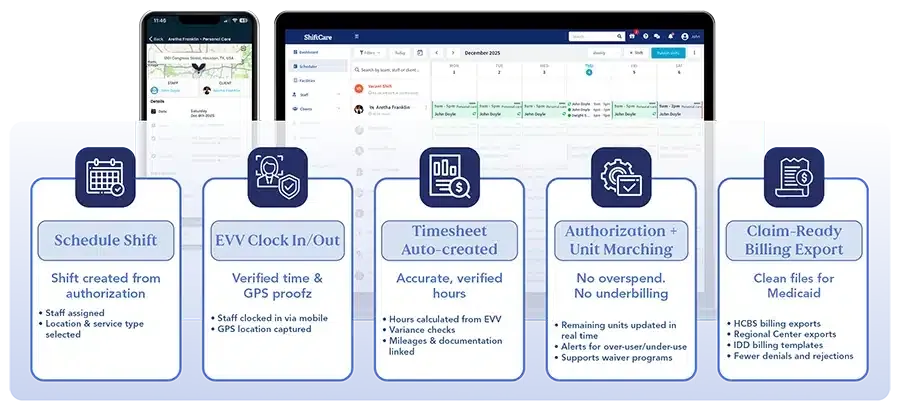
Manual EVV file uploads reach state aggregators after billing windows close, producing the same rejected-claim outcome as missing visit data. For open-system states, evaluate on three criteria: real-time aggregator transmission, caregiver identity verification at the point of care, and scheduling integration so authorized and captured visits are matched automatically. Requiring a separate export step between visit capture and billing creates a reconciliation gap that compounds across every billing cycle.
Step 3: Configure the System Before Any Visit Goes Live
Four pre-live requirements: client records loaded with service addresses, authorizations mapped to EVV visit types, prior authorization balances set up for real-time tracking, and exception workflows built for missed clock-ins and location failures. Test aggregator transmission with dummy visits first. An error caught in testing takes an hour to fix; an error discovered after a full billing cycle creates weeks of rejected-claim follow-up. Supervisors need visibility into incomplete visit records the same day they occur, not at the next billing review.
Step 4: Train DSPs Before Their First Shift
DSP adoption is where most EVV implementations break down. Workers clocking in from the car fail the location data element; shared login credentials fail the provider identity element; forgotten clock-outs produce incomplete time records that trigger claim exceptions. Train DSPs on exception handling specifically: what to do when there’s no cell signal, how to document a client who refuses location capture, and when to call a supervisor before closing a visit. With turnover above 45%, EVV training needs to be part of every new hire onboarding cycle, not a one-time rollout event.
Step 5: Connect EVV Data to Medicaid Billing
Verified EVV data feeds Medicaid billing in two ways: confirming a service was delivered and supplying the time-in/time-out data that converts to units of service at state-specific billing rates. An EVV mismatch on service type, provider identity, or service location triggers an automatic denial, regardless of whether the care was actually delivered. Prior authorization balance tracking must run alongside EVV. Delivering a visit beyond the authorized unit limit creates a billing error even when the visit record itself is clean.

Frequently Asked Questions
Is EVV required for private pay home care agencies?
The EVV mandate applies to Medicaid-funded personal care and home health services only. Some states have extended EVV requirements to state-funded programs, but the federal mandate is Medicaid-specific. Agencies that accept any Medicaid funding, even for a subset of clients, need EVV compliance for those visits regardless of their overall payer mix.
What happens if a DSP forgets to clock out through EVV?
A missed clock-out fails the time data element and creates a claim exception. Most platforms route these to a supervisor exception queue for correction before the billing cycle closes. Build a 24-hour exception resolution window into agency policy so incomplete records are corrected before they reach the payer.
Does EVV replace progress notes?
EVV and progress notes serve different compliance functions. EVV captures the six required visit data elements for Medicaid billing; progress notes document what happened during the visit and are required under care plan and state-specific documentation standards. Removing progress notes because EVV is in place creates a documentation gap that surfaces during state audits and complaint investigations.
What is the difference between a closed and open EVV state?
In a closed EVV state, the state mandates a specific platform all Medicaid providers must use. Open states allow agencies to choose any CMS-compliant EVV vendor, provided visit data transmits to the state aggregator in the required format. Managed care organizations in open states sometimes specify a preferred vendor in their contracts, which narrows the field further for agencies under MCO agreements.
Build an EVV Workflow That Pays the First Time
An EVV record that doesn’t match the authorization on file produces the same rejected claim as missing visit data. Agencies that stand up EVV separately from scheduling and billing still lose claims at the point where visit data meets the payer. Clean visit capture and clean billing are the same workflow.
ShiftCare’s EVV software captures all six CMS-required data elements, transmits directly to state aggregators, and routes verified visit data into Medicaid billing without a manual export step. Start your free trial today! Run your first EVV-verified claims through a system where visit capture and billing are the same record.
See it in ShiftCare.
7 days free on Premium. No credit card.