Understanding Private Home Care in New Brunswick
Insights into New Brunswick’s home health services industry will help you build a comprehensive business model, market your services, and budget effectively. Home care agencies provide a broad range of healthcare services, including both medical and non-medical support, such as personal care, companionship, medication management, and daily living assistance. Here’s what you need to know before establishing your own home care business:
The home care industry is experiencing rapid growth, with demand for in home care expected to rise significantly due to the aging population and increasing chronic illnesses. In fact, the industry is projected to grow by 34 percent from 2019 to 2029, much faster than the average for all occupations. As you develop your business model and assess the market, it’s crucial to establish a strong operational infrastructure. This includes setting up administrative systems, technology tools, and workflows that support care delivery, billing, and compliance.
Technology has transformed home health care by improving patient outcomes and operational efficiency. Home care agencies are increasingly using software solutions to manage scheduling, invoicing, and care documentation, which helps reduce administrative burdens and minimize errors. Electronic health records (EHRs) are essential for quick access to patient information and improved care coordination. Mobile apps for caregivers facilitate time tracking and care documentation, while telehealth services allow for remote care delivery, reducing travel time and improving access for clients.
New Brunswick’s Acute Need for Private Home Care Services
With an aging population, more than one in five people in New Brunswick are aged 65 or older. Care home beds going empty due to nursing staff shortages have increased demand for home health care services. This provides an opportunity for home health agency owners to deliver high-quality care directly in clients’ own homes.
Typical start up costs for a home care business range from $40,000 to $80,000, so careful planning and budgeting are essential. Understanding all costs, developing a pricing strategy, and monitoring market trends are vital to maintaining profitability. Home care businesses often generate recurring revenue through hourly service fees or monthly membership fees, with private pay being a common payment structure for non-medical services. Establishing a marketing plan—with marketing and advertising costs typically between $1,000 and $5,000—helps promote your business and attract new clients by clearly communicating your services and value proposition. Implementing client referral programs and leveraging satisfied clients for testimonials and referrals can further help you attract new clients and grow your business.
To manage this growing need, workforce management tools and scheduling solutions like a scheduler with caregiver filters are crucial. The ShiftCare job board also helps you match qualified caregivers with the right clients and will help you achieve this as you scale your business.
Private Home Care Services for New Brunswickers with Disability
About 35.3% of the province’s population lives with at least one disability, a figure growing faster than anywhere else in Canada. Providing personal care services and non medical home care to these clients requires specialized caregiver training, safety training, and adherence to client safety standards.
Non-medical home care involves assistance with activities of daily living (ADLs) such as bathing, dressing, meal prep, and transportation. Light housekeeping, including tasks like cleaning and laundry, is also a common non-medical service that supports clients’ independence. Home care agencies typically provide non-medical assistance—such as Home Support and Companion Services—while home health agencies deliver medical care at home, including skilled services like wound care, medication management, physical therapy, Nursing Services, and In-Home Medical Care provided by licensed professionals.
The Challenge of Providing Plurilingual Private Home Care Services
Given that New Brunswick is Canada’s only officially bilingual province, clients will expect to receive private home care services in the language of their choice.
You could respond by prioritizing bilingual caregiver recruitment. However, in light of the province’s severe care worker shortage, this may make it even harder to hire and retain sufficient staff.
Another option is to use a scheduler with caregiver filters. This will help you stay on top of your caregivers’ language skills and assign appropriate caregivers to each client.
For example, with the ShiftCare job board, you can set it so that only approved caregivers are able to view and bid on new shifts. By combining that with the software’s caregiver filters, you’ll make sure that Francophone clients always receive care services from French-speaking care staff.
Creating Your New Brunswick Private Home Care Business’ Legal and Financial Structure
Before you can start offering private home care services, you’ll need to legally set up your business and register it with the Government of New Brunswick. As a foundational step, it’s important to select the appropriate business entity, such as an LLC, corporation, or partnership, to ensure the right legal and organizational structure for your home care business. You must also register your business name and obtain a business number (BN) from the Canada Revenue Agency (CRA) as part of the registration process. Additionally, register for GST/HST and payroll accounts with the CRA to meet tax and payroll requirements. Here’s what you have to do:
1. Choose Your Home Care Business’ Structure
When deciding on a business structure, options include sole proprietorship, partnership, or corporation. Your choice affects taxes, liability, and eligibility for funding. Tools like the New Brunswick Business Structures Wizard can guide you in selecting the right legal structure for your home care business.
You can also use the New Brunswick Business Structures Wizard for some free guidance.
2. Incorporate Your Private Home Care Business via Service New Brunswick
Unless you provide home care services as a sole proprietor under your own name, you’ll need to register your business with Service New Brunswick. You’ll also have to renew your business name every five years.
3. Apply for Licences and Permits
Use the BizPaL database to identify necessary permits. Protect your agency with general liability insurance or private insurance, and consider business insurance for comprehensive coverage.
4. Register for WorkSafeNB Coverage
WorkSafeNB provides workers’ compensation for you and your team. Once you have three or more employees, you must sign up for coverage. Below that level, you can also sign up for voluntary coverage.
Risk Management and Insurance for Private Home Care Businesses
Operating a private home care business in New Brunswick means taking on a unique set of risks, from ensuring client safety during personal care visits to protecting your staff and property. A robust risk management plan is essential for safeguarding your agency’s reputation and financial stability.
Start by identifying the potential risks your home health agency may face. These can include accidental injuries to clients or caregivers, property damage during in-home visits, breaches of patient health information, and even transportation incidents if your team provides rides to appointments. Proactively addressing these risks not only protects your business but also builds trust with clients and their families.
Securing the right business insurance is a cornerstone of risk management. At a minimum, your home care business should carry general liability insurance to cover claims of bodily injury or property damage. Professional liability insurance (also known as errors and omissions insurance) is crucial for healthcare providers, as it protects against claims related to the delivery of medical or non medical services. If you employ staff, workers’ compensation insurance is mandatory once you reach three or more employees, but voluntary coverage is available for smaller teams.
Consider additional coverage such as business property insurance for your office and equipment, cyber liability insurance to protect sensitive client records, and commercial auto insurance if your agency provides transportation services. Review your policies regularly to ensure they keep pace with your agency’s growth and evolving service offerings.
Implementing risk management strategies goes beyond insurance. Invest in ongoing caregiver training, safety training, and clear protocols for incident reporting. Use care management software like ShiftCare to maintain accurate client records, monitor key performance indicators, and ensure compliance with provincial regulations. These steps help reduce the likelihood of incidents and demonstrate your commitment to client safety and quality care.
By prioritizing risk management and comprehensive insurance coverage, you’ll create a safer environment for your care team and clients, protect your business assets, and set the foundation for a successful business in New Brunswick’s growing home health care sector.
Building Your Private Home Care Team
Hiring professional caregivers and healthcare providers is critical. Focus on creating a positive work environment, offering competitive pay, flexible schedules, ongoing support, and professional development opportunities.
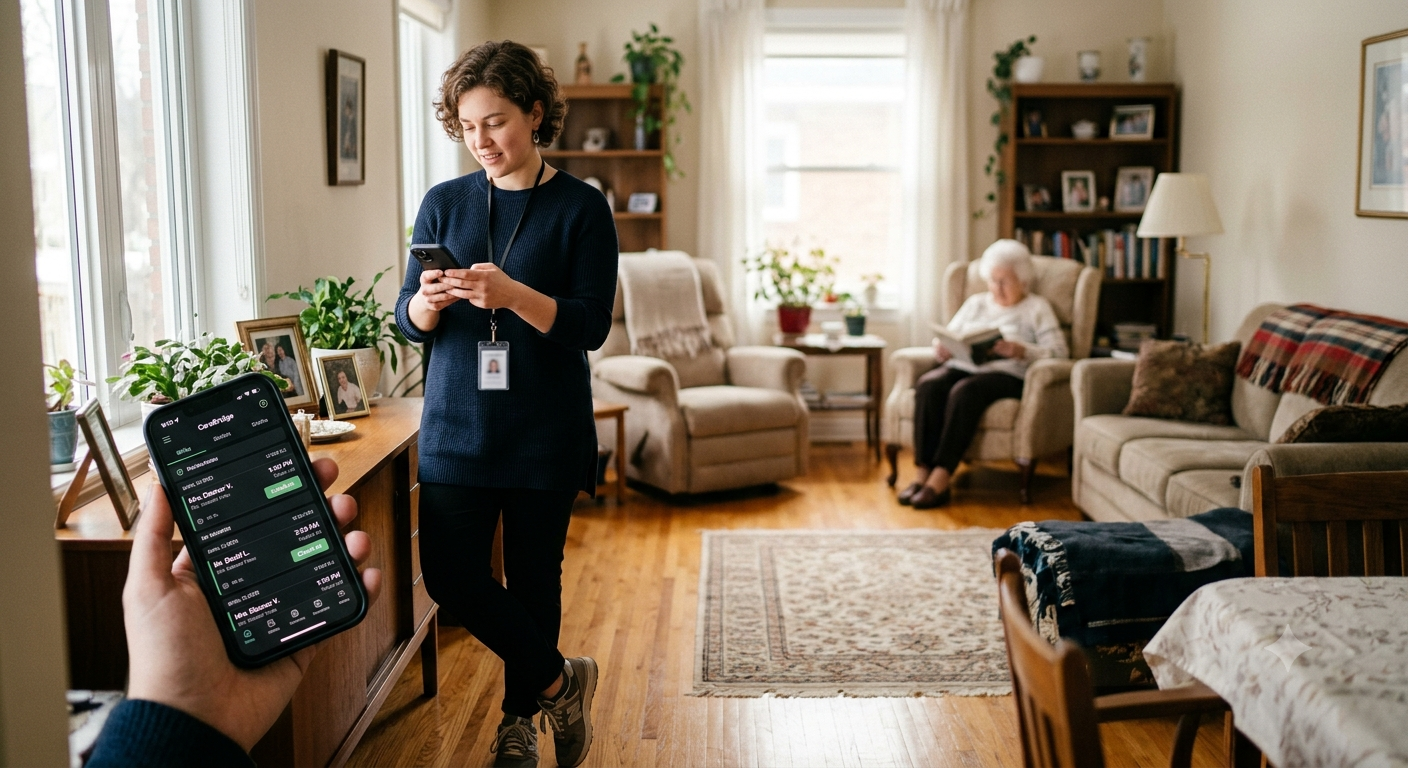
A ShiftCare caregiver app helps staff access schedules, bid on shifts, and manage client records. This ensures consistent personal care delivery and improves patient outcomes.
Key steps for hiring include:
- Recruit registered nurses, personal care aides, occupational therapists, and physical therapists
- Offer caregiver training and ongoing training
- Maintain client safety and compliance with patient health information regulations
Professional Help and Resources for New Brunswick’s Private Home Care Businesses
Professional associations can support you in launching your private home care business. You’ll find a list of national associations in our step-by-step guide to launching a Canadian care business. But in this article, we’ll focus on your local options.
Attending industry events and community events is crucial for building a strong local presence, networking with health care providers, and establishing valuable referral partnerships. Participate in local health fairs, workshops, and industry events to connect with hospitals, clinics, and other healthcare professionals. Building relationships with discharge planners, social workers, and local physicians can lead to high-quality referrals—often the best lead source for a homecare business. Engaging in community events and sponsoring local activities also helps strengthen your brand and demonstrates your commitment to the community. Establishing a strong brand in your local area is essential for gaining trust and recognition among potential clients.
New Brunswick Home Support Association (NBHSA)
The NBHSA dedicates itself to providing advocacy, advice, and events for New Brunswick’s home care providers. It also has a directory of home care agencies on its website, helping improve your visibility among potential clients.
Women in Business New Brunswick
Women in Business NB shares funding opportunities, training, networking events, and a resource library.
New Brunswick Aboriginal Peoples Council (NBAPC)
The NBAPC advocates and provides support for Aboriginal people living in New Brunswick. One of their initiatives is the NBAPC Equity Fund, available for Aboriginal people who want to start or expand their businesses.
Atlantic Canada Business Grants
Atlantic Canada Business Grants publishes free educational guides and information about business grants in New Brunswick.
How is home care funded in New Brunswick?
The Department of Social Development in New Brunswick funds some home support services. However, many New Brunswickers choose to pay privately for additional home care, either to supplement their care services or avoid long waiting lists.
In the United States, home health agencies must obtain Medicaid services certifications and a home care license to provide reimbursable care through Medicaid. Private pay is also a common model for non-medical home care services, allowing agencies to serve clients who do not qualify for or wish to supplement government-funded care.
How much does it cost to start a business in New Brunswick?
Your private home care business’ launch costs will depend on how many caregivers you employ and how much you invest in marketing, vehicles, and business management systems. Be sure to include marketing materials as part of your start up costs to ensure consistent branding and professional outreach.
That’s why, in addition to following our step-by-step guide to starting your business, you should have a fully laid-out business plan with estimated costs.
Final Thoughts on Starting Your Private Home Care Business in New Brunswick
Launching a private home care business isn’t always easy, but the rewards are significant. You’ll get the immense satisfaction of not just building a thriving business but also supporting elderly people and people with disability in your local community. Your work will enable your clients to live independent, comfortable, and safe lives in their own homes.
ShiftCare’s home care software helps you start and grow your private home care business. It comes with rostering tools, client document management tools, accounting and payroll integrations, a caregiver app, and a portal for your client’s loved ones.