
Canada’s home care and disability support sector is grappling with a staffing crisis that care management software is uniquely positioned to address. Staff turnover has reached 79.2%. It’s the highest rate in five years, and more critically, 57% of caregiver departures happen within the first 90 days. This suggests the problem isn’t just about wages but about how new employees are onboarded, supported, and valued.
For disability support providers managing teams of 5 to 50 workers, losing experienced caregivers doesn’t just strain budgets. It disrupts the continuity of care for vulnerable individuals and damages team morale. But here’s what many providers don’t realise: the root cause of turnover isn’t always about wages.
Poor communication, lack of recognition, chaotic scheduling, and inadequate onboarding are equally damaging. These pain points are precisely what care management software is designed to solve. When implemented thoughtfully, the right platform can transform how your team works, reduce administrative burden, and create an environment where caregivers actually want to stay.
The Cost of Turnover

When a caregiver leaves, you lose far more than a person. You lose institutional knowledge, relationship continuity with the clients they serve, and team cohesion. The financial cost is equally staggering. Recruiting, training, and onboarding a new care worker costs between $3,000 and $5,000 on average. If you’re turning over 30 staff per year at a 20-person agency, that’s $90,000 to $150,000 annually spent on replacing people who’ve already quit.
Beyond the spreadsheet, turnover undermines the quality of disability support. Clients need consistent faces and relationships to thrive. Frequent staff changes create anxiety, disrupt care plans, and make it harder for individuals with developmental disabilities to build trust with their support team. For agencies trying to provide person-centered care, high turnover is poison.
Why Caregivers Leave in the First 90 Days
The first 90 days is make-or-break. New hires are assessing whether the job matches the promise, whether they feel supported, and whether they can sustain the emotional labour of care work. What drives them away?
Poor communication ranks as the top complaint. Caregivers feel disconnected from management, unclear about expectations, and unsure who to ask when problems arise. Inadequate onboarding means new workers are thrown into shifts without proper training, mentoring, or structured support. Chaotic scheduling creates unpredictability. Caregivers can’t plan their lives when their shifts are assigned haphazardly. Lack of recognition leaves workers feeling invisible; no one celebrates their wins or acknowledges their effort. By day 90, these friction points accumulate, and the caregiver decides to leave.
How Care Management Software Reduces Staff Turnover
The right care management software addresses these four pain points directly. It’s not a silver bullet, but it’s foundational infrastructure for retention.
Automating Scheduling to Improve Work-Life Balance
Intelligent scheduling is transformative. Instead of manual spreadsheets and last-minute emails, modern disability care management software platforms intelligently match caregiver availability, preferences, and skills to shift requirements. Caregivers can view their schedules weeks in advance, request time off through mobile apps, and pick up additional shifts if they want extra hours.
This predictability matters enormously. When caregivers can plan around their childcare, school, or second jobs, they experience measurable improvement in work-life balance. They feel trusted and respected. The software also reduces the administrative burden on coordinators, who spend less time on manual scheduling and more time on strategic workforce planning.
For a provider running 15 caregivers across multiple clients in Ontario or Alberta, intelligent scheduling can reduce coordinator time by 3-5 hours per week. That’s time your team can spend on mentoring, recognition, and strategic problem-solving.
Centralizing Communication and Reducing Friction
Communication breakdowns breed resentment. When information lives in email, texts, phone calls, and sticky notes, nothing is systematic. Care management software creates a central hub where coordinators post shift information, training updates, policy changes, and recognition messages. Caregivers access this information through mobile apps designed for their workflow, not the back office.
Better yet, the platform enables two-way communication. Caregivers can flag concerns, ask questions, and alert management to client needs in real time. When a support worker notes that a client is struggling with medication adherence, that concern is visible to the whole team immediately. When a coordinator sees a caregiver going above and beyond, they can recognize that work publicly within the system.
This shift from siloed communication to transparent information flow dramatically improves team cohesion and reduces misunderstandings that lead to frustration and departures.
Streamlining Onboarding to Set New Hires Up for Success
89% of employees who experience effective onboarding report higher engagement and are 30 times more likely to feel overall job satisfaction. Yet most Canadian home care providers lack structured onboarding. New hires often receive a folder of documents, a quick tour, and then get sent into the field.
Modern care management platforms embed onboarding workflows directly into the system. New hires complete training modules, access role-specific resources, and connect with mentors—all through a single platform. Managers receive alerts to check in regularly with new employees. Progress is tracked, and gaps are identified before they become problems.
When onboarding is structured and supported by software, new caregivers feel welcomed, informed, and confident. They’re less likely to quit in the first 90 days.
Creating Visibility and Recognition for Good Work
Care workers often feel invisible. They show up, provide compassionate support, and go home—with little acknowledgement from management or peers. Care management software makes good work visible. Coordinators can flag exemplary shifts, share positive feedback from clients, and publicly recognise achievements within the team portal.
Some platforms even include peer recognition features, allowing caregivers to celebrate each other’s work. This creates a culture of appreciation that’s visible to everyone. When caregivers feel valued, they stay.
Real-World Impact

When providers invest in thoughtful care management software implementation, the results speak for themselves.
Faster Shift Filling, Fewer Empty Rosters
With intelligent scheduling and mobile-first design, shift-filling becomes faster and more reliable. Caregivers receive shift offers immediately and can confirm within minutes. Coordinators no longer spend hours making phone calls and chasing responses. Empty shifts—which force emergency coverage or client cancellations—drop dramatically.
Data-Driven Insights Into Team Performance and Retention Risks
The best care management platforms generate real-time analytics on your workforce. You can see which caregivers are taking fewer shifts (an early warning sign), which clients receive consistent support, and where turnover risk is highest. Armed with this data, coordinators can intervene early—offering mentoring, adjusting assignments, or simply checking in before a valuable team member decides to leave.
Lower Admin Time, More Time for Relationship Building
Coordinators report spending significantly less time on manual tasks like scheduling, tracking, and documentation. That freed-up time allows them to do what actually matters: building relationships with the team, mentoring new hires, and addressing concerns before they escalate.
Key Features for Retention-Focused Platforms
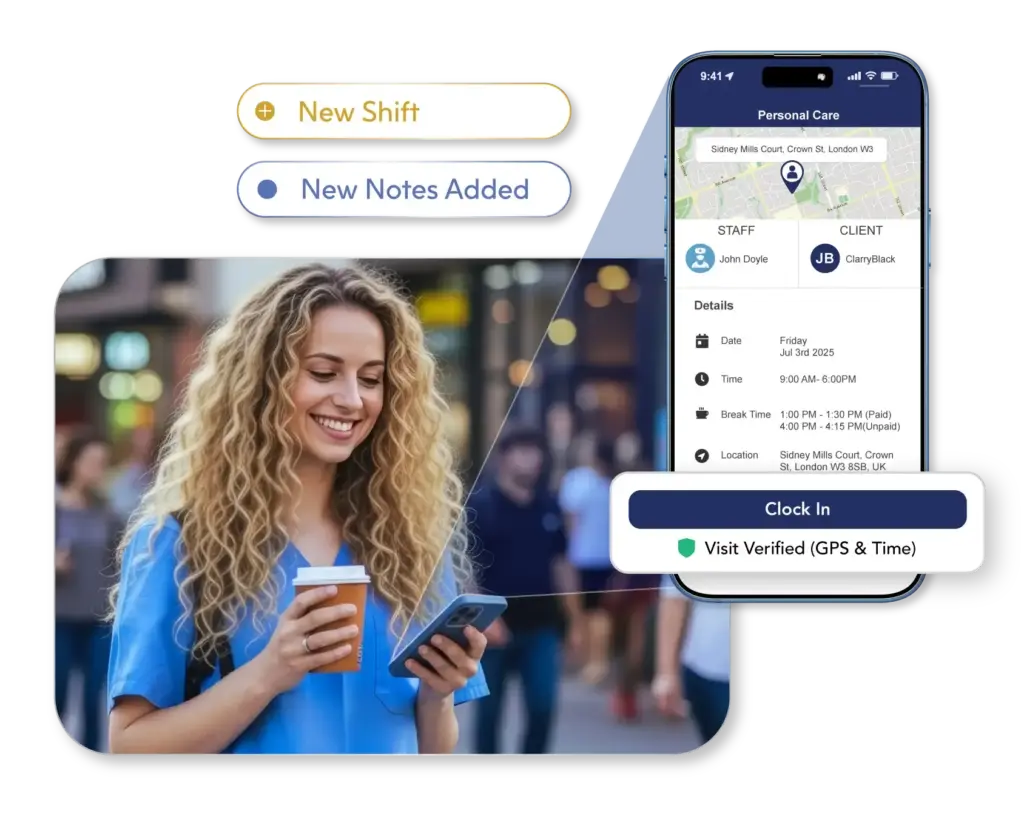
Intelligent Scheduling and Shift Management
The platform should learn caregiver preferences, availability, and skills—then intelligently propose shift matches. Caregivers should be able to view schedules, request time off, and pick up shifts through mobile apps. With Ontario disability care management software or Alberta disability care management software, scheduling integrates seamlessly with provincial funding models.
Mobile-First Design for Support Workers
Care workers are in the field, not at desks. The software must work seamlessly on smartphones. Apps should be simple, fast, and designed for their actual workflow—not a watered-down version of a desktop system.
Real-Time Alerts and Analytics
Coordinators need visibility into team performance and early warning signs of retention risk. The platform should flag concerning patterns and generate actionable insights.
Integration with Your Funding and Compliance Requirements
For Ontario DSO, BC CLBC, and Alberta PDD providers, integration with funding models and compliance tracking is non-negotiable. The software should handle your specific regulatory requirements seamlessly.
Building a Retention Strategy Around Your Technology
Software is an enabler, not a replacement for genuine care leadership. Implement your platform thoughtfully.
Change Management and Team Buy-In
Don’t surprise your team with new software. Involve caregivers and coordinators in the selection process. When staff feel ownership, they adopt the tool faster and recognize its value. Provide thorough training and ongoing support during the transition.
Using Data to Celebrate Wins and Address Early Warnings
Once your platform is live, use the data it generates. Celebrate caregivers who are hitting milestones or receiving consistent positive feedback. When you notice a caregiver taking fewer shifts or missing training, reach out proactively. Show your team that the data exists to help them, not surveil them.
Creating a Culture of Recognition
Pair your software’s recognition capabilities with genuine leadership practices. Regular one-on-ones with team members, celebrating wins at team meetings, and making clear pathways for growth all matter. Technology amplifies recognition culture but can’t create it alone.
FAQs About The Role of Care Management Software in Reducing Home Care Staff Turnover
How quickly can we expect to see retention improvements after implementing care management software?
Early wins in scheduling and communication can show impact within 4 to 8 weeks—caregivers report improved work-life balance and faster shift confirmation. Broader retention improvements typically appear within 3 to 6 months as onboarding processes mature and recognition culture takes hold. The biggest impact often comes at the 6 to 12 month mark when compound effects become clear (better retention means more experienced teams, which attracts new hires more easily).
Can software really reduce the 90-day turnover problem, or do we need to address other factors too?
Software is part of the solution but not the whole answer. The best results come from combining software (structured onboarding, clear communication, visible recognition) with genuine leadership practices (personal check-ins, mentoring, creating psychological safety). Software makes these leadership practices easier and more systematic, but it can’t replace authentic care for your team.
How do we ensure coordinators actually use the recognition features in the software?
Make recognition a habit, not an afterthought. Build it into coordinator workflows, weekly check-ins should include noting exemplary shifts or caregivers who went above and beyond. Celebrate when recognition is used publicly; share stories of how caregiver feedback improved client outcomes. Some providers tie recognition to performance management, making it clear that acknowledging good work is part of every coordinator’s job. When recognition becomes cultural, usage becomes natural.
Build a Retention-Focused Team with the Right Infrastructure
Home care staff turnover won’t solve itself. Providers who invest in both culture and infrastructure, i.e., combining genuine leadership with smart technology, see measurable retention improvements within 6 to 12 months.
The first step is assessing your current gaps: Are you losing people in the first 90 days? Is communication broken? Are your coordinators drowning in scheduling work? ShiftCare’s care management software helps providers across Ontario, BC, and Alberta streamline scheduling, improve communication, and build retention-focused teams through intelligent rostering, mobile-first design, and built-in recognition features.
Start your free trial today and see how ShiftCare helps you reduce turnover and keep your team together.