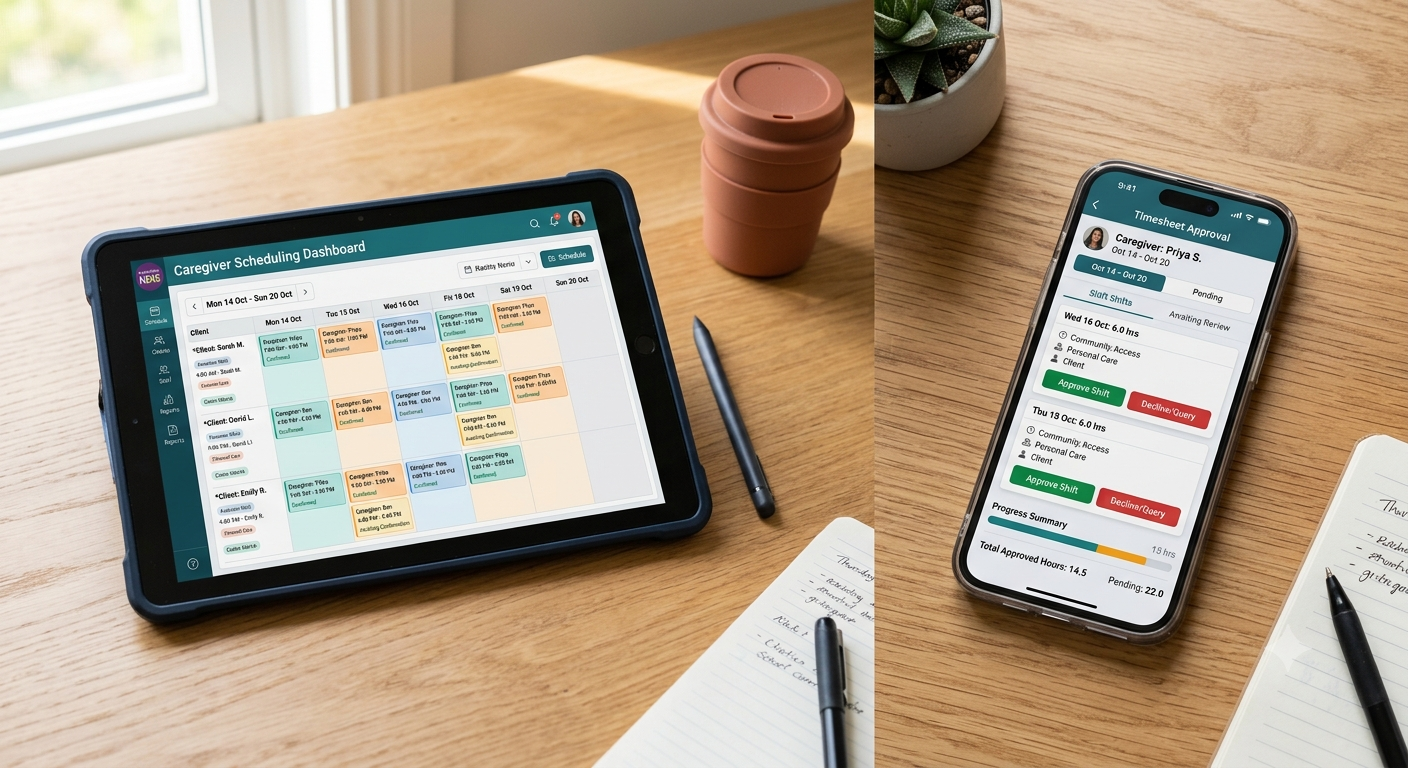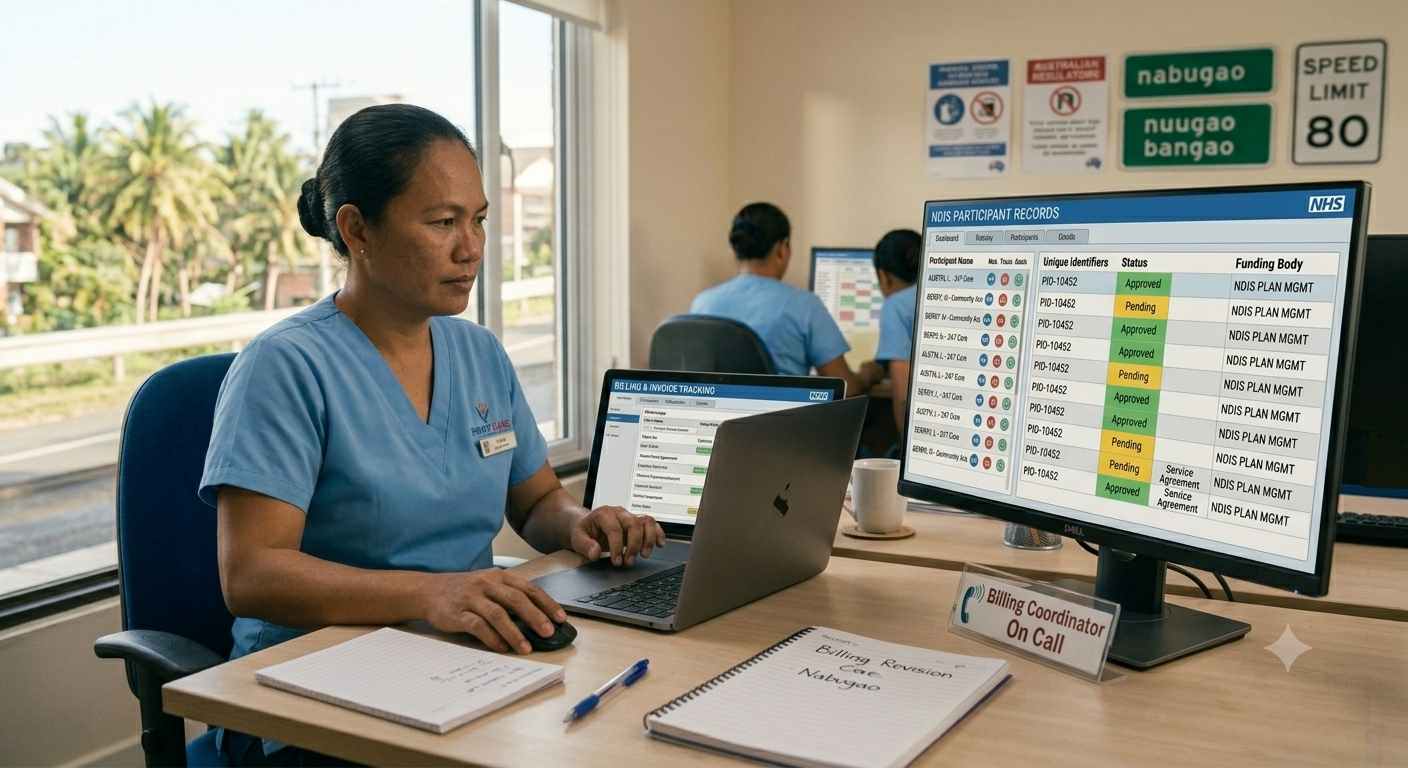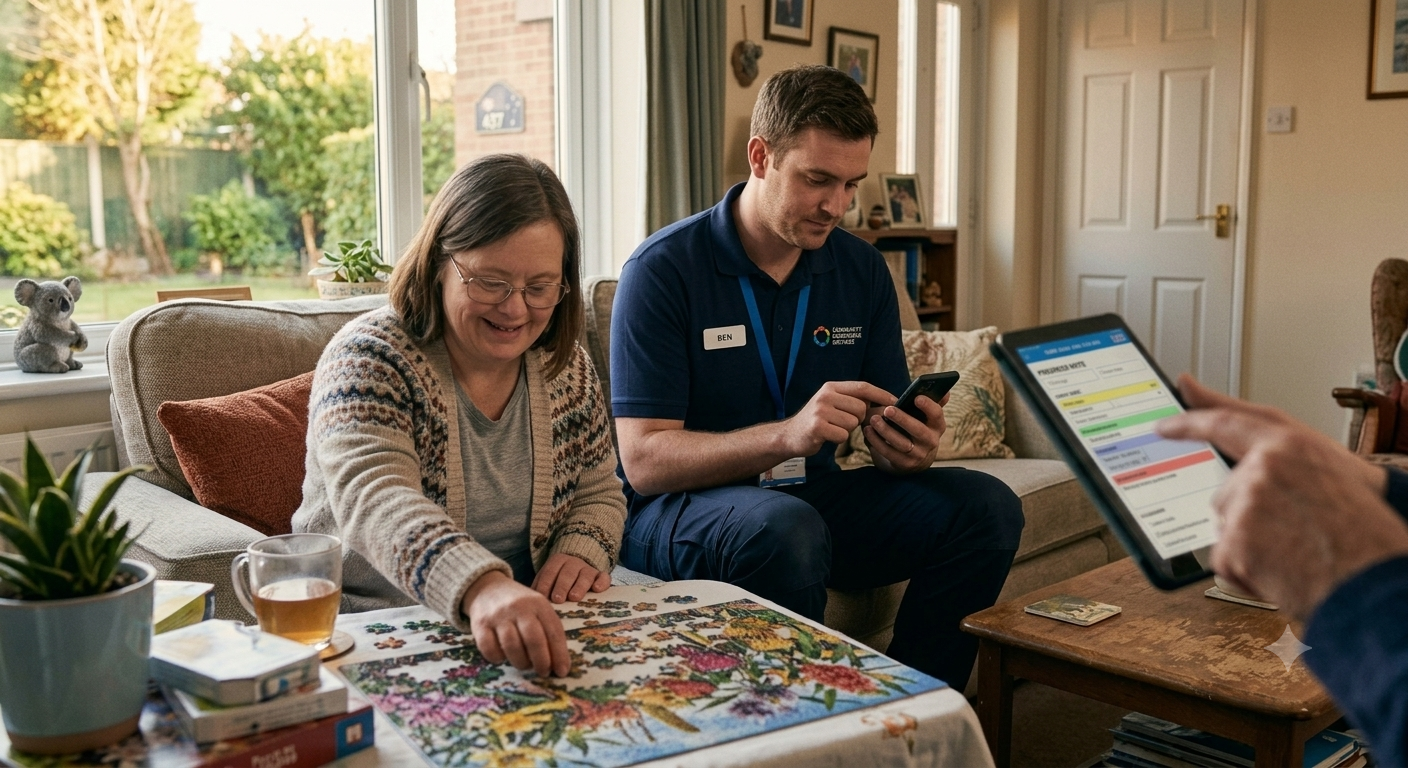
Home aged care teams work in the field, not at desks. Mobile apps enable carers to access schedules, document care at the point of service, verify visits, and stay compliant in real time. The right app reduces admin work, supports offline use, and keeps carers and coordinators aligned.
Most people carry a smartphone everywhere. It’s how we navigate, message, check schedules, and keep track of daily tasks. For aged care teams providing home care, however, your phone can become one of the most practical tools for delivering care in the field.
Carers don’t work at desks or inside fixed systems. They move between homes, manage changing schedules, and document care in real time while working independently. In that context, mobile apps aren’t a convenience anymore. They’re how care teams stay connected, compliant, and supported at the point of care.
Why Mobile Apps Are Essential in Home Aged Care
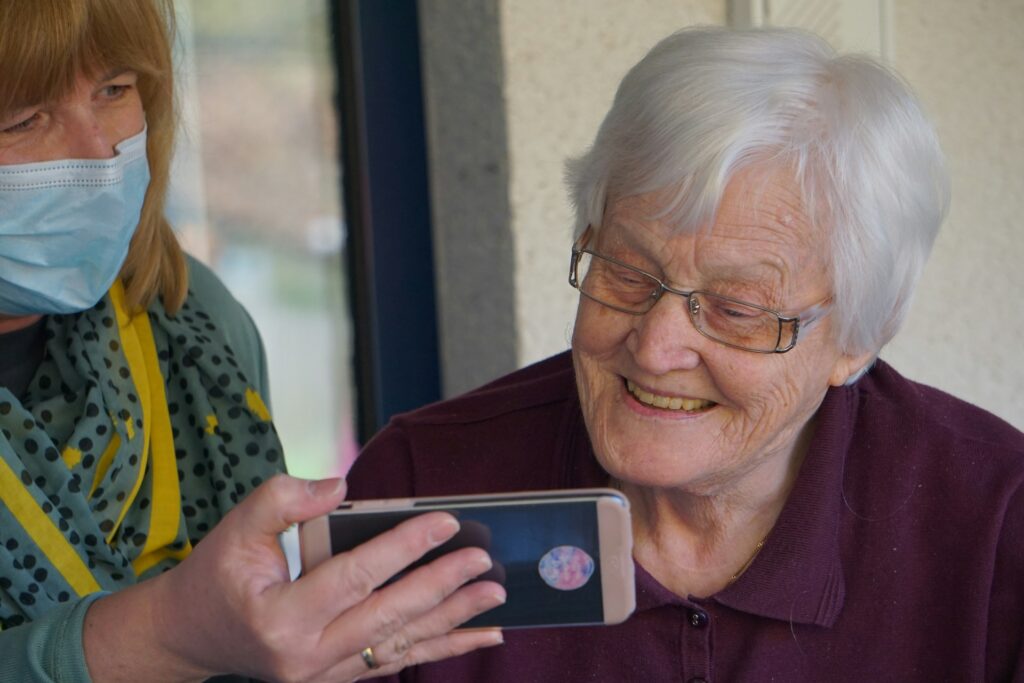
Carers are constantly on the move, travelling between clients’ homes to deliver care services. Their days already involve managing supplies, personal items, and care equipment. Expecting them to carry laptops or return to an office to complete admin tasks adds unnecessary hassle.
Instead, your team should use a comprehensive mobile admin app. Here are some benefits of mobile apps for home care teams:
- Care is delivered in the field, not at a workstation: Mobile apps allow carers to access schedules, care plans, and tasks directly from their device.
- Carers work independently across shifting schedules: A mobile app keeps carers, coordinators, and back-office teams aligned with real-time updates – keeping you connected and providing the tools to document on the go.
- Documentation needs to happen at the point of care: Visit notes, confirmations, and incident reports are more accurate when recorded immediately. Some home care settings may not have a signal, and notes or incident reports need to be logged. Many apps offer offline mode, so your carers can provide updates as they occur.
- Compliance depends on timely, auditable records: Regulators and auditors expect documentation that reflects when and how care was delivered. Delayed or reconstructed records increase the risks when audited and also add additional administrative burden on your staff.
- Workforce expectations have changed: Carers expect tools that fit modern work: mobile-first, simple to use, and reliable even in low-connectivity environments.
What to Look for in a Home Aged Care Mobile App
Not every mobile app can handle the specific guidelines of home aged care. They might look good during demos, but issues like slow interfaces, poor navigation systems, and outdated features can inadvertently hurt your operations. A usable app needs to support care delivery, not add more or unnecessary pressure to your carers.
Here are our top tips for what to look for when selecting an aged care mobile app:
- Point-of-care documentation: Carers should complete notes, tasks, and confirmations during the visit. Apps that rely on end-of-shift reporting increase errors and may add compliance risks.
- Reliable offline functionality: Network errors don’t excuse missing information – from notes or updates on care plans and care delivery. The app should work fully offline and sync automatically once the connection returns, not only keeping your workflow seamless, but making it simple for your team to focus on providing care.
- Clear visit verification: Time, location, and service confirmation should be captured automatically where required, without carers manually entering the same data twice – helping keep your records up-to-date, and your billing clear.
- Simple, carer-friendly workflows: Fewer taps, clear prompts, and no training-heavy screens. If an app needs constant guidance, it won’t be useful for your carers on the go. Always run use cases with your carers when trialling an app, to ensure it’s easy to use and fits how they manage and deliver care with real situations..
- Real-time visibility for coordinators: Updates should sync instantly so that coordinators can see progress notes, completed visits, issues, or changes without chasing staff by phone.
- Role-based access and audit trails: Carers, coordinators, and admins should only see what they need. Built-in audit logs support compliance without exposing unnecessary information.
- Security designed for aged care operations: Practical protections like device access controls, permissions, and traceability matter more than complex clinical or hospital-grade features most home care teams don’t use.
Mobile Care Management App Purpose-Built for Aged Home Care Providers
Deliver care, capture visits, and complete documentation directly from the field. ShiftCare’s mobile app lets carers verify visits, record notes, complete tasks, and submit timesheets at the point of care. Connect mobile care delivery with rostering, reporting, and compliance workflows.
Try for free today free trial today – no credit card needed. See how ShiftCare supports consistent, compliant care delivery for care teams.