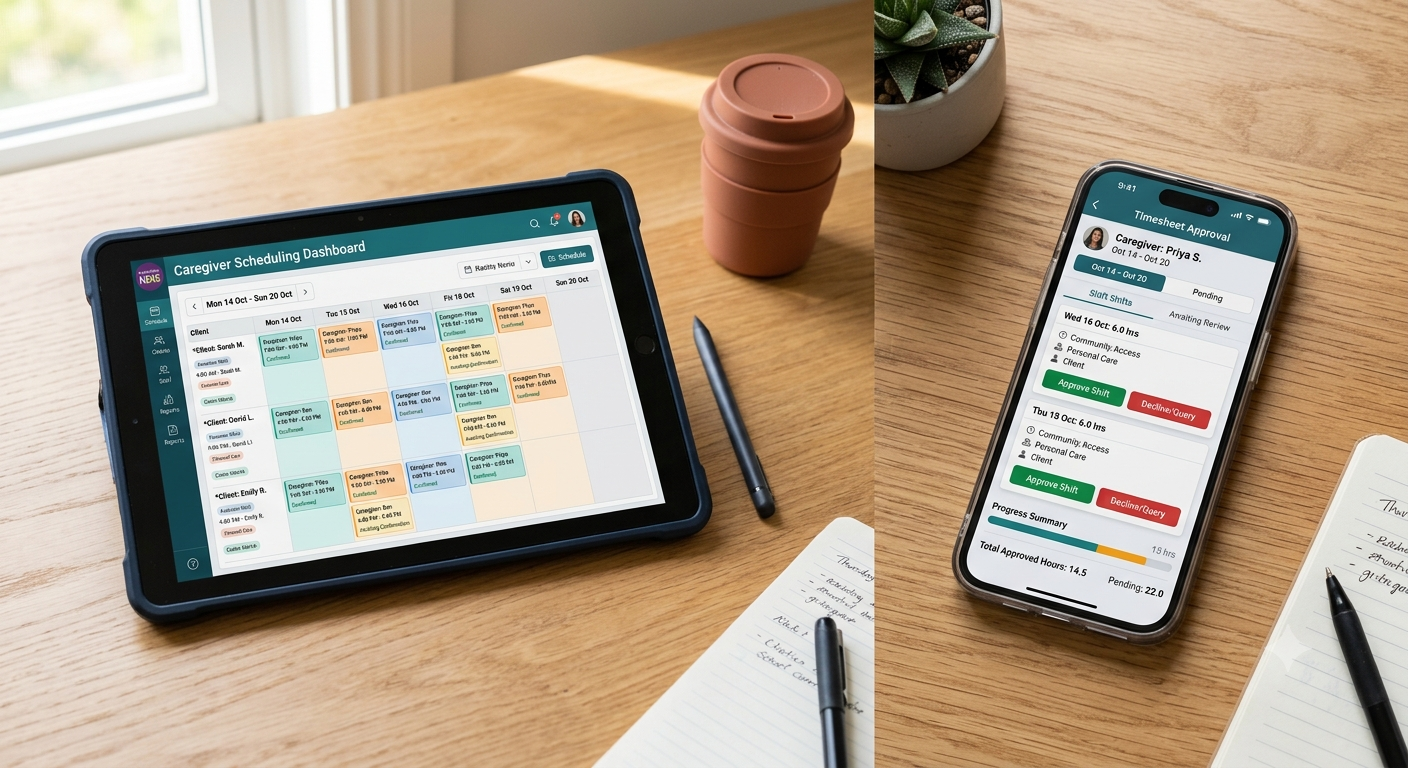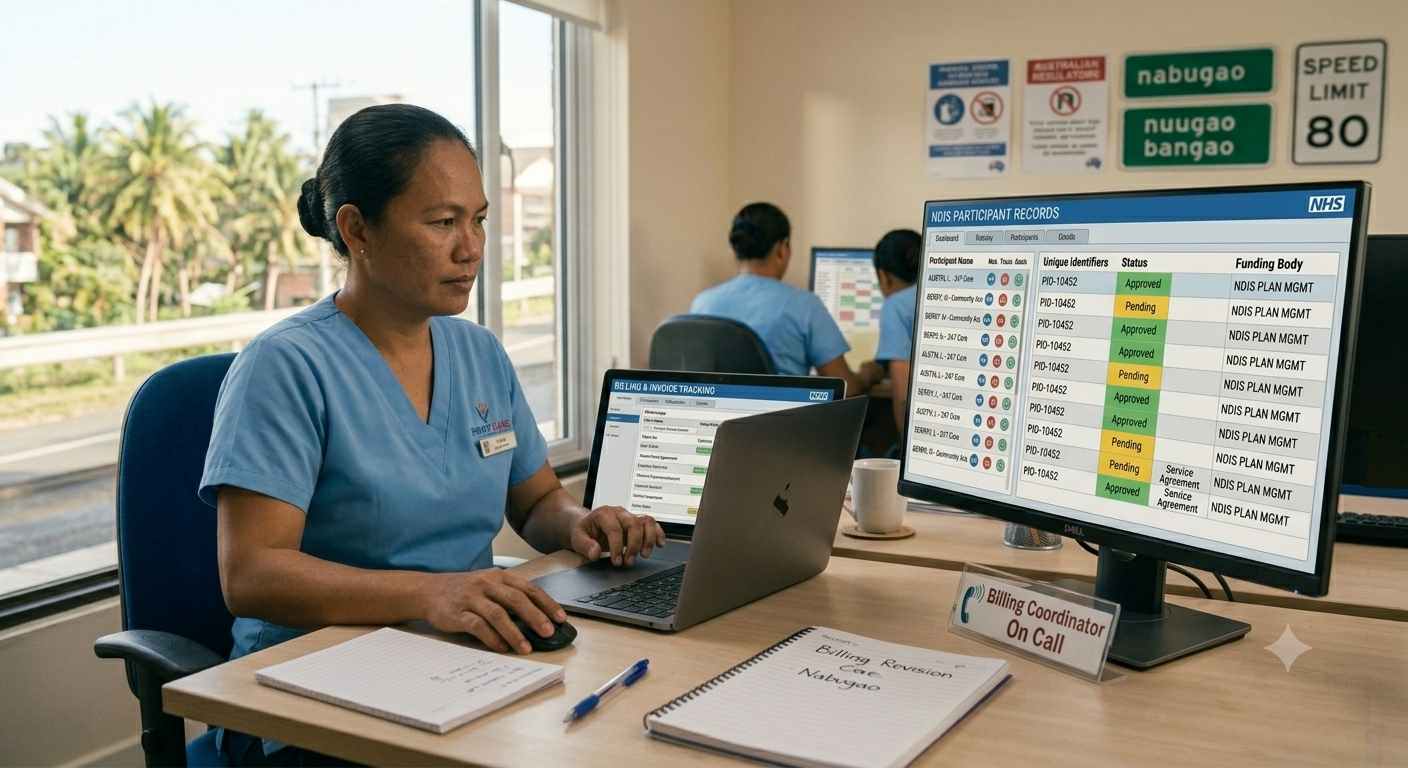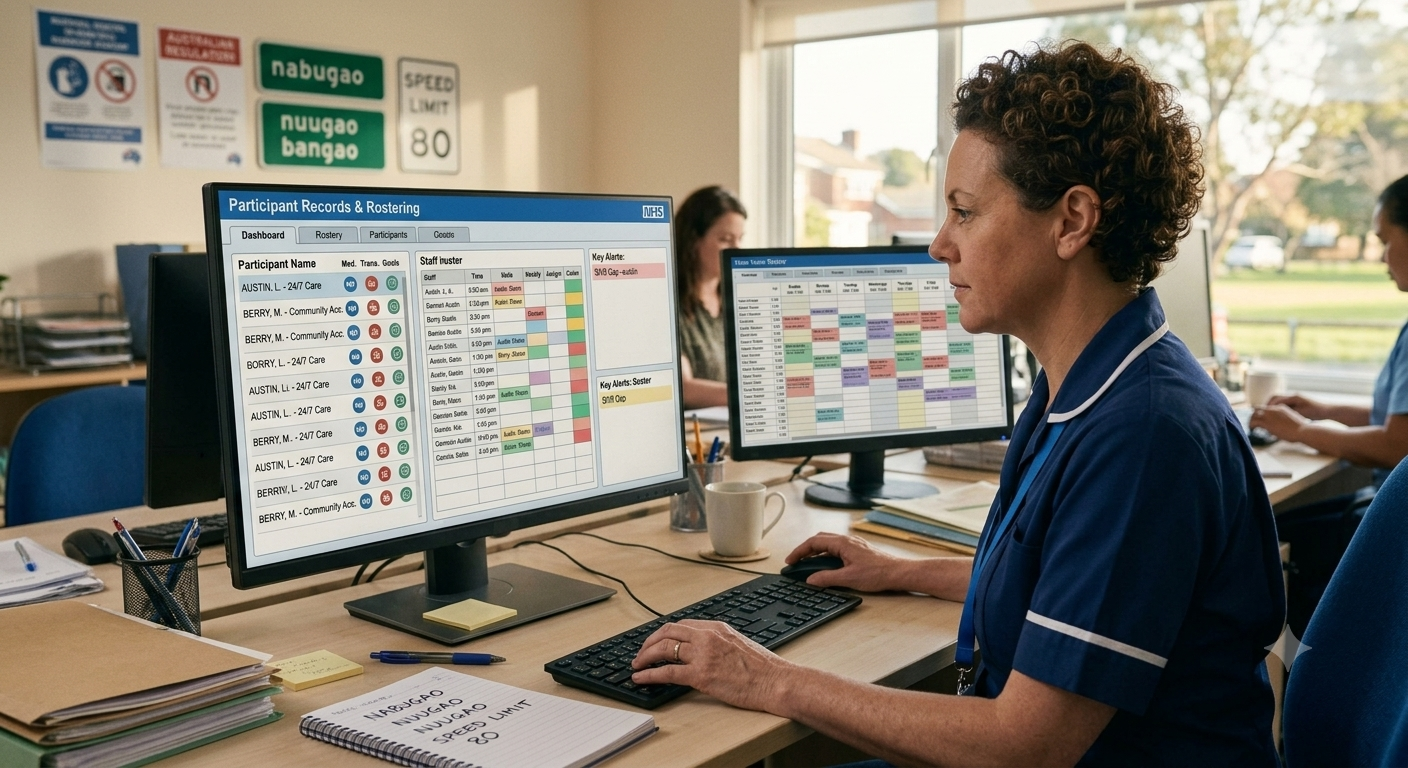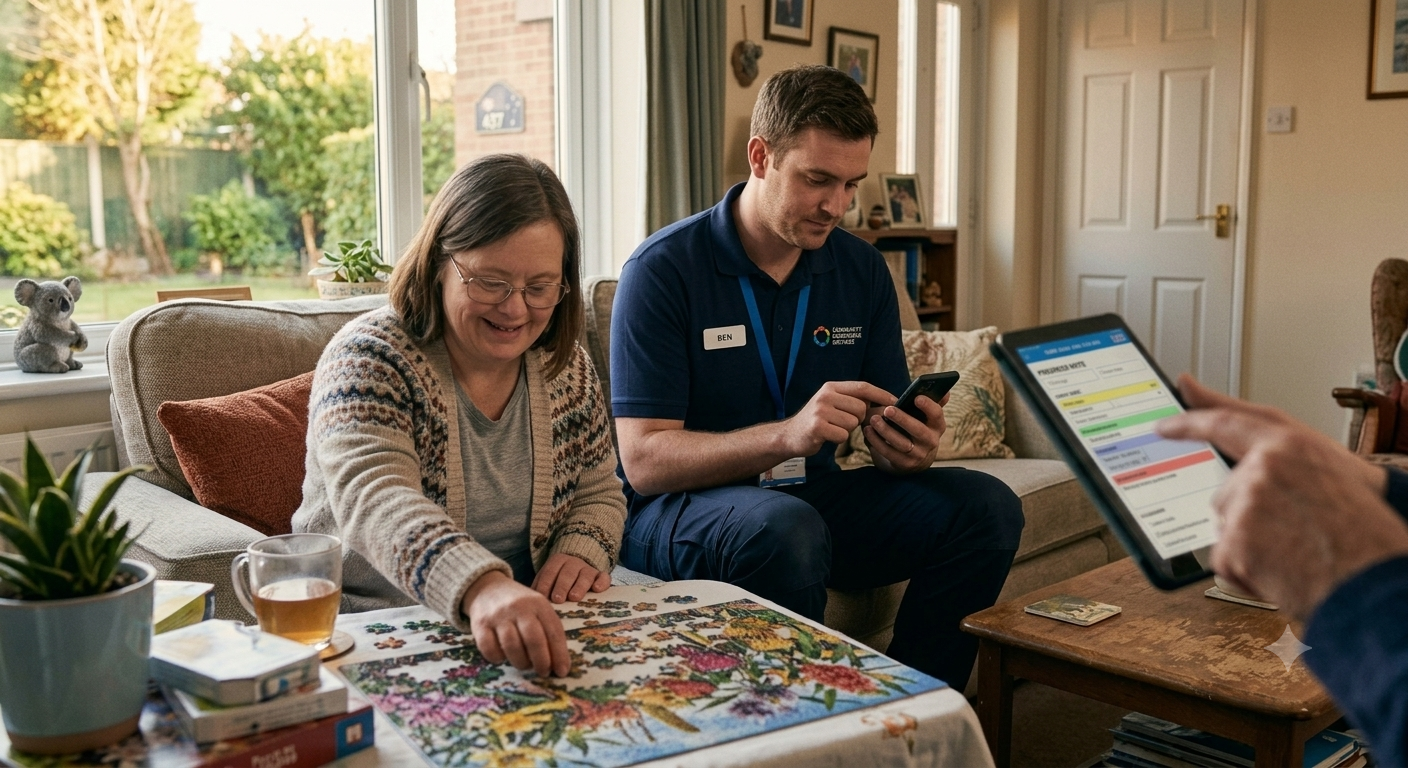
The NDIS supports over 630,000 participants across Australia, and the compliance environment has never been more demanding. The NDIS Amendment (Integrity and Safeguarding) Bill 2025 passed in April 2026, raising maximum civil penalties to $15 million where a participant is harmed. Client management software determines whether providers can demonstrate compliance at audit, deliver person-centred support, and scale operations without the administrative overhead collapsing under the weight of their own caseload.
Providers who manage participant records across spreadsheets, email folders, and paper files don’t have a documentation problem. They have a risk problem that grows with every new participant they take on. This article covers five reasons why client management software is central to running a sustainable NDIS business in 2026.
1. Scattered Participant Records Create Audit Exposure That Manual Systems Can’t Close
The NDIS Quality and Safeguards Commission audits registered providers against the NDIS Practice Standards. Certification audits assess whether your participant records are complete, current, and accessible. Verification audits can be triggered at any time. When an auditor requests six months of participant records, progress notes, and incident logs, a provider relying on shared drives and email threads is reconstructing documentation rather than producing it.
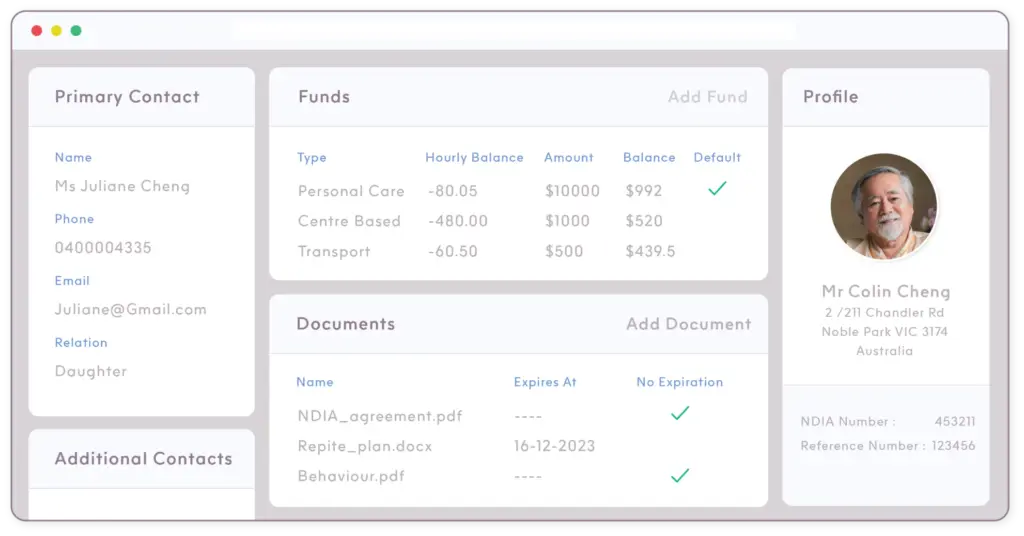
Client management software centralises every participant record in one platform: intake forms, support plans, consent documentation, risk assessments, progress notes, incident records, and communication logs. Role-based access controls ensure each staff member sees only the records their role requires, and a full audit trail logs every access, edit, and update.
What a compliant participant record needs to contain
- Full intake and assessment documentation aligned to NDIS reporting standards
- Person-centred support plan linked to the participant’s approved NDIS goals and funding categories
- Progress notes logged at point of support, connected to specific plan goals
- Risk assessments, health plans, and medication records updated when circumstances change
- Incident records with investigation notes, corrective actions, and completion tracking
- Consent documentation with review dates and a record of informed agreement
2. Goal Tracking Without a Connected System Produces Evidence That Doesn’t Hold Up at Audit
The NDIS is an outcomes-based scheme. Participants fund supports to achieve goals, and providers are expected to demonstrate progress toward those goals through documented evidence. Progress notes that describe what a support worker did without connecting it to a plan goal don’t satisfy NDIS Practice Standard 1.5 on participant outcomes.
When goal tracking lives in a separate spreadsheet from progress notes, coordinators have no reliable way to see whether supports are producing measurable movement toward plan goals across a caseload. That gap becomes visible at audit and in plan reviews when the participant’s Local Area Coordinator or support coordinator asks for evidence of goal progress.
Client management software connects goals to every shift and progress note so the relationship between funded support and outcome is documented automatically. Coordinators can see which goals are progressing, which are stagnant, and which supports have produced the strongest results across the caseload. That data supports both audit evidence and plan review conversations.
3. Service Agreement Management Across a Growing Caseload Creates Revenue Leakage Without Automation
Every NDIS participant requires a service agreement that defines the supports to be delivered, the funding categories to be drawn from, and the price limits that apply. As caseloads grow, tracking which participants have current service agreements, which agreements are approaching expiry, and which have funding categories that are approaching exhaustion becomes operationally complex.
Revenue leakage in NDIS businesses is often a systems problem rather than a billing problem. When coordination, rostering, and service agreement records aren’t connected, funded hours disappear in the gaps between systems. A support worker delivers a service that wasn’t matched to a current service booking. A participant’s funding runs out mid-month because nobody tracked the draw-down in real time. A service agreement expires without renewal and claims are rejected.
Client management software connects service agreements to rostering so only authorised services get scheduled and billed. Budget balance alerts surface when a participant’s funding is approaching exhaustion in a given category. Automated reminders flag service agreements approaching their review date before a gap in authorisation creates a billing problem.
4. Incident Management Obligations Require a System That Connects Incidents to Participant Records and Triggers Reportable Notifications
The NDIS Commission requires registered providers to report certain incidents within 24 hours of becoming aware. Reportable incidents include unexpected death, serious injury, abuse, neglect, and unlawful sexual or physical contact. The Reportable Incident Rules require providers to maintain an internal incident management system covering all incidents, not just reportable ones.
In November 2025, Lifestyle Solutions received a $2.5 million Federal Court penalty, including $500,000 for 1,811 contraventions of the Reportable Incident Rules over five years. In January 2026, Oak Tasmania received a $1.1 million penalty that included $350,000 for 474 contraventions of the same rules. Both cases involved systemic failure to report incidents correctly and on time.
Client management software handles incident management as a connected workflow. When a support worker logs an incident on mobile during a shift, the platform classifies it as reportable or non-reportable based on the incident type, automatically notifies the relevant supervisor, and initiates the documentation workflow. Every record includes investigation notes, corrective actions, and a timestamped audit trail accessible for Commission review.

5. Family and Participant Communication Without a Secure Platform Creates Privacy and Compliance Risk
Support coordinators and families need visibility into a participant’s plan, goals, and service delivery without accessing the full clinical record. Providers who manage this through personal email accounts, text messages, or shared cloud folders create data privacy exposure under the Privacy Act 1988 and risk breaching participant confidentiality.
The Australian Information Commissioner can investigate privacy complaints against NDIS providers. Unauthorised disclosure of a participant’s personal information, including sharing care records through insecure channels, constitutes a notifiable data breach if it is likely to result in serious harm.
A family portal within a client management platform gives authorised family members and participants controlled visibility into care summaries, upcoming visits, and goal progress without exposing the full clinical record. Communication is logged within the platform rather than scattered across personal devices. Consent for information sharing is documented and accessible, satisfying both NDIS Practice Standards and Privacy Act obligations.
Build a Client Management Foundation That Scales With Your Caseload
The five functions above — participant records, goal tracking, service agreement management, incident reporting, and secure family communication — are where the operational gap between purpose-built NDIS software and generic tools becomes consequential. At low caseloads, manual systems are workable. At 30, 50, or 100 participants, they create the gaps that surface at audit and in plan reviews.
ShiftCare’s NDIS client management platform centralises participant records, support plans, and goal tracking in one system. Rostering tools connect service agreements to shift scheduling so only authorised supports get delivered and billed. Progress notes are logged on mobile at point of support and linked directly to participant goals. Incident management connects to the participant record with automated supervisor notification and timestamped documentation. The family portal gives authorised family members secure visibility into care summaries without exposing the full clinical record.
Start your free trial today and see how ShiftCare helps Australian NDIS providers build the client management foundation that audit readiness and sustainable growth both depend on.