Shift Handovers in Group Homes: The 10 Minutes That Prevent Most Incidents
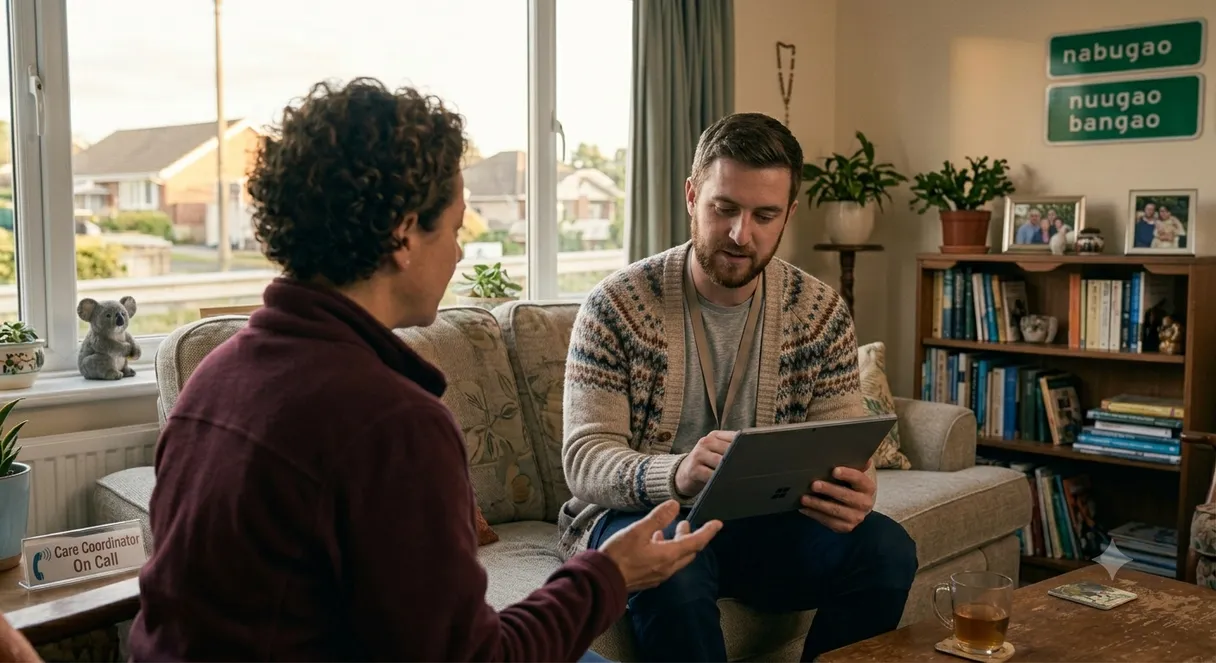
Group home shift handovers take about ten minutes. How those ten minutes go determines what the next shift knows, what it misses, and how a worker responds when something starts to look off. Here’s what effective information transfer looks like in practice, and where most handovers quietly fall apart.
A group home shift handover is supposed to take ten minutes, and most of the time it does exactly that: nothing dramatic, just one worker updating another before walking out the door. At a four-bed home in Hamilton, Ontario, a support worker named Priya was three minutes from the end of her shift when she caught something she’d almost let slide: one resident had refused his afternoon snack. Unusual, but not alarming on its own. She mentioned it anyway.
Two hours later, that resident had a seizure. His care plan noted that appetite changes sometimes preceded seizure activity, and the incoming worker, primed by Priya’s observation, caught the early signs in time to get help before it escalated.
Why the Group Home Shift Handover Gets Rushed More Than Any Other Task
Handovers get compressed because they fall at exactly the wrong moment: the outgoing worker is thinking about leaving, and the incoming worker is thinking about starting. In a four-bed group home, that pressure is sharper than in a larger facility, because there is no team meeting to catch what one person forgets. One worker to one worker, and whatever doesn’t get said stays unsaid.
Ontario’s serious occurrence reporting patterns and similar incident data tracked by Community Living BC consistently show incomplete handover information as a contributing factor in avoidable incidents. Not because workers are careless, but because the transfer relies entirely on memory and timing.

What Priya’s Ten Minutes Actually Prevented
The detail that mattered wasn’t dramatic on its own. A refused snack is not an emergency. What made it useful was context: the incoming worker already knew, from the resident’s care plan, that appetite changes sometimes preceded seizure activity. Without that link, the same observation would have been forgotten by dinner.
A group home shift handover has one job: transfer the small, specific observations that only make sense against a person’s individual care plan. Task lists, appointment reminders, and supply notes matter, but they can be read from a file. The information that changes how the next shift acts usually cannot wait.
The Information That Actually Needs to Cross Shifts
Most handovers try to cover everything, which is how the important details get buried under routine updates. The information that actually changes how the next shift responds tends to fall into three areas:
- Anything unusual in mood, appetite, sleep, or behaviour compared with the client’s normal pattern
- Any change to medication timing, appointments, or family visits due that shift
- Any incident, near miss, or unresolved concern from earlier in the day that hasn’t yet been formally logged
Everything else can wait for the written file rather than crowding a verbal exchange already under time pressure.
What a Good Handover Routine Looks Like in Practice
A handover that works usually has a fixed, short structure rather than an open-ended conversation. Some Ontario and BC group homes use a verbal walkthrough covering those three categories, backed by a written note in the client’s file that the incoming worker reads before starting tasks, not after. Others build the habit around a quick walk through each resident’s space, pointing out anything physically different from the previous shift.
The specific method matters less than consistency. A worker notices something is missing only when the routine is familiar enough to have a baseline.

Why Verbal-Only Updates Fail Under Pressure
Verbal-only updates fail for a predictable reason. At the end of a long shift, workers default to habit: they mention what they always mention and skip what feels unusual precisely because it doesn’t fit their usual script. Fatigue makes the unusual harder to surface, not easier.
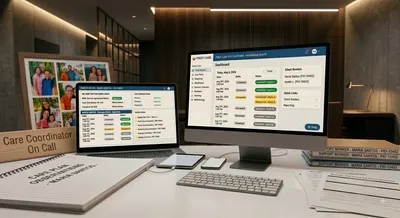
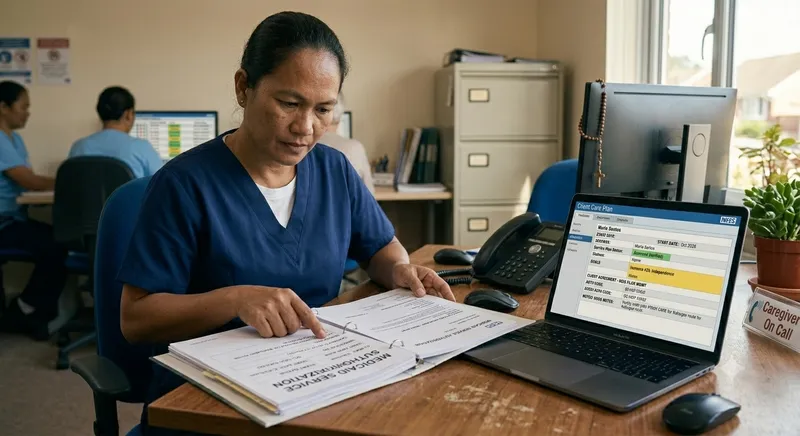
A written component forces a moment of deliberate recall. Even a short note about what was different that day leaves a record the next shift can check later if something starts to look off. Shift notes entered directly against a client’s record at the point of care keep that information where the next worker can find it, without relying on verbal memory.
Building a Routine That Survives Staff Turnover
Staff turnover is where informal handover habits collapse fastest. A team that has worked together for years develops unwritten shorthand about what to flag, and none of that transfers automatically to a new hire covering a shift for the first time.
Group homes that maintain good handover practices through turnover tend to write the process down as a short checklist tied to each client’s individual care plan, kept somewhere both outgoing and incoming workers can access it. Institutional knowledge should not live only in the heads of long-tenured staff.
Frequently Asked Questions
What should a group home shift handover include?
A group home handover should cover three categories: changes in a client’s mood, behaviour, appetite, or sleep compared with their usual pattern; any upcoming appointments, medication timing changes, or family visits; and any incident or unresolved concern from the outgoing shift that hasn’t yet been formally logged. Everything else, including routine task lists and supply updates, can wait for the written file. Community Living Ontario guidance on incident documentation reinforces this prioritisation across disability services in the province.
Why do shift handovers fail in group homes?
Verbal-only handovers fail because they rely on the outgoing worker to judge what matters while fatigued and focused on leaving. Unusual details get skipped because they don’t fit the routine script workers default to under pressure. Without a written component, the incoming worker has no record to check later if something starts to look off during their shift.
How does staff turnover affect handover quality?
Teams that have worked together for years develop unwritten shorthand about what to flag and what can wait. New hires don’t inherit that knowledge automatically. Group homes that document their handover process as a short structured checklist tied to individual client records maintain consistent standards regardless of how often staff change.
How can Canadian disability providers reduce incident risk during shift changes?
Ontario’s serious occurrence reporting patterns and data from Community Living BC both point to incomplete handover information as a recurring factor in avoidable incidents. Providers reduce that risk by adding a written component to every handover, structuring it around the three categories most likely to affect the next shift’s decisions, and making each client’s current care plan visible to incoming workers before they start tasks.
Make Shift Handovers Part of the System, Not a Test of Memory
Priya’s story ends well because one worker made a choice to mention a small detail. Most handovers don’t have that outcome documented anywhere, which means good practice stays invisible and gaps stay hidden until an incident surfaces them. A system built on memory and verbal custom is one staff change away from losing everything it depends on.
ShiftCare’s disability care management software gives support workers in Ontario, BC, and Alberta a way to log shift notes directly against each client’s record, making care plans and previous observations visible to the incoming worker before they start. The caregiver app works from any mobile device, so notes travel with the worker, not the paperwork.
Start your free trial today! See how ShiftCare can help you deliver higher-quality care services.