Care Team Communication in Aged Care and Disability Services: A Guide for Australian Providers
Care team communication failures in Australian aged care and disability services rarely announce themselves. A sticky note on a fridge, an unread group chat, a verbal handover that never happened. The ACQSC and NDIS Commission both identify information gaps as a factor in preventable incidents. Here’s what structured communication looks like in practice.
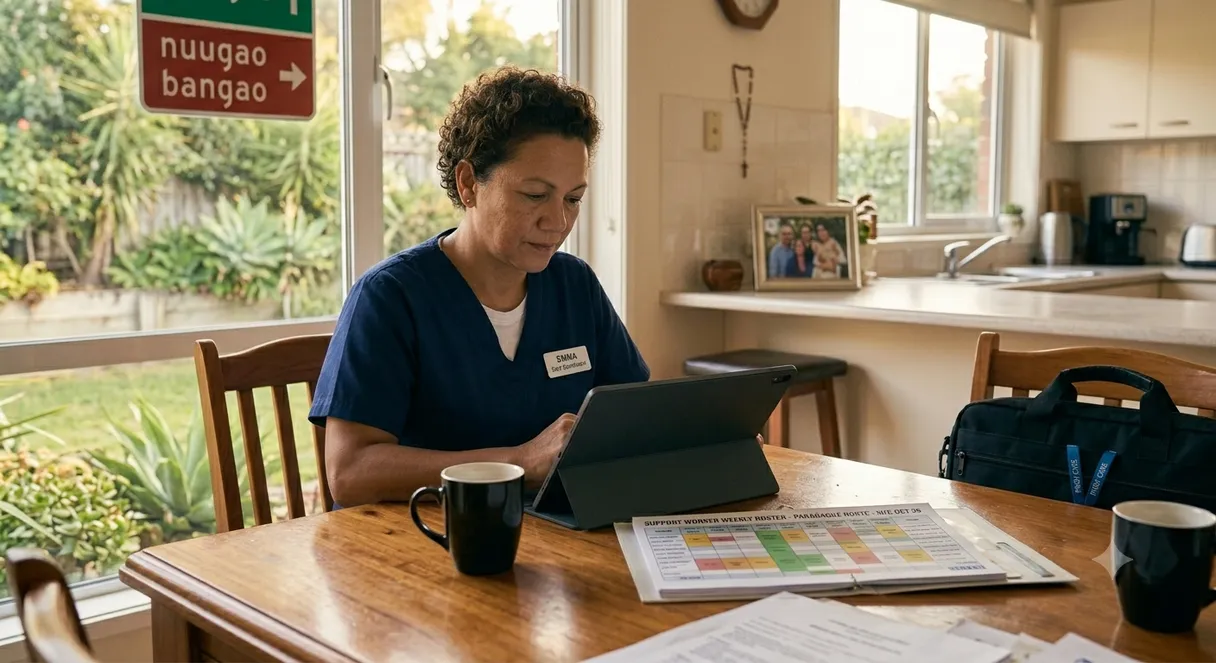
Maria’s support worker arrived for the Tuesday afternoon shift and found a note stuck to the fridge: “Dr changed the blood pressure tablets, ask family for details.” No timing, no dosage, nothing in the file. The regular coordinator was on leave, the previous shift’s carer hadn’t logged anything beyond a tick box, and the new tablets sat in their packet while everyone waited for someone to call the pharmacy back. Nothing went wrong that day, but it easily could have. The kind of near miss that plays out weekly across Australian aged care and disability services, usually without anyone outside the team knowing.
When Care Team Communication Breaks, It’s Rarely Loud
Communication failures in care rarely look dramatic in the moment. They look like Maria’s fridge note: quiet, incomplete, and easy to miss until something compounds on top of it. The Aged Care Quality and Safety Commission’s standards specifically identify communication and information sharing as a core expectation of safe, person-centred care. The NDIS Commission’s incident management framework consistently surfaces cases where a meaningful share of incidents trace back to information that existed somewhere in the system but never reached the right person at the right time.
The problem isn’t usually that nobody knows something important. It’s that what they know lives in a text message, a paper diary, a verbal handover, or someone’s memory, and none of those travel reliably between a Tuesday afternoon shift and a Wednesday morning one.

Why Group Chats and Sticky Notes Aren’t a System
Most providers don’t set out to run communication this way. It happens gradually. A WhatsApp group gets created because it’s faster than emailing, a printed folder gets left at the client’s house for notes, and a coordinator becomes the unofficial hub who holds the full picture in their head.
When the team is small and stable, that informal structure holds. The moment someone goes on leave, a new starter joins mid-week, or a client has three different workers rotating through in a fortnight, the gaps become visible. Group chats bury important information under casual conversation, and there’s no reliable way to confirm someone has actually read and understood an update rather than just seen a notification. For anything touching medication, behaviour support, or a change in a client’s condition, that’s not a system that holds up under scrutiny. It creates exactly the kind of documentation gap that surfaces badly if a regulator asks questions.
The Handover Gap Between Shifts
The riskiest moment in most care schedules is the handover: the fifteen minutes either side of a shift change where one worker’s knowledge needs to become the next worker’s. Done well, it’s a genuine conversation backed by a written record. Done badly, it’s a rushed goodbye in the driveway or nothing at all, especially when the outgoing worker is already late for their next booking.
Addressing this doesn’t mean adding more meetings. It means ensuring the information that actually matters — medication changes, behavioural triggers, family instructions — is written down in one place the next worker opens before walking in the door, rather than trusting it will be passed on verbally.
What Good Care Team Communication Looks Like Day to Day
Providers who get this right tend to share a few consistent habits. Every client has a single, current source of truth for care instructions rather than versions scattered across paper and phones. Support workers log updates as they happen, not at the end of the week when details have already blurred. Coordinators can see what’s been logged without chasing individual staff for updates, and urgent flags — a fall, a refusal of medication, a change in mood — are visible immediately rather than discovered days later during a routine check-in.
Progress notes entered at point of care are the practical engine behind this. A worker who records what happened during the shift, while still in the client’s home, produces a record the next shift can act on. A worker who plans to write it up later produces a record that may or may not arrive, and may or may not be accurate when it does.
None of this requires workers to be constantly glued to a screen. It requires the system they already use for shifts and notes to be the same place where communication happens, so there isn’t a second tool competing for their attention.
Bringing Documentation and Messaging Into One Place
Moving communication out of personal phones and into the same platform that already holds the roster and the client file is the practical shift a growing number of Australian providers are making. Team collaboration tools that route messages against a specific client or shift keep context intact in a way a general group chat cannot, and prevent important updates from being buried under unrelated conversation.
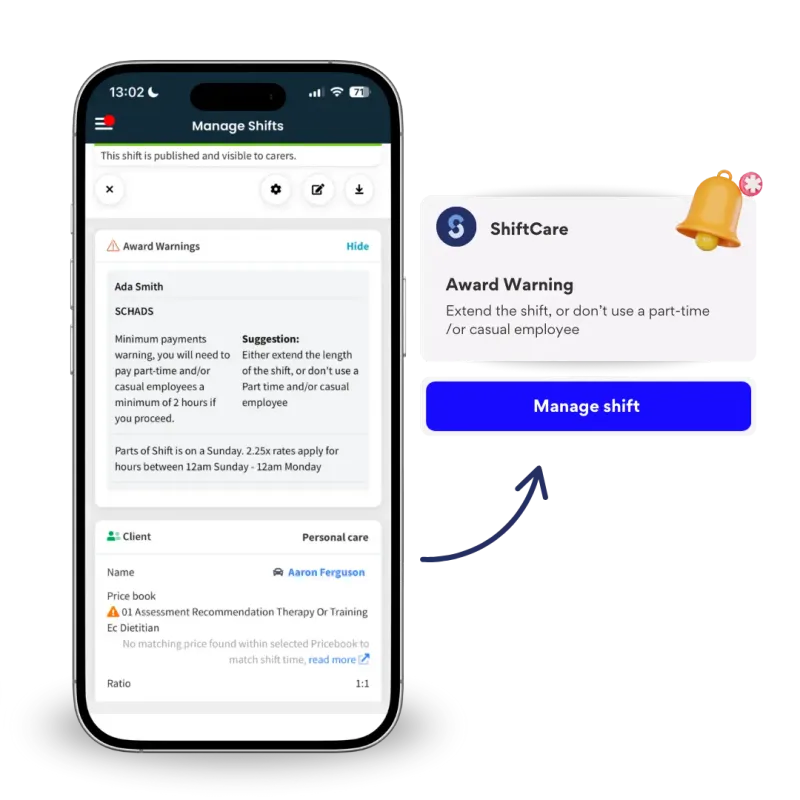
Communication logged against a client’s file is also accessible to the next worker from the same screen as their roster. When a new worker opens a shift, the relevant notes and recent messages are right there, not somewhere they have to go looking for separately.
Frequently Asked Questions
What are the most common care team communication failures in Australian aged care?
The most common failures are verbal handovers with no written backup, important updates shared only in group chats where they get buried, and coordinators acting as the unofficial knowledge hub whose absence creates an immediate gap. The ACQSC standards require providers to have formal communication systems in place, not rely on informal channels that depend on individual workers’ habits and memory.
Why are WhatsApp and group chats a compliance risk for care providers?
Group chats have no reliable read confirmation, no audit trail tied to a specific client, and no way to ensure the right worker received a critical update before starting a shift. For anything involving medication changes, behavioural triggers, or incident follow-up, a group chat creates a documentation gap that becomes a compliance problem if an incident is reviewed. Information that existed in a chat but never reached the responsible worker is not the same as information that was communicated.
What does good handover communication look like in disability and aged care settings?
A good handover has two components: a brief verbal exchange covering anything urgent, backed by a written note entered against the client’s record that the incoming worker reads before starting tasks. The written component is what makes the verbal exchange redundant if it gets cut short. Providers that structure handovers around a specific client record rather than a general chat or paper diary maintain consistent standards regardless of who is handing over to whom.
How can providers meet ACQSC and NDIS Commission communication standards?
Both the ACQSC and the NDIS Commission expect providers to have formal systems for information sharing, not informal channels that depend on individual workers. Meeting that standard in practice means using a platform where communication is logged against client records, visible to coordinators without chasing individual staff, and accessible to the next worker before they start their shift.
Run Care Team Communication Through the System, Not Around It
Care communication that runs through group chats, verbal handovers, and paper notes looks functional until it isn’t. An ACQSC or NDIS Commission review of an incident frequently surfaces the same pattern: the information existed somewhere in the system but never reached the right person in time. Providers relying on informal channels build that risk into every shift change.
ShiftCare’s care management software lets coordinators and support workers log updates directly against each client’s record, so the incoming worker sees what changed before they walk in the door. Team collaboration tools keep messages tied to specific clients and shifts rather than buried in a general chat. Start your free trial today, no credit card required, and give your team a communication system that holds up when a regulator asks what happened between Tuesday afternoon and Wednesday morning.