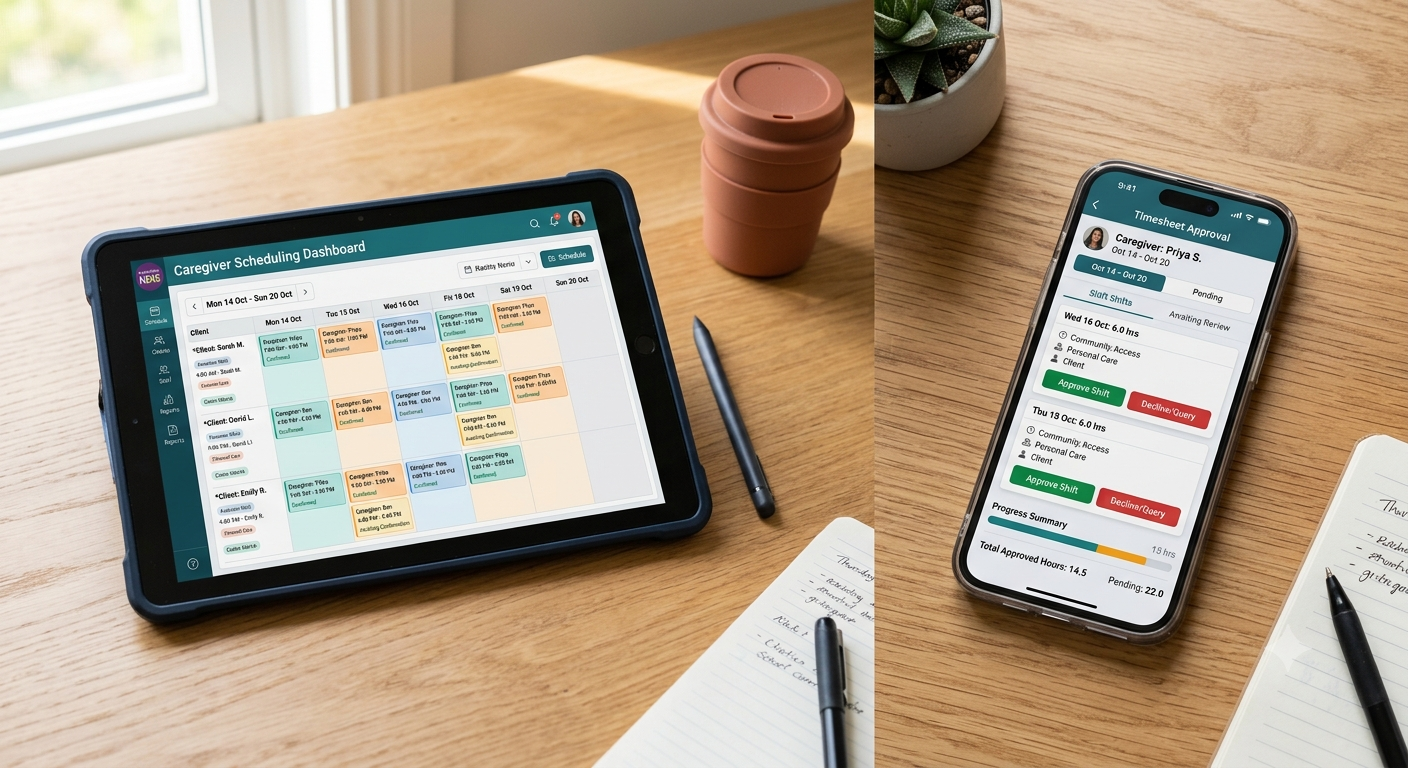
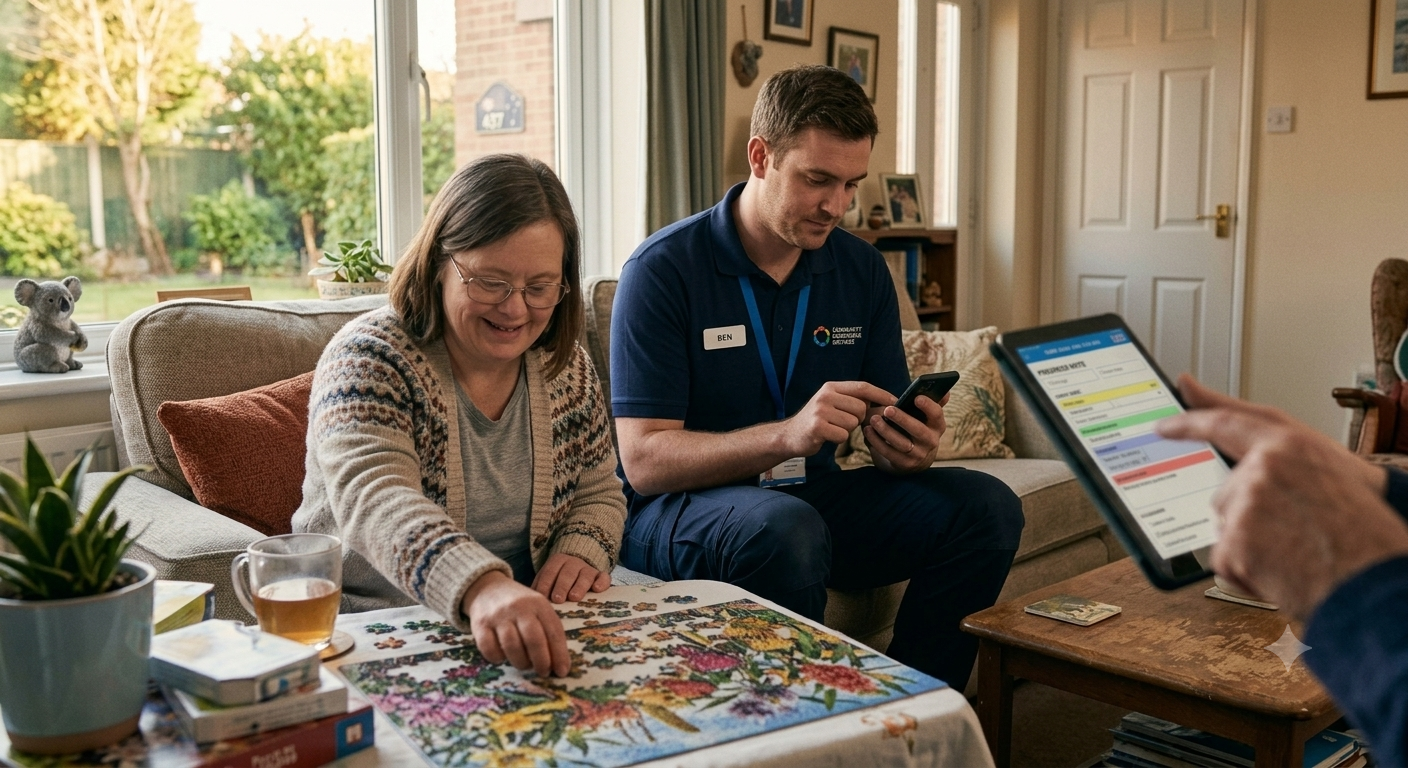
NDIS progress notes are an essential part of care management as an NDIS provider or Aged Care business.
Not only do they detail a client’s progress and the support being provided by care staff, but they’re also critical for maintaining compliance with NDIS regulations.
As a care provider, however, you know that writing progress notes can be a time-consuming and burdensome process – and there are several challenges you can encounter in making sure they’re up to scratch for care management and auditing purposes.
That’s why, at ShiftCare, we’ve put together a range of best practices to show you how to write progress notes more efficiently and effectively.
Before we start, though, let’s check out some of the more common issues care workers typically face with writing progress notes.
What are the common challenges involved with writing NDIS progress notes?
We already know that writing progress notes can be incredibly time-consuming, meaning many care workers may try to rush the process between appointments or at the end of their shift.
The problem is that this can easily lead to data errors, inaccuracies or insufficient information in some notes as a result of trying to get them done as quickly as possible.Another common issue many care workers face is how to write progress notes that are consistent in structure and formatting. Without any structure, one note might read quite differently from the next, making it difficult for other NDIS care staff, family members or auditors to understand how the client is doing or what they need.
Likewise, NDIS and Aged Care progress notes created and stored using manual systems – like Excel and Note Pad – can also be difficult to share and collaborate on. It’s also quite easy to run into privacy and confidentiality issues when storing medical progress notes manually as well.
When you consider each of these challenges, it’s easy to see how this could potentially impact the quality of support that your care workers are able to provide to their NDIS participants.
So, what can you do to solve these challenges?

3 best practices for writing NDIS progress notes
Don’t worry! Putting together your NDIS care documentation doesn’t have to be such a challenge or burden.
By following a few simple suggestions, you can show your team how to write patient progress notes that are of a high-quality without sacrificing time, detail or the level of support they’re able to provide:
- Keep progress notes simple yet effective
It’s easy to forget that NDIS progress notes don’t have to be fancy. As long as they are thorough and effective, that’s all you need.
To help with simplifying your progress notes, take the time to review existing notes and put together a simple standard that outlines exactly what information your care workers need to include.
Trust us, your staff will thank you for it.
If you want to make things even easier for them, try our next suggestion.
- Create an NDIS progress notes template
A simple custom template with a clear, concise structure is one of the easiest ways to help make note-taking so much faster for your care staff.
Not only that, but it will also ensure that every note contains the right information in the right order, helping to make them much easier to understand when sharing or collaborating with other staff, families or auditors.
Don’t worry, this doesn’t have to be complicated. In fact, with care notes software like ShiftCare, building an NDIS progress notes template is a breeze.
We can even take this another step further.
- Use progress note software to help transcribe your care notes
Gone are the days when care workers need to write out their NDIS progress notes by hand – or even type them out on a computer or tablet. You can now get NDIS care notes software with a transcription feature that enables your staff to simply talk into their device and have it populate the fields in the relevant NDIS progress notes template by converting their speech to text.
Once again, you can find this handy NDIS transcription feature on the ShiftCare platform.
Naturally, this will help dramatically reduce the time spent creating progress notes, leaving your staff with much more time to focus on the important things like care management and supporting their clients.
How ShiftCare simplifies creating and managing NDIS progress notes
As you can see, our ShiftCare platform and NDIS progress note software has been designed with each of these best practices front of mind.
Through these features and more, ShiftCare enables you and your team to easily fill out care documentation and improve collaboration and communication between staff and families to help bring the focus back to what matters most.
As part of our care notes software, ShiftCare also enables staff to upload several different file types to support their notes, including .png, .jpg, .pdf, word and email files.
Any Aged Care or NDIS incidents can also be easily documented quickly and correctly to ensure full compliance.
Most importantly, ShiftCare also allows you to control exactly who can gain access to each client’s progress notes to help maintain their privacy and confidentiality.

Ready to transform your approach to NDIS progress notes with ShiftCare?
ShiftCare is an easy-to-use care management platform designed to streamline day-to-day operations and reduce administration burdens for NDIS providers, as well as Aged Care and Disability Support services.
Boasting powerful and intuitive features, ShiftCare offers key solutions to improving care management, rostering, HR, invoicing, NDIS compliance and so much more, enabling you and your team to focus on delivering a higher standard of personalised client care.
So, if you’re looking for the right progress note software to help streamline your NDIS admin, ShiftCare has got you covered.
Book a demo or get in touch with our team today to discover how ShiftCare can revolutionise your care management and give you back more time for what truly matters.