Understanding the Foundations of Fair Shift Rostering
Fair shift rostering begins with recognising that every care worker has unique needs, preferences, and circumstances. Some might prefer morning shifts to accommodate family responsibilities, while others might be more productive during evening hours. The key lies in finding the sweet spot between these individual preferences and your organisation’s operational requirements.`
Recent studies show that well-planned rosters can reduce staff turnover by up to 25% and increase job satisfaction significantly. This is particularly relevant in the Australian care sector, where worker retention remains a critical challenge.
Essential Elements of Effective Shift Rostering
Creating balanced rosters requires careful consideration of multiple factors. First, you need to ensure adequate coverage across all shifts while maintaining appropriate staff-to-client ratios. This becomes even more complex when factoring in different skill levels, qualifications, and experience required for specific care situations.
Compliance with industry regulations is another crucial aspect. Australian care providers must adhere to various awards and enterprise agreements, including minimum break periods between shifts and maximum weekly hours. Failing to account for these requirements can result in costly penalties and unhappy staff.
Best Practices for Fair Schedule Distribution
One effective approach is implementing a rotating roster system where demanding shifts are distributed equally among team members. This ensures no single worker consistently gets stuck with less desirable shifts. Additionally, incorporating staff preferences where possible shows respect for work-life balance and personal circumstances.
It’s also important to provide adequate notice of upcoming rosters. While the minimum notice period varies by award, giving staff more time to plan their personal lives often results in fewer last-minute changes and improved attendance rates.
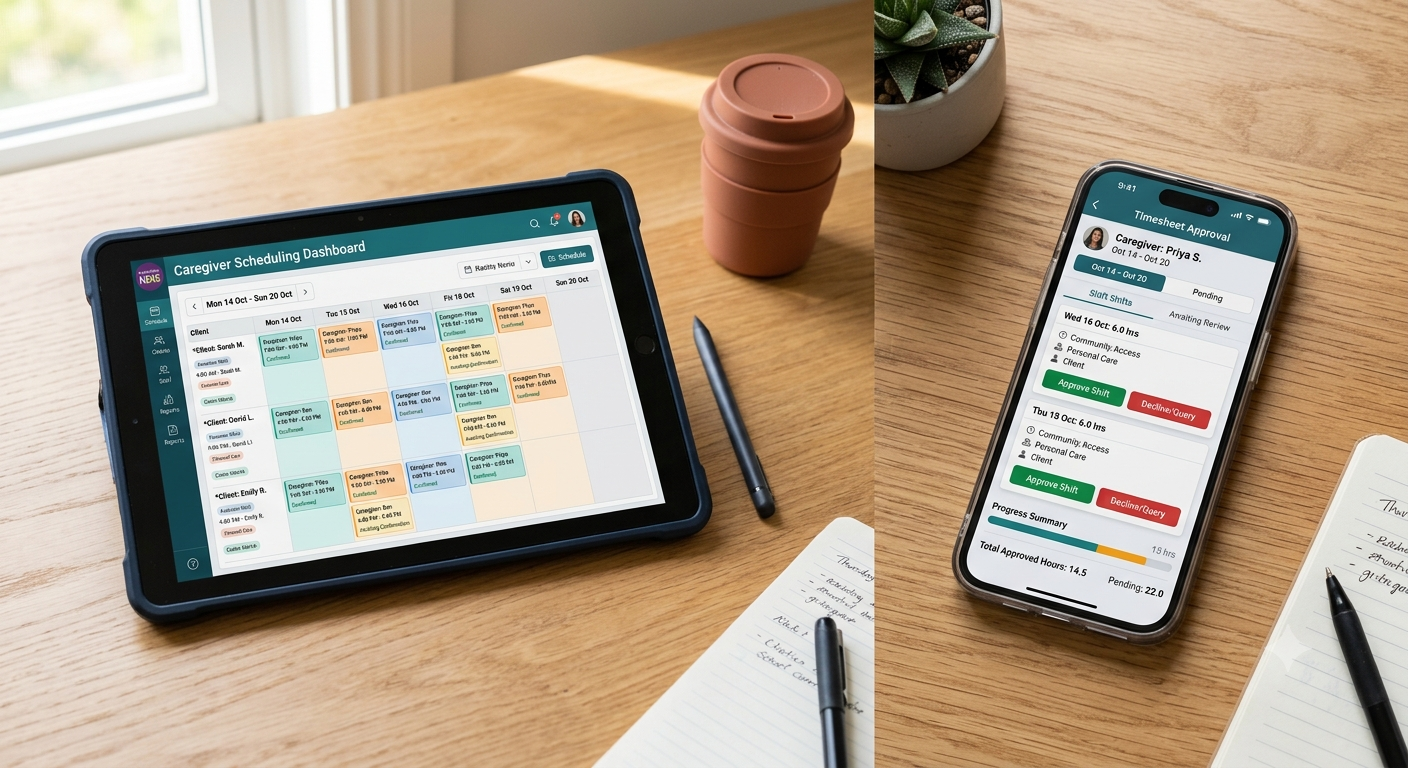
Manual rostering methods are becoming increasingly inadequate in today’s complex care environment. Modern care management software can revolutionise your rostering process by:
- Automatically checking for award compliance and preventing common rostering mistakes
- Tracking staff availability and preferences in real-time
- Identifying potential gaps in coverage before they become problems
- Enabling quick responses to last-minute changes or emergencies
The Impact of Fair Rosters on Care Quality
When care workers have predictable, fair schedules, the benefits extend beyond staff satisfaction. Clients receive more consistent care from engaged, well-rested staff members who can focus fully on providing quality service. This leads to improved client outcomes and stronger relationships between care workers and those they support.
Managing Change and Communication
Implementing new rostering practices requires clear communication with all stakeholders. Regular feedback sessions can help identify potential issues early and ensure your rostering approach continues to meet everyone’s needs. Remember that successful shift rostering is an ongoing process of refinement and adjustment.
Modern care providers are increasingly using data analytics to inform their rostering decisions. By analysing patterns in client demand, staff availability, and service delivery, organisations can create more efficient and effective rosters that benefit everyone involved.
Looking Ahead
As the Australian care sector continues to evolve, the importance of fair and efficient shift rostering will only grow. Organisations that master this crucial aspect of operations will be better positioned to attract and retain quality staff while delivering exceptional care services.
Ready to transform your approach to shift rostering? Book a demo with ShiftCare today to discover how our innovative care management software can help you create fairer, more efficient rosters while ensuring compliance and improving staff satisfaction. Our Australian-based team understands local industry requirements and can show you how to streamline your rostering process for better outcomes.