How Much Does It Cost to Register as an NDIS Provider?

Becoming an NDIS provider comes with costs and criteria. Learn smart strategies to cut time, reduce expenses, and improve care with better management tools.
Becoming an NDIS provider comes with costs and criteria. Learn smart strategies to cut time, reduce expenses, and improve care with better management tools while understanding How to become an NDIS provider in a practical, cost-aware way.
But before diving into the world of care delivery, there’s one big question every new provider asks us: how much does it cost to become an NDIS provider?
Popular question – how much does it cost to become an NDIS provider?
From audits and insurance to training and technology, there are a number of hidden and upfront expenses involved in the process. Understanding the NDIS registration cost and how to become an NDIS provider helps you plan better, avoid unnecessary fees and start your business on solid footing.
This guide breaks down those costs while also offering practical ways to manage them more efficiently.
Is NDIS Registration Free? Technically, yes but there’s more
While the NDIS Quality and Safeguards Commission doesn’t charge an application fee, registering as a provider still involves a range of costs, which is an important consideration when learning How to become an NDIS provider. These include:
- Audit and compliance expenses
- Staff training and worker screening
- Insurance premiums
- Policy and procedure documentation
- Software systems for managing care
So, while the application itself is free, the real cost lies in preparing your business to meet the necessary standards. Whether you’re a sole trader or a growing organisation, it’s important to budget accordingly.

How Much Does NDIS Registration Cost on Average?
| Cost Category | Registered Provider | Unregistered Provider |
|---|---|---|
| Business set-up | $1,000 to $2,000/year | $500–$1,500/year |
| Audit | $900 to $5,000 | Not required |
| Policy and procedures | $500 to $1,500 | Optional |
| NDIS worker screening | $80 to $120 per staff member | Optional |
| First aid / manual handling training | $100 to $300 per person | $100–$300 per person |
| Public liability insurance | $500 to $2,000/year | Recommended |
| Professional indemnity insurance | $1,000 to $3,000/year | Recommended |
| Training and compliance | $500 to $2,000/month | $250–$1,000/month |
| Software | $8 to $50 per user/month | $8–$50 per user/month |
| Website, branding and marketing | $500 to $3,000 | $500–$3,000 |
| Total estimated start-up cost | $7,500 to $25,000 | $1,000–$6,000 |
The process of compliance and operations at the NDIS comes with costs, especially for those mapping out How to become an NDIS provider step by step. Being unregistered, which some NDIS providers may want to do in the beginning, is generally the cheaper option.
First, setting up the business for registered providers can cost around $1,000 to $2,000 a year and about $500 less for unregistered providers.
An audit for a registered NDIS provider can cost between $900 to $5,000 while an unregistered NDIS provider does not require an audit. Audit fees include the verification audit for basic household tasks while a certification audit is for high-risk services, such as those involving clinical care or personal support.
Policy and procedure set-ups can cost between $500 to $1,500 for registered providers while the process is optional for unregistered providers.
NDIS worker screening is about $80 to $120 per staff member for registered providers and optional for unregistered providers, while first aid or manual handling training is $100 to $300 per person.
Insurance is required for registered providers and strongly recommended for unregistered providers. Public liability insurance can range from $500 to $2,000 annually while professional indemnity insurance can go from $1,000 to $3,000 each year.
Training and compliance is about $500 to $2000 a month for registered providers and about half the cost for unregistered providers.Using NDIS software platforms such as ShiftCarewill help you organise and can cost as little as $100 a monthFor example, NDIS-ready CRM or rostering platforms can cost only about $8 to $50 per user per month, while website, branding and marketing costs can range from $500 to $3000.
Altogether, it can cost registered providers anywhere from $7500 to $25000 to get started while unregistered NDIS providers can budget about $1000 to $6000.
As mentioned in a previous blog, Registered vs. Unregistered NDIS Providers What’s Best for Your Business, if you want full access to all types of participants, it is essential to become a registered NDIS provider. However, even unregistered providers should generally maintain insurance, policies and compliance.Using NDIS software like ShiftCare helps both registered or unregistered NDIS providers from day one

Hidden time and costs to consider
Beyond financial figures, being an NDIS provider can involve a number of hidden costs in time, compliance and especially missed opportunities.
Here’s what to look out for:
- Documentation preparation: Creating NDIS-aligned policies can take up to 60 hours or more
- Registration timeline: It can take three to six months to get approved
- Ongoing compliance: There are annual renewals, audits every three years and client documentation requirements
- Administrative loads: Rostering, progress notes and claims can take up to 20 to 30 hours per week in day-to-day admin
NDIS Provider Cost-Saving ideas
New NDIS providers can avoid overspending with these smart strategies:
Use care-management software like ShiftCare to automate documentation, rostering and compliance from the start.
- start unregistered: Begin with self-managed and plan-managed clients while building your documentation and systems
- Buy policy templates: Instead of doing everything from scratch or hiring a consultant, purchase ready-made NDIS-compliant policy kits
- Use free resources: The NDIS Commission offers free checklists, e-learning and audit guides
- Outsource admin: Freelance compliance support and virtual assistants can help lessen costs
Care-management tools like ShiftCare are a great investment
Regardless of whether you’re a registered or unregistered provider, investing in the best NDIS software is key to reducing admin costs and avoiding compliance issues. Additionally,NDIS software for small providers and large providers alike, such as ShiftCare, can help mitigate costs.
ShiftCare is designed specifically for disability and aged care providers and offers powerful tools at a good price. It starts at around $8 per user per month only. It has several key features:
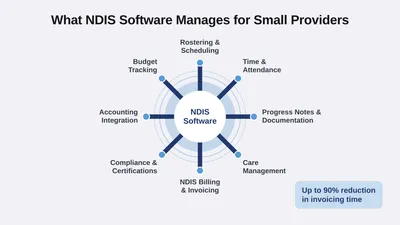
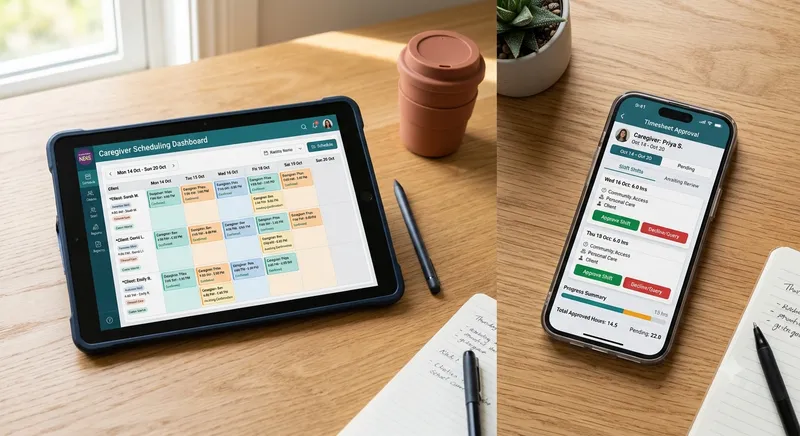
- Staff rostering: It has drag-and-drop scheduling with alerts and reminders
- Invoicing and claims: It automates NDIS bulk billing and pricing guide compliance
- Progress notes: It secures documentation that simplifies audits
- Client management: It stores care place, goals and communication logs
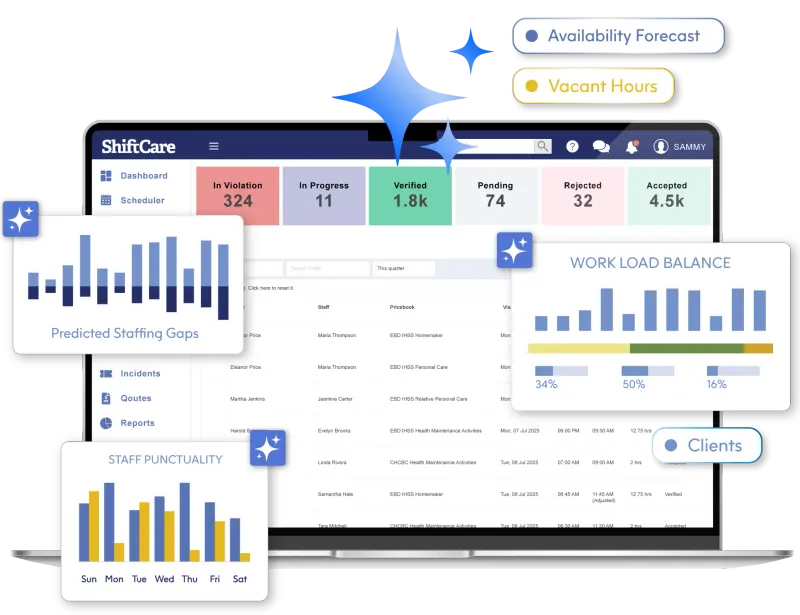
- Compliance reporting: It meets NDIS requirements with real-time dashboards
- Time management: It cuts admin time by 30% or more
Frequently asked questions
Is the NDIS registration application free?
Yes, the NDIS Quality and Safeguards Commission charges no application fee. The costs come from preparing your business to meet registration requirements: audits, insurance, worker screening, policy documentation, and training.
What is the difference between a verification audit and a certification audit?
A verification audit applies to lower-risk supports such as basic household tasks. A certification audit applies to higher-risk services including personal care and clinical supports. Certification audits are more extensive and typically cost more.
How often do registered NDIS providers need to be audited?
Registered providers undergo an audit during the initial registration process and then every three years at renewal. The audit type depends on the registration groups held. Providers adding higher-risk supports may also trigger a new certification audit outside the standard renewal cycle.
ShiftCare can help NDIS providers mitigate costs
ShiftCare is an easy-to-use care management software designed to streamline day-to-day operations and reduce administration burdens for NDIS providers, as well as Aged Care and Disability Support services.
Boasting powerful and intuitive features, ShiftCare offers key solutions to improving care management, rostering, HR, invoicing, NDIS compliance and so much more, enabling you and your team to focus on delivering a higher standard of personalised client care.
So, if you’re looking for the right care management system to help streamline your NDIS business, ShiftCare has got you covered.
Book a demo or get in touch with our team today to discover how ShiftCare can revolutionise your care management and give you back more time for what truly matters.