The NDIS registered provider logo is one of your most valuable marketing assets. It signals to participants and families that your organisation has met rigorous NDIA standards and passed quality audits. But you can’t just download it and use it however you want. The NDIA has strict guidelines about how the logo can be displayed, and misusing it (even accidentally) can result in compliance warnings or enforcement action.
Understanding these requirements is essential for building trust while staying compliant. Whether you’re updating your website, creating marketing materials, or printing office signage, knowing exactly how to use the NDIS registered provider logo will help you maximise its impact without breaking brand guidelines.
What Is the NDIS Registered Provider Logo?

The NDIS registered provider logo is an official visual mark that distinguishes your organisation as a provider that has met the rigorous standards set by the NDIA. This logo serves as a public declaration that your disability support services or aged care services have undergone quality and safety audits, meet the NDIS Practice Standards, and are committed to delivering person-centred support to people with disability. For prospective clients and their families, this logo provides immediate assurance that they’re choosing a provider they can trust.
The significance of this logo extends beyond simple marketing. In a competitive market where disability support providers and aged care organisations are proliferating, the registered provider logo differentiates compliant, audited organisations from those that may not meet national standards. When a family is searching for disability support services or home care providers, seeing the official NDIS registered provider logo on your website, in your materials, or on your office signage significantly increases their confidence in your organisation.
However, with this powerful branding tool comes responsibility. The NDIA has implemented strict guidelines to protect the integrity of the NDIS brand and ensure that only truly registered providers can display the logo. Misuse of the logo can result in compliance warnings, reputational damage, and potential enforcement action against your organisation.
The Two Official Logo Variants You Can Use
The NDIA provides two primary logo variants for registered providers, each designed for specific marketing and communication contexts. Understanding which logo variant to use in different situations is the first step toward compliant branding.
The “I Heart NDIS” Registered Provider Logo
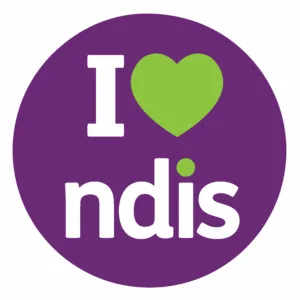
The “I Heart NDIS with Registered Provider” tagline pack is one of the most commonly used logo variants. This version conveys a personal, participant-focused approach and works particularly well in digital marketing, website headers, and social media profiles. The heart symbol creates an emotional connection that resonates with families seeking compassionate disability support providers. This variant is ideal for consumer-facing materials where you want to emphasise your commitment to the people you support.
Note: The NDIA is set to phase out the I Heart NDIS logo soon, so stay updated.
The “We Support NDIS” Registered Provider Logo
The “We Support NDIS with Registered Provider” variant uses slightly different language and visual presentation, making it particularly effective in professional contexts such as business documents, formal letterheads, and professional development materials. This version maintains a more corporate tone whilst still clearly communicating your registered status.
What are the Supported File Formats and Technical Specifications?
The NDIA provides multiple file formats to accommodate different applications and media. The registered provider tagline pack includes JPG files suitable for web use and email, EPS (Encapsulated PostScript) files for high-quality print production, and SVG (Scalable Vector Graphics) files that can be scaled to any size without quality loss. Each file format serves a specific purpose. JPG files are ideal for website implementation and quick digital deployment. EPS files ensure professional print quality when producing marketing collateral, signage, or promotional materials. SVG files provide maximum flexibility for digital applications where scaling and responsive design are important.
Strict NDIS Registered Provider Logo Usage Requirements

Understanding what you can and cannot do with the NDIS registered provider logo is crucial for maintaining compliance whilst maximising the marketing value of your registration status.
What Registered Providers Can Do
As a registered NDIS provider, you have the explicit right to download and use the official NDIS registered provider logo with the “Registered Provider” tagline. This logo must always be displayed in its entirety with no alterations to colour, size, design elements, or layout. You may use the logo across your digital channels, including your website, email signatures, social media profiles, and online advertising, to signal your registration status to potential clients and their families.
You may also use the logo in print materials such as business cards, letterheads, brochures, and promotional flyers. It can appear on physical signage at your office or service locations, helping clients immediately recognise your registered status when they visit. The logo is also appropriate for use in professional documents, policy manuals, staff training materials, and any official organisational communications where demonstrating registration status is beneficial.
What You Cannot Do
There are several critical restrictions on logo usage that all registered providers must follow. You cannot alter, modify, or customize the logo in any way. This includes changing the colour, resizing elements disproportionately, rotating the logo, or removing components. The logo must always be displayed exactly as provided by the NDIA. You cannot use the logo without explicit authorisation from the NDIA, and you must ensure your organisation remains registered to continue using it.
You cannot use the logo in contexts that might damage the NDIS brand or reputation. For example, using the logo on products or services unrelated to your registered NDIS support delivery, or using it in association with politically controversial campaigns, could result in enforcement action. You also cannot claim affiliation with the NDIA itself or suggest that the NDIA endorses specific products or services beyond your registered role as a disability support provider.
Unregistered Providers and Logo Restrictions
Critically, unregistered providers or those not currently registered with the NDIA are strictly prohibited from using the “I Heart NDIS” or “We Support NDIS” logos with the “Registered Provider” tagline. This restriction exists to prevent misleading potential clients and protect the integrity of the NDIS scheme. Unregistered disability support organisations that use the registered provider logo without authorisation expose themselves to significant legal and reputational risk.
How to Obtain and Download Official Logo Files
Obtaining the correct logo files is straightforward, but it’s essential to source them from the official NDIA channels to ensure you’re using the correct, most current versions.
Official Logo Packs and Download Process
The official NDIS logo guidelines page (available at ndis.gov.au/contact/ndis-logo-guidelines) provides direct download links to all approved logo variants. The page is organised by logo type and file format, making it easy to locate exactly what you need. Each pack contains multiple file formats to suit different applications.
Download the complete packages rather than attempting to recreate the logos yourself. The official files have been professionally designed and tested to ensure they reproduce correctly across different media and applications. Using official files also ensures you’re always working with the current, approved versions. The NDIA occasionally updates logo files, and using outdated versions could inadvertently signal that your organisation hasn’t maintained current compliance awareness.
Asset Organisation and Storage
Once you’ve downloaded the logo files, establish a clear organisational system to ensure consistency across your organisation. Create a dedicated folder for NDIS brand assets, clearly labelled and accessible to anyone in your organisation who creates marketing materials or communications. Provide staff with clear documentation about which logo variant to use in different contexts.
Store master copies of all logo files in a secure location that can be accessed by authorised team members but protected from accidental modification. When teams use team collaboration tools for internal communications and brand asset sharing, staff members can always access current logo files and usage guidelines without confusion about which versions are official.
How to Use the Logo on Your Website and Marketing Materials
Effective logo implementation requires more than simply placing the image on your materials, thoughtful integration will maximise the impact and credibility of your registered provider status.
1. Website and Digital Implementation
On your website’s homepage, position the NDIS registered provider logo prominently in a location where prospective clients immediately see it. The header or above-the-fold section of your landing page is ideal, alongside your own organisational logo. Many disability support providers and aged care providers position the NDIS logo in the top right corner of their websites or integrate it into their main navigation area.
Ensure the logo displays correctly on mobile devices. Test the logo across different screen sizes and browsers to confirm it appears sharp and clear. Use the SVG format where possible for web display, as SVG scales beautifully across all device types. Include appropriate white space (clear space) around the logo so it doesn’t appear cramped or cluttered with surrounding content.
On your “About Us” or “Our Registration” page, you can provide additional context about what registered provider status means and how it demonstrates your commitment to quality and compliance. You might include a link to the NDIS registration database where prospective clients can verify your registration independently.
2. Print Materials and Signage
For printed business cards, letterheads, and brochures, use the EPS file format and work with professional print designers to ensure the logo reproduces correctly. Maintain the same clear space around the logo as you would in digital materials. Don’t allow the logo to bump up against the edges of your printed materials.
For office signage and larger promotional materials, you can display the NDIS registered provider logo at a much larger scale. Ensure the logo always appears clearly, with no distortion or uneven scaling. If you’re designing custom signage with your own organisational logo and the NDIS registered provider logo, position them with equal visual weight so that neither logo dominates the other inappropriately.
3. Email and Document Headers
Many organisations incorporate the NDIS registered provider logo into their email signature template. This is an excellent practice as it extends your credible branding to every client communication. Keep the logo small in email signatures. Ideally, it should be around 150 to 200 pixels wide so that it won’t overwhelm the signature block.
For formal organisational documents such as policies, training materials, or strategic plans, including the NDIS registered provider logo on the cover page or header demonstrates your commitment to NDIS-aligned governance and compliance. Using NDIS provider software solutions can help you automatically incorporate your branding into formal documents while maintaining consistent formatting and compliance requirements.
Common Logo Usage Mistakes to Avoid

Never modify the logo colours, even if it would match your brand guidelines better. The official logo uses specific colours that must remain unchanged. Never resize elements disproportionately; the logo must maintain its original proportions and element relationships.
Avoid using outdated versions of the logo if the NDIA has released updated files. Periodically check the official NDIA logo guidelines page to confirm you’re using current versions. Never position the logo in a way that suggests NDIA endorsement of specific products, services, or business decisions beyond your registration as a disability support provider. Never use the logo in politically sensitive or controversial contexts that might associate the NDIS brand with particular political positions.
Don’t use low-quality versions of the logo (such as compressed JPG files with visible pixelation or distortion) on printed materials where quality is critical. Always use the appropriate file format for your intended application.
Using Software to Maintain Consistent Branding
NDIS-registered providers benefit from centralised systems that maintain consistent branding and compliance messaging across all operational contexts. Integrated care management platforms help you manage brand assets, create compliant templates for client communications, and ensure all staff members understand logo usage guidelines. By combining your care management, rostering software, and compliance systems, you create a unified, professional presentation that builds trust with clients and families.
Many providers also use their care management systems to document compliance activities and maintain records of branding implementations. When your operational systems support consistent branding and compliance, you reduce the risk of inadvertent logo misuse and strengthen your overall professional presentation.
Final Pre-Launch Checklist
Before rolling out any new marketing materials, website updates, or communications that incorporate the NDIS registered provider logo, work through this final checklist:
- Confirm that your organisation is currently registered with the NDIA by checking the NDIS register to verify your active registration status
- Confirm that you’re using the most current version of the logo files by checking the official NDIS guidelines page
- Ensure the logo appears in its entirety without any modifications to colour, size, or design elements
- Verify that the logo reproduces clearly and sharply across all intended applications. Test digital versions on different devices and browsers, and review print proofs carefully
- Ensure that every team member who creates materials or communications understands the logo usage guidelines
- Periodically audit your existing communications, e.g., website, printed materials, email signatures, to ensure consistent logo implementation across your organisation
The NDIS registered provider logo is one of your most powerful marketing assets. By using it correctly and consistently, you signal to prospective clients, their families, and the broader community that your disability support organisation meets the highest national standards.
FAQs About NDIS Registered Provider Logo Requirements
Where do I download the official NDIS registered provider logo?
Download official logo files from the NDIA’s logo guidelines page. Always source logos from official NDIA channels rather than attempting to create or modify them yourself.
Can I change the logo colours or modify it to match my branding?
No. The NDIS logo must always be displayed exactly as provided by the NDIA without any modifications to colour, size, or design elements. Altering the logo violates NDIA brand guidelines and can result in compliance warnings.
What happens if my organisation loses registration with the NDIA?
You must immediately cease using the NDIS registered provider logo. Continuing to display the logo after losing registration status is a breach of NDIA brand guidelines and exposes your organisation to legal and reputational risk. Only currently registered providers may use the logo.
Stay Compliant While Maximising Your Registration Status
The NDIS registered provider logo is one of your most powerful marketing tools. Use it correctly and consistently to show participants and families that your organisation meets national standards and is committed to quality care. Download the official files from the NDIA, follow the brand guidelines, and maintain compliance across all your materials. ShiftCare helps you maintain consistent branding and compliance messaging across all your operational systems, manage brand assets, create compliant templates, and ensure your team understands logo usage requirements.
Start your free trial today. See how ShiftCare helps you stay compliant while building trust with the families you serve.