Australia’s home care sector is navigating a workforce shortage, a restructured funding model, and tighter compliance expectations under the Aged Care Act 2024. Five technology shifts are changing what providers need from their software. Here’s what each trend means for how agencies roster, bill, deliver care, and manage risk.
More than 22% of Australians will be over 65 by 2026, up from 16% a decade ago. Home care providers managing Support at Home reforms, ACQSC enforcement changes, and sector vacancy rates between 8% and 15% are making technology decisions that will shape how they operate for the next decade. The software built for the Home Care Packages era was not designed for what providers are managing now.
Five shifts are changing what home care software needs to do. Each one reflects an operational pressure providers are already navigating, not a future prediction.
How AI Is Changing the Way Providers Fill Shifts
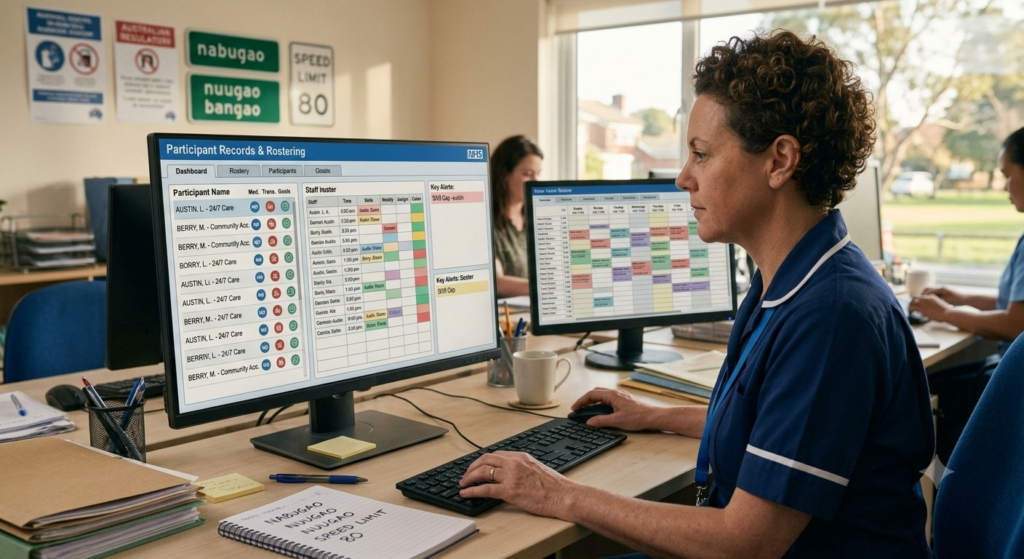
Roughly 20% of disability and aged care services in Australia have implemented or are piloting AI-assisted rostering as of early 2026. Providers using it are reporting concrete outcomes: 35% faster schedule creation, 22% fewer unplanned coverage gaps, and measurably higher staff satisfaction on rostering fairness.
The shift is not about removing coordinators from the process. Manual rostering forces coordinators to hold every worker’s availability, credentials, location, and client history in their head before offering a shift. At 20 clients, that’s manageable. At 80, it produces errors and delays that compound across the week.
Smart client-staff matching filters on skills, certifications, availability, and prior visit history before a shift is offered. Coordinators see a shortlist of qualified options, not a full workforce to manually screen. The cognitive load shifts from routine allocation to the complex cases that require human judgement.
Why Compliance Documentation Is Shifting from Periodic to Continuous
The Aged Care Act 2024 changed the compliance posture providers are expected to maintain. Regulators now expect real-time evidence of safe, high-quality care, not documentation assembled in the weeks before an inspection.
The Aged Care Quality and Safety Commission’s expanded enforcement powers from May 2026 reinforce this shift. The Commission can now order refunds, take action against providers not issuing monthly statements, and publicly report enforcement outcomes. Compliance is no longer a periodic self-assessment exercise with a defined audit window.
Providers relying on manual documentation carry the same exposure: support workers entering notes retrospectively, incident reports sitting in email threads before being centralised, certification records spread across filing systems that require manual checking before an audit is called.
Incident reporting captured at point of care by support workers on mobile, combined with centralised compliance documentation and automated alerts when records are missing or overdue, closes the gap between how an agency operates day to day and what its documentation actually shows.
What Real-Time Financial Visibility Means Under Support at Home
Support at Home’s quarterly budget model changed the financial equation for home care providers. Unspent client funds above the rollover threshold return to the government at the end of each quarter, so providers tracking labour cost against client budgets on a monthly cycle are already working with stale data.
The question has shifted. Not “how did we perform last month” but “is the shift being scheduled today viable given what remains in this client’s quarterly allocation.” Monthly reporting cannot answer that in real time.
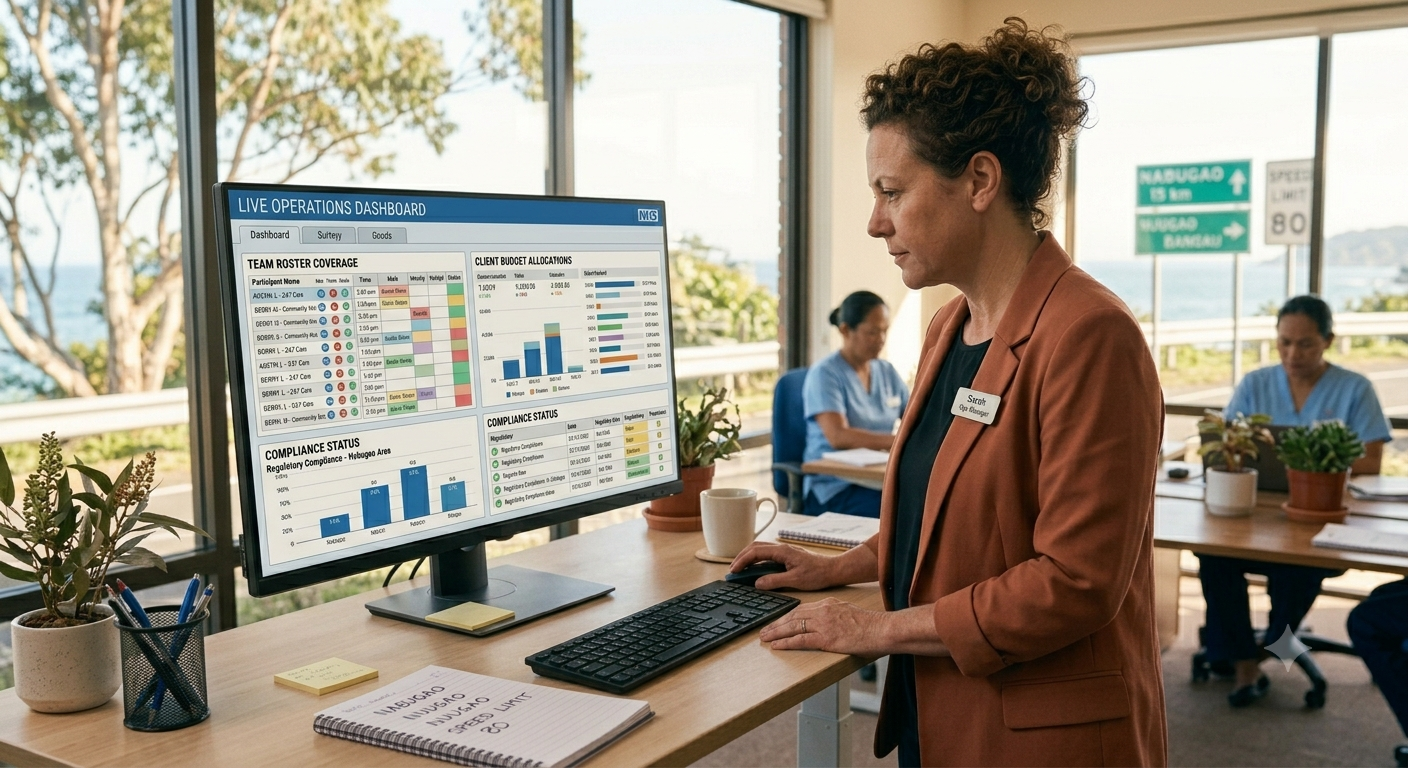
Live cost and roster dashboards that surface labour cost per client, flag budget risk before a shift is confirmed, and show margin across the active caseload give operations managers the visibility to make decisions at the rostering stage, not after delivery when adjustment is no longer possible.
How Software Is Helping Teams Identify Care Risks Earlier
Progress notes have existed in care management software for years. What’s changing is what happens to those notes after they’re written.
Pattern analysis across a client’s visit history used to be manual: care managers reading across notes from multiple support workers, looking for changes in behaviour, mood, appetite, or movement that might indicate deterioration. Across a caseload of 60 or more clients with several workers per client, patterns get missed before they become incidents.
Care signal monitoring surfaces behavioural and health change patterns across a client’s visit history automatically, flagging shifts that warrant closer attention before they escalate. Support workers enter notes at the point of care. The system identifies what’s changing and surfaces it for the care team to review.
Software surfaces the signal. Care teams make the clinical judgement. Under the Aged Care Act 2024, providers are expected to demonstrate proactive monitoring, not only responsive documentation after something goes wrong.

Why SCHADS Award Interpretation Is Leaving Spreadsheets
The Social, Community, Home Care and Disability Services Industry Award is one of the most complex pay awards in Australian employment. Penalty rates, broken shift allowances, travel time calculations, and overtime rules across a home care workforce of 50 or more support workers produce payroll errors that accumulate week by week when calculated manually.
Underpayment claims in home care are not uncommon. Fair Work Australia recovers millions in underpayments from the care sector annually, and the reputational consequences for agencies found non-compliant follow the finding for years.
Built-in SCHADS award interpretation calculates correct rates at the scheduling stage, before a roster is confirmed and before a timesheet is submitted. Direct integration with payroll platforms including Xero and MYOB means those calculations move through to pay runs without manual reconciliation between systems.
Payroll accuracy is also a retention issue. Support workers who discover they have been underpaid rarely give the agency a second chance.
Frequently Asked Questions
What features should home care software have in 2026?
Home care software in 2026 needs to cover rostering with client-staff matching, real-time labour cost and financial dashboards, compliance documentation with automated alerts, care signal monitoring across client visit history, and SCHADS Award interpretation integrated with payroll. Providers relying on separate tools for each function carry data gaps between systems that compound over time.
How is AI being used in Australian home care software?
AI in home care software mostly applies to rostering. It filters qualified, available, and location-matched staff before shifts are offered, reducing manual screening time and unplanned coverage gaps. Pattern recognition is also being applied to care monitoring, surfacing changes in client behaviour or health across progress notes without requiring coordinators to manually review every entry.
How does Support at Home affect what providers need from software?
Support at Home’s quarterly budget model requires providers to track each client’s spending in real time, not monthly. Quarterly allocations, 10% care management deductions, and rollover caps mean a shift scheduled without live budget visibility risks. Software that surfaces per-client budget status at the rostering stage prevents those decisions being made without the right information.
What is the SCHADS Award and why does it matter for home care software?
The Social, Community, Home Care and Disability Services Industry Award sets pay rates, penalty rates, allowances, and entitlements for support workers in Australian home care. Its complexity, including broken shift allowances, travel time calculations, and weekend and public holiday penalties, means manual payroll calculation across a workforce of 50 or more workers produces regular errors. Software with built-in SCHADS interpretation calculates correct rates at the scheduling stage and integrates directly into payroll, preventing errors from accumulating.
The Software Providers Need Now Looks Different to What Existed Five Years Ago
Running separate tools for rostering, care documentation, billing, compliance, and payroll creates five disconnected data problems that compound simultaneously. A roster decision made in one system has financial consequences invisible in the billing system until a coordinator manually connects the two. A client risk flagged in care notes doesn’t reach the scheduler until someone reads both.
ShiftCare’s aged care software connects smart rostering, real-time financial visibility, care signal monitoring, compliance documentation, and SCHADS-aware workforce management in one platform. Start your free trial today! Run your home care operations with the visibility your team needs now.