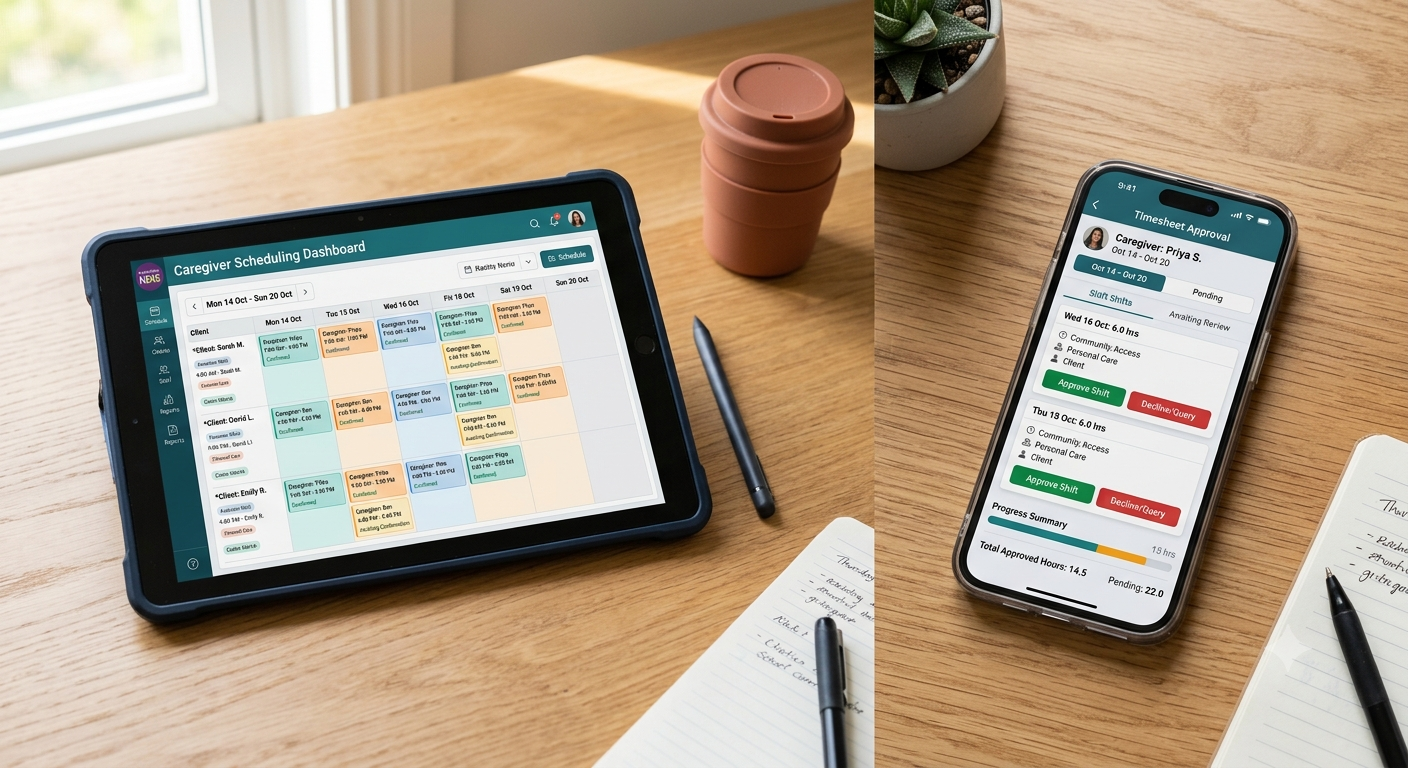
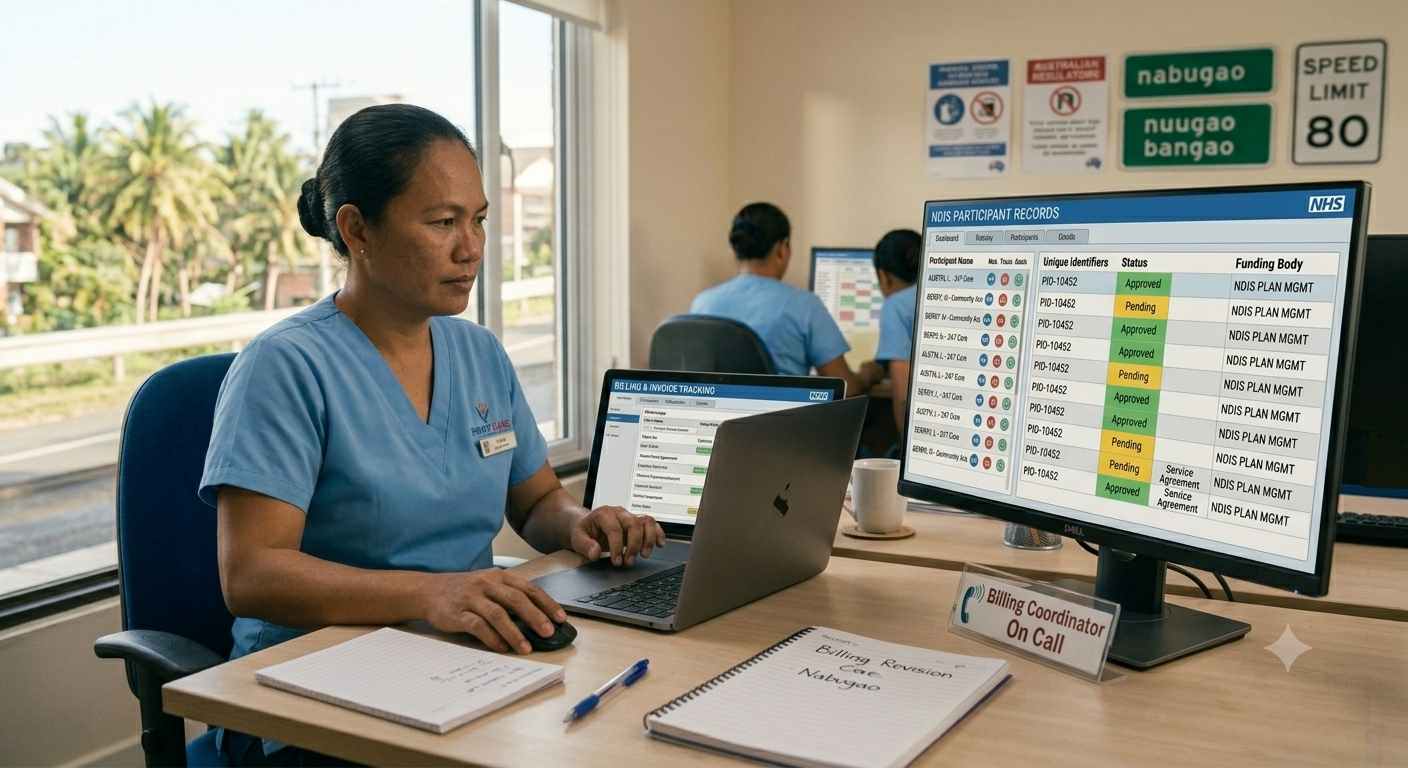
Care rostering has traditionally been a labour-intensive, error-prone task. A care coordinator sits with spreadsheets, text lists of staff availability, and participant needs, manually trying to match workers to shifts. The result is frequent gaps, overstaffing in quiet periods, understaffing when demand spikes, and frustrated staff who get shift offers that don’t suit their availability or preferences.
By the end of a shift, the coordinator has spent three to four hours on rostering alone. Now, artificial intelligence is beginning to solve this friction at scale across Australian disability, aged care, and home care services.
AI rostering care scheduling isn’t science fiction. It’s a set of practical tools that analyse historical data, predict participant demand, match worker strengths to shift requirements, and surface scheduling conflicts automatically. Providers using AI-enabled rostering are reporting 15-25% faster schedule creation, 20% fewer unplanned gaps, and measurably higher staff satisfaction. Here’s what AI rostering does, how it works in practice, and what Australian providers need to know in 2026.
Why AI Rostering Matters for Australian Care Providers
The care workforce in Australia is under pressure. Disability, aged care, and home care services report vacancy rates between 8% to 15%, and casual staff turnover is running above 25% nationally.
When rosters are manually built, coordinators are forced to make quick compromises:
- A participant’s preferred worker isn’t available, so someone else is assigned
- A shift gets offered to the wrong worker because the coordinator didn’t notice a conflict
- An absence crisis hits and there’s no visibility into who can cover quickly
These gaps accumulate and create stress for staff and inconsistent outcomes for participants.
AI addresses this by automating the pattern-recognition task. Rather than relying on human memory, AI systems analyse months or years of historical data to understand demand patterns, worker availability patterns, and scheduling constraints. They can then generate rosters that are both compliant (meeting minimum ratios and staffing policies) and optimised (matching workers to shifts based on skills, preferences, and availability).
The practical result is faster rostering, fewer gaps, and staff who feel matched to shifts fairly.
Predictive Demand Forecasting for Care Rosters

One of the strongest applications of AI in care rostering is demand prediction. Many care services experience predictable variation in demand: certain days are busier, certain seasons bring more absences, certain participant cohorts need more attention at certain times. Traditional rostering doesn’t capture this; coordinators build static rosters and then react when demand exceeds capacity.
AI systems learn these patterns:
- An aged care service might discover that Monday mornings see 40% higher care demand because many staff are unavailable after weekends
- A disability service might find that school holidays trigger 20% more respite requests
AI-enabled systems forecast this demand and suggest increased staffing for those periods. One provider in Victoria using predictive rostering reported an 18% reduction in emergency shift covers and a corresponding reduction in overtime costs.
The forecasting accuracy improves over time as the system sees more data. Services often see meaningful accuracy within the first three to six months of operation.
Smart Shift Matching & Worker Preferences in AI Rostering Care Scheduling
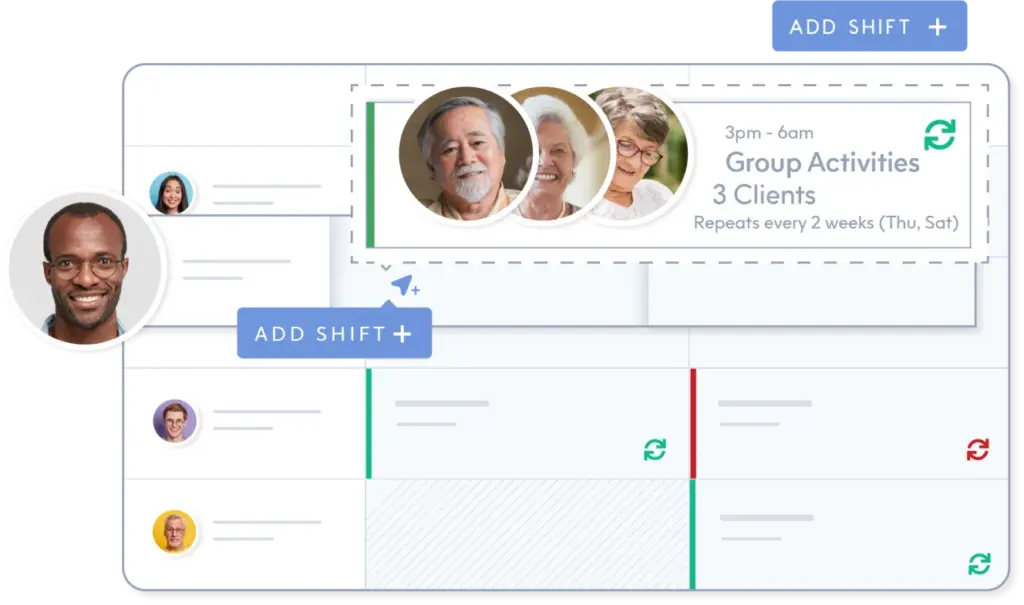
Beyond predicting demand, AI can match individual workers to shifts intelligently. Modern rostering systems let workers indicate availability, preferred shift lengths, and any skills or preferences (e.g., “I prefer morning shifts” or “I’m trained in catheter care”). AI systems factor these preferences into shift allocation, which improves staff satisfaction and reduces the friction of shift refusal or last-minute cancellations.
Skill-based matching is another layer. If a participant requires a worker trained in manual handling or specialist mental health support, the AI system flags available workers with those credentials and prioritises them. This reduces the risk of assigning inadequately trained staff to complex shifts, which improves safety and quality.
A home care service in NSW reported that skill-based matching reduced inappropriate staff assignments by 60% within the first four months. Staff also reported higher confidence and lower stress because they were being assigned to shifts where they felt equipped to deliver good care.
Reducing Unplanned Absences
Absence management is a persistent pain point. A worker calls in sick at 6 a.m., and the coordinator scrambles to find cover. If no one is available, a shift goes uncovered and participant safety or quality suffers. AI can’t prevent illness, but it can reduce the chaos of absence response. AI systems maintain a ranked pool of workers who can cover specific shifts based on availability, skill, and commute proximity. When an absence is reported, the system surfaces the best matches immediately, dramatically reducing the time to cover the gap.
Some systems go further and predict absence patterns. If a worker has a history of calling in sick on certain days or periods, the system flags this and a supervisor can proactively check in or plan coverage. This isn’t punitive; many absences are genuine. But having visibility helps coordinators plan ahead rather than react. Services using predictive absence management report 25-30% fewer uncovered shifts over a 12-month period.
Real-World Outcomes & Adoption Rates
Adoption of AI-enabled rostering in Australia is accelerating. ABS and AIHW data suggests that roughly 20% of disability and aged care services have implemented or are piloting AI rostering tools as of early 2026. Early adopters are concentrated among larger providers (50+ staff) and services with more complex scheduling, but adoption is spreading to mid-sized providers as systems become easier to use and more affordable.
Outcome data from early adopters shows consistent improvements. A survey of Australian providers using AI rostering tools reported an average of 35% reduction in manual roster planning time, 22% reduction in unplanned gaps, and an 8-point increase in staff satisfaction scores on rostering fairness. Several providers also reported improved compliance with staffing ratios and qualification requirements because the system enforces policies automatically. Cost savings typically emerge from reduced overtime and fewer emergency cover premiums, though the primary driver for most providers is staff and participant experience improvement, not cost reduction alone.
Getting Started with AI Rostering Care Scheduling
If your service is considering AI rostering, start with a clear audit of your current state. How much time does roster planning take? What are your top pain points (unplanned gaps, staff dissatisfaction, overstaffing, compliance mismatches)? How accurate is your current availability and skill data? Services with cleaner, more complete data see faster benefits from AI. If your current system is built on email confirmations and informal staff knowledge, data entry and cleanup will be an upfront cost.
Choose a provider that integrates with your existing systems where possible. Look for tools that let staff easily manage their availability and preferences, not systems that layer more administrative burden onto workers. Pilot with one team or shift type first to build confidence before rolling out service-wide. Staff training and change management matter; many implementations succeed or fail based on how well coordinators and staff understand and adopt the new system. ShiftCare’s advanced scheduling module is designed to simplify AI-enabled rostering for Australian care services and integrates straightforward worker and coordinator interfaces.
Stop Building Care Rosters Manually in Spreadsheets
AI in care rostering is moving from emerging innovation to practical mainstream tool in 2026. Services that embrace smart scheduling are seeing real improvements in staff retention, participant consistency, and operational efficiency. ShiftCare’s advanced scheduling module simplifies AI-enabled rostering for Australian care services with straightforward worker and coordinator interfaces.
Start your free trial today. See how ShiftCare helps Australian providers reduce roster planning time, fill gaps faster, and match workers to shifts based on skills and preferences.