Every disability support worker in Australia needs three things to work legally with NDIS participants: a valid NDIS Worker Screening Check, proof of training in the NDIS Code of Conduct and workplace basics, and clean documentation that shows you’ve done your homework. In 2026, the first wave of five-year screening renewals is hitting, and plenty of providers are scrambling.
The first cohort of checks issued in 2021 started expiring from 1 February 2026. If you hired staff in early 2021, many of them need to renew now. Workers can apply to renew up to 90 days before their check expires, but they must submit at least seven days before expiry to avoid a gap. Any gap in their clearance means they can’t work until it’s renewed. If you haven’t built a system to track and manage compliance across your workforce, now is genuinely the time.
What the NDIS Worker Screening Check Is and How Long It Takes

The NDIS Worker Screening Check is not a police check. It’s a national assessment run by state and territory screening agencies that specifically examines whether a person poses any unacceptable risk to people with disability. It costs around $85 to $130, takes two to six weeks to process, and is valid for exactly five years. Every worker who delivers NDIS supports in a risk-assessed role must hold one.
The first cohort of checks issued in 2021 started expiring from 1 February 2026. If you hired staff in early 2021, many of them need to renew now. Workers can apply to renew up to 90 days before their check expires, but they must submit at least seven days before expiry to avoid a gap. Any gap in their clearance means they can’t work until it’s renewed.
How to Track NDIS Worker Screening Expiry Dates
Create a master register logging every worker, their check issue date, their expiry date, and renewal status. Set up a reminder system that fires 90 days before each expiry so workers have time to get their application in. When a worker’s check expires or is refused, that person’s roster should be flagged immediately and they can’t be assigned new shifts.
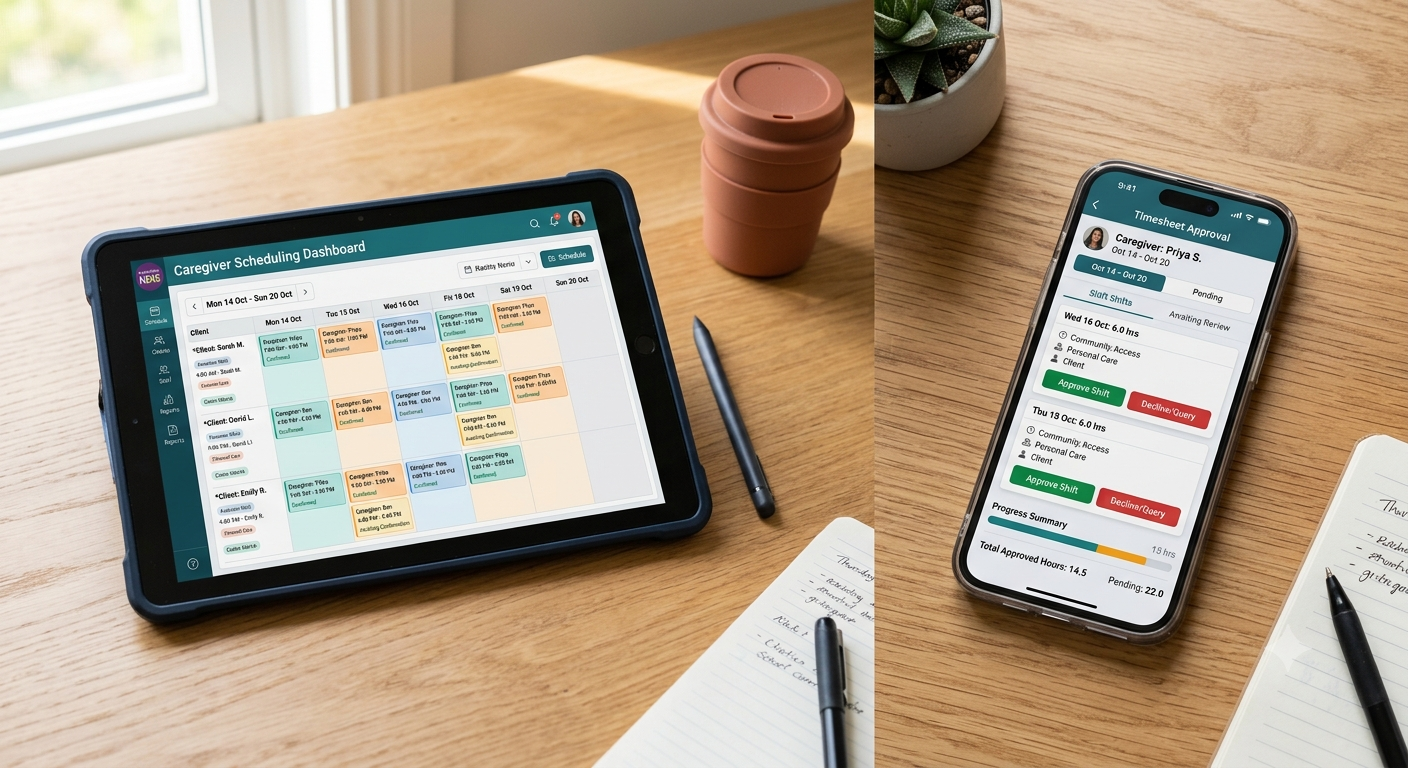
This is where using dedicated NDIS provider software makes a real operational difference. Systems that integrate worker compliance tracking with rostering can automatically prevent scheduling a worker whose clearance has lapsed.
What Training NDIS Workers Must Complete
The NDIS Worker Orientation Module is a free, online, 90-minute course run by the Commission. It covers the NDIS Code of Conduct, human rights, disability inclusion, safety expectations, and how to work respectfully with participants. Every worker delivering NDIS supports should complete it, and during an audit, you’ll need to show completion records.
Beyond the orientation module, most providers expect staff to hold a Certificate III in Individual Support (Disability) or equivalent. Train your recruitment team to verify qualifications before a hire’s first shift.
What Documentation You Need for NDIS Audits

Good compliance documentation does three things: it shows what your policies are, it shows that staff have been trained on those policies, and it shows that the policies are actually being followed in practice. A policy document that sits in a filing cabinet is not compliance. It’s a piece of paper.
For audits, you’ll typically need your workforce screening register, training completion records for every staff member, incident reports and their resolution documentation, evidence of regular supervision for each worker, and your current service agreement templates.
Who Is Responsible for Worker Compliance
The NDIS Commission holds registered providers responsible for the conduct of their workers, including employees, contractors, and volunteers. You can’t outsource this accountability. Even if you use a labour hire agency, your service is accountable for that worker’s conduct.
Start Tracking Renewals Now Before Workers Lapse
Workers whose screening checks expire cannot deliver NDIS supports until they renew. If you have 20 workers and five of them hired in early 2021, you’re managing five separate renewal timelines over the next six months. Miss one and that worker sits idle while you scramble to cover their shifts. Miss three and your roster collapses.
The providers who manage this well track expiry dates in real time and send automated reminders at 90 days, 60 days, and 30 days before expiry. They don’t rely on workers to remember. They build compliance into the roster so expired workers can’t be scheduled for shifts. ShiftCare’s NDIS support worker app screens expiry dates, flags renewals automatically, and prevents scheduling workers whose clearances have lapsed.
Start your free trial today. See how ShiftCare helps NDIS providers manage worker compliance without the manual tracking.