This article is from our partners at Pay Cat, a member of our trusted network. Pay Cat is the legally compliant SCHADS Award payroll software for NDIS businesses. Discover more about our trusted partners.
In this blog, we’ll explore some dead-easy tips to streamline your payroll processes a, saving you time, money, and a fair few grey hairs along the way.
The State of Payroll in Australia
Before we dive into the tips, let’s take a quick look at the current payroll landscape in Australia:
- The average cost of managing payroll in-house is approximately $125.29 per payslip.
- Payroll expenses typically account for 50 to 60 per cent of a company’s business spend.
- One-third of employers make payroll mistakes in any given year.
These statistics highlight the importance of efficient payroll management for your NDIS business or as a care provider. So, let’s get stuck into some tips to help you streamline your processes!
1. Embrace the Digital Revolution
Gone are the days of manual calculations and paper payslips. It’s time to embrace the digital age and leverage technology to your advantage.
Invest in Robust Payroll Software
Investing in a quality payroll system is like hiring a tireless, ultra-efficient employee who never takes a sickie. Modern payroll software can automate complex tasks such as wage calculations, tax deductions, and compliance tracking, significantly reducing manual errors and saving time.
Each solution on the market also offers unique features, so it’s worth doing your homework to find the best fit for your NDIS business or needs as a care provider.
Integrate Your Systems
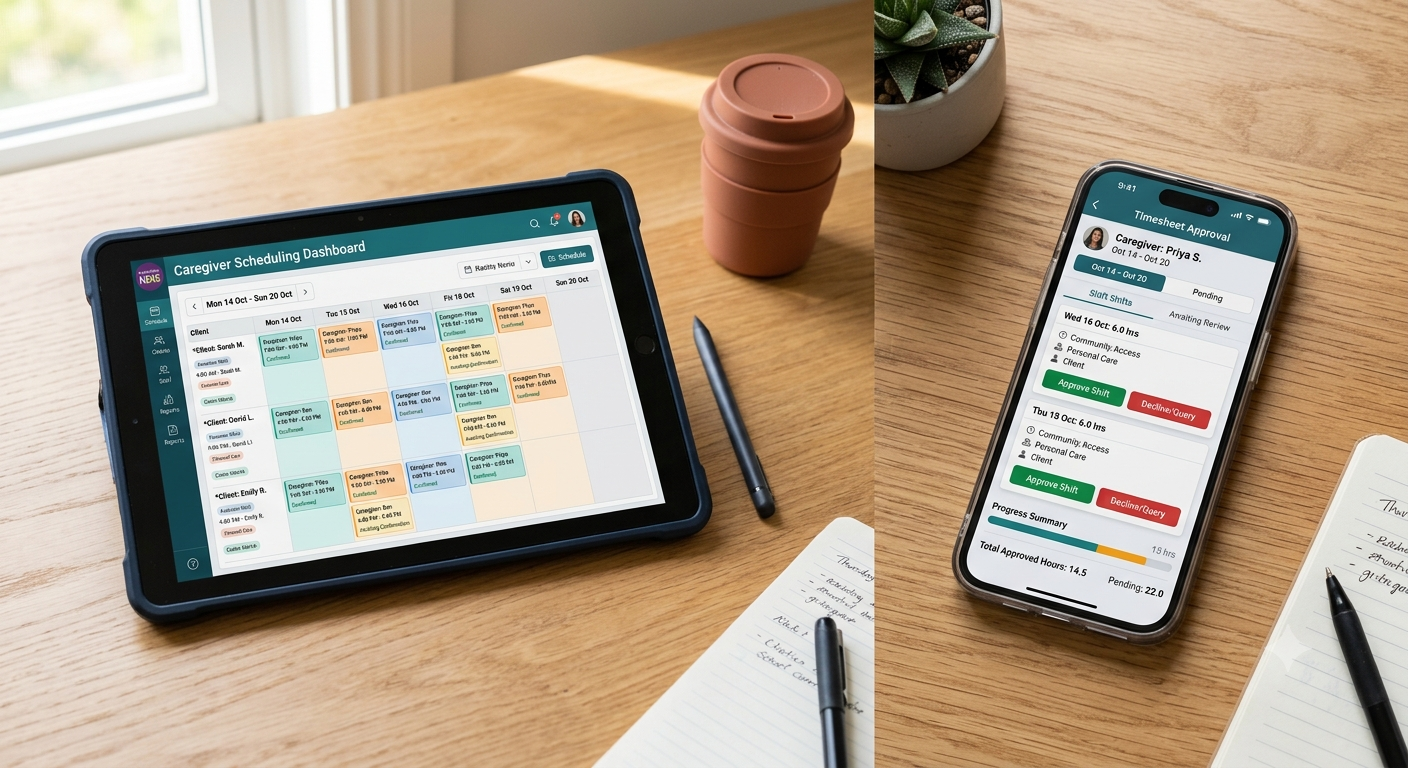
Don’t let your payroll system be a lone wolf. Integrating it with your HR, finance, and timekeeping systems can create a seamless flow of information, reducing the need for duplicate data entry and enhancing overall efficiency.
2. Stay on Top of Compliance
Navigating the complex web of Australian payroll regulations can feel like trying to understand cricket rules – it’s tricky, but essential.
Keep Up with Legislative Changes
Australian payroll regulations are as dynamic as our weather. Stay informed about changes in payroll tax, superannuation, and modern awards to avoid non-compliance penalties. Consider subscribing to updates from the Australian Taxation Office (ATO) and Fair Work Australia to stay in the loop.
Conduct Regular Audits
Regular payroll audits are like health check-ups for your business. They help identify discrepancies and areas for improvement, reducing the risk of financial penalties and reputational damage. Aim to conduct quarterly audits, or more frequently if you’re implementing new systems or processes.
3. Empower Your Employees
Your employees are more than just names on a payroll – they’re your greatest asset. Empower them with self-service options and clear communication.
Implement Employee Self-Service Portals
Providing employees with self-service portals allows them to access and manage their payroll information independently. This reduces the administrative burden on your payroll team and enhances employee satisfaction by providing transparency.
Communicate Changes Effectively
Keep your team in the loop about changes to payroll processes or regulations. Clear communication fosters trust and reduces misunderstandings. Consider setting up a dedicated channel for payroll-related queries and updates.
4. Consider Outsourcing
If payroll management is giving you more grief than a kangaroo in your veggie patch, it might be time to consider outsourcing.
Benefits of Payroll Outsourcing
Outsourcing payroll to specialised providers can be cost-effective, especially for businesses lacking in-house expertise. It ensures compliance with complex regulations and lets you focus on your core business activities.
Here’s a quick comparison of average in-house vs. outsourced payroll costs:
| Business Size | In-House Cost Per Payslip | Outsourced Cost Per Payslip | Potential Savings |
| Small (40 employees) | $125.29 | $31.32 | Up to 75% |
Note: Figures are approximate and may vary based on specific circumstances.
5. Continuous Improvement is Key
Like a fine wine, your payroll processes should improve with age. Regularly review and refine your processes to identify inefficiencies and areas for automation.
Benchmark Against Industry Standards
Compare your payroll costs and processes against industry standards. This practice helps you stay competitive and ensures your payroll operations align with best practices.
Key Takeaways
- Invest in robust payroll software and integrate it with other business systems.
- Stay informed about legislative changes and conduct regular audits.
- Empower employees with self-service options and clear communication.
- Consider outsourcing payroll to specialised providers for cost savings and expertise.
- Continuously review and improve your payroll processes.
Solutions like ShiftCare integrated with Pay Cat’s SCHADS payroll automation can schedule staff compliantly while ensuring correct allowances.
If you need help understanding your obligations or implementing technology, book a demo today to find out more.
FAQs
What is Single Touch Payroll (STP), and why is it important?
Single Touch Payroll (STP) is a reporting system introduced by the Australian Taxation Office (ATO) that requires employers to report salaries, wages, and superannuation information directly to the ATO at the time of payment 8. It’s important because:
- It streamlines reporting obligations for businesses.
- It ensures the ATO’s real-time visibility of payroll information.
- It helps reduce errors and improves compliance with tax obligations.
- It simplifies the end-of-year process for businesses, as they no longer need to provide employee payment summaries.
How can I ensure my business is compliant with superannuation obligations?
Superannuation compliance is a critical aspect of payroll management in Australia. Here are some steps to ensure compliance:
- Understand the current superannuation guarantee (SG) rate and any planned increases.
- Calculate superannuation on ordinary time earnings (OTE) correctly.
- Make superannuation payments at least quarterly, by the due dates.
- Use SuperStream to make electronic super payments and provide employee information to super funds.
- Keep accurate records of all superannuation payments and calculations.
- Stay informed about any changes to superannuation legislation.
How can I handle payroll for a distributed workforce?
With the rise of remote and hybrid work models, managing payroll for a distributed workforce presents unique challenges. Here are some tips:
- Use cloud-based payroll software that allows secure access from anywhere.
- Implement robust time-tracking systems for accurate recording of hours worked.
- Ensure your payroll system can handle different pay rates and conditions for employees in different locations.
- Stay informed about tax obligations for employees working in different states or countries.
- Use employee self-service portals to allow workers to update their information and access payslips remotely.
- Regularly communicate with remote employees about payroll processes and any changes.