It’s Friday afternoon. A finance manager is reviewing the week’s NDIS claims. She finds three claims rejected because the units recorded in the rostering system don’t match the units submitted through the PACE portal. She will need to contact three support workers to confirm actual hours, then resubmit manually. This will take two hours and delay payment by at least a week. It is the kind of problem that NDIS billing software is designed to prevent.
This scenario repeats every week at providers relying on manual NDIS billing or disconnected systems. Across Australia, NDIS providers lose hundreds of thousands of dollars monthly to billing errors, late submissions, and manual workarounds. The financial impact is real. NDIS billing software that integrates with rostering and payroll can eliminate most of these problems, speed up claims, and give finance teams real-time visibility over cash flow.
The Cost of Manual NDIS Billing

NDIS billing is complex. Each client has a unique plan with multiple support categories, hourly rates that vary by support type, and funding cycles that reset quarterly. A single billing error is expensive: a rejected claim means no payment until you resubmit, adding days or weeks to your cash flow cycle. Accidentally claiming units you did not deliver triggers an NDIS Commission review and potential repayment demand. Underbilling because of data entry errors means leaving your own money unclaimed.
Many providers compound the problem by running separate systems for rostering, payroll, and billing. A support worker logs hours in the rostering app. Payroll pulls a separate report. Finance manually re-enters data into the PACE portal. At each handoff, errors creep in. A worker’s logged hours might be rounded differently in each system. A support category might be miscoded. By the time a claim lands in the PACE portal, it is often incomplete or inaccurate.
Providers report that 10 to 15 percent of NDIS claims are rejected on first submission, most for trivial reasons: missing documentation, unit discrepancies, or incorrect support category codes. Each rejection costs admin time, delays cash flow, and generates frustration. Across a year, those rejections represent significant lost revenue.
How NDIS Billing Automation Works
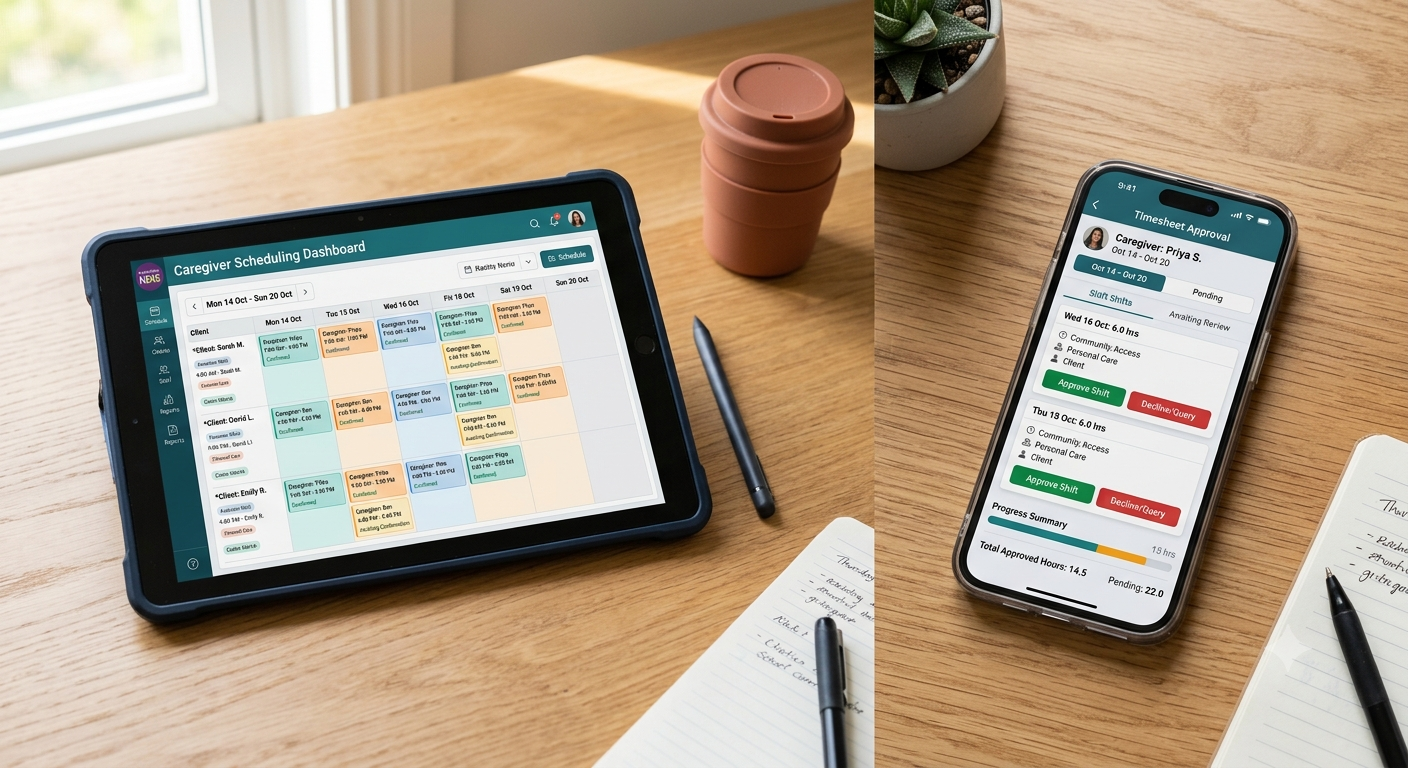
An integrated NDIS billing software platform connects your rostering, payroll, and NDIS claiming in a single system. When a support worker clocks in and out of each shift, the system records the support category, client, and units delivered and timestamps every entry. At the end of the billing cycle, the platform automatically collates hours by client and support category, applies the correct hourly rates, and generates a billing report ready for submission through NDIS PACE.
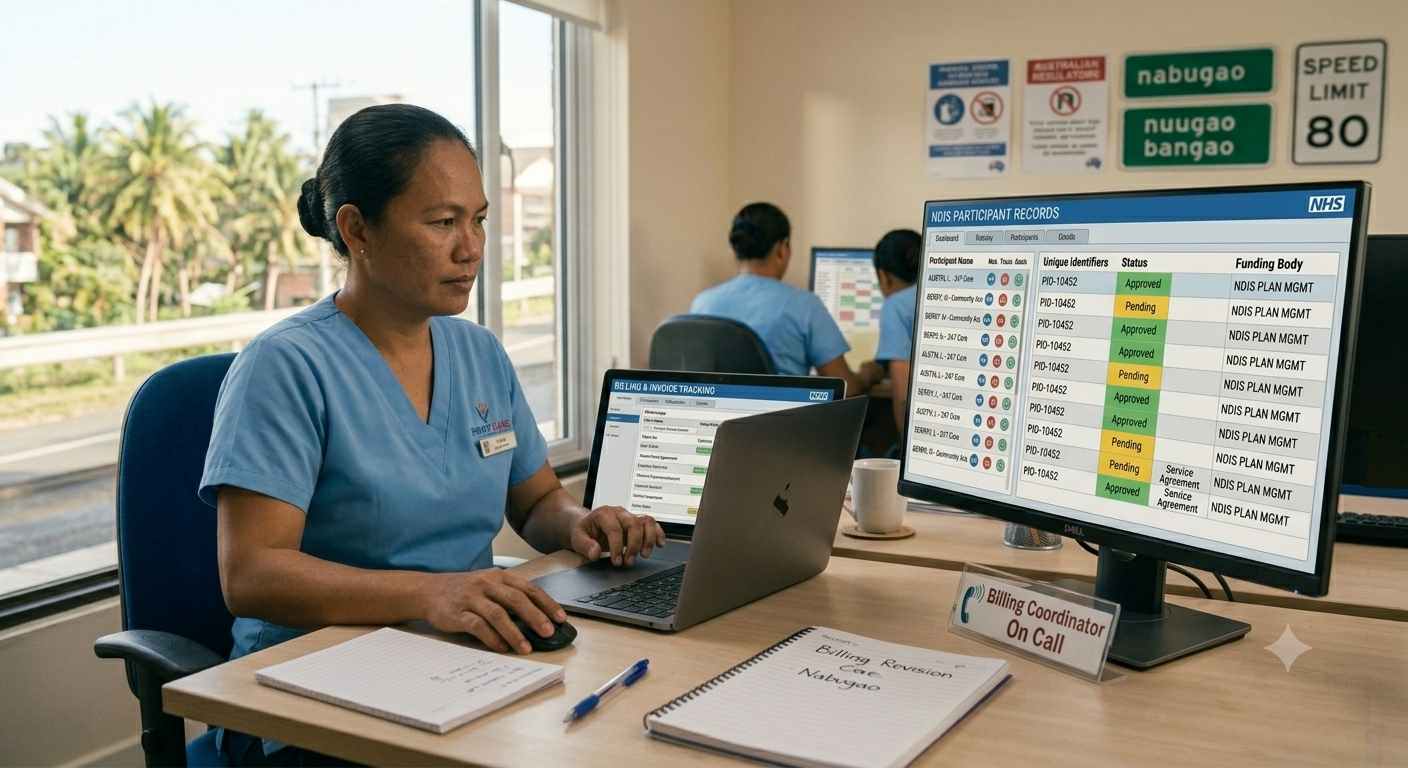
That report is pre-validated. The system checks that every claim has the necessary documentation, that units match the client’s plan, and that rates align with contracted prices. If something is missing or incorrect, it flags the issue before submission. You correct it in minutes rather than discovering a rejection after the fact. Once you’ve approved the billing report, a single click submits the claim to the PACE portal via API integration, with no manual data entry and no transcription errors.
The Financial Impact

The numbers are concrete. An NDIS provider with 200 active clients and an average annual claim of $50,000 per client generates $10 million in annual claims. If manual billing leads to an 8 percent error rate through rejections and underbilling, that is $800,000 in lost revenue each year. Automation typically reduces rejection rates to 1 to 2 percent. Most of that lost revenue comes back immediately.
But the savings go deeper than rejected claims. A finance manager who currently spends 15 hours per week on billing and claim chasing can redirect those hours to financial planning, cash flow forecasting, and strategic work. You also reduce the risk of accidentally overbilling, which triggers audits, or underbilling, which leaves money on the table. One provider that automated their NDIS billing through ShiftCare’s platform saw their average claim-to-payment cycle drop from 18 days to 4 days. That 14-day improvement in cash flow reduced their reliance on overdraft facilities, cutting financing costs significantly.
Real-Time Visibility Over Revenue and Forecasting
An integrated billing system does more than submit claims. It gives you a real-time dashboard of your financial health: claimed versus unclaimed services, outstanding invoices by client, and forecast cash flow based on historical claim cycles. This visibility enables faster decisions about staffing, service expansion, and pricing.
If the NDIA rejects claims for a particular support category more often than others, you can investigate immediately. Are workers logging hours incorrectly? Did they miscode a support category in your system? Is there a documentation gap? With real-time data, you spot patterns and fix them before they escalate into a systemic problem.
How to Implement NDIS Billing Automation
NDIS billing automation is a fundamental requirement for providers who want to protect cash flow and reduce compliance risk. The financial upside is significant, and the operational relief is even more valuable. Start by auditing your current billing process: map every step from when a worker logs hours to when a claim lands in PACE to when you receive payment. Identify bottlenecks, error points, and manual handoffs. Then evaluate NDIS billing software that integrates rostering, payroll, and claims management. Plan a phased rollout: start with a small cohort of 20 to 30 clients and run your old and new processes in parallel for one billing cycle.
Ready to transform your invoicing and billing? ShiftCare’s rostering and billing tools are built for exactly this kind of phased transition, integrating rostering, payroll, and NDIS claims management in a single platform. Start your free trial today. See how ShiftCare helps NDIS providers automate billing and improve cash flow.