
As a program run by the government to support and fund people living with permanent or significant disabilities, the NDIS provides participants (and their loved ones) with the services and care they may need.
Primarily, the NDIS aims to help those with disabilitiesto be more independent while reducing the risk of substandardor unstructured care services.
Since its introduction over a decade ago, the NDIS has transformed the disability care landscape. For providers, it presents both a meaningful opportunity and a responsibility. By registering with the NDIS, care organisations and businesses can access government funding and deliver high-quality, life-changing support.
There are two types of NDIS providers.
Registered NDIS Providers vs Unregistered NDIS Providers
Registered NDIS providers are formally approved by the NDIS Quality and Safeguards Commission. They must meet strict NDIS Practice Standards and undergo regular audits. In return, they can deliver services to all participants, whether their plans are NDIA-managed, plan-managed or self-managed.
To explore what this process involves, read our article on how much NDIS registration costs.
Unregistered providers don’t go through formal registration with the Commission. However, they can still support participants whose plans are self-managed or handled by plan managers. While they face fewer requirements, they must still adhere to the NDIS Code of Conduct.

How to become an unregistered NDIS provider
To become an unregistered NDIS provider, you must first establish your business by choosing a business structure and obtaining the proper insurance.
As an unregistered provider, you must also define your services, understand your client base and most importantly, adhere to ethical and legal standards. Unregistered providers are not bound by the NDIS Practice Standards but must adhere to the NDIS Code of Conduct.
Curious about which path is best? Read our blog comparing registered vs unregistered NDIS providers.

How to become a registered NDIS provider: a step-by-step overview of the NDIS registration process
Becoming a registered provider unlocks wider service categories and adds credibility to your organisation. It also enables:
- Access to the NDIS Provider Finder tool
- Direct NDIA payments
- Clearer definitions of best practices in care delivery
Here’s a step-by-step look at the process:
1. Prepare
Select your registration groups and business structure. Secure your ABN, public liability and professional indemnity insurance. Set up your Provider Digital Access (PRODA) account.
2. Apply Online
Access the NDIS Commission Application Portal. Complete the self-assessment and upload your business policies, procedures, and evidence.
3. Complete Your Audit
Engage an NDIS-approved auditor. Audit costs depend on your business size and the risk classification of your services.
4. Await a Decision
The Commission may request additional information. If approved, you’ll receive your registration documentation.
5. Maintain & Renew
Stay compliant by submitting reports, managing incidents appropriately, and renewing your registration every three years.
What does NDIS Registration cost?
While there’s no fee to apply, you will incur costs for audits.
A verification audit typically ranges from $900 to several thousand dollars, while certification audits can cost $3,000 to $15,000, depending on your organisation’s complexity. Renewal costs occur every three years.The NDIS registration cost need not break the bank!

Top NDIS compliance requirements
Whether registered or unregistered, all providers must comply with core obligations, including:
- NDIS Code of Conduct
This mainly involves the practice of respect, dignity and fairness at all times during care services and delivery.
- Worker Screening and Sustainability Checks
All NDIS support workers must undergo appropriate screening and be verified as fit for their role.
- Complaints and Incidents Management Check
Serious incidents must be recorded and reported promptly and complaints must be resolved fairly and transparently.

Helpful Tools for NDIS Providers
- Compliance
There are many tools available for compliance and risk management. For instance, NDIS software platforms like ShiftCare, offer audit views, policy templates and cybersecurity tools to help you meet requirements.
- Client & Workforce Management
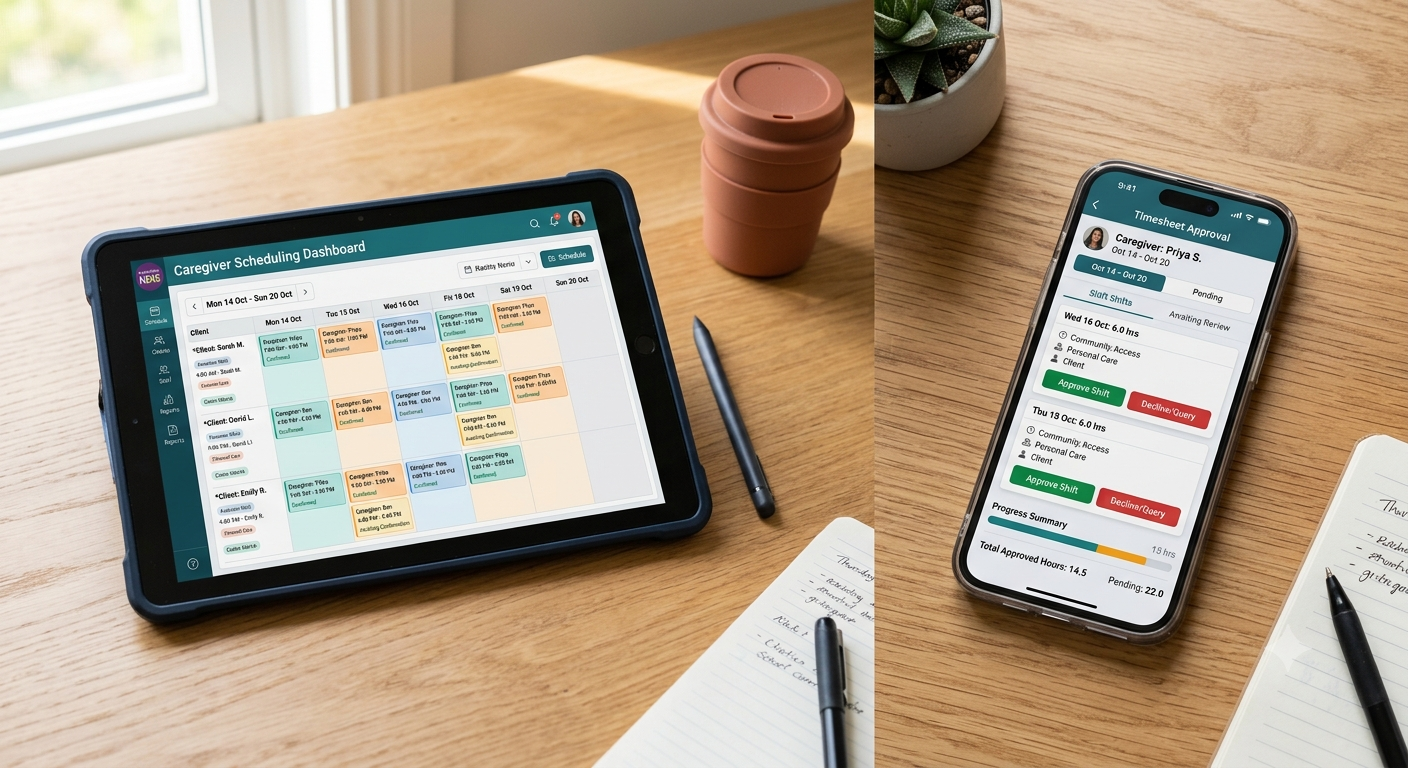
ShiftCare is an NDIS provider software platform that offers end-to-end client and workforce management. ShiftCare provides efficient tools such as client rostering, timesheets and the streamlining of payment processes.
- Documentation both when Mobile & Offline
Progress notes are essential when it comes to all provided care services. You can use ShiftCare on the go to record notes, use voice-to-text and stay productive even without internet access.
For the best NDIS software, ShiftCare provides care management software that makes team management, accounting and other operational processes easier for NDIS providers
Why ShiftCare helps NDIS providers succeed
From taking care of bookkeeping, undertaking NDIS audits and making sure your compliance is up to date, to managing shifts of care providers and working out how to get NDIS clients, ShiftCare is the NDIS provider software that does it all, offering the highest standard of quality care.

Ready to become an NDIS provider? Let’s talk!
ShiftCare is a professional care management platform designed to take the hassle out of admin, so you can focus on delivering quality care. Whether it’s rostering, invoicing, HR or NDIS compliance requirements, our intuitive platform streamlines operations and reduces the burden of manual paperwork.
With powerful features built for NDIS providers, Aged Care and Disability Support services, ShiftCare helps you keep records audit-ready, automate scheduling and invoicing and simplify compliance tracking with advanced NDIS software – all in one place.
If you’re looking for a smarter way to manage your business, ShiftCare is here for you.
Book a demo today or reach out to our expert team and see how ShiftCare can help you empower your work more efficiently while focusing on what truly matters.