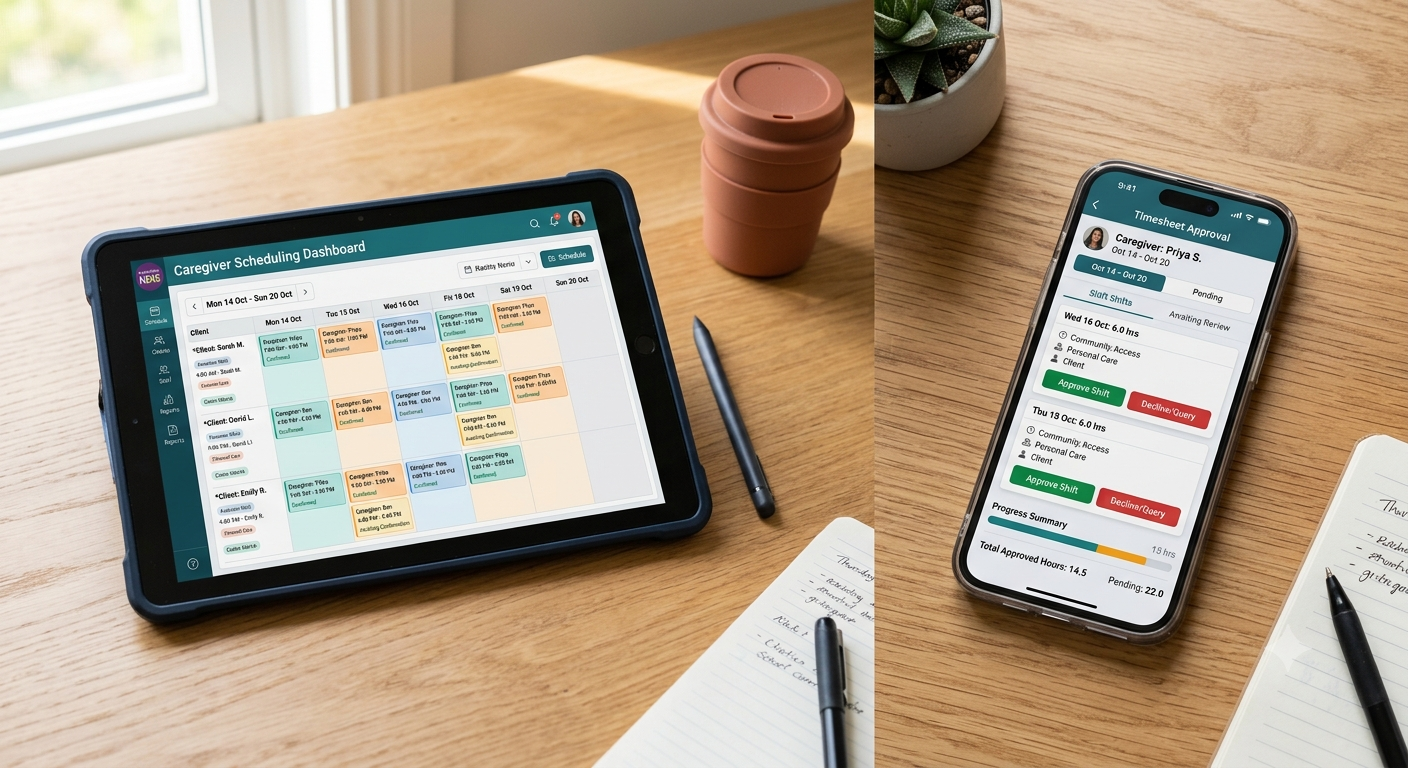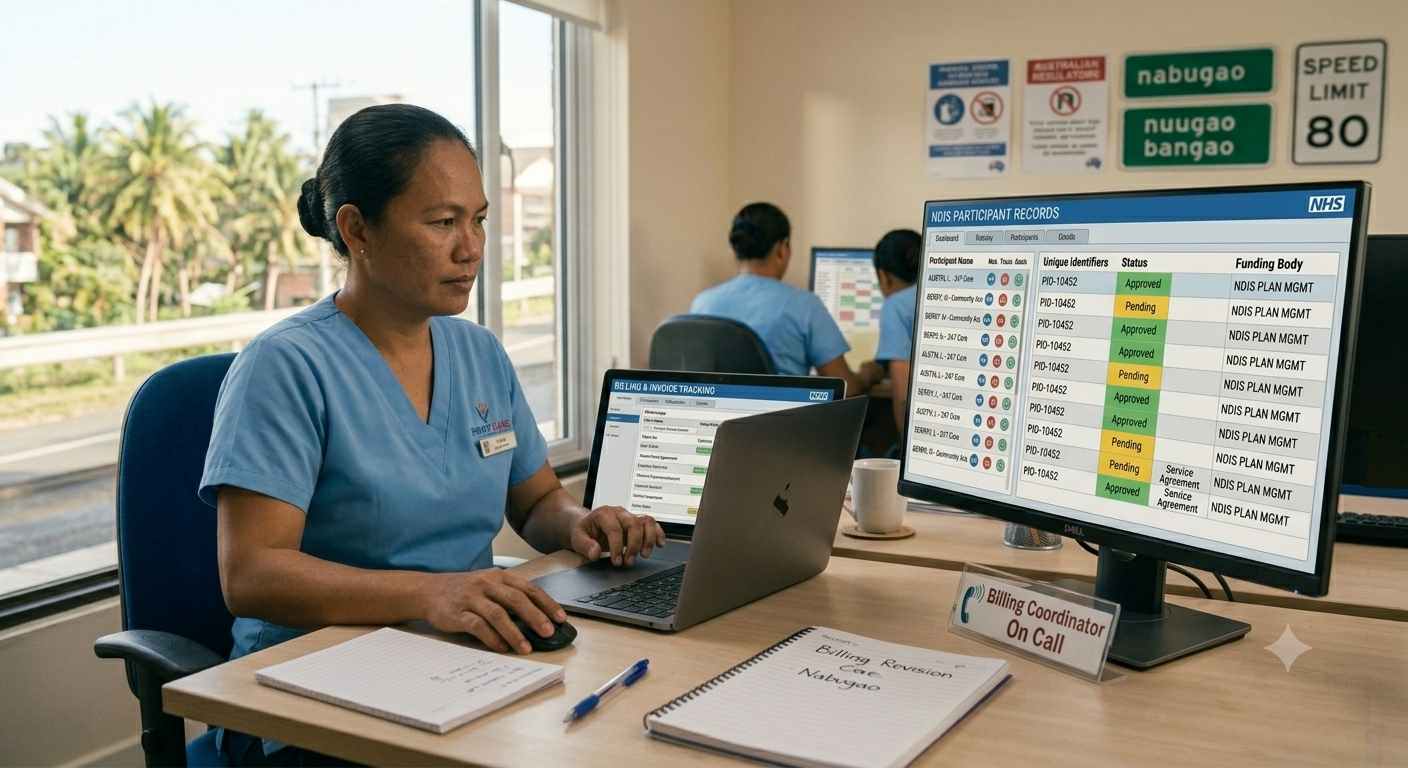
Disability care management software for Australian providers becomes essential when your organisation operates across NDIS, Support at Home, and Home Care Package funding streams simultaneously. You’re dealing with completely different rules, pricing models, billing cycles, and compliance obligations. Your support workers switch between clients in different programmes throughout the day, your finance team manages three separate claims processes, and compliance obligations are a moving target because each programme changes independently.
This is the reality for many mid-sized Australian disability and aged care providers. Diversification across funding streams reduces dependency on a single funder and opens new revenue, but it also creates operational complexity. Here are the questions multi-registered providers ask most often, and the answers that keep organisations running smoothly.
How Do I Track a Support Worker’s Time Across Multiple Funding Streams?
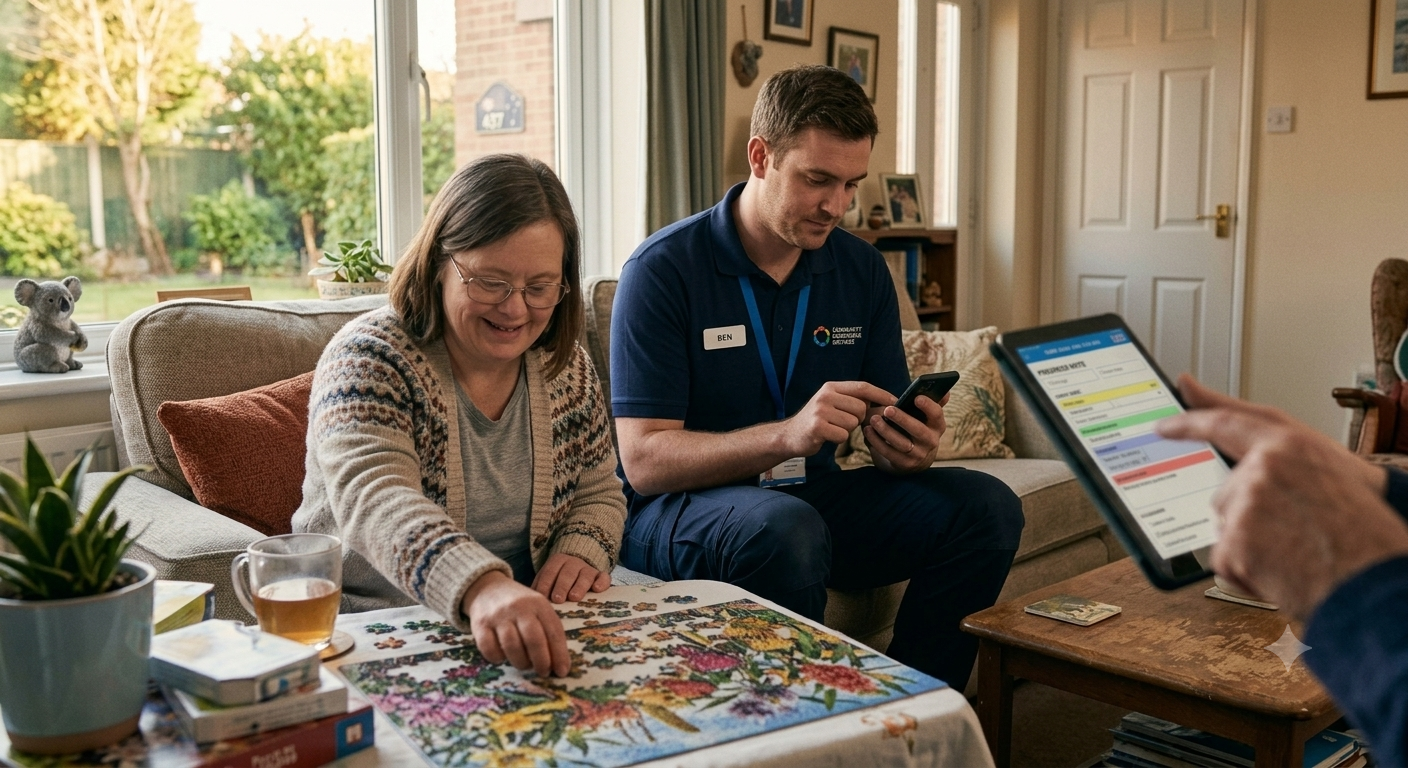
Your support worker delivers NDIS support to Client A from 9am to 11am, then transitions to Support at Home care for Client B from 11am to 1pm. Both are legitimate work, but they are billed differently, governed by different regulatory standards, and reported to different funders. You need to track her time accurately in each program.
The practical answer is to ensure your rostering system can tag each shift with both the client and the funding source. When the worker logs her hours, she records not just the client name but also whether the session falls under NDIS, Support at Home, Home Care Packages, or another program. This tag follows the hours through to billing, ensuring they are claimed against the correct funder and subject to the correct rate. ShiftCare’s disability care management tools support multi-funder tagging natively, which eliminates the most common source of billing errors in multi-registered organisations.
This tagging is critical for compliance. If an auditor reviews your billing and finds NDIS hours claimed against a Support at Home client, it is a red flag. Many legacy systems track hours by client but not by program. If this describes your current setup, upgrading to a system with multi-funder tracking should be an immediate priority.
How Do I Manage Different Pay Rates and Billing Rates for the Same Service?
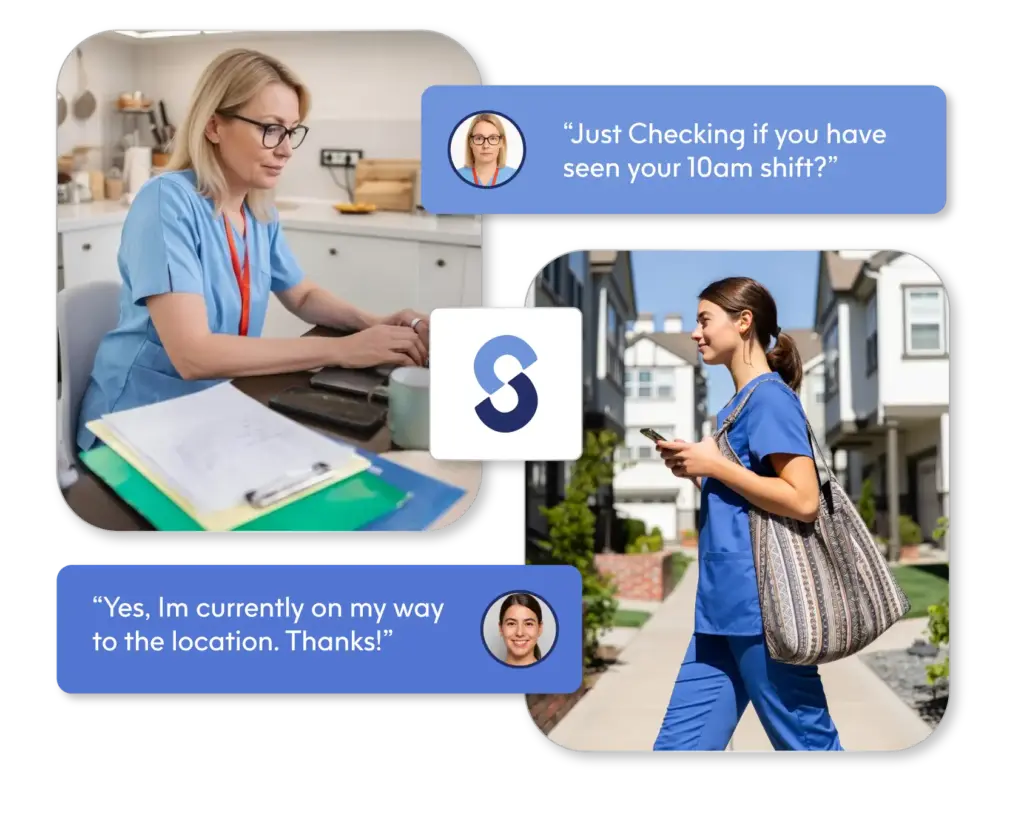
A support worker delivering community access support might earn $30 per hour under your base pay scale, but the NDIS may reimburse you at $45 per hour while Support at Home reimburses at $38 per hour. Your payroll system needs to track what you pay the worker; your billing system needs to track what you claim from each funder. These numbers rarely align, and confusing them costs money.
Set up rate tables in both your payroll and billing systems that are funder-specific. Create a master schedule showing the hourly rate for each service type under each program and link these tables to your rostering system so that when a shift is tagged with a funder, the correct rates apply automatically. Many providers run a monthly audit where they compare payroll costs against claimed revenue by funder. This catches rate errors before they affect financial reporting or create compliance issues.
What Compliance Obligations Apply to Each Funding Stream?
This is where multi-registration becomes operationally heavy. NDIS clients have plans with specific goals, review cycles, and participant safeguards governed by the NDIS Commission. Support at Home clients are managed under the Department of Health’s program with its own reporting requirements. Home Care Package clients are governed by the Aged Care Act and the Aged Care Quality and Safety Commission.
Create a compliance calendar listing key obligations for each funder: registration renewal dates, audit windows, reporting deadlines, and training requirements. For NDIS, mark the date each client’s plan was last reviewed. NDIS plans have 12-month review cycles, and missing a review date may affect your ability to claim. For Support at Home, track quarterly reporting deadlines. For Home Care Packages, mark annual statement submission dates. Assign one team member as the compliance owner across all programs.
How Do I Report to Multiple Funders Without Duplicating Data Entry?
Each funder wants data in a specific format. The NDIS Commission wants incident reports; the Aged Care Quality and Safety Commission wants aged care incident notifications; Support at Home funders want quarterly progress reports. Your support workers document incidents once, but reporting systems often require separate data entry for each funder.
Use a centralised incident and reporting system that generates funder-specific reports from a single data entry point. When a worker logs an incident, they fill out one form. Your system then transforms that data into NDIS, aged care, or Support at Home report formats as needed. This eliminates double data entry and ensures consistency across all reports.
What Technology Do I Need to Operate Across Multiple Funding Streams?
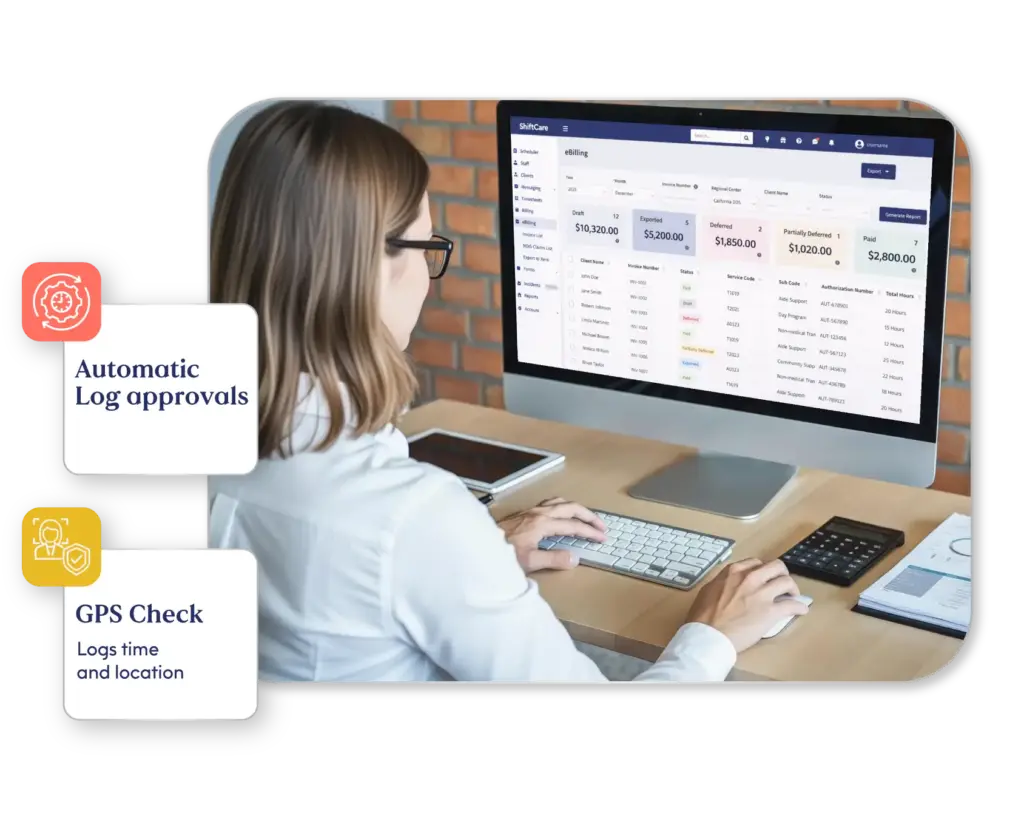
You need disability care management software that handles multiple funding streams natively. Your rostering system must tag shifts by funder, apply funder-specific rates, and generate funder-specific reports. Billing systems must claim against the correct funder, apply funder-specific rules, and reconcile claims across programs. Meanwhile, payroll system must track worker costs against funder revenue so you can see profitability by program and client. ShiftCare’s rostering software is designed to manage exactly these multi-funder environments, consolidating scheduling, billing, and reporting for providers across NDIS, aged care, and home care.
If your current systems cannot do this, you are running operational and financial risk. Even if you are managing it with spreadsheets and workarounds today, scaling to more clients or more funding streams will break your processes. The providers who do this successfully treat multi-funder operations as a distinct operational model, not multiple registrations they happen to run in parallel. That clarity is what turns complexity into competitive advantage. Good disability care management software for Australia is what makes that model sustainable at scale.
Turn Multi-Funder Complexity into Competitive Advantage
If your current systems cannot handle multiple funding streams natively, you are running operational and financial risk. Even if you are managing it with spreadsheets and workarounds today, scaling to more clients or more funding streams will break your processes. The providers who do this successfully treat multi-funder operations as a distinct operational model, not multiple registrations they happen to run in parallel. That clarity is what turns complexity into competitive advantage.
Good disability care management software for Australia is what makes that model sustainable at scale. ShiftCare’s rostering software is designed to manage exactly these multi-funder environments, consolidating scheduling, billing, and reporting for providers across NDIS, aged care, and home care. Start your free trial today! See how ShiftCare helps Australian providers manage multiple funding streams.