As the Minister for Aged Care, Anika Wells, highlighted, “We’ve heard the message from older Australians: they want support to stay in the homes and communities they love. Support at Home will help around 1.4 million older Australians do just that, with shorter wait times, more levels of support, and funding for home modifications. The Government will pay 100 per cent of clinical care services, with people contributing towards their support services like help with showering, gardening or meal preparation.
As a home care provider, whether you’re involved with Home Care Packages (HCP), Commonwealth Home Support Programme (CHSP), or Support at Home, the upcoming changes will require significant adjustments in your operations. These reforms, effective from 1 July 2025, aim to deliver a better system for older Australians, emphasising quality and safety.
What Does This Mean for You as a Provider?
The reform package includes a $5.6 billion investment, with a large portion dedicated to the Support at Home program, which will replace the current Home Care Packages program. The changes will affect how services are delivered, how care is funded, and the operational demands on providers.
As a provider, it’s critical to understand how these changes will impact your business and how you can prepare for the transition. Below, we’ve summarised the key changes for each provider type, and a high-level timeline for what needs to be done before the 2025 rollout.

Key Changes for Home Care Providers (HCP, CHSP, and Support at Home)
The changes for providers will vary depending on whether you’re managing Home Care Packages (HCP), the Commonwealth Home Support Programme (CHSP), or preparing for the new Support at Home program. Below, we’ll compare these programs and outline what adjustments will be required, including key changes to residential care, caps, price adjustments, and end-of-life care.
| Aspect | Home Care Packages (HCP) | Commonwealth Home Support Programme (CHSP) | Support at Home |
| Program Start Date | Ongoing | Ongoing | 1 July 2025 |
| Funding Structure | Based on 4 levels of care (Level 1-4) | Service fee-based, means-tested contributions | 10 funding classifications (from 4) |
| Care Management Fees | Varies by level | N/A | Capped at 10% of participant budgets |
| Participant Assessment | Based on 4 levels of care needs | Based on individual needs | 10 new classifications, including short-term restorative care and end-of-life care |
| Eligibility Criteria | Age, care needs, asset tests | Age, care needs, low care requirements | Age, care needs, with a focus on supporting independence |
| Technology Access | No automatic funding for technology | No automatic funding for technology | Separate funding scheme for technology access |
| Service Contribution | Varies by package and income/assets | Varies by service type and income/assets | Participants contribute based on income/assets, highest for everyday living services |
| Short-Term Care | Limited restorative care options | Limited | Up to 12 weeks of intensive allied health support |
| Rural and Remote Access | Not specifically funded | Not specifically funded | Grant funding available for rural or diverse providers |
| Residential Care Changes | Increased caps on fees for some services; no major changes for current participants | Changes to pricing for low-level residential care services | New residential care funding model will address gaps in available services, particularly for end-of-life care |
| Price Changes | Some price changes for services under HCP, including co-payments for higher levels | Price adjustments for services in line with updated funding for CHSP services | Price changes to align with the new funding structure; higher caps on fees for certain services |
| End-of-Life Care | Care options for end-of-life care provided under existing packages | Limited end-of-life care services available under CHSP | Specific funding for end-of-life care as part of the new Support at Home classifications, addressing gaps in care |
| Impact on People Dying | No significant changes to end-of-life funding or services | Limited options for end-of-life care | Focused support for people in end-of-life stages, including more targeted funding and services tailored to those nearing death |
What You Need to Prepare for as a HCP Provider
If you’re a Home Care Package (HCP) provider, the transition to Support at Home will involve several key changes to how services are delivered and funded. The most immediate action you will need to take involves preparing your systems for the updated care classifications and funding structure.
Here’s what you need to do and when:
Before 1 July 2025
- Update Care Classification Systems – Prepare to transition from the four Home Care Package levels to the new ten classifications. This will require system updates to ensure your care plans align with the new model.
- Care Management and Fees – The new cap on care management fees (set at 10%) will require you to revise how you manage participant budgets and billing. Ensure your billing systems can handle the new cap and the pooled funding approach for care management.
- Training and Staff Readiness – Staff will need to be trained on the new classifications and funding structure. Start scheduling training sessions now to ensure a smooth transition.
- Participant Communication – Inform your clients of the upcoming changes. Develop clear communication strategies to ensure they understand how their care will be affected and any changes to their costs or services.
What You Need to Prepare for as a CHSP Provider
The CHSP program, which provides basic support services to older Australians, will also see significant changes. Here’s a breakdown of the adjustments required for CHSP providers:
Before 1 July 2025
- Adapt to New Classifications – CHSP providers will need to align their services with the ten classifications under Support at Home. This will mean revising service delivery models to support both the classification changes and the increased demand for services.
- Update Service Delivery Models – Under the new model, services like domestic assistance, meals, and personal care will be more tightly integrated with clinical support. This shift will require updates to your service delivery models to accommodate increased demand for higher levels of care.
- Budget Adjustments – Like HCP providers, CHSP providers will need to revise their budget systems to account for the changes in how funding is allocated. You will also need to monitor how clients contribute to service costs, especially with the new funding models and caps on contributions.
- Communicate with Clients – Given that the Support at Home program will bring more funding and support options for eligible clients, you will need to ensure your clients are well-informed about the upcoming changes and how they may benefit.
High-Level Timeline for Transition
This transition plan outlines the steps and timeline for home care providers to adjust to the new Aged Care reforms, including system upgrades, staff training, client communications, and the implementation of the new Support at Home program.
| Date | Action/Preparation | Details/Notes |
| Now – Early 2025 | Begin system upgrades to handle new classifications and funding models | – Assess current IT infrastructure to identify required changes for new funding models. – Begin integrating new classification structures for Support at Home (10 classifications). |
| Start staff training for new systems and processes | – Develop training materials focused on changes to classifications, funding models, and participant assessment criteria. – Provide training for staff on new processes for care delivery. |
|
| Conduct initial internal communication on reforms and transition requirements | – Hold meetings or send out communications to all teams explaining the changes. – Prepare internal FAQs for staff regarding the new Support at Home program and other reforms. |
|
| Mid 2025 | Begin client communications on changes to funding and services | – Develop clear, concise communication to inform clients of the upcoming changes to their funding and services. – Start holding meetings or webinars for clients to explain the changes. |
| Finalise software upgrades and ensure compliance with new government requirements | – Finalise system updates to align with the government’s new funding structures. – Ensure that all software solutions are compliant with new regulatory requirements for data reporting. |
|
| Prepare transition documentation for clients | – Create client-facing materials outlining the transition process, new funding classifications, and how the changes will affect their care. – Prepare a timeline of key milestones for clients. |
|
| 1 July 2025 | New Support at Home program begins | – Launch the new Support at Home program, beginning service delivery under the updated classification and funding models. – Ensure all internal systems and teams are fully prepared for the transition. |
| Implement updated service delivery models | – Transition clients to the new funding structures and classifications. – Implement any updated care management workflows for service delivery. – Monitor the first month of service delivery closely for any issues. |
|
| Post July 2025 | Ongoing monitoring and client feedback | – Gather feedback from clients regarding their experience with the new funding structure and service delivery models. – Make adjustments as necessary based on feedback and service performance. |
| Continuous staff training and support | – Conduct ongoing staff training on emerging needs or adjustments to the Support at Home program. – Implement regular updates and support for staff to ensure they remain compliant with all changes. |
Conclusion
The new Aged Care reforms will bring significant change to how home and support services are delivered across Australia. As a provider, ensuring your systems are up to date and your staff are trained well ahead of the 1 July 2025 implementation date will be critical to maintaining service quality and compliance.
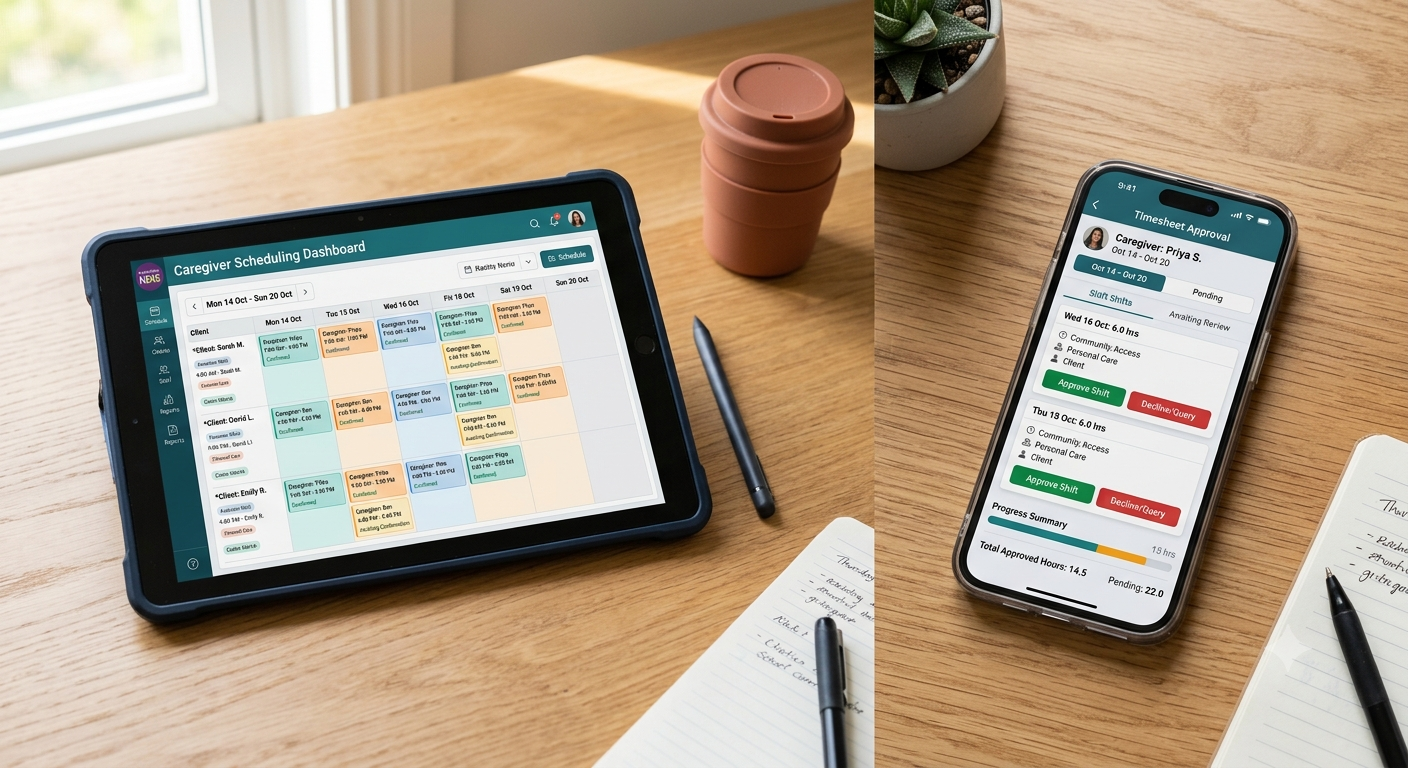
ShiftCare is committed to helping you navigate these changes, providing you with the Support at Home software tool and guidance needed to transition smoothly. Stay informed, stay prepared, and ensure your organisation is ready to adapt to this new era in aged care.
Try ShiftCare today, sign up for a free 7-day trial.
1. What are the key changes introduced by the new aged care reforms?
The new aged care reforms focus on improving care quality, increasing transparency, and strengthening compliance requirements. They include updated standards for care delivery, funding adjustments, and stricter reporting obligations for providers.
2. How can aged care providers prepare for the reforms?
Providers can prepare by reviewing the new compliance requirements, training staff on updated standards, and adopting tools like ShiftCare to streamline rostering, documentation, and reporting processes.
3. How do the reforms impact aged care providers’ operations?
The reforms require providers to enhance service quality, maintain accurate records, and meet stricter compliance standards. Using advanced care management software can help providers adapt while ensuring efficiency and compliance.