Understanding NDIS home support and home care packages is essential for disability providers in Australia. These represent two distinct government-funded systems: the NDIS serves people aged 7 to 65 with permanent disabilities, while home care packages serve people 65+ requiring aged care support.
Many Australians seeking support to remain independent at home encounter confusion about the different funding schemes available. The terms “NDIS” and “home care packages” are frequently used interchangeably, but they represent two distinct government-funded support systems.
Understanding the critical differences is essential for disability support providers, aged care organisations, and most importantly, for individuals and families seeking appropriate care solutions. It has profound implications for eligibility, funding levels, service types, and the regulatory environment providers must navigate.
Understanding the Difference: NDIS vs Home Care Packages

The confusion between NDIS and home care packages arises because both schemes fund home-based support and both enable people to remain living independently in their homes. However, they serve fundamentally different populations and operate under different legislative frameworks. The NDIS (National Disability Insurance Scheme) is a national disability support scheme that provides funding and supports to people with disabilities aged 7–65 who have a permanent and significant disability. Home care packages, by contrast, are aged care supports specifically designed for people aged 65 and over who require assistance to continue living at home.
This age distinction is critical. A person cannot be eligible for both NDIS and home care packages simultaneously because they can only be in one age bracket—either under 65 (NDIS-eligible) or 65 and over (home care package eligible). The government’s intentional design separates disability support (NDIS) from aged care (home care packages), each with its own funding model, quality standards, and provider requirements. For disability support organisations and aged care providers, this means serving one population or the other, though some larger organisations may hold separate registrations to operate in both sectors.
NDIS Home Support Eligibility Requirements
For individuals to access NDIS home support, they must satisfy multiple eligibility criteria. Unlike home care packages, which focus primarily on age and care needs, NDIS eligibility involves a more comprehensive assessment of disability, permanence, and support requirements.
Age Requirements
The primary age boundary for NDIS access is 65 years old. Individuals must be under 65 years at the time they first apply for NDIS access. The scheme currently accepts applications from people aged 7 onwards, though in transitional arrangements, some people aged 65 and over have been grandfathered into the scheme if they were receiving support before July 2013. For disability support providers, this means your client base will progressively shift toward younger demographics as the NDIS matures, whereas aged care providers serve an aging population through the home care packages scheme.
Disability and Permanence Criteria
Beyond age, applicants must have a permanent and significant disability. The disability must be caused by a physical, sensory, intellectual, neurological, cognitive, or psychosocial impairment. The critical word is “permanent”—the impairment must be expected to last for a lifetime or an indefinite period, not temporary or situational disability. Applicants must demonstrate that the disability significantly affects their capacity to participate in everyday activities and that support is necessary to help them become more independent.
The assessment of permanence and significance is conducted by the NDIA during the access request process. People with temporary disabilities, injuries that are expected to resolve, or conditions that do not substantially limit daily functioning may not be deemed eligible despite having a diagnosed disability.
Residency Requirements
NDIS eligibility is limited to Australian citizens, permanent visa holders, and protected special category visa holders. Importantly, applicants must reside in Australia at the time they apply and be expected to continue residing in Australia. This means international students, temporary visitors, and people on temporary work visas are generally ineligible, even if they have a significant disability.
Means Testing and NDIS Funding
The NDIS does not means-test eligibility—this is a fundamental principle that distinguishes it from other support schemes. An individual’s financial circumstances do not affect their eligibility for NDIS access. However, the NDIS does undertake participant contributions for some services based on financial capacity, particularly for participants with higher incomes. This difference is important: disability does not automatically exclude you from NDIS support based on wealth, but your personal contribution to some services may be adjusted if you have significant financial resources.
Types of NDIS-Funded Home and Living Supports

NDIS-funded home supports encompass a wide range of assistance that helps participants maintain independence and participate in community life from their homes.
Personal Care and Daily Living Assistance
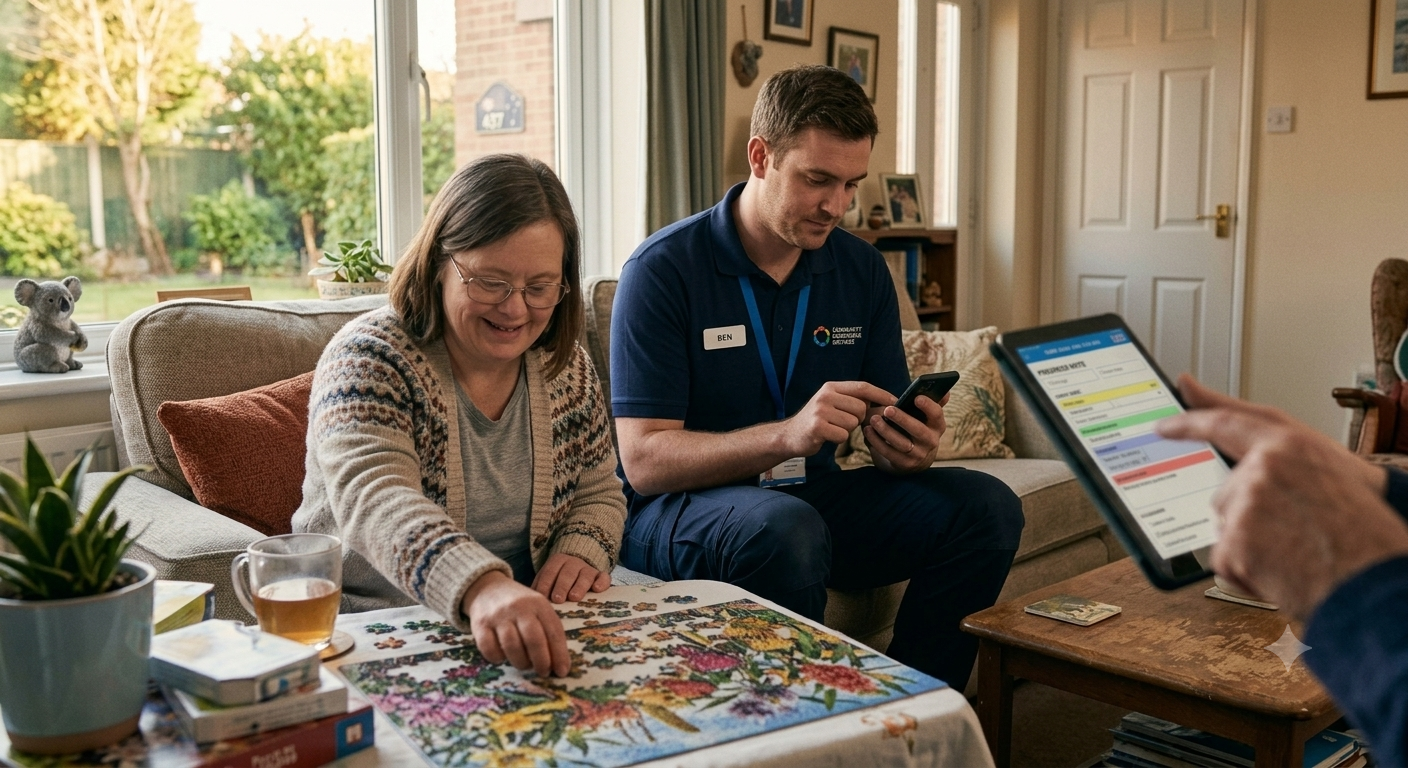
Personal care is one of the most commonly funded home supports. This includes assistance with showering, bathing, and personal hygiene; dressing and grooming; toileting and continence management; and meal preparation and eating. NDIS participants who are unable to undertake these activities independently due to their disability can access funding to pay a carer to provide this assistance. Personal care funding is calculated based on the participant’s identified needs in their plan.
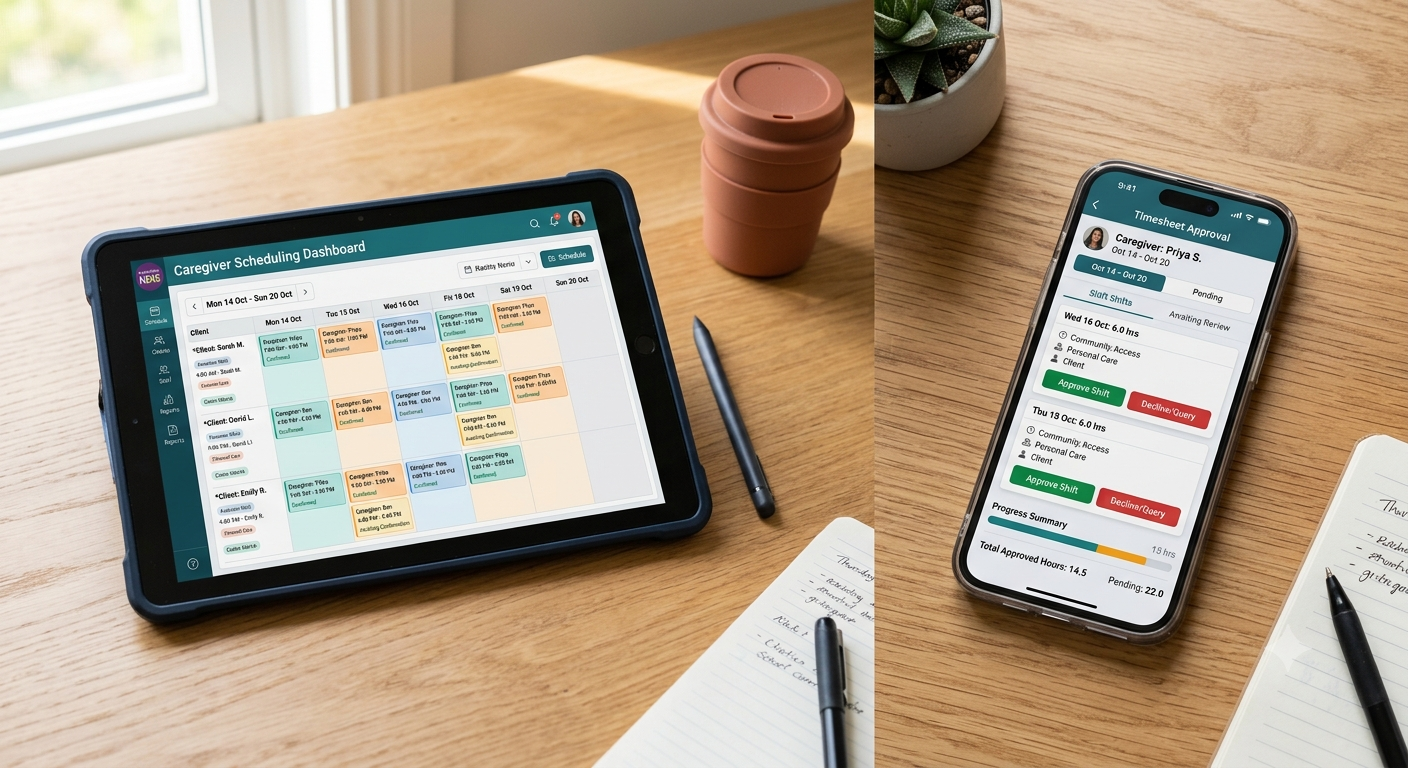
Managing personal care schedules across multiple participants requires efficient coordination. Many NDIS home support providers use rostering software to streamline shift scheduling and ensure workers are matched to appropriate participants based on skills and availability.
Home Help and Environmental Supports
Home help supports cover assistance with household cleaning, laundry, meal planning and preparation, and general housekeeping. Unlike personal care, which focuses on the participant’s bodily needs, home help addresses environmental factors that affect independence and participation. A participant might not require personal care but may need assistance with complex meal preparation or house cleaning due to physical limitations caused by their disability.
Home modifications represent a significant category of NDIS-funded support. Participants can access funding for physical modifications such as ramps, grab bars, accessible bathrooms, and widened doorways that enable safer and more independent movement through their homes. Assistive technology—including communication devices, mobility aids, environmental controls, and safety systems—is also NDIS-funded, allowing participants to engage with technology that enhances their independence.
Home Modifications and Assistive Technology
Assistive technology funding is particularly important for participants with complex support needs. Participants might receive funding for smart home systems that enable voice-activated controls, alert systems that notify carers of emergencies, or specialised technology that enables communication for non-verbal participants. The NDIS recognises that technology can sometimes substitute for or reduce the need for direct personal care by enhancing participant independence.
Transitional and Crisis Supports
Some NDIS funding categories are specifically designed for transition periods. Participants might access short-term intensive support during hospitalisations, recovery periods, or major life changes. Crisis supports are available to address sudden support needs that threaten a participant’s independence or safety, bridging the gap until longer-term arrangements can be established.
How NDIS Home Support Plans Work
NDIS home support plans operate on a planning cycle that typically runs for either one year or three years, depending on whether the participant is in a trial stage or established in the scheme. During the planning meeting, the participant, their support network, and NDIS planners discuss the participant’s goals, support needs, and how NDIS funding can help them progress toward those goals.
Plan Duration and Review Cycles
New NDIS participants typically receive annual plans to allow for adjustment and learning about their needs. Established participants may move to three-year planning cycles if their circumstances are stable and their needs are well understood. Plan reviews occur at the end of each planning cycle, or earlier if significant changes occur in the participant’s circumstances—such as changes in support needs, housing situation, or life events.
For home support providers, plan cycles are significant because participant funding availability and support requirements may change at each review. Providers need systems for tracking when participant plans expire, understanding upcoming reviews, and being prepared to adjust service delivery based on updated plans.
Budget Management and Flexibility
Within their approved plans, participants control how their funding is allocated across support categories. A participant might have a plan that allocates funding for personal care, home help, and assistive technology. The flexibility to reallocate funding between categories (within their plan’s parameters) allows participants to adjust their support mix as their needs evolve.
The NDIS encourages flexible, outcome-focused planning rather than prescriptive support arrangements. This means a participant’s funding is tied to achieving identified goals and addressing identified support needs, rather than funding a specific number of hours of specific support types. For providers, this means understanding each participant’s plan structure and helping them use funding strategically to achieve their goals.
Self-Managed, Plan-Managed, and Agency-Managed Arrangements
Participants can choose how they manage their funding through three arrangements: self-managed (where the participant or their representative manages budgets and pays providers directly), plan-managed (where a plan management agency manages the budget and pays providers), or agency-managed (where the NDIA delegates day-to-day management to a registered provider). Understanding which management arrangement each participant uses affects how providers invoice, report on service delivery, and maintain records.
Home Care Packages: Understanding the Alternative

Home care packages are the aged care equivalent of NDIS home supports, serving people aged 65 and over who require assistance to remain in their homes. Understanding home care packages is important for disability support providers considering service expansion and critical for organisations serving people transitioning from NDIS (under 65) to aged care (65+).
Who Qualifies for Home Care Packages
Eligibility for home care packages requires an assessment by an Aged Care Assessment Team (ACAT) or the My Aged Care assessment service. The assessment determines whether the person requires aged care and what level of care is appropriate. Home care packages are designed for people who can live safely at home with support, as opposed to residential aged care.
Funding Levels for Home Care Packages
Home care packages operate on four standardised funding levels, from Level 1 (basic support) to Level 4 (high-level care). Each level provides different annual funding amounts, and providers are paid from this budget to deliver support services. This is fundamentally different from NDIS planning, where funding is individualised based on participant needs rather than standardised into levels.
Can You Have Both NDIS and Home Care Packages?
A person cannot have both an active NDIS plan and a home care package simultaneously because the schemes target different age groups. However, a person might transition from NDIS (before age 65) to aged care (at age 65). Some transitional arrangements exist to support people approaching this age boundary, but the fundamental rule is that only one scheme is active at any given time.
Provider Requirements for NDIS Home Support Delivery
NDIS-registered providers delivering home supports must comply with the NDIS Practice Standards, which establish requirements across seven quality areas: participant rights and safeguarding, positive behaviour support, worker conduct and competence, service management and accountability, person-centered and goal-oriented supports, and participant communication and control.
Registration and Compliance Obligations
Providers must be registered with the NDIS to deliver NDIS-funded supports. Registration confirms that the provider meets minimum standards and has systems in place to deliver quality, safe, and participant-centred support. Providers may be registered for specific categories of supports. For example, a provider might be registered to deliver personal care but not home modifications.
Implementing NDIS provider software solutions helps organisations maintain compliance with documentation requirements, incident reporting, and participant communication standards essential for registration maintenance.
Quality and Safeguarding Standards
Providers must have robust incident management systems, complaint handling procedures, and risk management frameworks. Home-based support delivery, in particular, requires attention to safeguarding risks, as carers work in participants’ private homes with limited oversight. Providers must screen and train workers appropriately, maintain clear communication with participants and their representatives, and respond rapidly to any incidents, concerns, or complaints.
Participant Documentation and Record-Keeping
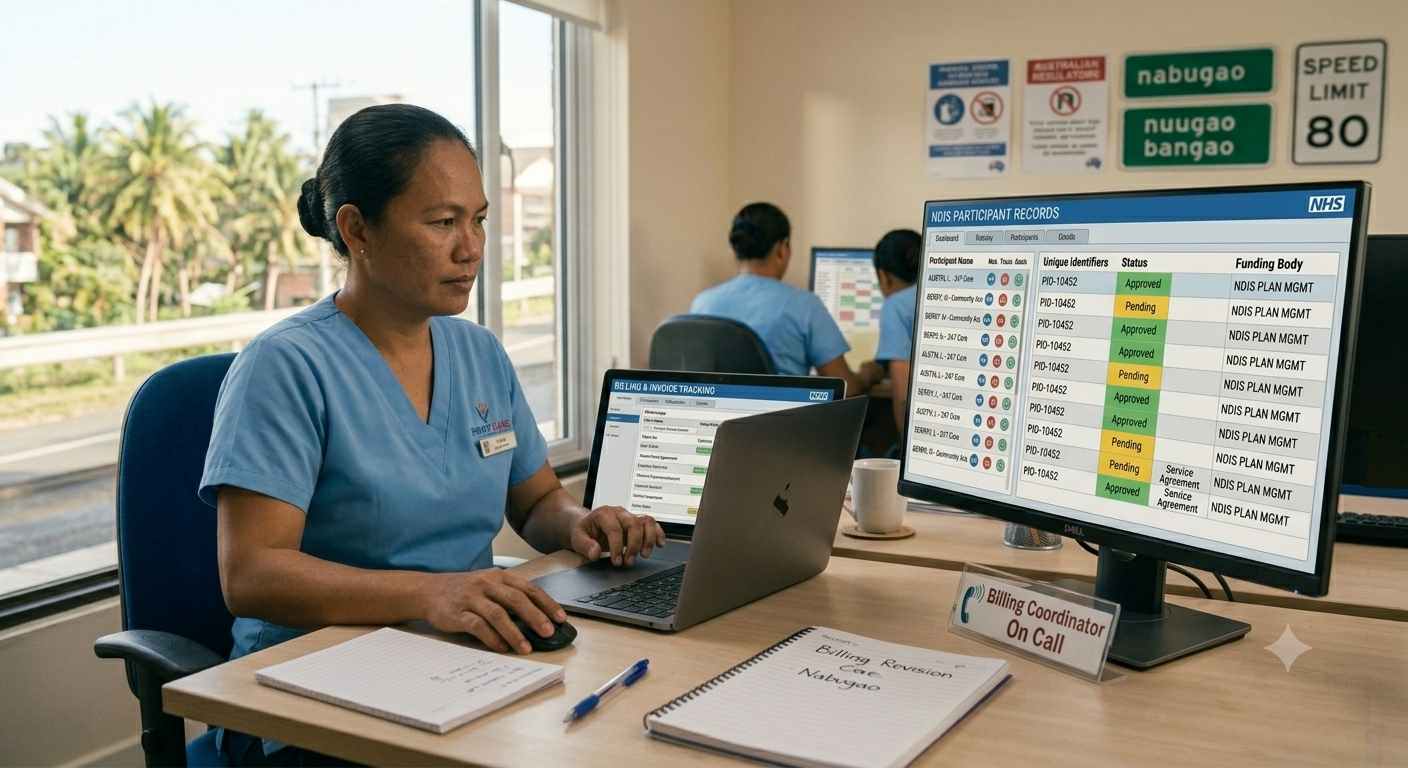
Providers must maintain comprehensive records of all supports delivered, including what support was provided, when, by whom, and what outcomes were achieved. These records serve multiple purposes: demonstrating service delivery to plan managers and the NDIA, enabling care coordination, supporting incident investigations if concerns arise, and demonstrating compliance during quality audits.
Many home support providers streamline this complex documentation using team collaboration tools that enable real-time communication between field workers and office staff, ensuring incident reports, progress notes, and participant updates are captured accurately and promptly.
Documentation and Compliance for Home Support Providers
Effective documentation and compliance systems are foundational to quality home support delivery. Providers must clearly document participant goals and support plans, record all services delivered with specific times and nature of support, maintain incident and complaint logs, track worker qualifications and screening status, and document participant communication and consent.
For home support providers, compliance extends to data security—participant information must be stored securely, with access limited to authorised personnel. Workers must understand confidentiality obligations and how to handle sensitive participant information. The complexity of compliance requirements makes integrated care management systems invaluable for home support providers seeking to maintain quality standards while managing scalable delivery across multiple participants.
FAQs About NDIS Home Care Packages & Home Supports
What is the key difference between NDIS and home care packages?
The NDIS is for people aged 7 to 65 with permanent disabilities. Meanwhile, home care packages are for people aged 65+ requiring aged care support. They are two separate schemes with different eligibility criteria, funding models, and registration requirements.
Can someone have both an NDIS plan and a home care package at the same time?
No. A person can only access one scheme at a time because they must be in the appropriate age group for eligibility. However, people may transition from NDIS to aged care when they turn 65 with appropriate transitional support.
What compliance systems do NDIS home support providers need?
Providers need systems for participant documentation, incident and complaint management, worker screening and training records, goal tracking, service delivery recording, and secure data management. Integrated care management software significantly streamlines these requirements and ensures compliance with NDIS Practice Standards.
Streamline NDIS Home Support Delivery with Better Systems
Effective documentation and compliance systems are foundational to quality home support delivery. Providers must clearly document participant goals and support plans, record all services delivered with specific times and nature of support, maintain incident and complaint logs, track worker qualifications and screening status, and document participant communication and consent. The complexity of compliance requirements makes integrated care management systems invaluable for home support providers seeking to maintain quality standards while managing scalable delivery across multiple participants.
ShiftCare’s care management software helps NDIS-registered providers manage participant management, goal tracking, rostering and scheduling, and automated compliance documentation. Start your free trial today! See how ShiftCare helps you deliver consistent, compliant, participant-centred home support.