However, their use must always be a last resort, carefully managed, and rigorously documented. For providers navigating these practices across Australia’s diverse state regulations, the process can be complex and time-consuming. That’s where ShiftCare comes in.
What Are Restrictive Practices?
Restrictive practices refer to interventions that limit a person’s rights or freedom of movement. The NDIS Quality and Safeguards Commission identifies five main types that you need to be aware of:
- Seclusion – Confining someone in a space they cannot freely leave.
- Chemical restraint – Using medication to influence behaviour, not for a medical condition.
- Mechanical restraint – Using devices to restrict movement.
- Physical restraint – Using physical force to limit movement.
- Environmental restraint – Restricting access to certain areas or objects.
Restrictive practices are only permissible when included in a participant’s Positive Behaviour Support (PBS) Plan and authorised in accordance with state or territory regulations.
State-by-State Overview of Restrictive Practices
While the NDIS provides overarching guidelines, each state and territory has its own framework for authorising and reporting restrictive practices and this is where it gets complicated.
New South Wales (NSW)
- Managed through the Restrictive Practices Authorisation (RPA) Panel.
- Detailed reports are required for each instance, highlighting efforts to reduce usage.
Victoria
- Overseen by the Senior Practitioner – Disability.
- Providers use the Restrictive Intervention Data System (RIDS) for authorisation and reporting.
Queensland
- Governed under the Disability Services Act 2006.
- Approvals are sought through the Office of the Public Guardian.
South Australia
- Managed through the Authorising Restrictive Practices (ARP) Scheme.
- Practices require authorisation from panels or registered professionals.
Western Australia
- Authorisation follows the Restrictive Practices Authorisation (RPA) process, aligned with NDIS standards.
- Reporting requirements are streamlined through state systems.
Tasmania
- Governed by the Tasmanian Disability Services Act.
- Involves close collaboration with the Office of the Senior Practitioner.
Australian Capital Territory (ACT)
- Overseen by the ACT Senior Practitioner.
- Focuses on minimisation strategies and participant outcomes.
Northern Territory
- Managed by the Northern Territory Senior Practitioner’s Office.
- Providers must report usage frequency and impacts in detail.
Challenges Australian Providers Face
- Inconsistent Processes – Each state has unique authorisation and reporting requirements, making it challenging for providers operating in multiple regions.
- Complex PBS Plans – Developing and maintaining PBS Plans demands significant time and expertise.
- Time-Intensive Reporting – Manual processes for documentation and reporting can be overwhelming.
- Ensuring Staff Compliance – Keeping staff informed of approved practices and participant updates requires constant communication.
How ShiftCare Supports Compliance with Restrictive Practices
ShiftCare’s care management software is designed to simplify restrictive practice management, ensuring compliance across all states while promoting best practices in participant care.
Centralised Participant Records
- Store PBS Plans, authorisation documents, and incident reports in one secure, accessible platform.
Reporting
- Extract the data for state-specific reports, tailored to meet the requirements of each jurisdiction.
- Save hours on manual documentation with pre-filled templates and automated data tracking.
Mandatory Acknowledgment of Critical Updates
- Enforce staff acknowledgment of participant updates and approved restrictive practices before every shift clock-In with our “Need to know information”.
- Reduce the risk of errors by ensuring all team members are aware of changes and compliance obligations.
Real-Time Visibility for Staff
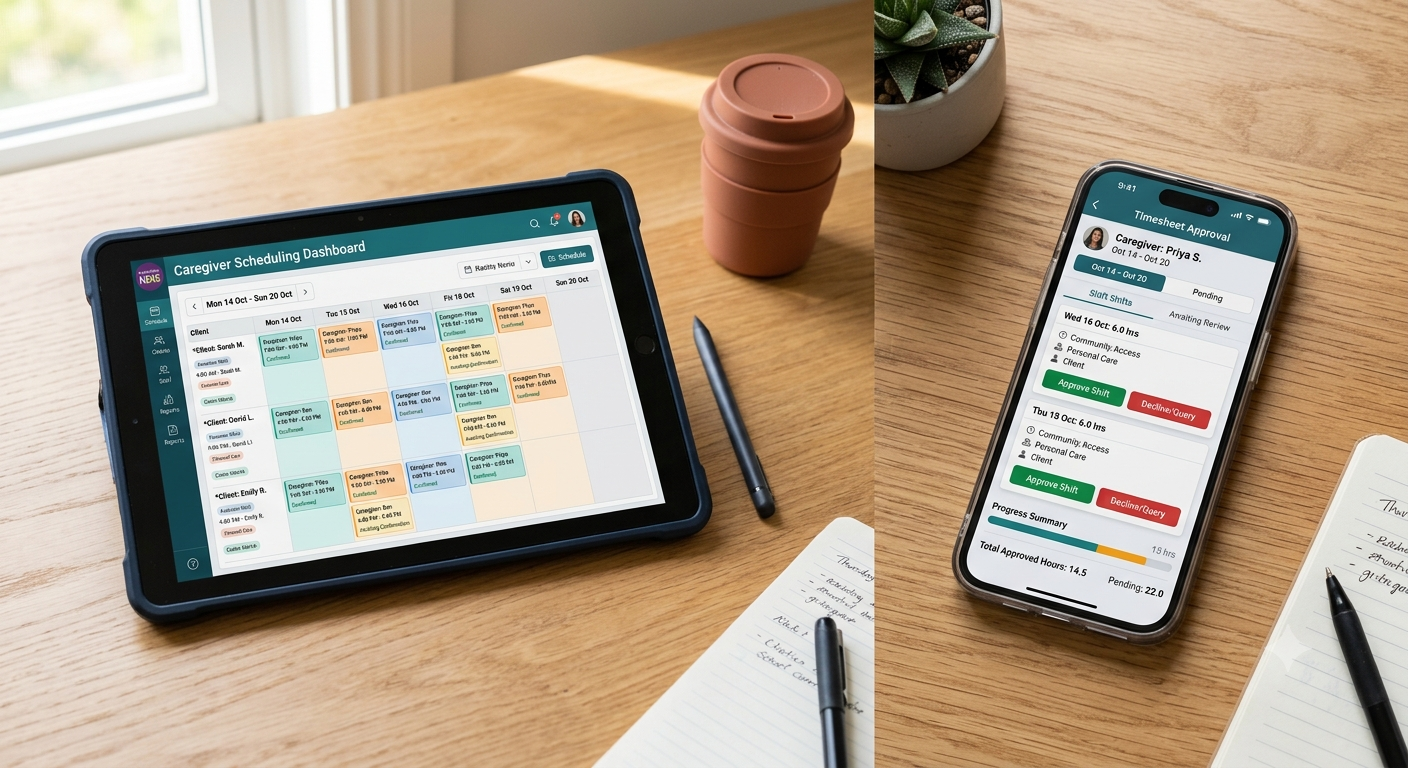
- Provide staff with access to participant-specific details, such as behaviour support strategies and restrictive practice protocols, directly through the ShiftCare Mobile app.
- Empower teams to deliver informed, high-quality care while reducing stress and confusion.
Compliance Across All States
- Adapt to varying state regulations with ease, ensuring all practices are authorised and reported correctly.
- Stay audit-ready with robust record-keeping and comprehensive reporting capabilities.
Beyond Compliance and Enhancing Participant Outcomes
ShiftCare doesn’t just simplify compliance, we aim to provide you with the tools to foster better care. By streamlining processes, providers can focus on reducing the use of restrictive practices and implementing positive behaviour support strategies. This leads to:
- Improved participant quality of life.
- Increased staff confidence and morale.
- A stronger commitment to person-centred care.
Managing restrictive practices is a significant responsibility for SIL providers. With its user-friendly platform and state-specific compliance tools, ShiftCare helps providers navigate this complex landscape with ease.
From automating reporting to ensuring staff are informed and prepared, ShiftCare empowers providers to meet regulatory obligations while prioritising participant well-being.
Ready to streamline your restrictive practice management?
Sign up for ShiftCare’s 7-day free trial or contact us today to learn how ShiftCare can transform your operations.
1. What are restrictive practices in NDIS services?
Restrictive practices are measures to ensure safety by limiting a participant’s freedom. NDIS providers must follow strict guidelines to stay compliant.
2. How does ShiftCare simplify restrictive practice compliance?
ShiftCare helps providers track, document, and monitor restrictive practices, ensuring accurate reporting and compliance with NDIS rules.
3. Why is compliance with restrictive practices important?
Compliance protects participant rights, avoids penalties, and maintains NDIS registration. ShiftCare’s tools streamline the process for providers.