As of 1 November, 2025 the New Aged Care Act is live, with the introduction of reforms including Support at Home for Home Care providers. To ensure you’re Support at Home ready and meeting the new standards, providers should understand what’s changed and audit and reformat client records. This also incudes retraining staff on digital documentation, upgrading care management systems, and aligning service plans with the reform’s new structure.
For established providers, this is not a future preparation task—it is an immediate adaptation challenge that requires a complete overhaul of your systems and documentation.
With the changes live, the biggest question for providers is: are you Support at Home ready? The program launched across Australia in November 2025 as part of the New Aged Care Act, replacing the Commonwealth Home Support Programme (CHSP), Home Care Packages (HCP), and Short-Term Restorative Care (STRC) with a single, streamlined framework. Providers who fail to align their systems and workflows risk service disruption and compliance breaches.
The goal is to simplify access to home-based care, standardise service categories, and create a more consistent client experience. With this shift comes new provider obligations around assessments, care planning, documentation, and quality reporting. Being one month into the new program, it is a perfect time to review and assess where you fall in the new model and any gaps that still need to be filled.
1. Understand the Foundational Changes Now in Effect

Support at Home simplifies aged care by combining multiple programs into one unified model. It streamlines assessment, service delivery, and funding with the introduction of the Integrated Assessment Tool (IAT).
Here is a snapshot of key changes:
- Restructured service categories: Services are grouped into clearer categories.
- Stronger focus on care goals: Providers must closely align services with the participant’s goals and document these in individual care plans.
- Improved self-management options: Older Australians have more control over their service choices, budgets, and providers.
- Digital compliance: Providers will need to use processes to keep records digitally, including submitting real-time service data, and maintaining audit-ready documentation.
2. Strategically Align Service Plans and Pricing
Support at Home introduces standardised service categories and more structured care planning. Providers must immediately review if their service delivery models and pricing structures align with this framework. Many existing care records under CHSP, HCP, and STRC use outdated, inconsistent formats that won’t meet upcoming documentation and reporting standards.
Services will be grouped into clearer categories, namely:
- Personal care
- Domestic assistance
- Nursing
- Allied health
- Assistive technology
- Goods, equipment, and home modifications
3. Immediately Audit and Reformat Client Records
To prepare, aged care providers should review and align all current services with SaH. For instance, you could move general help tasks under a more specific section, like domestic assistance or personal care.
Likewise, audit individual client records for
- Missing service logs
- Undocumented goals or care outcomes
- Outdated service descriptions or care plans
All client records must be updated, digitised, and formatted – either for easy exports or to provide audit ready evidence. Be sure to archive your legacy system or migrate information so older records remain accessible for comparison, compliance tracking and audits.
4. Implement Ongoing Training for Real-Time Digital Documentation

Support at Home shifts a lot of responsibility onto frontline staff. The accuracy in their documentation, goal‑based care planning, and incident reporting directly affects compliance. As a provider, you must train your team to understand the new processes.
Here’s what you can do:
- Train Staff on Digital Documentation Standards: Support at Home requires consistent digital records for service delivery, goals, assessments, and incidents. Your staff should know how to enter notes in real time, record approved service types, and follow your digital workflow without offline shortcuts.
- Refresh Care Planning Skills: Care plans must link to client needs under the new model and the Strengthened Quality Standards framework. Help them understand how the changes in condition and risks influence reassessments and funding.
- Strengthen Incident and Quality Reporting: Train staff to document incidents with clear time, place, type, and follow‑up actions — no vague notes or delayed reporting.
- Use Ongoing Training, Not One‑Off Sessions: Offer short refreshers, micro‑training modules, or in‑app prompts rather than relying on long manual‑based sessions.
5. Upgrade to a Care Management System Built for the New Standards
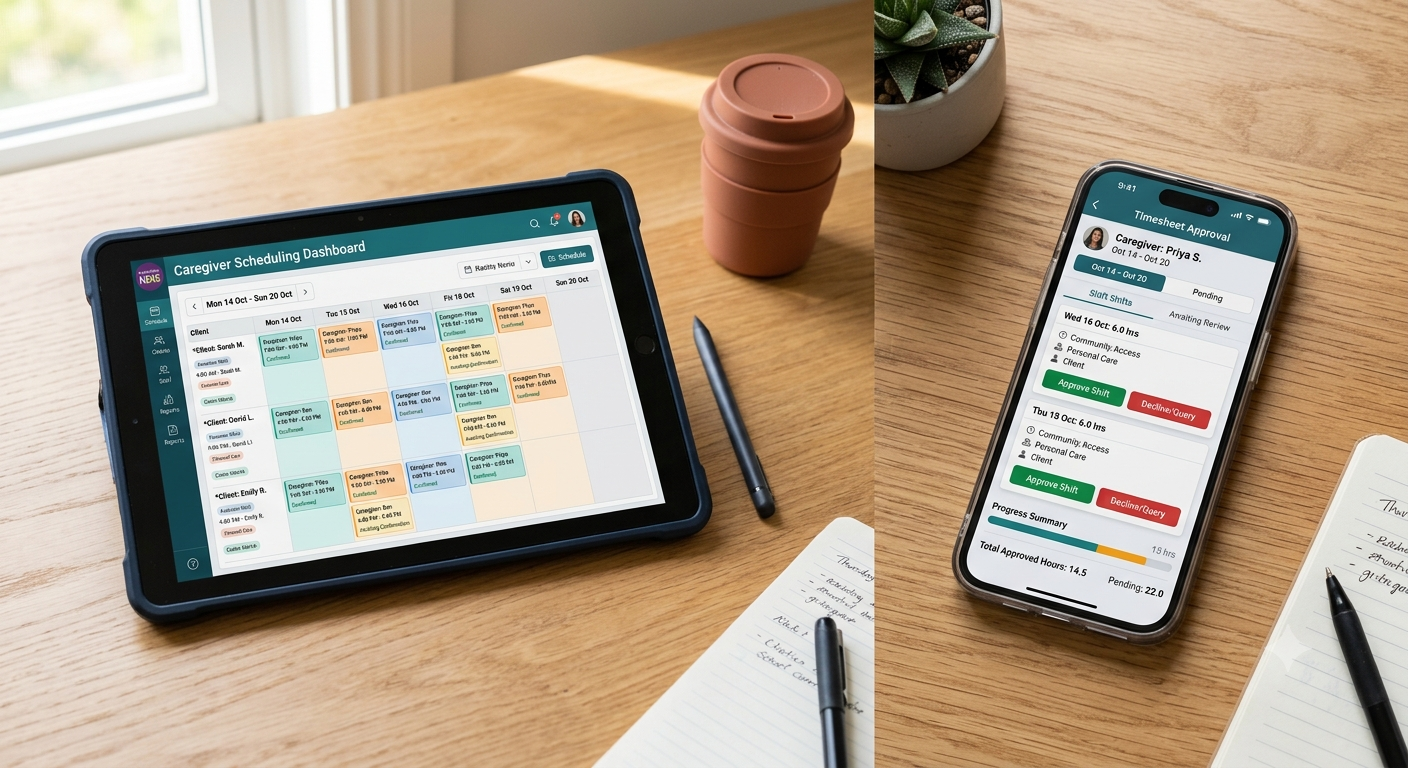
Legacy systems might not support the level of integration, transparency, and goal tracking required under Support at Home. If you’re still using paper records or disconnected tools, it’s time to upgrade. Look for care management systems that support care documentation, service delivery logs, billing, and client goals and map to new requirements under Support at Home, including the Strengthened Quality Standards for compliance and service delivery, and different categories for billing.
- Prioritise Digital Documentation and Reporting: Your system must capture client plans, approved services, staff notes, and assessment data, all in one place.
- Enable Seamless Service Coordination: Choose a platform that integrates across services and allows easy care coordination (e.g., linking GPs to home care visits or setting transport notes tied to goals).
- Prepare for Automated Reporting: Support at Home will increase the volume of required data exports and audit requests. You’ll reduce admin work if your system automatically generates client summaries, service logs, and compliance exports.
Support at Home also introduces new funding types, i.e., subsidy, top-up, and out-of-pocket, all of which require more flexible billing workflows. You must now track each funding stream separately, link charges to approved service categories, and reflect real-time care delivery data.
To help implement this, ShiftCare’s Support at Home outlines how to configure service billing, funding rules, and goal-based plans in line with the reform. You can also watch our recent webinar for a walkthrough of how this works in practice.
Be Support at Home Ready With ShiftCare
Support at Home is already here, and now is a perfect time to understand what’s working – and what’s not. Providers who align and adapt their systems and workflows early will be better positioned to stay compliant, avoid service disruption, and focus on delivering quality care.
Instead of manually auditing your entire workflow, switch to ShiftCare. Our care management system syncs care plans, services, and documentation so that everything stays aligned with the new standards. Request a free trial today (no credit card needed) to get started!