Did you know that more than one in five NDIS providers exited the market in the past year? And it’s not because of demand, but the margin pressure from rising costs and administrative burden. Participants still need care and funding is still available. However, providers are walking away because the economics no longer work. The providers who remain are operating fundamentally differently. They’ve automated rostering, achieved real-time budget visibility, and built mobile-first workflows that cut administrative hours by 30 to 40%.
The NDIS market isn’t contracting because of policy failures or participant demand. It’s consolidating because only the operationally efficient providers can maintain sustainable margins.
The Reason Why Providers Are Leaving

The number of NDIS providers managing 50 or fewer participants, i.e., the backbone of community disability support, has shrunk noticeably. Exit interviews and industry feedback show that margins have been compressed by wage growth, compliance costs, and rising operational overhead. Meanwhile, the NDIS pricing structure hasn’t kept pace.
A typical disability support provider managing 15 to 30 participants operates on margins of 5 to 12%. The rise in administrative burden has been particularly corrosive. NDIS providers now spend 25 to 35% of their operational time managing tasks that generate no direct revenue, e.g., compliance, billing, rostering, and documentation. For smaller providers running lean teams, this administrative overhead is the killer.
Add to this the rising cost of support worker wages (up 5 to 8% annually in many regions), growing training requirements, and the expectation of professional-grade compliance systems, and it’s clear why providers are reassessing whether the sector is worth the headache.
But providers aren’t leaving because demand has declined. Participants still need services, after all. Providers are leaving because the operational model has become unsustainable without significant technological efficiency gains.
The Administrative Burden of Home Care Services
NDIS providers operate in a complexity sandwich. At the bottom, they’re managing the day-to-day realities of disability support: coordinating shifts, responding to participant needs, ensuring safeguarding. At the top, they’re managing NDIS compliance, billing cycles, plan renewals, and quality assurance requirements that grow more stringent every year. In the middle, they’re running a small business.
For providers that use legacy systems, each of these layers operates in isolation. The rostering spreadsheet doesn’t talk to the billing system. The billing system doesn’t talk to the compliance records. Information flows backward through time, never forward in real-time. This fragmentation creates a compounding administrative burden that actually makes running the business harder, not easier, as you scale.
How Thriving NDIS Providers Operate Differently

The providers staying in the market and growing aren’t necessarily the ones with the biggest budgets. They’re the ones who’ve invested in operational efficiency.
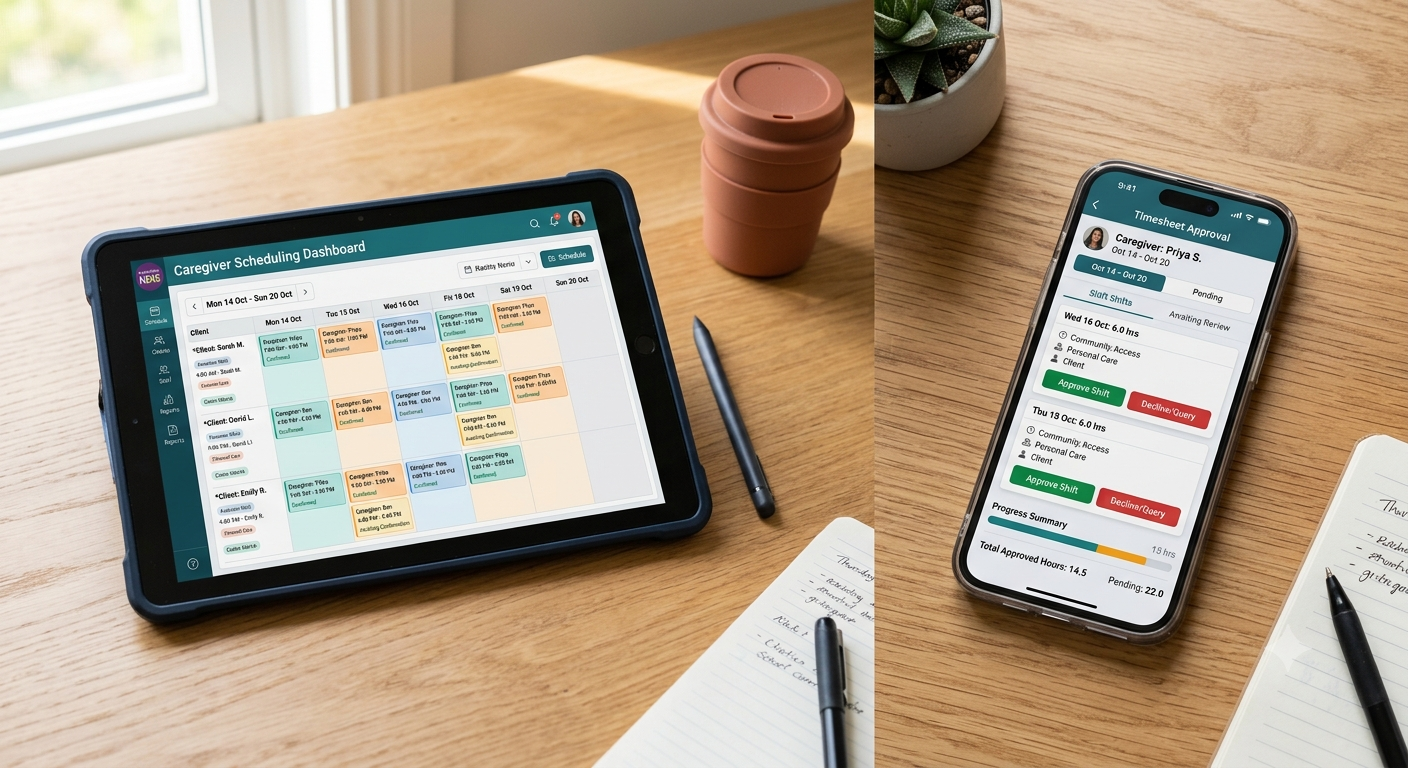
First, they use rostering systems that work in real-time, across the team, often from mobile devices. Instead of a manager spending five hours on Monday updating the weekly roster, modern rostering lets team members see their schedules, swap shifts, and request time off through an app. The manager spends 30 minutes approving changes.
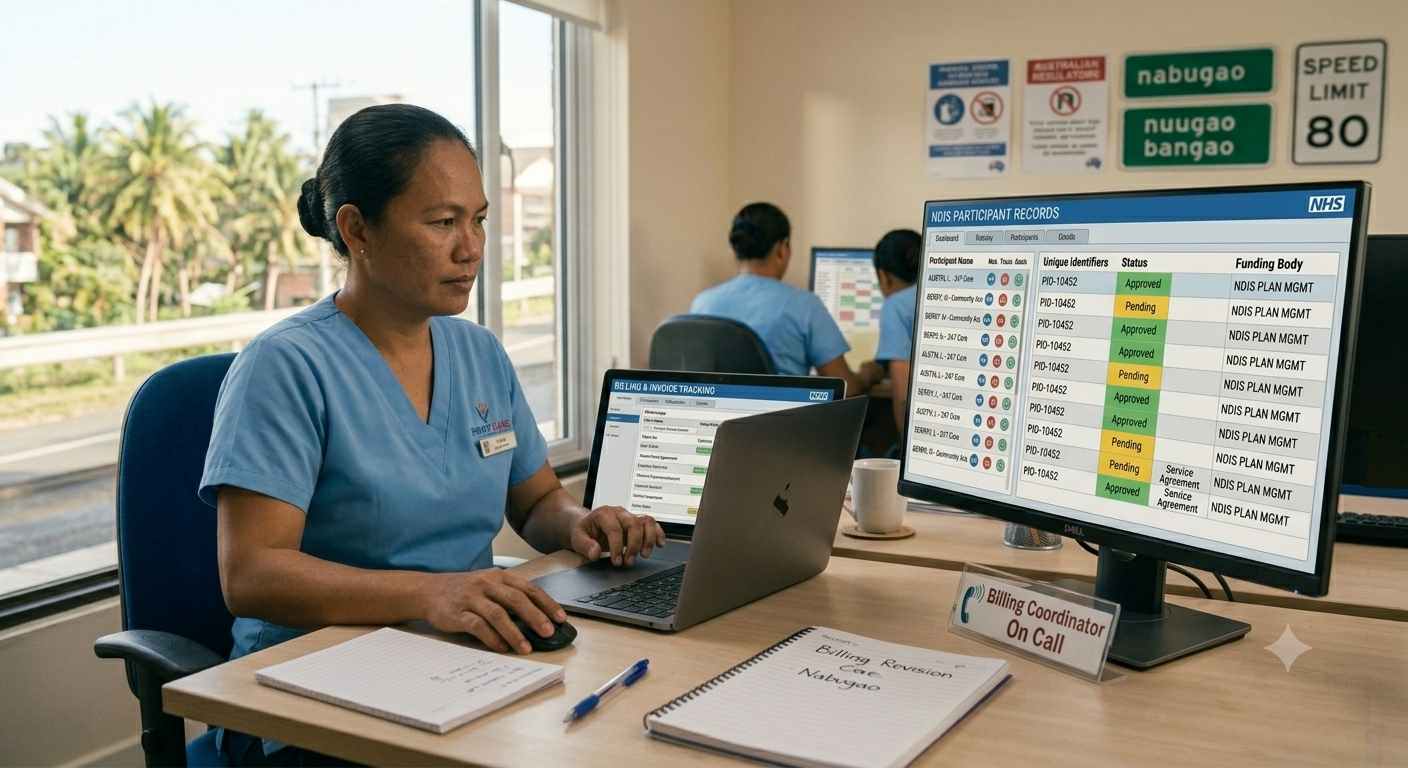
Second, they’ve automated the flow between rostering and billing. When a shift is scheduled and completed in a connected system, billing information flows automatically. This automation typically reduces billing administration by 40 to 50%.
Third, they’ve built real-time budget visibility into their operations. A provider managing 20 participants can instantly see current utilisation, remaining budget, and forecast whether they’ll hit targets. This visibility lets them make decisions with confidence.
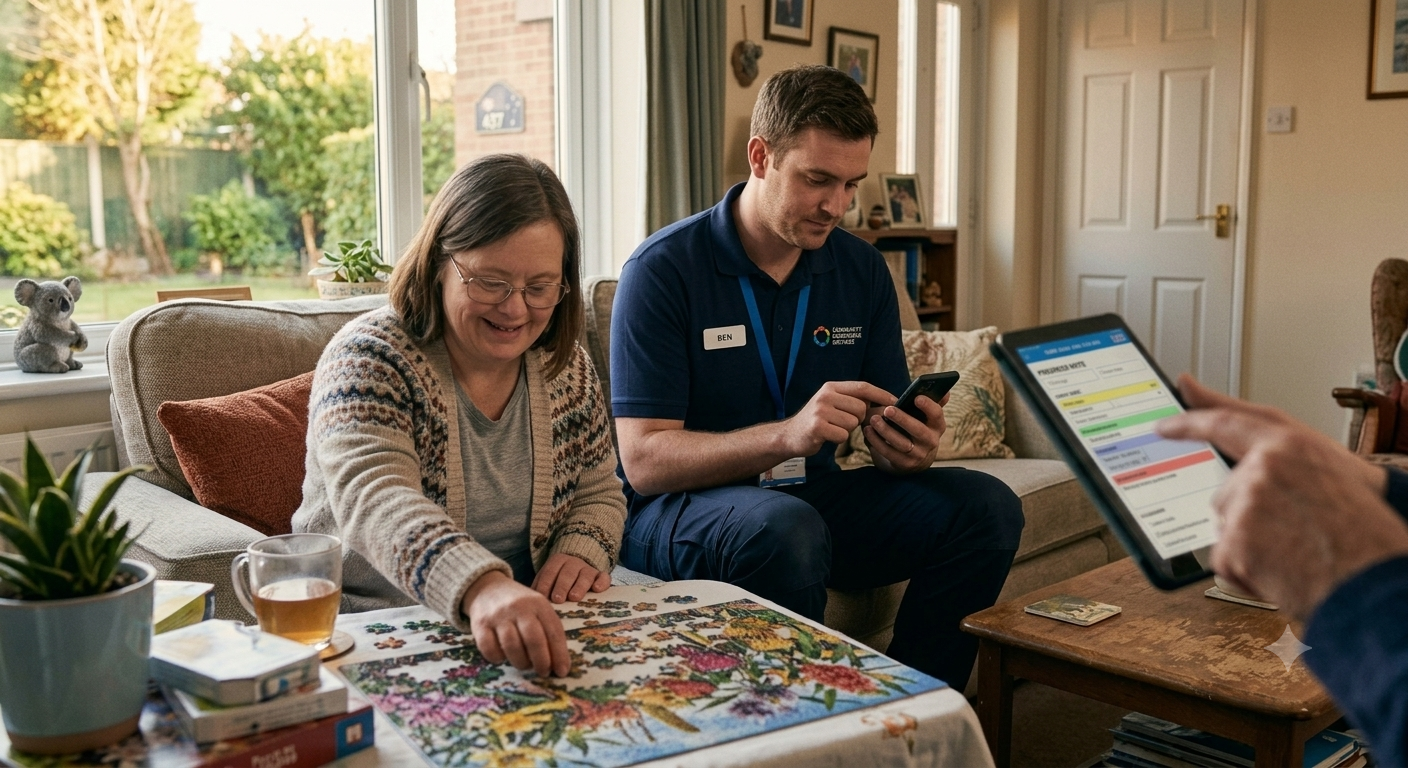
Fourth, they’ve made documentation a real-time, integrated part of service delivery. Support workers document services as they occur on mobile devices. Team collaboration integrated with documentation means questions are answered immediately, not via email chains days later.
Leveraging Technology as an NDIS Provider
A connected disability care software platform that integrates rostering, scheduling, team collaboration, and documentation doesn’t just cut admin work. It changes the operational model. The right workflow enables a six-person provider operate with the administrative efficiency that previously required 1.5 FTE administrators. It lets a 30-person provider scale to 50 without doubling their back-office team.
A provider saving 30 to 40% on administrative hours recoups their software investment within three to six months. For providers on tight margins, that’s the difference between sustainability and exit.
How to Future-Proof Your NDIS Business
The NDIS market will continue consolidating, margins will remain under pressure, and compliance requirements will continue tightening. Now’s the time to adapt. Providers who’ve invested in modern systems, automated their workflows, and built real-time visibility are building sustainable businesses. They’re growing when others are leaving.
Learning how modern rostering and care management systems can transform your operation doesn’t require a huge capital commitment. It requires honest assessment of where your administrative burden lives and how much time and money you’re spending on tasks software could handle better.
FAQs About Why NDIS Providers Are Leaving
What’s driving the 21% provider exit rate?
Rising labour costs (5 to 8% annually), administrative burden consuming 25 to 35% of operational time, stagnant NDIS pricing, and increasing compliance requirements. Margins on small-to-medium providers have compressed to 5 to 12%, making the business unsustainable without operational efficiency.
Can I really reduce administrative burden by 30–40% with new software?
Yes, but only if the software integrates rostering, billing, and documentation. Providers using real-time, connected systems report reducing administrative hours from 25–35% of operational time down to 15–20%, freeing capacity for growth and service quality.
Will automation reduce jobs for my back-office team?
Software automates tasks, not people. Instead of spending time on manual rostering and billing reconciliation, your team moves into strategic roles: financial management, compliance strategy, participant experience. Many providers grow their team while reducing administrative burden.
Join the Providers Building Sustainable NDIS Businesses
The 21% provider exit rate is a wake-up call, but also an opportunity. Providers who modernise their operations are positioning themselves to not just survive, but grow. ShiftCare’s integrated care management platform cuts administrative burden by 30 to 40%, automates the flow between rostering and billing, and provides real-time budget visibility. Turn margin pressure into sustainable growth for Australian disability providers.
Start a free trial today! See how modern care management software helps Australian disability providers cut administrative burden by 30–40%, improve margins, and spend more time supporting participants.