NDIS and aged care providers generate thousands of free-text progress notes weekly. Risks and safeguarding concerns are buried in plain language. One worker writes, “the client seemed upset and raised their voice” instead of “verbal aggression incident.” Meanwhile, another writes “had to leave the property early” instead of “physical intimidation requiring worker evacuation.” Coordinators read hundreds of care notes daily, yet catch risk signals too late.
NDIS providers must report incidents within 24 hours under the Incident Management Rules. Aged care providers face the same 24-hour requirement under the Serious Incident Response Scheme. Manual note review doesn’t meet this obligation when incidents are described in plain language without formal incident terminology.
Why Incident Detection Fails When Providers Read 1,000+ Progress Notes Weekly
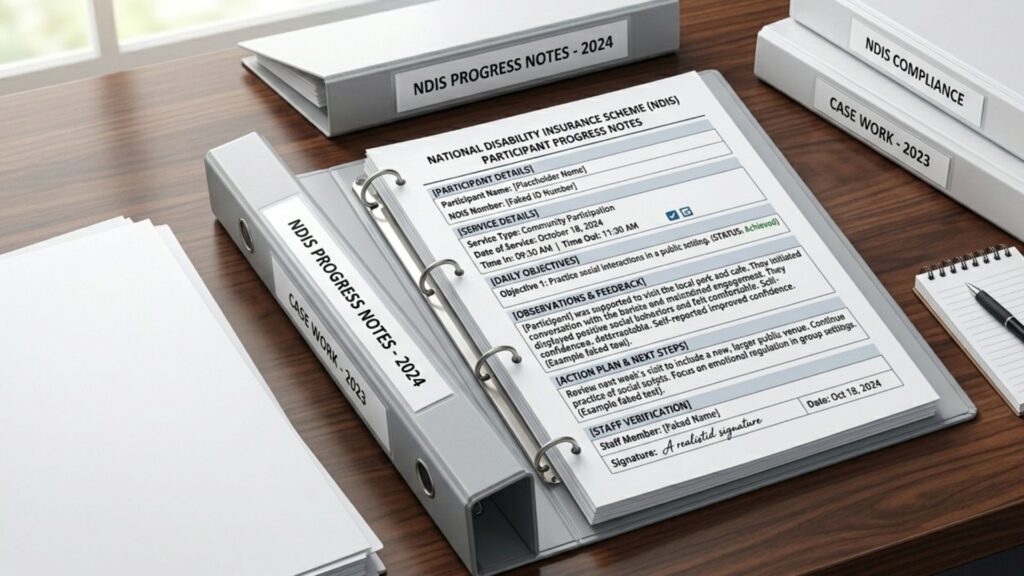
A 100-participant provider generates 600 to 800 progress notes weekly. Coordinators scan notes for service delivery details (e.g., tasks completed, medication administered, and client mood) but cannot analyse every sentence for buried risk signals. Incidents go unnoticed until formal complaints actually surface them or audits flag missing reports.
Manual reviews often fall short in the following categories:
- Volume: Coordinators manage 100+ notes daily across multiple workers and participants
- Plain language: Workers describe incidents conversationally without using words like “incident,” “safeguarding,” or “reportable”
- Context spread: A single incident might span multiple notes across different shifts (escalation pattern over days, not one dramatic event)
- Compliance timing: NDIS and aged care require 24-hour reporting, but manual review often happens days after notes are written
NDIS reportable incidents include death, serious injury, abuse, neglect, sexual misconduct, and unauthorised restrictive practices. Aged care SIRS reportable incidents include unreasonable use of force, unlawful sexual contact, neglect, psychological abuse, and unexpected death. Workers rarely describe incidents using these formal categories in shift notes.
What 176,000 Care Interactions Tell Us About Buried Incidents
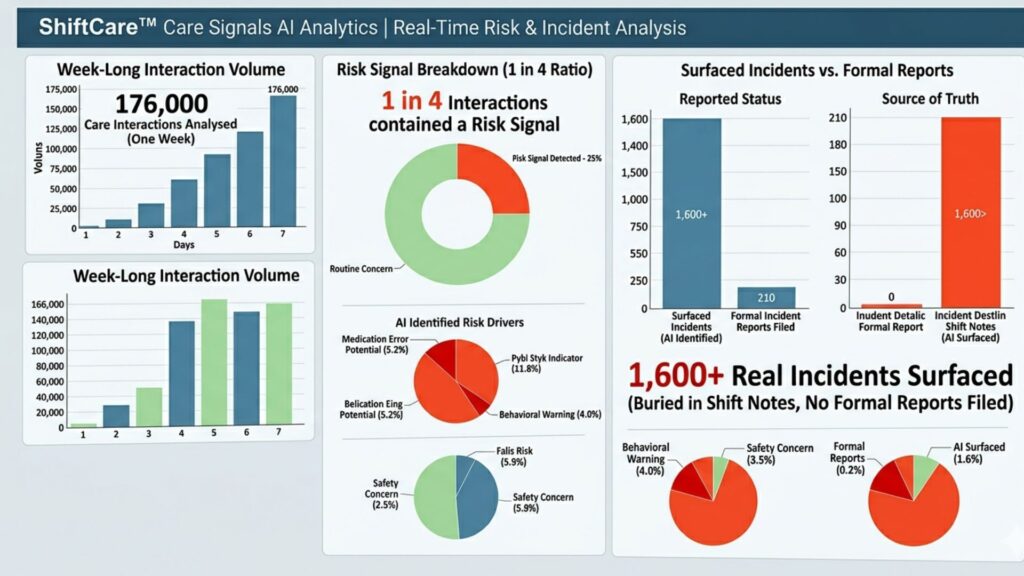
ShiftCare’s Care Signals AI analysed 176,000 care interactions in one week. One in four interactions contained a risk signal. 1,600+ real incidents surfaced that had been buried in shift notes with no formal incident reports filed.
The data validates what providers suspect but cannot quantify: a significant percentage of incidents are documented in progress notes but never flagged as formal incidents requiring investigation or reporting. Workers write what happened in plain language. Coordinators miss the compliance implications during routine note review.
Verbal Aggression Flagged Within 30 Minutes of Go-Live
Sunflower Services activated Care Signals, and within 30 minutes, AI flagged escalating verbal aggression and physical intimidation incidents from shift notes written that day. The notes described a participant becoming increasingly angry, raising their voice, and making threatening gestures toward the support worker. The worker left the property early for safety reasons and documented this as “client seemed agitated, shortened visit.”
No formal incident report had been filed. The notes sat in the system as routine progress documentation. Care Signals flagged the interaction as a potential safeguarding concern requiring investigation. The National Accommodation Manager responded immediately: “Wow! This could be game-changing for the org.”
This incident would have stayed buried until the next audit or until the participant’s behaviour escalated further. The 24-hour NDIS reporting window would have been missed. Care Signals flagged it in real time.
Intelligence Layer vs Feature Bolt-On
Feature bolt-on AI:
- Summarises progress notes after they’re written
- Auto-fills templates based on previous entries
- Suggests common phrases to speed up documentation
- Reactive: works on completed notes, doesn’t flag risks proactively
Intelligence layer AI:
- Reads every interaction as it’s written
- Understands context across multiple notes and shifts
- Identifies risk patterns in plain language descriptions
- Surfaces incidents proactively before coordinators review notes manually
- Flags reportable incidents requiring 24-hour notification
The distinction matters for compliance. NDIS Practice Standards require providers to identify and respond to incidents promptly. Aged care SIRS requires proactive incident management systems, not just reactive documentation. A feature bolt-on AI helps with administrative efficiency. Intelligence layer AI prevents compliance breaches and safeguarding failures.
What AI Detects in Plain Language Progress Notes

Care Signals identifies incidents when workers use conversational language without formal incident terminology. Here are some examples:
Verbal aggression and behavioural escalation:
- “Client raised their voice and used profanity”
- “Participant became increasingly agitated throughout the visit”
- “Had to redirect client multiple times, behaviour worsening”
Physical intimidation and safety concerns:
- “Client stood very close and blocked the doorway”
- “Felt uncomfortable and ended the visit early”
- “Worker requested not to return to this participant”
Medication errors and falls:
- “Accidentally gave morning meds twice, contacted supervisor”
- “Client fell in the bathroom, no injury, but seemed shaken”
- “Participant on the floor when the worker arrived, unclear how long”
Safeguarding and unexplained injuries:
- “Client had bruising on the arm, said he didn’t remember how it happened”
- “Participant mentioned a family member taking their pension card”
- “Worker found participant very distressed, wouldn’t explain why”
These descriptions don’t include words like “incident,” “reportable,” or “safeguarding concern.” AI recognises the compliance implications and flags them for coordinator review.
Intelligence Layers Surface What Manual Review Misses
Care Signals reads every progress note, shift handover, and care interaction in real time. It flags risk signals coordinators would miss during routine manual review. Incidents buried in plain language descriptions get surfaced within minutes, not days or weeks.
This isn’t a feature bolt-on that summarises completed documentation. It’s an intelligence layer that proactively detects safeguarding concerns, behavioural escalations, medication errors, and physical safety risks before they compound or trigger compliance breaches.
ShiftCare’s Care Signals analyses every care interaction and flags incidents requiring investigation or 24-hour reporting to NDIS or aged care regulators. Start your free trial today and see how Care Signals surfaces risks buried in plain language progress notes.