The recent ShiftCare x Resolv webinar Josh from Resolv addressed these pain points and provided actionable insights into how SIL providers can improve their businesses.
How SIL Providers Can Improve Compliance, Financial Management, and Efficiency: Addressing the Challenges
SIL providers operate within a highly complex system, particularly when it comes to rostering, claiming, and financial sustainability. Many providers struggle due to:
- Complicated rostering and claiming processes – Ensuring accuracy and compliance while keeping up with frequent changes is a major challenge.
- Financial constraints – SIL businesses often operate on thin or negative margins, making profitability difficult.
- Limited administrative support – Many providers perform multiple roles, leading to inefficiencies and errors.
- Lack of visibility on funding allocations – Many providers find it challenging to track participant funding and ensure it is optimally used.
- High administrative burdens – Managing compliance, staffing, and financial planning manually can drain resources and time.
Understanding Supported Independent Living (SIL)
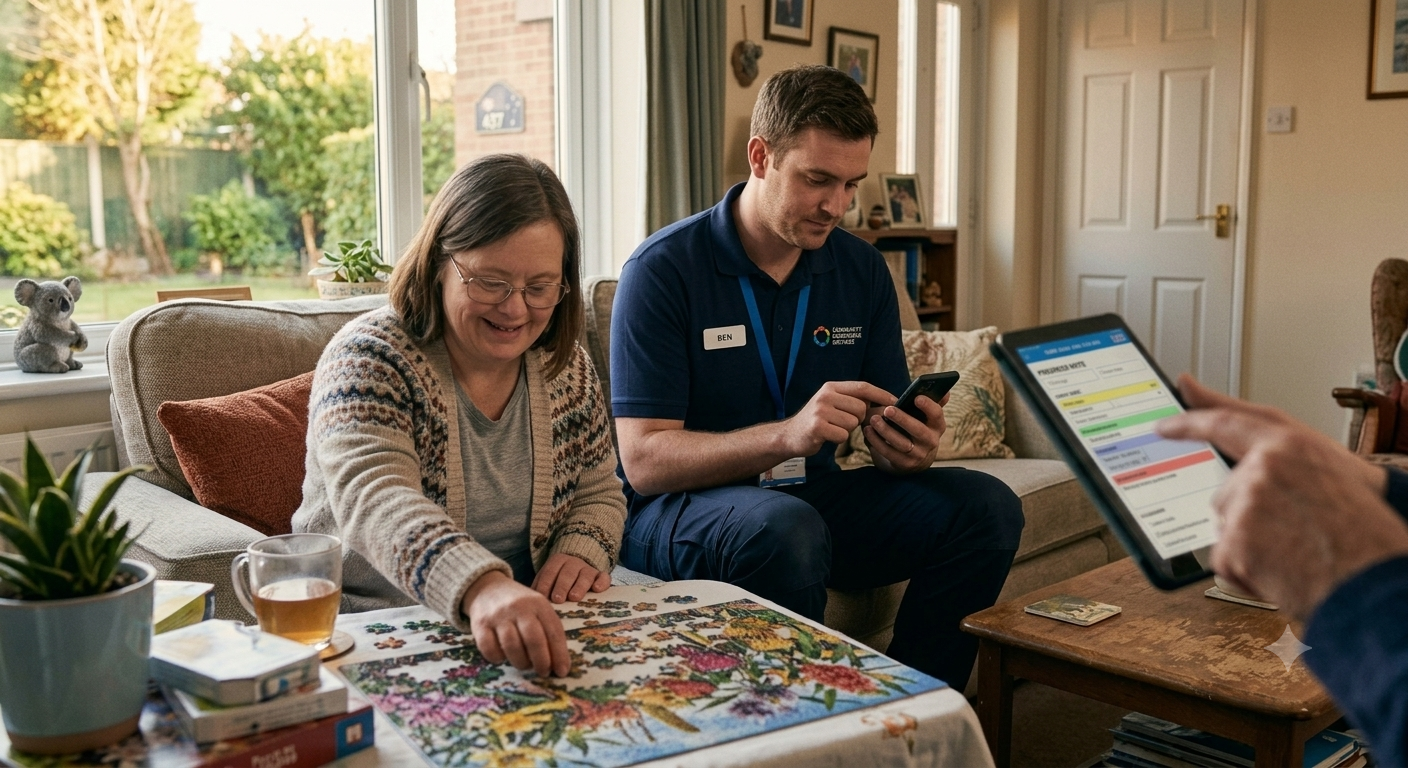
Supported Independent Living (SIL) is a vital support service that empowers individuals with disabilities to live independently, whether in their own homes or shared accommodations. This service is particularly crucial for those with high support needs, including individuals with very high support needs, as it enables them to participate actively in their communities.
SIL funding, provided by the National Disability Insurance Agency (NDIA), is designed to cover a range of support activities that promote autonomy and self-determination. These activities include personal care, household tasks, meal preparation, and social participation. The goal is to provide the necessary support while encouraging individuals to lead independent lives.
Eligibility for SIL funding is determined by the NDIA based on an individual’s specific circumstances and support needs. To qualify, individuals must have a disability that necessitates ongoing support and a high level of need for assistance. The NDIA conducts thorough assessments to ensure that the funding is allocated to those who genuinely require it, thereby maximising the impact of the support provided.
How Inefficiencies Lead to Financial Losses
Resolv’s benchmarking data highlights that many SIL providers lose significant revenue, often costing up to $25,000 per participant per year due to incorrect rostering and inefficiencies. These inefficiencies are often exacerbated by the need to provide higher support levels for participants with significant support needs. This is part of the broken SIL system, where providers struggle to maintain compliance and financial stability.
Understanding where money is lost is the first step towards improvement. Common issues include:
- Shift creep – Additional shifts that remain permanently despite no longer being necessary.
- Mismatch between rostering and claiming – Claims should always match scheduled shifts, but discrepancies often occur.
- Ineffective vacancy management – Without a structured plan, vacant positions create revenue losses.
- Participant splits not managed correctly – Incorrect allocation of funding between participants.
- Manual processes creating errors – A lack of automated workflows results in mistakes that lead to lost revenue.
SIL Funding and Pricing
SIL funding, administered by the NDIA, is tailored to an individual’s unique support needs and goals. The NDIA employs a comprehensive pricing framework to determine the cost of SIL supports, considering factors such as the level of support required, the frequency of support, and the location where the support is provided.
This funding can be utilised for a variety of essential activities, including:
- Personal care: Assistance with bathing, dressing, and grooming.
- Household tasks: Support with cleaning, laundry, and meal preparation.
- Social participation: Facilitating attendance at community events and activities.
- Overnight support: Providing active assistance and supervision during the night.
The cost of SIL supports can vary significantly based on the level and frequency of support needed. The NDIA’s pricing framework serves as a guide for both providers and participants, ensuring transparency and understanding of the costs involved. This framework helps in planning and budgeting, making it easier for providers to deliver high-quality support services while maintaining financial sustainability.
Key Strategies for Supported Independent Living Providers
To tackle these issues, SIL providers must focus on compliance, financial organisation, and operational efficiency. Below are three key areas where improvements can be made. Effective management of independent living funding is crucial for ensuring that participants receive the necessary supports to maintain their independence.
1. Strengthen Service Agreements
A well-structured service agreement can help clarify responsibilities and prevent financial risks. SIL providers should ensure service agreements include:
- Provider limitation acknowledgement – Clearly define the provider’s scope of responsibility and decision-making limitations under the NDIS.
- Emergency housing measures – Outline a contingency plan for when funding runs out, ensuring all stakeholders understand their role in managing the situation.
- Programs of Support – A structured six-month agreement ensuring continuity of care and financial stability, reducing disruptions caused by hospitalisations or unpredictable participant support needs.
- Fixing ‘open’ agreements – Ensure service agreements have clear terms to avoid funding uncertainties and additional costs.
- Regular service agreement audits – Keep agreements updated and ensure they are properly signed and enforced.
- Clear cost expectations – Define responsibilities for all involved parties to avoid future funding disputes.
- Engaging support coordinators – Ensure that support coordinators are involved in the creation and management of service agreements to align support options with participant goals and needs.
2. Implement Robust Financial Oversight
Providers need to track financial performance regularly to maintain profitability. Essential reports include:
- Monthly Profit & Loss Reports – Understanding revenue and costs is crucial for informed decision-making.
- Weekly Cash Flow Reports – Helps track available funds and anticipate financial risks.
- Annual Budget – Long-term planning ensures sustainable operations and investment in quality care.
- Roster adherence reports – Ensure scheduled shifts align with actual hours worked.
- Vacancy reports and plans – Track and proactively fill vacant positions to prevent revenue loss.
- RUGA (Rent, Utilities, Groceries, Activities) support tracking – Ensure providers understand how much they are subsidising and whether it is financially sustainable.
- NDIS funding utilisation reports – Gain visibility into how much funding is available per participant and avoid shortfalls.
- Support worker efficiency – Ensure that support workers are well-trained and compliant to deliver high-quality, individualized services that promote financial sustainability.
3. Leverage Technology for Rostering and Claiming
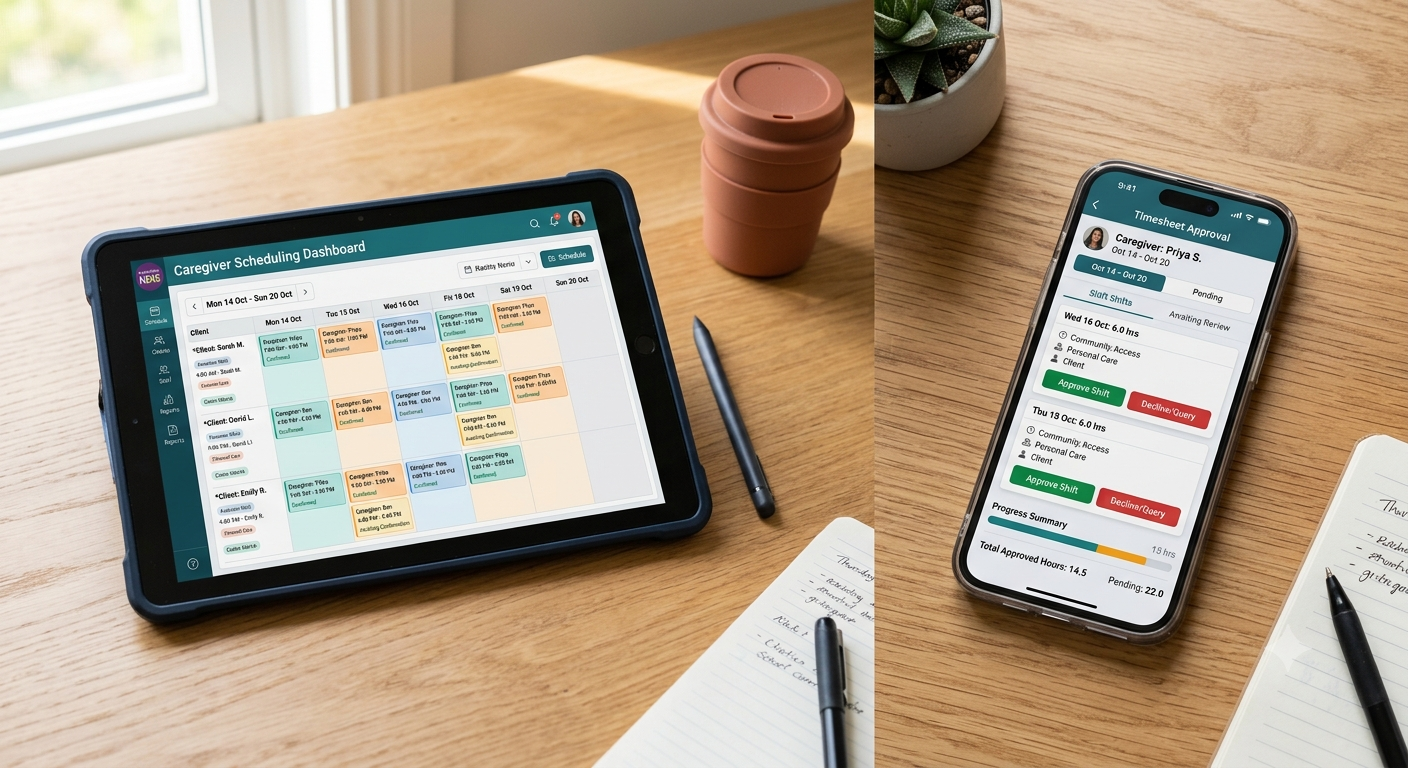
Using care management software like ShiftCare can significantly reduce inefficiencies by:
- Ensuring rostering aligns with claims – ShiftCare helps providers match scheduled shifts with claims, reducing errors and revenue loss.
- Improving vacancy tracking – A structured vacancy plan allows providers to optimise staffing and reduce financial waste.
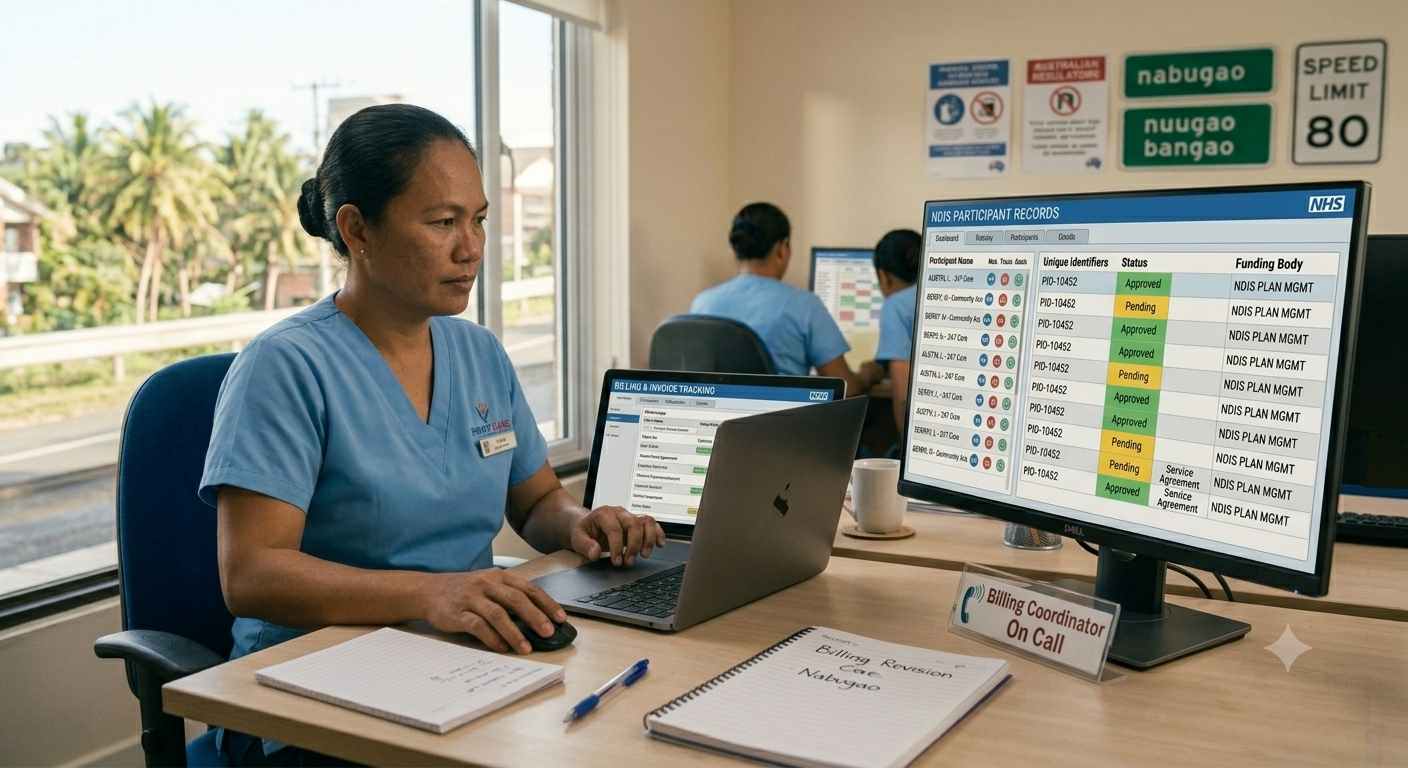
- Managing participant funding effectively – Automating funding allocation prevents underutilisation or exhaustion of funds.
- Identifying unclaimed funds – There may be unclaimed funds unnoticed due to inefficient rostering and claiming.
- Automating compliance processes – ShiftCare ensures that documentation, reporting, and compliance tracking are streamlined.
- Support coordinator involvement – Engage support coordinators to assist with documentation and liaising with service providers, ensuring efficient and accurate rostering and claiming.
NDIS Registered Provider Requirements
To offer SIL supports, providers must be registered with the NDIA, meeting a set of stringent requirements designed to ensure high-quality service delivery. These requirements include:
- Valid ABN and GST registration: Providers must have a valid Australian Business Number (ABN) and be registered for Goods and Services Tax (GST).
- Suitable business structure and governance: Providers need to have an appropriate business structure and governance arrangements in place.
- Transparent pricing policy: A clear and transparent pricing policy is essential to ensure participants understand the costs associated with their supports.
- Complaints handling process: Providers must have a robust system for managing participant feedback and complaints, ensuring issues are addressed promptly and effectively.
Additionally, registered providers must comply with the NDIS Practice Standards and Code of Conduct, which outline the expectations for delivering high-quality support services. This includes maintaining participant confidentiality and managing participant funds in accordance with their plans. By adhering to these standards, providers can ensure that they deliver services that meet the individual needs and goals of participants, fostering trust and reliability in the support services offered.
Optimising SIL Business Operations
The webinar highlighted that simplifying SIL management is possible with the right strategies. By improving financial oversight, optimising rostering, and refining service agreements, providers can ensure a sustainable and compliant business. It’s also essential to differentiate Supported Independent Living (SIL) from Specialist Disability Accommodation (SDA), which offers tailored housing for those with high support needs or severe functional impairments.
To enhance SIL operations, providers should update service agreements, audit rostering and claims, and track finances using detailed reports. ShiftCare’s software streamlines these processes by automating rostering, compliance, and funding management. Regular compliance checks help minimise revenue loss and maintain financial stability. ShiftCare and Resolv offer the tools to optimise operations and boost profitability.
Discover how ShiftCare can help today!
Sign up now for a free 7-day trial!
Check out our webinar – ShiftCare x Resolv: A Must-See for SIL Providers
A Must See Webinar for SIL Providers
1. How can SIL providers ensure compliant rostering and claiming?
Use care management software like ShiftCare to match rostering with claims. Regular audits, staff training, and structured service agreements help maintain compliance.
2. What financial mistakes do SIL providers make with SIL funding?
Common issues include shift creep, mismatched claims, unclaimed NDIS funds, and poor budgeting. Proper management of supported independent living funding is essential to avoid financial shortfalls and ensure that participants receive the necessary supports. Track finances with profit/loss reports, cash flow monitoring, and vacancy management plans.
3. How can SIL providers improve service agreements?
Ensure agreements include provider limitations, emergency housing plans, and Programs of Support. Regularly audit agreements to keep them up to date. Additionally, clearly defining SIL support in the agreements can help ensure that participants receive the appropriate level of assistance.