In a recent webinar with Effective HR, we tackled some of the most pressing questions employers have about compliance, pay structures, and industry updates. Here’s a Q&A breakdown of the key insights from the session.
Unpacking SCHADS With Effective HR: The Basics Every Employer Should Know About Changes to the SCHADS Award
Employers should regularly check updates from the Fair Work Ombudsman (FWO), which releases information on wage increases and award modifications. Subscribing to FWO notifications and consulting industry experts like Effective HR ensures you stay compliant. Additionally, staying informed about changes and seeking additional information on compliance requirements is crucial for effective management.
Q: Are pay rates and pay points still applicable in the Aged Care and Home Care sectors?
A: No, pay points no longer apply in these sectors under SCHADS. Instead, pay rates are determined by the employee’s role and responsibilities, with adjustments reflecting their classification level. Pay point progression is an essential component of the SCHADS Award, highlighting employer responsibilities concerning employee remuneration and career development. Employers should refer to Clause G.1 and G.2 for details on pay structures.
Q: What are the minimum shift requirements for casual workers under SCHADS?
Casual employees must meet minimum engagement periods based on the stream that covers their role. Broken shifts, which involve splitting a worker’s shift into two or more parts with breaks in between, can affect hours of engagement and compliance with the SCHADS Award. Employers should check the award to confirm minimum shift lengths and ensure compliance with the rules.
Q: How is travel time between broken shifts handled?
Travel time is generally paid time if employees are required to move between different client locations during their shift. Remote work requirements under the SCHADS Award also impact travel time and shift arrangements, addressing factors like shifts, breaks, and the unique considerations that come with remote work. Employers should ensure they correctly track and compensate for travel in accordance with the award provisions.
Q: What are the rules for overnight and sleepover shifts?
There are two types of overnight shifts under SCHADS:
- Sleepover shifts require a fixed allowance.
- Active overnight shifts are paid at the standard hourly rate.
Employers must clearly define expectations and compensation when rostering staff for overnight work and manage these shifts effectively.
Q: What are the break and rest period requirements under SCHADS?
Workers are entitled to meal and rest breaks based on award provisions. Just as ads enhance user experience by personalising content, breaks can significantly impact productivity and compliance by ensuring employees are well-rested and focused. Employers must ensure staff receive adequate breaks to comply with workplace safety and fair employment standards. Reviewing the specific break entitlements in the award helps avoid non-compliance.
Q: How does SCHADS impact payroll processing?
Payroll teams need to correctly interpret the award to avoid underpayment risks. Effective services play a crucial role in managing payroll and ensuring compliance. Payroll software should be updated to reflect SCHADS Award changes, including allowances, penalties, and overtime calculations. Regular compliance checks and HR guidance can prevent payroll errors.
Best Practices for Compliance
Ensuring compliance with the SCHADS Award requires a proactive approach. Employers should establish clear policies and procedures that address workplace health, pay rates, and employee classifications. Regularly reviewing and updating these policies to reflect changes in the award and industry best practices is crucial.
Effective HR management plays a vital role in maintaining compliance. Employers should consider seeking support from HR professionals or consultants to navigate the complexities of the SCHADS Award. Accurate record-keeping of employee data, including pay rates, hours worked, and leave taken, is essential for compliance and transparency.
Training and educating employees and managers about the SCHADS Award and its requirements can prevent non-compliance. Regular training sessions and webinars can keep everyone informed and aligned with the latest regulations.
Managing Change
Adapting to changes in the SCHADS Award and industry trends can be challenging, but it’s essential for maintaining a compliant and efficient workplace. Clear communication with employees about changes to pay rates, working conditions, and other employment terms is key to managing change effectively.
Providing support and training to employees during transitions can help them adjust smoothly. Effective change management minimises disruption to the business and ensures a seamless transition. Employers should consider seeking advice from HR professionals or consultants to navigate these changes successfully.
By managing change proactively, employers can maintain a positive work environment and support their employees through periods of adjustment.
Review and Evaluation
Regular review and evaluation of HR policies and procedures are essential to ensure ongoing compliance with the SCHADS Award and adherence to industry best practices. Conducting regular audits of HR systems and processes can help identify areas for improvement and ensure that all aspects of the award are being met.
Seeking feedback from employees and managers is invaluable for identifying areas that need attention. Implementing changes based on this feedback can improve employee engagement, productivity, and overall business success.
Using data and case studies to inform review and evaluation processes allows employers to make data-driven decisions. This approach helps in identifying opportunities for improvement and ensuring that the business remains compliant and competitive.
By following these best practices, employers can navigate the complexities of the SCHADS Award and create a supportive and compliant workplace.
Navigating the SCHADS Award can be challenging, but staying informed and seeking expert advice ensures compliance and fair workplace management. If you need tailored support, consult Effective HR for guidance on your specific business needs.
ShiftCare: Supporting SCHADS Compliance with Smart Rostering
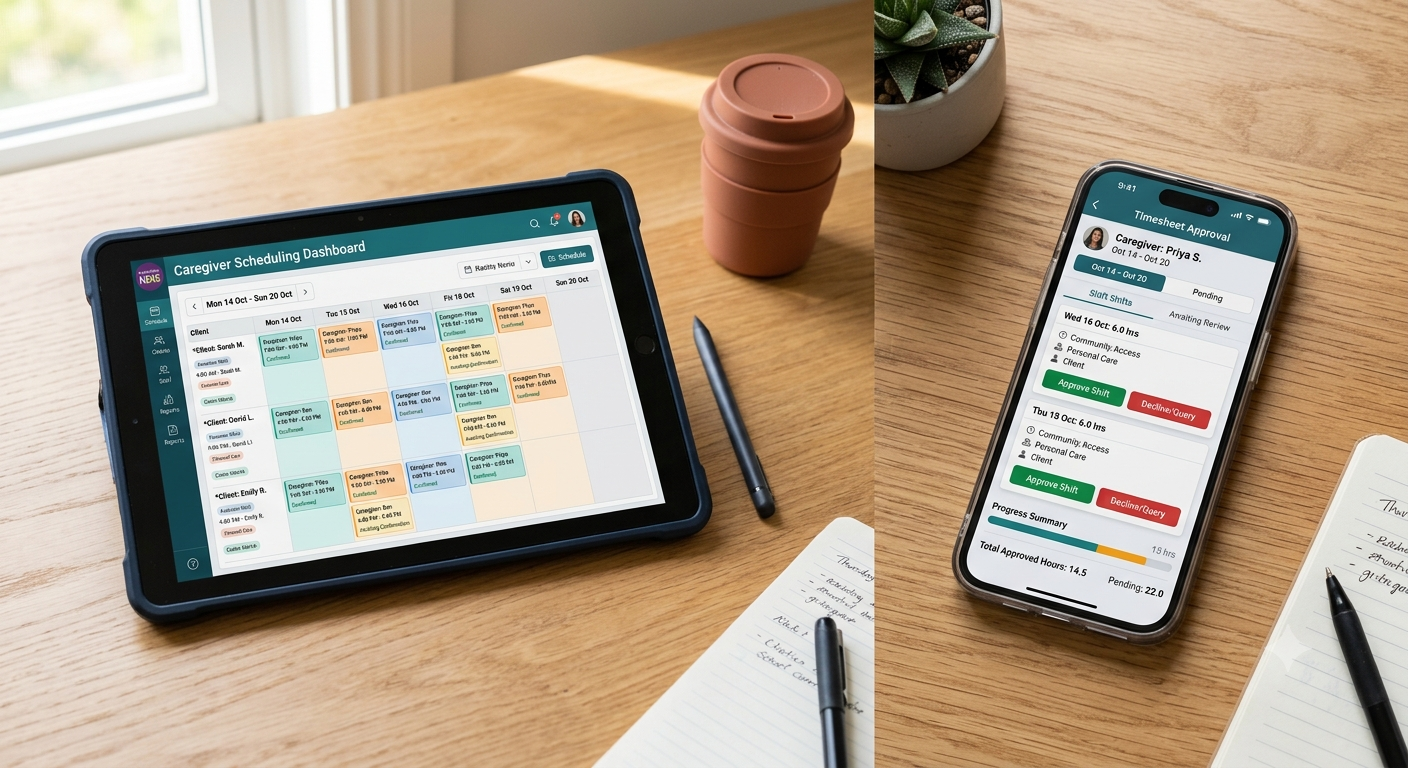
Managing workforce compliance under the SCHADS Award can be time-consuming and complex. ShiftCare simplifies this process with smart rostering software tailored for the NDIS, home care, and aged care sectors. The platform helps businesses stay compliant by automating award interpretation, managing shift allocations, and integrating seamlessly with payroll systems.
With ShiftCare, providers can reduce administrative overhead and ensure staff are rostered in line with SCHADS requirements.
Book a free ShiftCare demo to learn more.
SCHADS FAQs
What penalties apply for SCHADS Award non-compliance?
Employers who fail to meet SCHADS Award requirements may face penalties, including back pay for underpaid employees, fines from the Fair Work Ombudsman, and potential legal disputes.
How do I classify employees correctly under SCHADS?
Employee classification is based on job responsibilities, qualifications, and experience. Employers should refer to the SCHADS Award classification levels and seek HR guidance if unsure.
Can employees refuse overtime under SCHADS?
Employees can refuse overtime if it is deemed unreasonable. Factors such as work hours, family responsibilities, and health considerations must be taken into account.
Does SCHADS require penalty rates for weekend and public holiday work?
Yes, employees working weekends and public holidays under SCHADS are entitled to penalty rates, which vary depending on the day and employee classification.
How can ShiftCare help with SCHADS compliance?
ShiftCare automates award interpretation, ensures correct shift allocations, and integrates with payroll systems, reducing the risk of non-compliance.