Support workers carry smartphones everywhere. Between participant homes, community activities, and back-to-back appointments, their phone is the one constant. Yet many care management platforms still treat mobile as an afterthought, building for desktops first, and assuming the platform will be fit for all devices without considering the actual use case.
That approach creates real problems in the field.
Field-based support work doesn’t happen at a desk. Workers need tools designed for mobility from the ground up – helping support workers access what they need, as they need it, quickly (and simply). For NDIS providers managing community-based care, mobile-first software isn’t a nice-to-have, it’s essential for NDIS compliance, operational control, and accurate service delivery, giving both participants and your support workers the best experience and tools they need to support those in their care.
1. Field-Based Support Workers Can’t Access Desktop Systems During Shifts
Support workers spend their entire day moving, whether it’s between participants’ homes, community venues, and scheduled appointments. Their smartphone is the only device they have with them. Forcing them onto desktop-only platforms means documentation gets delayed until they’re back at the office, creating gaps in care records and slowing systems down – from family updates to incident management and billing.
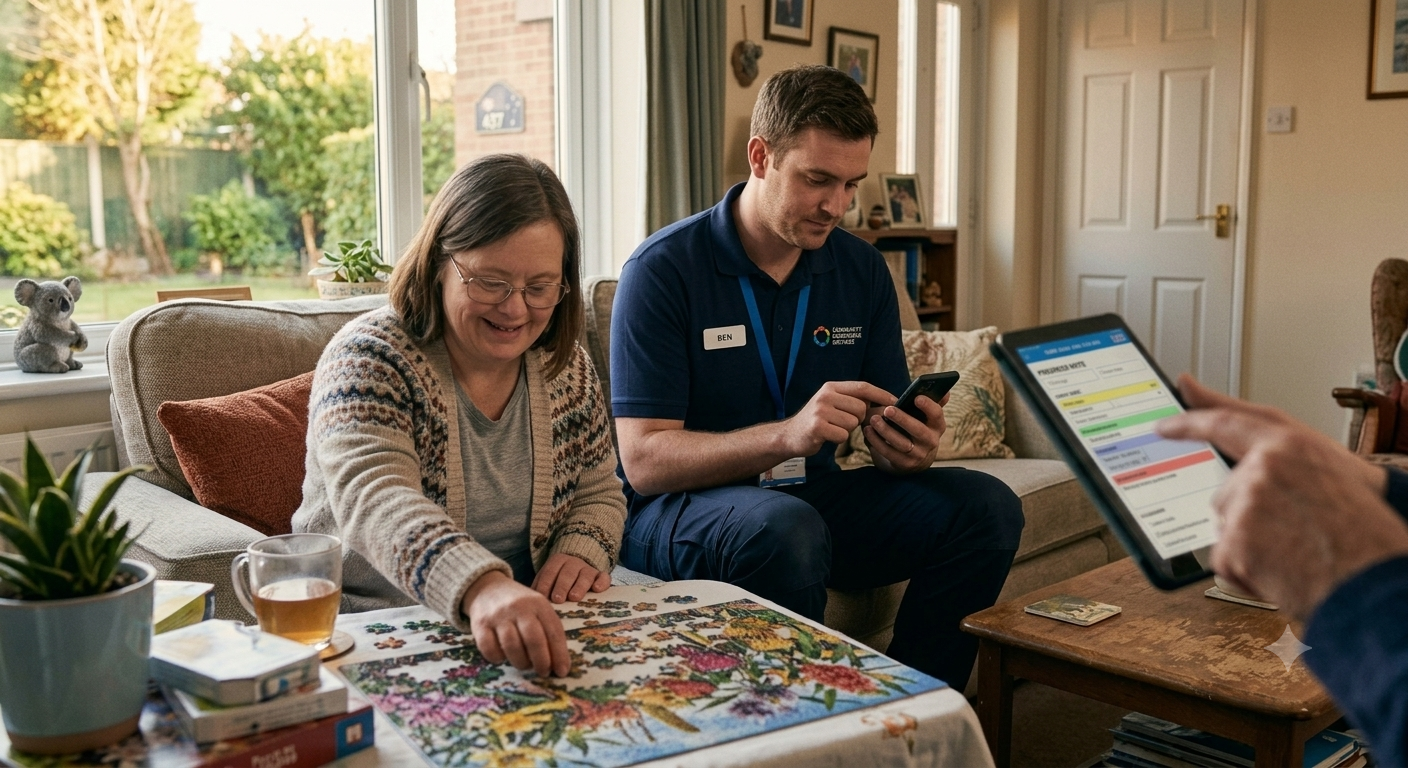
Mobile-first platforms let workers document progress notes, confirm shift details, and record care observations at the point of care, while everything’s still fresh. Notes sync in real time so your office always has an accurate picture of what’s happening on the ground.

2. NDIS Compliance Requires Location and Timestamp Data at the Point of Service
NDIS providers must verify service delivery with accurate time and location records to meet NDIA compliance standards. Manual timesheets and retrospective data entry create gaps that trigger audit issues, payment disputes, and claim rejections.
Mobile-first platforms capture service times and locations automatically through GPS verification. Workers clock in and out at each participant’s location, creating timestamped records that match invoiced services exactly. If a worker loses signal during a shift, the device stores the data locally and syncs automatically once connectivity is restored, helping to keep care delivery seamless, even when connection is lost.
3. Funded Hours and Authorisations Must Be Tracked in Real Time
Without visibility over a participant’s budget, support workers have to call the office or check a desktop system just to confirm they’re not over-servicing. That’s an unnecessary bottleneck, and often a risk.
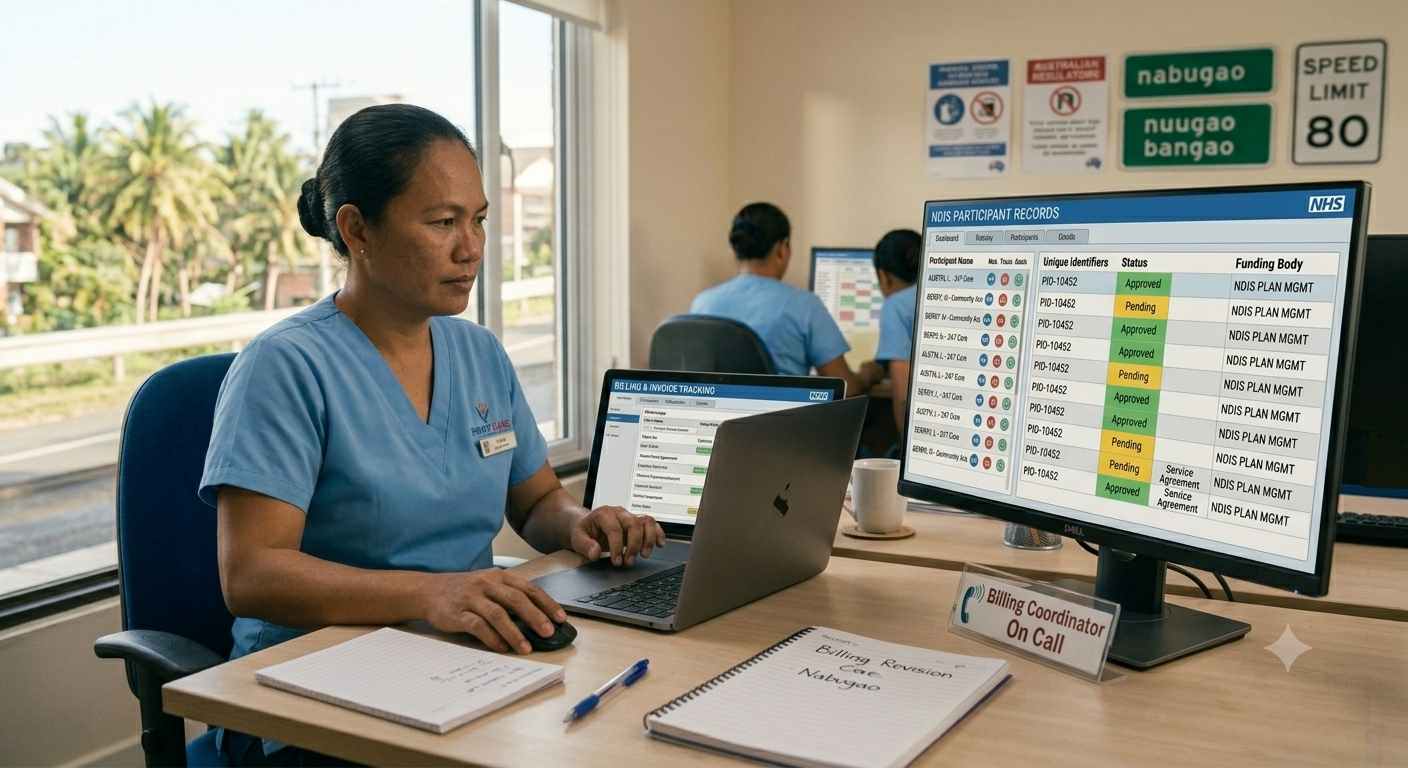
Mobile platforms put funded hours information directly in workers’ hands. Before starting a visit, workers can confirm that the scheduled service falls within the participant’s approved service agreement limits. Live budget balances, authorisation details, and plan expiry dates are visible on their device during the shift, so billing errors from exceeded authorisations don’t make it as far as the invoice.
4. Schedule Changes and Last-Minute Shift Updates Need to Reach Workers Immediately
Shift changes happen constantly in NDIS services; a participant cancels, a worker calls in sick, or a coordinator shuffles the roster. When support workers are tied to desktops, they won’t receive urgent updates fast enough.
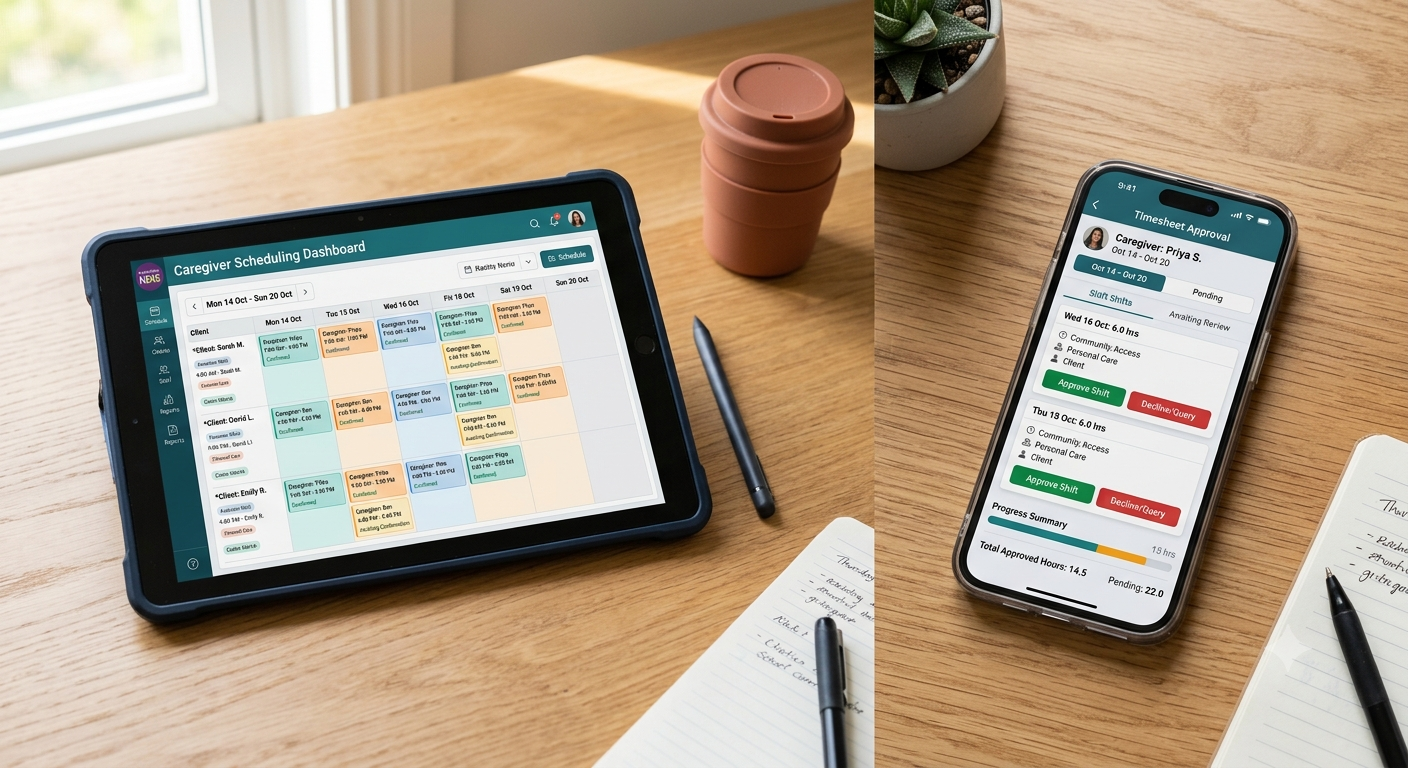
Mobile-first platforms push schedule changes directly to workers’ devices the moment they arise. Workers see updates in real time, can confirm changes without calling the office, and your team maintains accurate, up-to-date rosters across the board. That’s fewer missed shifts, fewer service gaps, and less back-and-forth for your coordinators.

5. Offline Functionality Is Essential for Areas With Poor Connectivity
Support workers often deliver services in regional areas, basement apartments, and locations where mobile coverage is unreliable. Cloud-only systems lock workers out of care plans, progress notes, and incident reporting the moment they lose signal. When workers can’t access critical information mid-shift, service delivery either stops or continues without proper documentation, which causes risks for both your operations and delivering proper client care.
Mobile-first platforms store essential data locally on the device and sync automatically once you restore your internet connection. Workers can complete shift documentation, record progress notes, and log incidents without an active internet connection – meaning nothing falls through the cracks.
Reduce Admin Work and Improve Service Delivery With Mobile-First Care Management
Field-based support work needs tools built for mobility, not desktop software adapted for a smaller screen.
ShiftCare gives NDIS providers mobile-first care management software that connects rostering, service delivery, funded hours tracking, and billing in one platform. Workers access schedules, care plans, and budget information from their smartphones. Your office maintains real-time visibility into service delivery and compliance across every shift.
Start a free trial today and see how ShiftCare helps your team deliver higher-quality care, connected care.