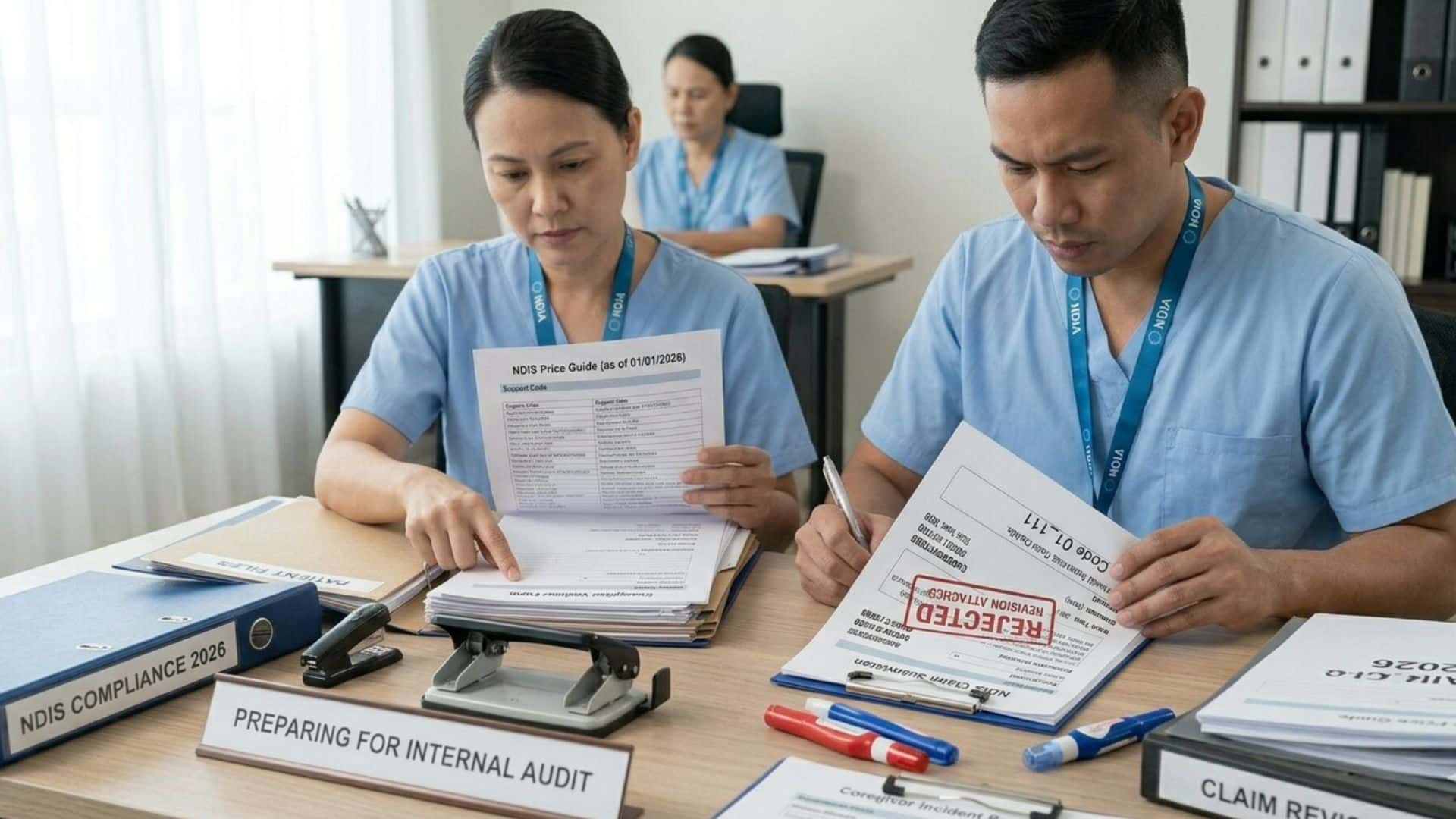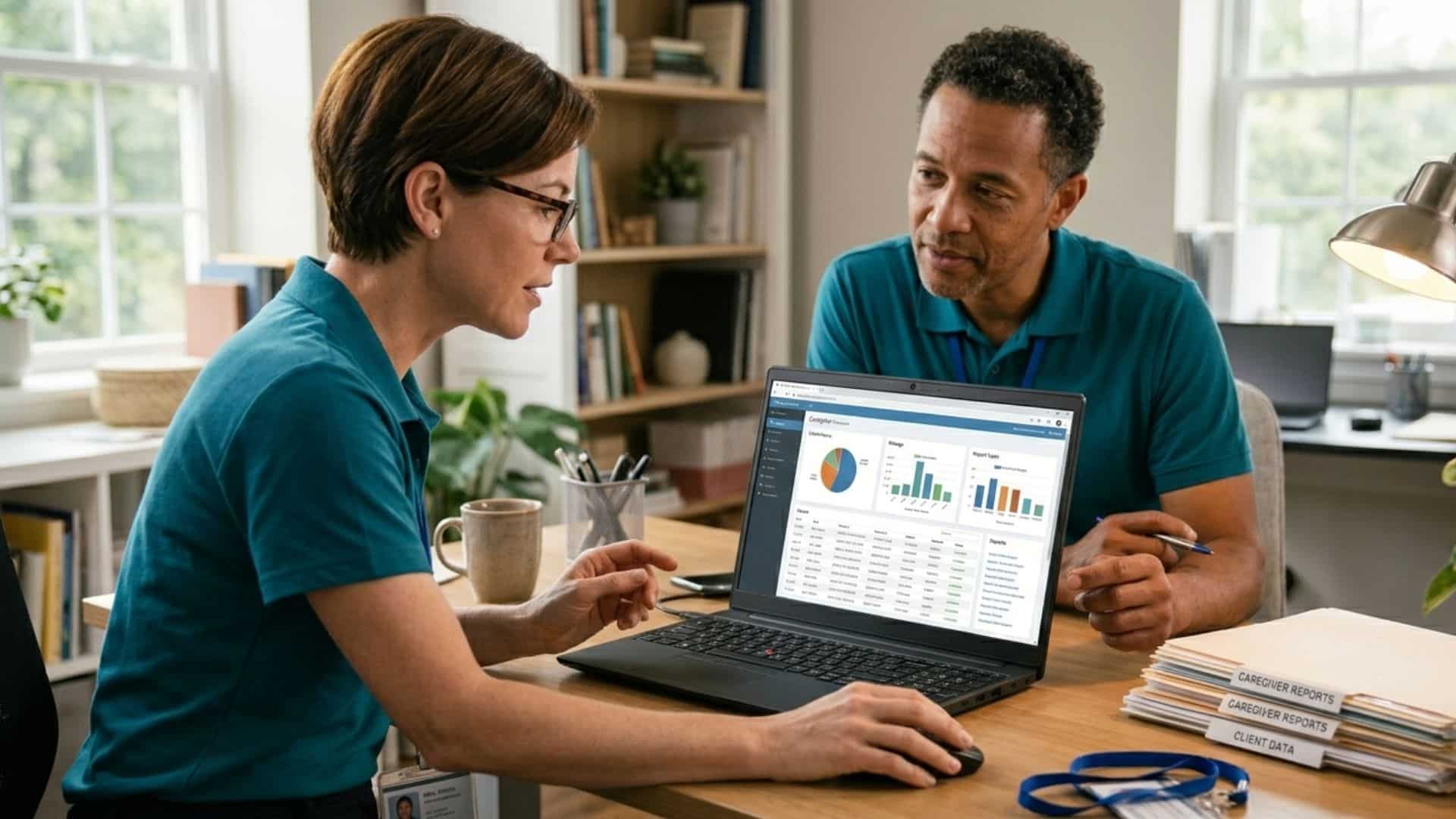
Visit tracking reduces billing disputes in home care by automatically recording clock-in times, GPS locations, and care notes at the point of service. For Canadian agencies operating under provincial funding programs like DSO, CLBC, and PDD, automated visit verification creates audit-ready records that match billed hours to documented visits. It also improves payroll accuracy by connecting verified service times directly to pay, gives coordinators real-time visibility into missed or late visits, and builds family trust through transparent visit records.
The Fundamentals of Visit Tracking in Home Care
A carer’s phone loses signal mid-shift. The app fails to capture GPS coordinates at clock-in. Someone forgets to log out after their visit. On their own, these feel like small issues, but when you amplify these issues across 40 shifts a week, even a 15-minute discrepancy per visit adds up to ten hours of unverified service time.
That’s when the problems can start – families question whether billed hours match what actually happened, and what is actually owed. Provincial auditors flag inconsistencies between your invoices and documented visits, and then your coordinators end up spending their mornings untangling spreadsheets.
Visit tracking solves this by automating data capture at the point of service. When clock-in times, GPS locations, and care notes are recorded automatically, you create verifiable records that prevent billing disputes, improve payroll accuracy, and give your team real-time visibility into every visit (while cutting out extra admin time).
What Is Visit Tracking in Home Care?
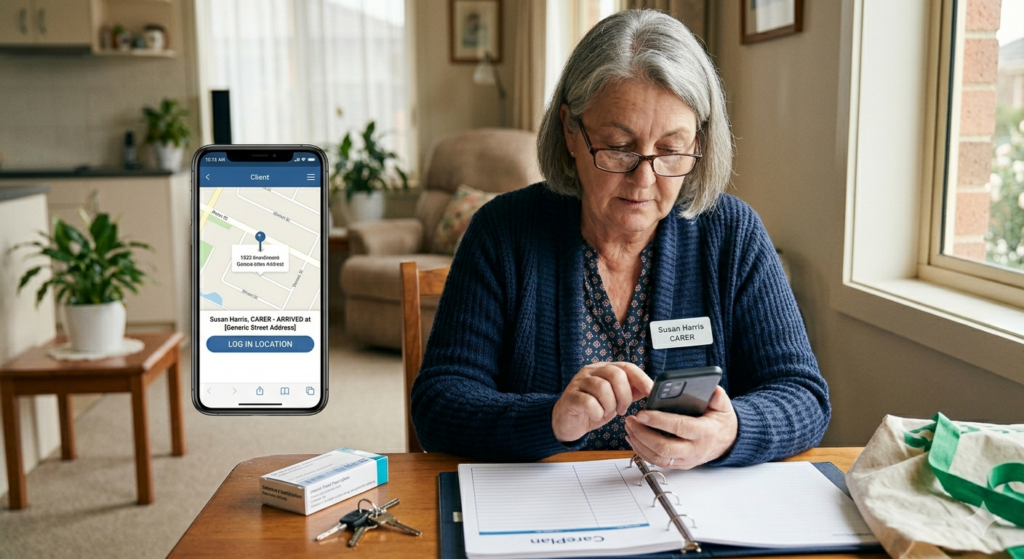
Visit tracking is the process of electronically recording when, where, and how long a home care visit takes place. Instead of relying on paper timesheets or end-of-day manual entries, visit tracking software captures clock-in and clock-out times, GPS location data, and care notes directly from the caregiver’s mobile device during the shift.
For Canadian home care providers, this matters because provincial funding programs require verifiable proof of service delivery. Whether you’re operating under Ontario’s DSO, British Columbia’s CLBC, or Alberta’s PDD, your billed hours need to match documented visits. Automated visit tracking creates the audit-ready records your home care organization needs to stay compliant.
Why Provincial Funding Programs Require Verified Visit Data
Provincial funding bodies expect your billed service hours and delivery times to align. When they don’t, you face rejected claims, payment clawbacks, or formal audit inquiries.
The gap usually starts with manual data entry, for example carers finishing a long day of back-to-back visits filling in their timesheets from memory. A shift that ended at 2:45 gets rounded to 3:00. A morning visit gets logged with the wrong start time. These small errors compound quickly, and when a provincial auditor compares your invoiced hours against your documentation, the discrepancies become harder and harder to explain.
Care management software with built-in time and attendance tracking helps to eliminate this risk. It automatically logs each carer’s clock-in and clock-out times, matched to the worker ID and client ID, resulting in timestamped, GPS-verified records that hold up under audit scrutiny, even if your carer’s device loses network connectivity or is in a low-signal area.
Provincial home care policy frameworks, such as British Columbia’s Home and Community Care Policy Manual, sets clear expectations around service documentation and accountability. Home care providers that rely on automated verification are better positioned to meet these requirements consistently.
How Real-Time Visibility Helps Coordinators Manage Service Delivery
When coordinators rely on end-of-day reports or phone calls to confirm whether visits happened, they’re always a step behind. By the time a coordinator discovers a missed visit through a paper log, the client may have been waiting for hours with no care delivered and no one aware of the gap.
Visit tracking changes this by providing live status updates for every scheduled visit: in progress, completed, running late, or missed. Coordinators can see at a glance which carers haven’t clocked in, which visits are behind schedule, and which clients still need service. This visibility means you can reassign a carer or notify a family before the gap turns into a complaint (or another issue).
This kind of proactive response isn’t just good operations, it’s the type of accountable care delivery that Canada’s Health Standards Organization (HSO) framework encourages, with a focus on coordinated, person-centred home care practices.
Closing the Gap Between Service Delivery and Documentation

Caregivers moving between client homes rarely have time to stop and write detailed progress notes between visits. When they fill out paper logs or notes on their phone at the end of the day, the shift’s details are already fading. What medication was administered at 10 a.m.? Did the client eat lunch? Was there an incident during the afternoon visit? Reconstructing these details hours later leads to missing specifics or inaccurate records.
Care management software with a mobile caregiver app solves this by letting your team capture notes, incident reports, and task completions in the moment, while the details are still fresh. Speak-to-text features make it even faster, so carers can document without slowing down their workflow.
When care notes sync across your team in real time, every carer arriving for the next shift has access to the same up-to-date information. That single source of truth means more consistent care across handoffs and fewer gaps for auditors or families.
Why Payroll Accuracy Depends on Verified Service Times
Paying carers based on scheduled shifts instead of actual service times creates a gap that frustrates everyone. A carer scheduled for four hours might finish in three and a half, or stay an extra thirty minutes to complete care tasks. When manual timesheets are the only record, you’re left comparing what carers claim against what supervisors recall, with no objective data to settle the difference.
The consequences go beyond payroll errors. Carers who are consistently underpaid for overtime feel undervalued and over time, they leave. In a sector already facing caregiver shortages across Canada, losing experienced staff because of avoidable pay disputes is a cost your agency can’t afford.
Automated visit tracking helps connects each verified clock-in and clock-out directly to your payroll process, so carers are paid for the exact hours they worked. No rounding, no disputes, no Sunday evening scramble to reconcile timesheets before Monday’s payroll run.
Building Family Trust Through Verified Visit Records

Families paying for care, or advocating for a loved one’s provincially funded services, want proof that visits happened as scheduled. They want to know whether the assigned carer showed up on time, how long the visit lasted, and whether the care plan tasks were completed. When the only confirmation is a phone call or a verbal update from the carer, families have no way to independently verify what happened.
A family portal gives approved family members real-time access to visit records, care notes, and schedule information. They can check in on their loved one’s care history without calling your office. That transparency builds trust, reduces billing complaints, and gives families confidence that the care they’re paying for is actually being delivered.
Track Visits, Reduce Disputes, and Improve Care Accountability With ShiftCare
ShiftCare brings visit tracking, care documentation, payroll verification, and family communication together in one care management platform built for Canadian home care providers. Whether you’re managing DSO-funded services in Ontario, CLBC clients in British Columbia, or mixed-pay models across provinces, ShiftCare gives you the verified records and real-time visibility your agency needs.
Start your free trial today and see how automated visit tracking can reduce billing disputes, support your carers, and keep your agency audit-ready.