
Developmental Services Ontario (DSO) funding supports Ontario residents with developmental disabilities by funding residential services, day programs, respite care, and community participation supports. Funding flows from the Ministry of Children, Community, and Social Services to approved service agencies through contractual agreements.
For providers new to DSO-funded services, understanding how funding is allocated, what services are covered, and what documentation is required can be confusing. Ontario’s disability funding system includes multiple streams with different eligibility criteria, service definitions, and billing requirements.
Here’s what DSO providers need to know about how funding works, what’s covered, and how to get paid for services delivered.
What Is DSO Funding?
DSO funding pays for developmental services delivered to adults with developmental disabilities in Ontario. The funding supports people who need assistance with daily living, community participation, and skill development due to intellectual or developmental disabilities.
Funding is allocated to approved service agencies, not directly to individuals. Providers contract with the Ministry to deliver specific service types at agreed-upon rates. Clients access services through the DSO system, which coordinates intake, assessment, and service matching across Ontario.
What Services Does DSO Funding Cover?

DSO funding covers five main service categories:
- Residential services include group homes, supported independent living, and host family arrangements where clients receive 24-hour or regular support in their homes.
- Day programs provide structured activities, skill development, and community participation during daytime hours. These programs focus on employment readiness, social skills, and daily living skills.
- Community participation supports help clients engage in recreational activities, volunteer work, and community events. This category includes support workers who accompany clients to activities outside formal programs.
- Respite services give primary caregivers temporary relief by providing short-term care in the caregiver’s home, the client’s home, or a respite facility.
- Specialized services cover behavior support, crisis intervention, and clinical services for clients with complex needs requiring professional intervention beyond standard support.
How Clients Access DSO Funding
Clients don’t apply for DSO funding directly. They apply for services through the DSO regional office serving their area. DSO coordinates intake, eligibility determination, and service matching.
The DSO Application Process
A client or their family contacts their local DSO office to start the application. DSO conducts an eligibility assessment to confirm the individual has a developmental disability that began before age 18 and requires ongoing support.
Once eligibility is confirmed, DSO completes a needs assessment to determine what type and intensity of supports the client requires. This assessment considers current living situation, support needs, caregiver capacity, and the client’s goals.
DSO matches the client with available service agencies based on assessed needs, service availability, and geographic location. The client and agency then develop a service agreement outlining what supports will be provided and at what frequency.
Wait Times and Service Availability
Not all clients who qualify for DSO funding receive services immediately. Wait times vary by service type and region. Residential services typically have the longest wait times due to limited capacity. Day programs and respite services generally have shorter waits.
Clients on waiting lists may access Passport funding while they wait for DSO-funded residential or day program placements.
DSO Funding vs Passport Funding: What’s the Difference?

DSO and Passport are both provincial funding streams for developmental disability services in Ontario, but they work differently and serve different purposes.
DSO funding goes to service agencies and pays for structured programs like residential services, day programs, and respite. Clients don’t control how the funding is spent. The agency delivers services according to the contract with the Ministry.
Passport funding goes directly to individuals or their families and can be used more flexibly. Recipients can purchase supports from agencies, hire their own workers, or pay for community activities and equipment. Passport is designed to give families more control over how supports are delivered.
Key differences:
| DSO Funding | Passport Funding |
| Flows to service agencies | Flows to individuals/families |
| Used for structured programs | Used flexibly for individualized supports |
| Agency-controlled spending | Family-controlled spending |
| No direct client invoicing | Client manages payments |
| Contractual service delivery | Self-directed service planning |
Many clients use both funding streams. A client might receive DSO-funded day program services while also using Passport funding to hire a support worker for evening activities.
How DSO Providers Get Paid
DSO providers are paid through service contracts with the Ministry of Children, Community and Social Services. Payment models vary by service type.
Residential Services Payment
Residential providers receive per diem rates for each client in their care. Rates vary based on the level of support required and the type of residential setting. Payments are typically made monthly based on the number of funded bed days.
Providers must track occupancy, document service delivery, and submit monthly reports confirming services were delivered as contracted.
Day Program and Community Participation Payment
Day programs are typically funded through annual contracts specifying the number of client spaces and the contracted service hours. Providers receive regular payments based on the contracted amount, not on actual attendance.
Community participation supports may be billed hourly or as part of a broader service package depending on the contract structure.
Respite Services Payment
Respite is usually billed based on actual hours or days of service delivered. Providers submit invoices documenting the dates, duration, and type of respite provided. Payment cycles vary but are typically processed monthly.
What Documentation Is Required for DSO Billing?
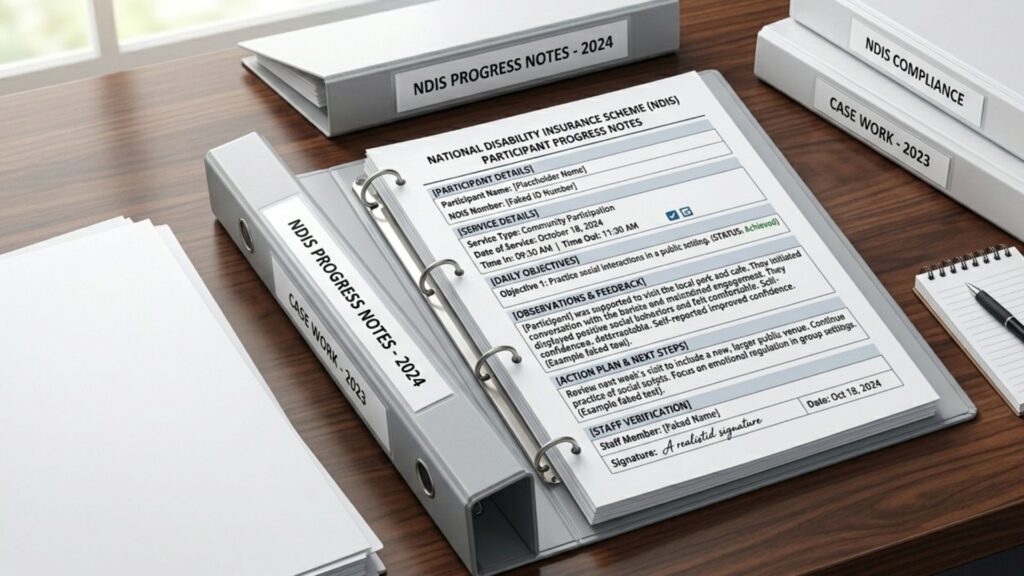
DSO contracts require specific documentation to demonstrate services were delivered as agreed and funding was used appropriately.
Service Delivery Records
Providers must maintain daily service logs documenting what supports were provided, when they were delivered, and who delivered them. For residential services, this includes shift notes, medication administration records, and incident reports.
Day programs require attendance records, activity logs, and progress notes showing skill development and goal achievement.
Client Service Plans
Every client receiving DSO-funded services needs a current service plan outlining goals, required supports, and how progress will be measured. Plans must be reviewed annually at minimum and updated when client needs change.
Service plans demonstrate that funding is being used to deliver supports aligned with the client’s assessed needs and goals.
Financial Reporting
DSO providers submit regular financial reports to the Ministry showing how funding was spent. Reports must align with approved budgets and demonstrate funds were used for contracted services.
Providers need systems that track expenses by service type, client, and funding source so financial reporting matches service delivery records.
Incident and Critical Event Reporting
Serious occurrences involving clients must be reported to the Ministry within required timeframes. This includes injuries, allegations of abuse, deaths, and other critical incidents.
Failure to report incidents properly can jeopardize future funding and trigger compliance reviews.
Common DSO Billing Challenges for Providers
Providers new to DSO funding face predictable billing and documentation challenges.
- Tracking service delivery across multiple programs becomes complex when clients receive residential, day program, and respite services from the same agency. Providers need systems that separate billing and documentation by service type while maintaining a unified client record.
- Reconciling contracted funding with actual service delivery causes problems when client attendance varies, residential beds sit vacant, or respite utilization differs from projections. Providers must explain variances in financial reporting and adjust contracts when service patterns change permanently.
- Managing multiple funding sources for the same client requires clear allocation rules when a client receives both DSO and Passport funding or when family members pay privately for additional supports not covered by DSO contracts.
- Meeting Ministry reporting deadlines while managing day-to-day operations strains small providers without dedicated administrative staff. Late or incomplete reports can delay payments and trigger compliance reviews.
Manage DSO Funding and Billing in One System
DSO providers need systems that track service delivery, manage contracts, and handle billing across multiple service types and funding sources. Manual processes create gaps between what was delivered and what gets reported to the Ministry.
ShiftCare’s Canadian care management software tracks DSO service delivery, manages client service plans, and integrates with accounting systems to streamline financial reporting. Support workers document services in real time. Billing coordinators generate reports that match Ministry requirements without manual reconciliation.
Start your free trial today and see how ShiftCare helps Ontario DSO providers manage funding, billing, and compliance in one platform.